
Close Menu
    Facebook X (Twitter) Instagram
    SciTechDaily
    • Biology
    • Chemistry
    • Earth
    • Health
    • Physics
    • Science
    • Space
    • Technology
    Facebook X (Twitter) Pinterest YouTube RSS
    SciTechDaily
    Home»Space»“Potentially Hazardous” Stadium-Sized Asteroid Skims Earth in a Breathtaking Near Miss
    Space

    “Potentially Hazardous” Stadium-Sized Asteroid Skims Earth in a Breathtaking Near Miss

    By SciTechDaily.comFebruary 2, 20245 Comments3 Mins Read
    Facebook Twitter Pinterest Telegram LinkedIn WhatsApp Email Reddit
    Share
    Facebook Twitter LinkedIn Pinterest Telegram Email Reddit
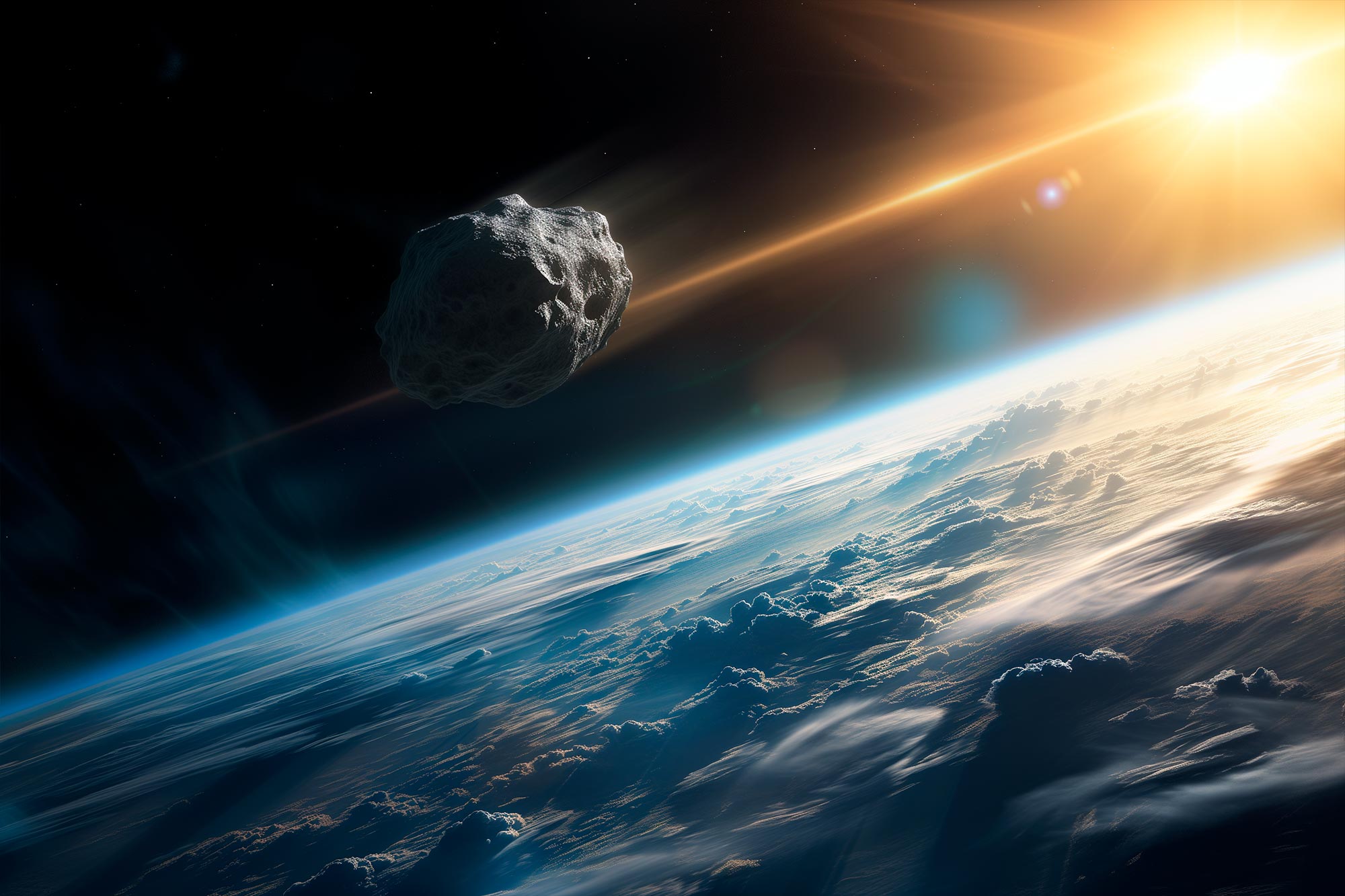
    Asteroid Above Earth Concept Art
    A stadium-sized asteroid, designated 2008 OS7, will make its closest approach to Earth today. It will pass by at a distance of approximately 1,770,000 miles, a proximity considered remarkably close by astronomical standards. (Artist’s concept.) Credit: SciTechDaily.com

    In an event stirring both excitement and a heightened sense of cosmic awareness among astronomers and the public alike, a stadium-sized asteroid, known as 2008 OS7, will make a close approach to Earth today, February 2, 2024. This asteroid, recognized for its significant size and its classification as “potentially hazardous” due to its proximity to our planet, presents a unique opportunity for scientific observation while also reminding us of the myriad celestial bodies that orbit within our solar system.

    The asteroid in question, 2008 OS7, measures approximately 890 feet (or about 271 meters) in diameter, making it comparable to the length of three football fields laid end to end. Its nearest distance to Earth during this approach is some 1,770,000 miles away, equivalent to around 2,850,000 kilometers. Despite the vastness of these numbers, in the grand scale of space, this distance is relatively small, meriting close attention from those monitoring near-Earth objects (NEOs).
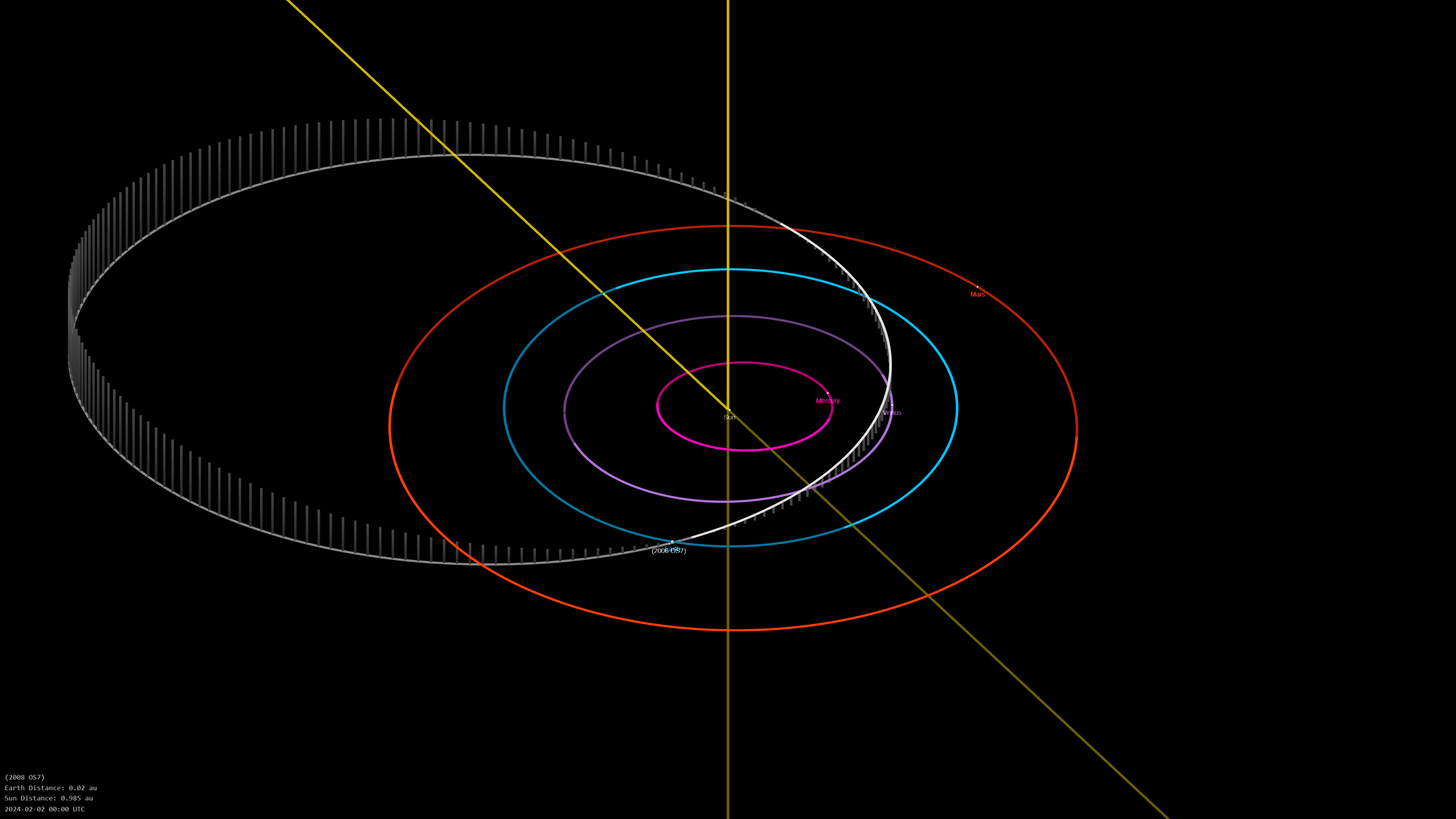
    Asteroid 2008 OS7 Orbit
    Asteroid 2008 OS7 orbit with location as of 5:34:01 on February 2, 2024. Credit: JPL

    Why Is It Considered “Potentially Hazardous”?

    An asteroid is classified as “potentially hazardous” based on criteria that include its size and how close it comes to Earth’s orbit. Specifically, asteroids that are larger than 150 meters in diameter and come closer to Earth than 19.5 times the distance to the moon (about 7.5 million kilometers or 4.6 million miles) fall into this category. Despite the alarming designation, it’s important to note that 2008 OS7’s trajectory is well understood by scientists, and it poses no imminent threat to our planet during this pass.

    Scientific Significance

    The close approach of 2008 OS7 provides a valuable opportunity for researchers to study a near-Earth object (NEO) of this size in greater detail. Observations can help refine our understanding of its composition, orbit, and whether it has companions. These insights are crucial for enhancing our ability to predict the orbits of NEOs and to develop potential strategies for planetary defense should a future asteroid pose a direct threat to Earth.

    Public Interest and Observation

    For those interested in catching a glimpse of 2008 OS7, while the asteroid will not be visible to the naked eye, amateur astronomers with the appropriate equipment may be able to observe the asteroid as it makes its close approach. Various space agencies and astronomical organizations around the globe are likely to provide live streams or updates, making it accessible for the public to follow this event from the comfort of their homes.

    Conclusion

    The flyby of asteroid 2008 OS7 serves as a reminder of the dynamic nature of our solar system and the importance of continued vigilance and research in the field of asteroid tracking and planetary defense. While there is no threat from this particular asteroid, it underscores the need for preparedness and the value of space science in safeguarding our planet against potential future hazards.

    Never miss a breakthrough: Join the SciTechDaily newsletter.
    Follow us on Google and Google News.

    Asteroid Planetary Defense
    Share. Facebook Twitter Pinterest LinkedIn Email Reddit

    Related Articles

    Huge Region of Europe Destroyed by Asteroid Impact in Planetary Defense Exercise

    Planetary Defense Conference: NASA to Participate in Exercise Simulating Asteroid Impact

    NASA Analysis: Earth Is Safe From Asteroid Apophis Impact for at Least 100 Years

    NASA’s Planetary Defense: “Potentially Hazardous Asteroid” Predicted to Safely Pass by Earth on March 21

    ESA’s Ambitious Hera Planetary Defense Mission Awards $153 Million Contract

    Asteroid Deflection Planetary Defense Mission Target: “Dimorphos”

    NASA Double Asteroid Redirection Test: First Planetary Defense Mission Target Gets a New Name

    Planetary Defense Researchers Simulate Earth-Bound Asteroid Deflection

    Large Near-Earth Asteroid Florence to Pass Earth on September 1

    5 Comments

    1. Telexope on February 2, 2024 7:40 am

      Wow! I think it’s time we stepped up planetary defense programs in prep. for future catastrophic asteroid collision events. For all the close calls mankind has had from asteroids, the goverment still seem to be impervious by refusing to provide funds for night sky gazers…

      Reply
    2. Sarneczy on February 2, 2024 7:45 am

      How stealthy! I still can’t believe how this elusive asteroid managed to evade by asteroid-prying eyes…perhaps, I was asleep at the time.

      Reply
    3. Telexope on February 2, 2024 7:51 am

      Hahaha. Meanwhile, apophis is on its way. I can imagine the looks on the faces of NASAians when they discover, in time, it’s heading for the roof top of the white house.

      Reply
    4. Critical Thinker on February 3, 2024 8:14 am

      Give me a break, 1,770,00 miles? That’s more than 6 times further away than the moon! Not exactly a “skim” regardless of artist’s fantasy concept.

      Reply
    5. Liz on February 3, 2024 2:10 pm

      LOL, you all kill each other every single day; so what’s the diff if a large rock takes out your lights? Get real and do the house flies a favor by going extinct and give them a big final meal of ourselves to them.

      Reply
    Leave A Reply Cancel Reply

    • Facebook
    • Twitter
    • Pinterest
    • YouTube

    Don't Miss a Discovery

    Subscribe for the Latest in Science & Tech!

    Trending News

    Artificial Sweeteners May Harm Future Generations, Study Suggests

    Splashdown! NASA Artemis II Returns From Record-Breaking Moon Mission

    What If Consciousness Exists Beyond Your Brain

    Scientists Finally Crack the 100-Million-Year Evolutionary Mystery of Squid and Cuttlefish

    Beyond “Safe Levels”: Study Challenges What We Know About Pesticides and Cancer

    Researchers Have Found a Dietary Compound That Increases Longevity

    Scientists Baffled by Bizarre “Living Fossil” From 275 Million Years Ago

    Your IQ at 23 Could Predict Your Wealth at 27, Study Finds

    Follow SciTechDaily
    • Facebook
    • Twitter
    • YouTube
    • Pinterest
    • Newsletter
    • RSS
    SciTech News
    • Biology News
    • Chemistry News
    • Earth News
    • Health News
    • Physics News
    • Science News
    • Space News
    • Technology News
    Recent Posts
    • What if Dark Matter Has Two Forms? Bold New Hypothesis Could Explain a Cosmic Mystery
    • Researchers Expose Hidden Chemistry of “Ore-Forming” Elements in Biology
    • Geologists Reveal the Americas Collided Earlier Than We Thought
    • 20x Difference: Study Reveals True Source of Airborne Microplastics
    • Scientists Uncover Hidden Force Powering Yellowstone’s Supervolcano
    Copyright © 1998 - 2026 SciTechDaily. All Rights Reserved.
    • Science News
    • About
    • Contact
    • Editorial Board
    • Privacy Policy
    • Terms of Use

    Type above and press Enter to search. Press Esc to cancel.