
Close Menu
    Facebook X (Twitter) Instagram
    SciTechDaily
    • Biology
    • Chemistry
    • Earth
    • Health
    • Physics
    • Science
    • Space
    • Technology
    Facebook X (Twitter) Pinterest YouTube RSS
    SciTechDaily
    Home»Space»NASA’s Solar Dynamics Observatory Views a Spotless Sun
    Space

    NASA’s Solar Dynamics Observatory Views a Spotless Sun

    By Lina Tran, NASA’s Goddard Space Flight CenterMarch 23, 2017No Comments2 Mins Read
    Facebook Twitter Pinterest Telegram LinkedIn WhatsApp Email Reddit
    Share
    Facebook Twitter LinkedIn Pinterest Telegram Email Reddit
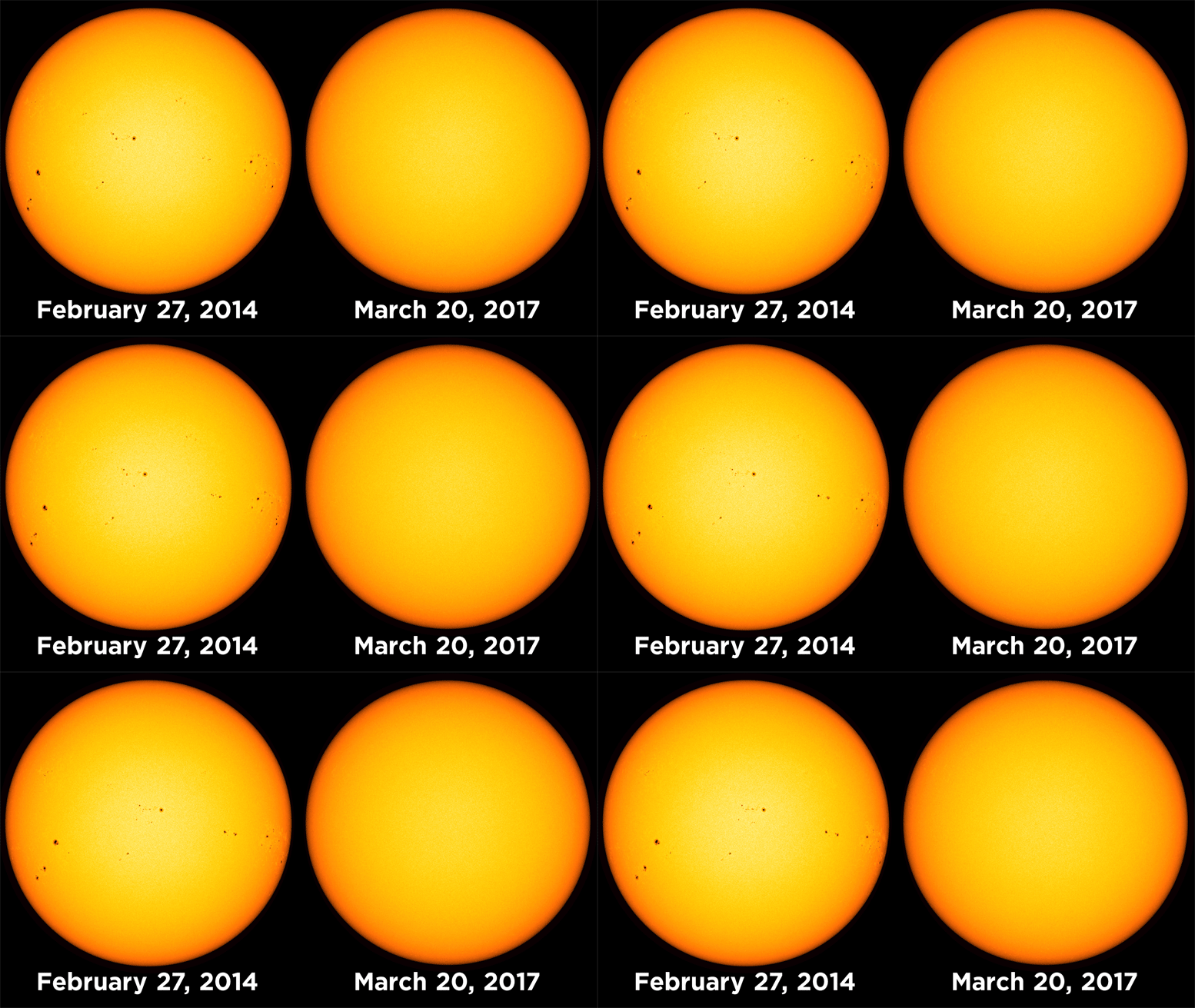
    NASA’s SDO Sees a Stretch of Spotless Sun
    February 27, 2014 – the last solar maximum vs March 20, 2017 – the longest stretch of spotlessness since the last solar minimum

    For a 15 day stretch beginning on March 7, 2017, NASA’s Solar Dynamics Observatory returned visible light images of a yolk-like spotless sun. This is the longest stretch of spotlessness since the last solar minimum in April 2010, indicating the solar cycle is marching on toward the next minimum, which scientists predict will occur between 2019—2020.

    The sun goes through a natural 11-year cycle marked by two extremes: solar maximum and solar minimum. Sunspots are dark regions of complex magnetic activity on the sun’s surface, so the number of sunspots at any given time is used as an index for solar activity. Solar maximum is characterized by intense solar activity and the greatest sunspot number. Conversely, during solar minimum, the sun is least active and sunspot number is at its lowest. Solar activity, however, does not end as sunspot number decreases toward minimum. There are other sources of solar activity such as high-speed streams of solar material from coronal holes, which spark aurora and other space weather effects.

    The SDO images here compare the sun on March 20, 2017, and February 27, 2014, during the last solar maximum when the sun sported numerous spots.

    Never miss a breakthrough: Join the SciTechDaily newsletter.
    Follow us on Google and Google News.

    Popular SDO Solar Dynamics Observatory Sun
    Share. Facebook Twitter Pinterest LinkedIn Email Reddit

    Related Articles

    NASA Satellites Recreate Solar CME Eruption in 3D

    NASA’s Solar Dynamics Observatory Sees Partial Solar Eclipse in Space

    Solution to the Coronal Heating Mystery Presented at 2015 TESS Meeting

    New Technique Provides Near Real-Time Mapping of the Sun’s Interior

    NASA’s Solar Dynamics Observatory Views Two New Solar Flares

    Scientists Overturn Previous Notions of How the Sun’s Writhing Insides Move

    New Observations Help Astronomers Learn How Young Stars Accrete Material and Grow

    NASA Solar Dynamics Observatory Captures Eruption in Extreme UV

    Solar Dynamics Observatory Measures Magnetic Fields on Sun’s Surface

    Leave A Reply Cancel Reply

    • Facebook
    • Twitter
    • Pinterest
    • YouTube

    Don't Miss a Discovery

    Subscribe for the Latest in Science & Tech!

    Trending News

    1.4-Million-Year-Old Footprints Reveal a Giant Human Relative

    Astronomers May Have Found the First Moon Beyond Our Solar System

    Underwater Cameras Expose the Secret Lives of Whale Sharks

    Why Dreaming Leaves the Brain Running Low on Energy

    CERN Experiments Detect Signs of the Universe’s Primordial Matter

    Study Finds a Surprising Link Between Gut Microbes and Aging

    Frequent Cannabis Users Wake Up With More “Stress Hormone”

    Scientists Reveal Hidden DNA Traces in the Shroud of Turin

    Follow SciTechDaily
    • Facebook
    • Twitter
    • YouTube
    • Pinterest
    • Newsletter
    • RSS
    SciTech News
    • Biology News
    • Chemistry News
    • Earth News
    • Health News
    • Physics News
    • Science News
    • Space News
    • Technology News
    Recent Posts
    • A Daily Multivitamin May Help Older Adults Stay Active
    • Blood Test May Reveal Alzheimer’s Risk Years Before Symptoms
    • Scientists Thought SuperAgers Had Lucky Genes. They Were Wrong
    • Humans and Mice May Process Smells in Very Similar Ways
    • These Beautiful Flowers Can Paralyze You, but Their Chemistry Could Save Lives
    Copyright © 1998 - 2026 SciTechDaily. All Rights Reserved.
    • Science News
    • About
    • Contact
    • Editorial Board
    • Privacy Policy
    • Terms of Use

    Type above and press Enter to search. Press Esc to cancel.