
Close Menu
    Facebook X (Twitter) Instagram
    SciTechDaily
    • Biology
    • Chemistry
    • Earth
    • Health
    • Physics
    • Science
    • Space
    • Technology
    Facebook X (Twitter) Pinterest YouTube RSS
    SciTechDaily
    Home»Science»New Clues to Consciousness: Scientists Discover the Brain’s Hidden Gatekeeper
    Science

    New Clues to Consciousness: Scientists Discover the Brain’s Hidden Gatekeeper

    By American Association for the Advancement of ScienceApril 6, 20259 Comments2 Mins Read
    Facebook Twitter Pinterest Telegram LinkedIn WhatsApp Email Reddit
    Share
    Facebook Twitter LinkedIn Pinterest Telegram Email Reddit
    Human Brain Neural Network Cerebral Cortex
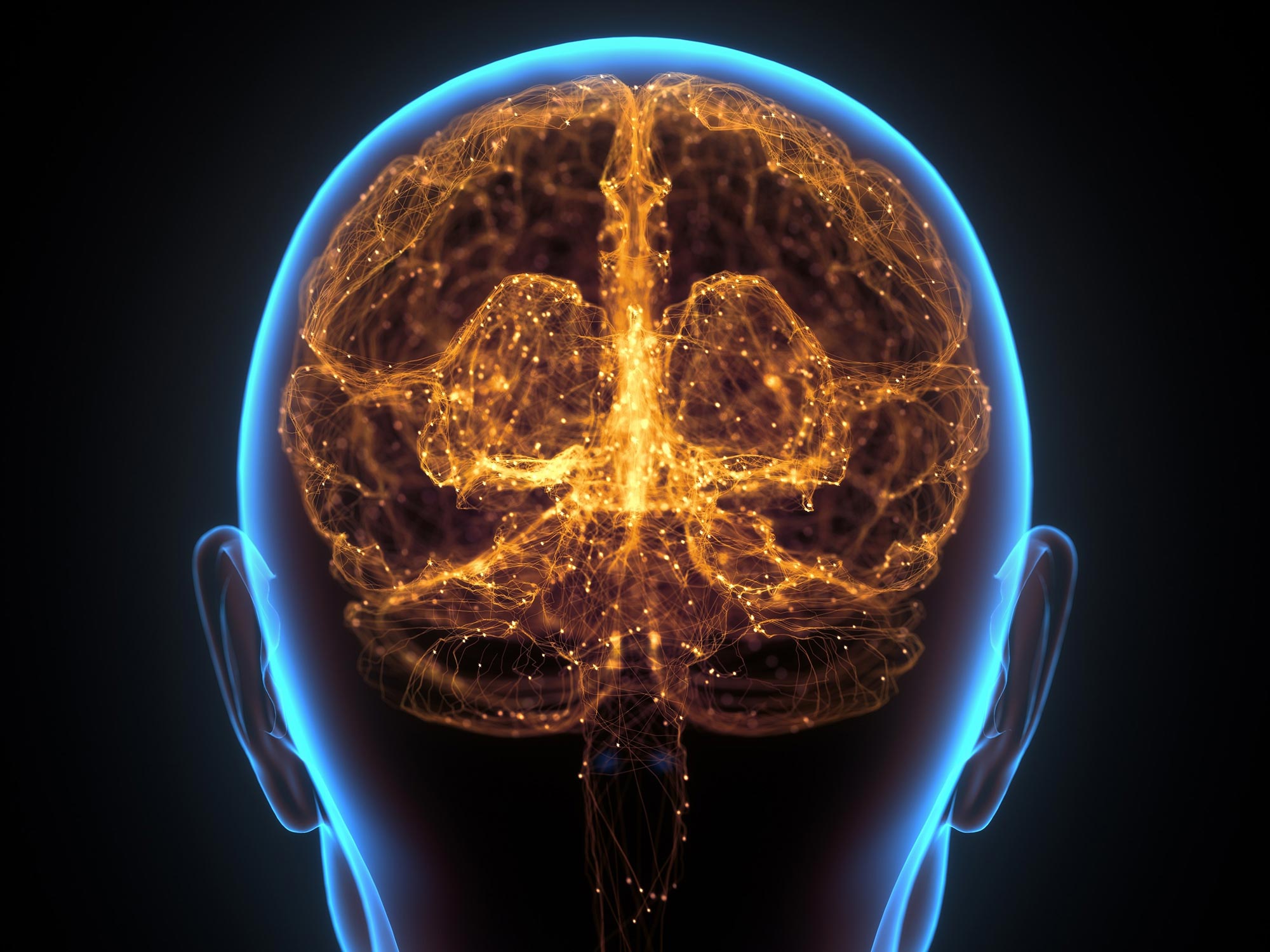
    A new study using direct brain recordings reveals that specific thalamic regions, especially the intralaminar nuclei, play a key role in triggering conscious perception by synchronizing with the prefrontal cortex. This challenges the traditional cortex-focused view and highlights the thalamus as a central gateway to awareness.

    Thalamic regions drive conscious perception by syncing with the prefrontal cortex, acting as a gateway to awareness.

    Using direct intracranial brain recordings in humans, a new study has identified the thalamus, a small, deeply situated brain structure, as a key player in conscious perception. The researchers found that specific higher-order regions of the thalamus function as a gateway to awareness by transmitting signals to the prefrontal cortex.

    These findings offer important insights into the complex nature of human consciousness. Unraveling the neural basis of consciousness remains one of neuroscience’s greatest challenges. Prior research has proposed that consciousness consists of two main components: the conscious state (such as being awake or asleep) and conscious content (the specific experiences or perceptions one is aware of).

    The Thalamus Beyond Sensory Relay

    While subcortical structures are primarily involved in regulating conscious states, many theories emphasize the importance of subcortical-cortical loops in conscious perception. However, most studies on conscious perception have focused on the cerebral cortex, with relatively few studies examining the role of subcortical regions, particularly the thalamus. Its role in conscious perception has often been seen as merely facilitating sensory information.

    To better understand the role of the thalamus in conscious perception, Zepeng Fang and colleagues performed a unique clinical experiment and simultaneously recorded stereoelectroencephalography (sEEG) activity in the intralaminar, medial, and ventral thalamic nuclei and prefrontal cortex (PFC), while five chronic, drug-resistant headache patients with implanted intracranial electrodes performed a novel visual consciousness task.

    A Thalamic “Gateway” to Awareness

    Feng et al. discovered that the intralaminar and medial thalamic nuclei exhibited earlier and stronger consciousness-related neural activity compared to the ventral nuclei and PFC.

    Notably, the authors found that activity between the thalamus and PFC – especially the intraluminal thalamus – was synchronized during the onset of conscious perception, suggesting that this thalamic region plays a gating role in driving PFC activity during conscious perception.

    Reference: “Human high-order thalamic nuclei gate conscious perception through the thalamofrontal loop” by Zepeng Fang, Yuanyuan Dang, An’an Ping, Chenyu Wang, Qianchuan Zhao, Hulin Zhao, Xiaoli Li and Mingsha Zhang, 4 April 2025, Science.
    DOI: 10.1126/science.adr3675

    Never miss a breakthrough: Join the SciTechDaily newsletter.
    Follow us on Google and Google News.

    American Association for the Advancement of Science Brain Neuroscience
    Share. Facebook Twitter Pinterest LinkedIn Email Reddit

    Related Articles

    The Resonance of Intelligence: Complex Vocal Learning Predicts Problem-Solving Abilities and Brain Size in Songbirds

    How the Anatomical Structure of the Brain Impacts Its Functioning

    Scientists Establish Functional Brain-to-Brain Interface between Human and Animal

    Photos of Einstein’s Brain Show Unique Features

    Brain Scans Help Scientists Read Dreams

    Listening to Mozart Can Make You Smarter but No More Than Justin Bieber

    MIT Neuroscientists Research Brain Activity Related to Face Recognition

    Neuroscientists Predict Which Parts of the Fusiform Gyrus are Face-Selective

    Be Like Neo and Learn New Skills Matrix-Style

    9 Comments

    1. Soren Bro on April 6, 2025 11:55 pm

      if true, far reaching consequences as it will mean that most animals are also conscious…

      Reply
    2. Eh, are we there on April 7, 2025 1:07 am

      I like it, I just like it

      Reply
    3. Eh, are we there on April 7, 2025 1:08 am

      I like it, can we have enough, byebye, tonight

      Reply
    4. Eh, are we there man on April 7, 2025 1:09 am

      I like it, can we have enough, byebye, tonight

      Reply
    5. Say, now what is this, what about it on April 7, 2025 1:11 am

      Can we have it like we like it, how about it

      Reply
    6. Michael on April 13, 2025 2:29 am

      Of course animals are conscious, you dont need to have a study for that

      Reply
    7. Norfairos bintiJunus on April 14, 2025 10:16 am

      Cer

      Reply
    8. Norfairos bintiJunus on April 14, 2025 10:17 am

      Sainst sanspepole seyt comlore

      Reply
    9. Lola on April 14, 2025 11:22 pm

      What was the new findings?

      Reply
    Leave A Reply Cancel Reply

    • Facebook
    • Twitter
    • Pinterest
    • YouTube

    Don't Miss a Discovery

    Subscribe for the Latest in Science & Tech!

    Trending News

    Scientists Say Love Follows Mathematical Patterns

    “Zombie Cells” Reveal a Hidden Weakness That Could Help Fight Aging

    Alien Signals May Be Hiding in a Radio Band SETI Has Barely Explored

    Earth’s Hidden Thermostat Has Regulated Climate for 60 Million Years

    This 518-Million-Year-Old Creature Reveals How Spiders Got Their Bite

    Scientists Built a Programmable Chip That Can Slow Light on Command

    The Backyard “Silly Sprinkler” That Cracked One of Physics’ Biggest Puzzles

    This Common Sleep Habit Could Be Making You Gain Weight

    Follow SciTechDaily
    • Facebook
    • Twitter
    • YouTube
    • Pinterest
    • Newsletter
    • RSS
    SciTech News
    • Biology News
    • Chemistry News
    • Earth News
    • Health News
    • Physics News
    • Science News
    • Space News
    • Technology News
    Recent Posts
    • Where on Earth Was This Fossil 200 Million Years Ago?
    • A 25,000-Year-Old Ritual Tradition Was Hidden Beneath This Cave Floor
    • A Hidden Source of Metal-Mining Emissions Could Be 10x Larger Than Estimated
    • Plant Compounds in Berries, Tea, and Cocoa May Support Healthy Brain Aging
    • Scientists Find a Way To Keep Cancer-Fighting T Cells From Burning Out
    Copyright © 1998 - 2026 SciTechDaily. All Rights Reserved.
    • Science News
    • About
    • Contact
    • Editorial Board
    • Privacy Policy
    • Terms of Use

    Type above and press Enter to search. Press Esc to cancel.