
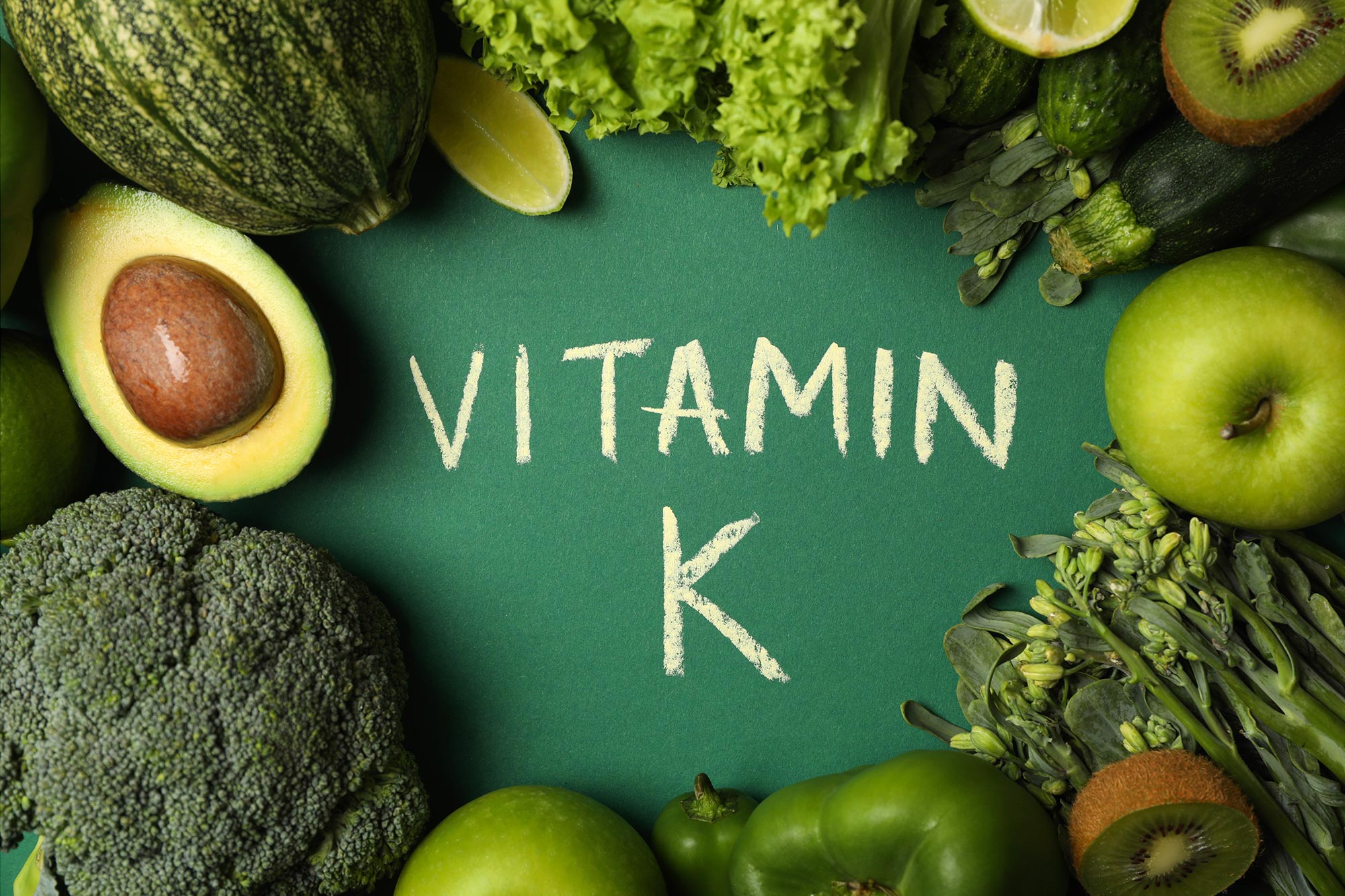
A new Tufts University study finds that not getting enough vitamin K, found in leafy greens like spinach and kale, could harm brain health as we age.
In experiments with mice, a vitamin K-deficient diet led to inflammation, impaired memory, and a drop in the birth of new brain cells in the hippocampus, a region crucial for learning. The researchers aren’t recommending supplements just yet, but they strongly support eating more vegetables to help keep the brain sharp into old age.
Exploring the Link Between Vitamin K and Brain Health
Scientists are continuing to explore how nutrition impacts brain health as we age, and a new study from the Jean Mayer USDA Human Nutrition Research Center on Aging (HNRCA) at Tufts University points to an important role for vitamin K. The research suggests that not getting enough vitamin K may negatively affect cognitive function as people get older.
The study, conducted in middle-aged mice, found that low vitamin K levels were linked to increased inflammation and reduced growth of new brain cells in the hippocampus, a region of the brain involved in learning and memory and known for its ability to generate new neurons.
Vitamin K’s Broader Role in the Body
Vitamin K, found in green leafy vegetables like Brussels sprouts, broccoli, green peas, kale, and spinach, is already known for its role in blood clotting. According to senior author Sarah Booth, director of the HNRCA and professor at Tufts’ Friedman School of Nutrition Science and Policy, past research has also suggested that vitamin K may support cardiovascular and joint health. This new work adds to growing evidence that it could benefit the brain as well.
“There is also research that indicates vitamin K contributes to brain function and that brain function declines during the aging process,” says Tong Zheng, lead author of the study and a research scientist at the HNRCA. “Vitamin K seems to have a protective effect. Our research is trying to understand the underlying mechanism for that effect, so that we might one day be able to target those mechanisms specifically.”
Learning and Memory Affected
In the new research, published in the Journal of Nutrition, researchers conducted a six-month dietary intervention to compare the cognitive performance of mice that were fed a low-vitamin K diet and those receiving a standard diet.
The research team focused on menaquinone-4, a form of vitamin K prevalent in brain tissue, and found significantly lower levels of this nutrient in the brains of the vitamin K-deficient mice. This deficiency is associated with noticeable cognitive decline as measured in a series of behavioral tests designed to assess their learning and memory.
Cognitive Decline Tied to Vitamin K Deficiency
In one such test, the novel object recognition test, the vitamin K-deficient mice showed a diminished ability to distinguish between familiar and new objects, a clear indication of impaired memory. In a second test, to measure spatial learning, the mice were tasked with learning the location of a hidden platform in a pool of water. The vitamin K-deficient mice took considerably longer to learn the task compared to their counterparts with adequate vitamin K levels.
When the researchers then examined the mice brain tissue, they found significant changes within the hippocampus, a brain region crucial for learning and memory. Specifically, they observed a reduced number of proliferating cells in the dentate gyrus of the hippocampus in the vitamin K-deficient mice. This decrease translated to fewer newly generated immature neurons, a process known as neurogenesis. “Neurogenesis is thought to play a critical role in learning and memory, and its impairment could directly contribute to the cognitive decline observed in the study,” Zheng says.
Brain Inflammation Adds to the Damage
Adding another layer of complexity, the researchers also found evidence of increased neuroinflammation in the brains of the vitamin K-deficient mice.
“We found a higher number of activated microglia, which are the major immune cells in the brain,” says Zheng. While microglia play a vital role in maintaining brain health, their overactivation can lead to chronic inflammation, which is increasingly recognized as a key factor in age-related cognitive decline and neurodegenerative diseases.
The Real Takeaway: Diet Still Reigns SupremeBoth Booth and Zheng emphasize that their research doesn’t mean that people should rush out and start taking vitamin K supplements.
“People need to eat a healthy diet,” says Booth. “They need to eat their vegetables.”
Booth noted that the Tufts team works closely with Rush University Medical Center in Chicago, with the Rush team conducting observational studies in humans of brain health and cognition, while Tufts focuses on models to study specific mechanisms.
“We know that a healthy diet works, and that people who don’t eat a healthy diet don’t live as long or do as well cognitively,” says Booth. “By choreographing animal and human studies together, we can do a better job of improving brain health long-term by identifying and targeting specific mechanisms.”
Reference: “Low Vitamin K Intake Impairs Cognition, Neurogenesis, and Elevates Neuroinflammation in C57BL/6 Mice” by Tong Zheng, Shannon Marschall, Jasper Weinberg, Xueyan Fu, Andrew Tarr, Barbara Shukitt-Hale and Sarah L Booth, 28 January 2025, The Journal of Nutrition.
DOI: 10.1016/j.tjnut.2025.01.023
Never miss a breakthrough: Join the SciTechDaily newsletter.
Follow us on Google and Google News.
4 Comments
This article doesn’t distinguish between vitamin K1 and K2. Vitamin K1 is found in green leafy vegetables, as correctly stated at the top of the article. Vitamin K2 is found in animal products, and not in vegetables.
Because the article (and apparently the study authors) cite this study as evidence that we need to consume more vegetables, I assumed that the study must have been on K1.
The I saw this: “The research team focused on menaquinone-4, a form of vitamin K prevalent in brain tissue, and found significantly lower levels of this nutrient in the brains of the vitamin K-deficient mice.”
Huh? Menaquinone-4 is a form of vitamin K2, and thus not derivable from K1 consumption (the body does not convert between K1 and K2). Why are they concluding that lower menaquinone-4 levels in the brain are a result of dietary K1 deficiency. Vitamin K2 deficiency would be the obvious suspect.
What’s going on here?
Did you notice how the advertising suddenly appeared… this is also to increase the sales of a particular product.
Correction. While human cells cannot convert K1 to menaquinone-4 and other K2 forms, bacteria in the gut can! So vegans needn’t worry. Still, it seems odd that the only vitamin K sources mentioned in the article are K1 sources, and no K2 sources are mentioned, especially considering that consuming the latter is a more sure and efficient way to obtain it menaquinone-4.
K2 as MK-7 needs D3 for the body to best utilize it. They work in conjunction with each other to enable calcium to be directed to the bones and teeth instead of to the vascular system where calcium can build up and possibly eventually causing a “hardening of the arteries”.