
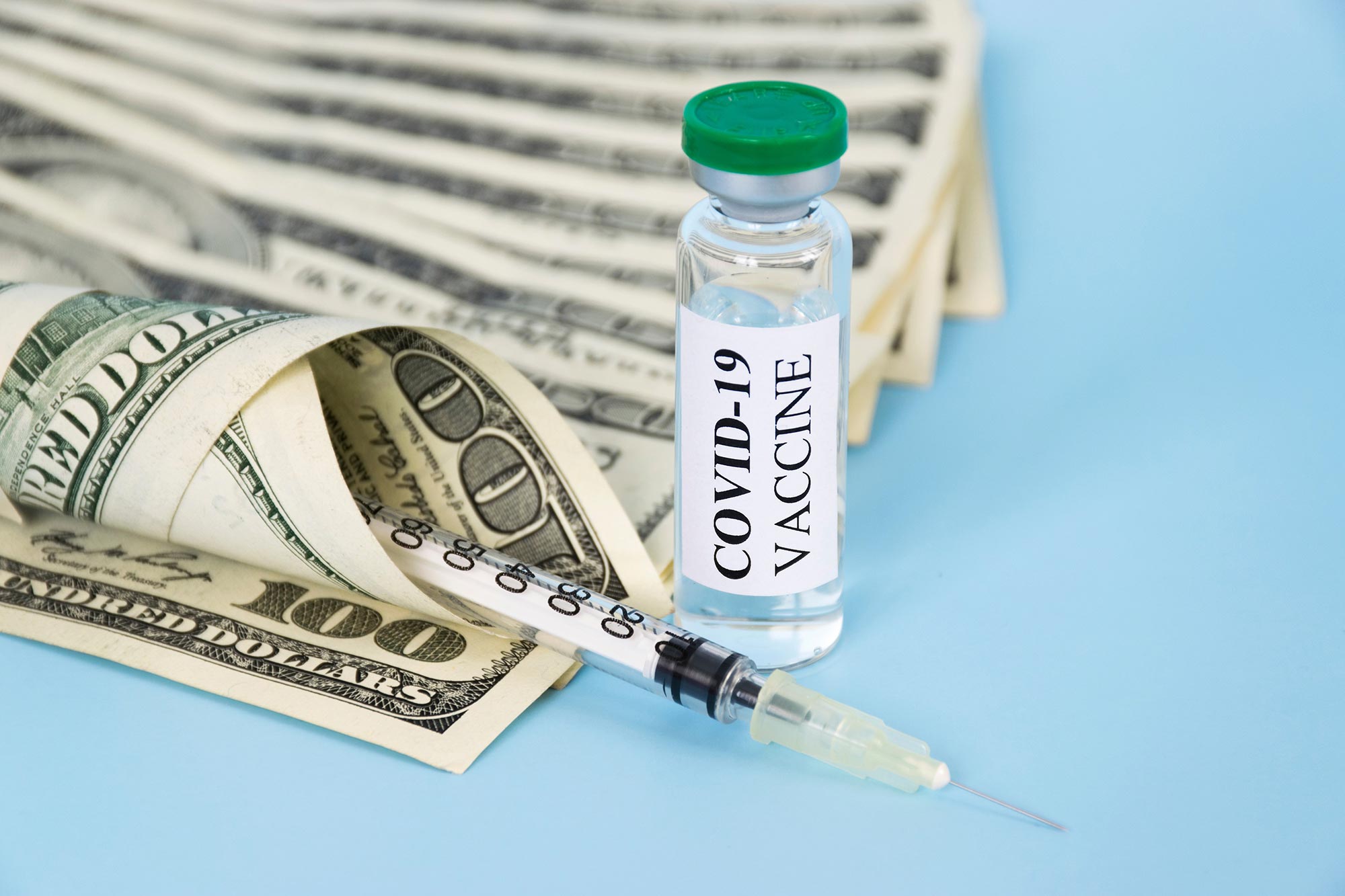
When COVID-19 first emerged, the U.S., under President Donald Trump, made an urgent bet on vaccines — and it paid off handsomely.
A new study shows that the nationwide vaccination effort quickly proved not just lifesaving but economically sound, saving more in medical and productivity costs than it spent. Even younger adults, typically at lower risk, benefited cost-wise when broader societal impacts were included.
A Bold Start to the COVID-19 Vaccine Effort
Five years ago, as COVID-19 rapidly spread across the globe, volunteers stepped up to join the first clinical trial of a vaccine designed to fight the new virus.
Within a year, more than 66 million American adults had received at least one dose of a COVID-19 vaccine, free of charge.
A Strategy That Paid Off
Now, new research highlights just how valuable that early national investment was. A study led by University of Michigan researchers, published in the journal Vaccine, found that the U.S. vaccine rollout paid for itself within the first year.
The reason? Vaccination significantly reduced the number of people who became seriously ill or died from COVID-19. As a result, the country ended up saving more money than it spent on the vaccine effort.
Analyzing Medical and Economic Savings
The analysis looked beyond just hospital bills. It factored in the costs of testing and treatment, care for long COVID and rare vaccine side effects, and lost productivity, such as missed work due to illness or death.
Even without counting lost productivity, the national COVID-19 vaccine effort saved money for most adult age groups purely by avoiding medical costs, the study concludes. Overall, among all adults over age 40, the nation saved more in avoided medical costs than it spent on the vaccine effort.
Even among adults aged 18 to 39, who are less likely to get seriously ill from COVID-19, the vaccination effort cost slightly more than the total medical costs avoided, but was still cost-effective by national standards. When lost productivity is included, vaccinating these younger adults was cost-saving.
CDC Collaboration and Broader Validation
The U-M team that performed the study has also presented findings about the cost-effectiveness of several vaccines to meetings of the Centers for Disease Control and Prevention’s Advisory Committee for Immunization Practices, which creates recommendations for vaccine use.
“All in all, we can safely say that this was a prudent investment for the American people, using a really conservative analysis,” said Lisa Prosser, Ph.D., first author of the new study and professor at the U-M Medical School and School of Public Health. “From a broader societal economic perspective, and from the perspective of medical care costs, the federal government’s decision to accelerate vaccine testing, buy large quantities of vaccine, and support the cost of vaccination in many settings was wise.”
Savings Likely Underestimated
Prosser and senior author David Hutton, Ph.D. of the U-M SPH worked to develop and test the model, which is based on research findings by many other teams that have studied aspects of COVID-19.
The model includes everything from the cost of the vaccine itself, to home or lab tests for the virus, to the likelihood of suffering any level of COVD-19 illness or vaccine reaction, to the typical cost of receiving care at any level of illness, to the number of days of work lost for different levels of illness. The researchers included post-COVID conditions, also called Long COVID or PASC for Post-Acute Sequelae of COVID-19.
The model uses conservative estimates, so the size of the savings may actually be even larger than the study reports, Prosser notes.
For instance, it does not include the lost productivity of people who took time off work to care for a sick adult family member, patients’ out-of-pocket costs for treatment, or transportation to get to medical care. Nor does It include the cost of the basic laboratory science funded by the federal government over two decades that laid the groundwork for the two mRNA vaccines made by Pfizer and Moderna.
Looking Forward: Future Models and Vaccines
Prosser, Hutton and their colleagues have done additional economic modeling of waves of vaccination after 2021 in collaboration with CDC. They hope to create a model for the updated version of the vaccines that are expected to roll out this coming fall, but this will depend on CDC funding and data.
Prosser notes that as of his winter, widespread vaccination and improved treatment have decreased the death toll from COVID-19, and the number of cases severe enough to need emergency or hospital care.
Still, between 800 and 1,000 people have died of COVID-19 every week of 2025 for which full data are available, and about 1% of all emergency department visits in recent months have been for illness diagnosed as COVID-19.
She notes that the current CDC recommendation is for everyone over the age of 6 months to get at least one dose of one of the three updated vaccines that became available in September 2023 and are now updated annually. So far, about 30 million have done so, including about 30% of people age 65 and older, who are at the highest risk of severe COVID-19 if they become infected.
For people who are age 65 and older, or immunocompromised because of a health condition or treatment, the CDC recommends a second dose of the current vaccine six months after the first.
That means that people who got the updated vaccine soon after it came out in September should now go get a second dose.
Reference: “The cost-effectiveness of vaccination against COVID-19 illness during the initial year of vaccination” by Lisa A. Prosser, Janamarie Perroud, Grace S. Chung, Acham Gebremariam, Cara B. Janusz, Kerra Mercon, Angela M. Rose, Anton L.V. Avanceña, Ellen Kim DeLuca and David W. Hutton, 21 January 2025, Vaccine.
DOI: 10.1016/j.vaccine.2025.126725
In addition to Prosser and Hutton, the study’s authors are Janamarie Perroud, Grace S. Chung, Acham Gebremariam, Cara B. Janusz, Kerra Mercon, Angela M. Rose, Anton L.V. Avanceña and Ellen Kim DeLuca. All the authors are or were formerly affiliated with the U-M School of Public Health or the Susan B. Meister Child Health and Evaluation Research Center (CHEAR), which is based in the U-M Medical School’s Department of Pediatrics.
The study was funded by CHEAR.
Never miss a breakthrough: Join the SciTechDaily newsletter.
Follow us on Google and Google News.
5 Comments
Agitprop.
Where do these articles come from? Even AI chatbots, which aren’t exactly known for their nonmainstream views, now acknowledge that the vaccines caused at least as much harm as they prevented.
Pfizer was laughing all the way to the bank.
Those that died from the vaccines didn’t get to laugh all the way to their funeral.
I’ll give them this, they’ll publish anything.
“When COVID-19 first emerged, the U.S., under President Donald Trump, made an urgent bet on vaccines — and it paid off handsomely.”
I thank God for Great Leader and Noble Helmsman President Trump who guided American researchers on their quest through 18 months of the Nation’s ignorance and despair to save American Health through his guidance to them in developing vaccines to lessen the social impact of the virus, Covid-19.
Hang on; the first vaccine for Covid-19 was developed by researchers at Oxford University, UK. And how come that Cuba developed three vaccines?