
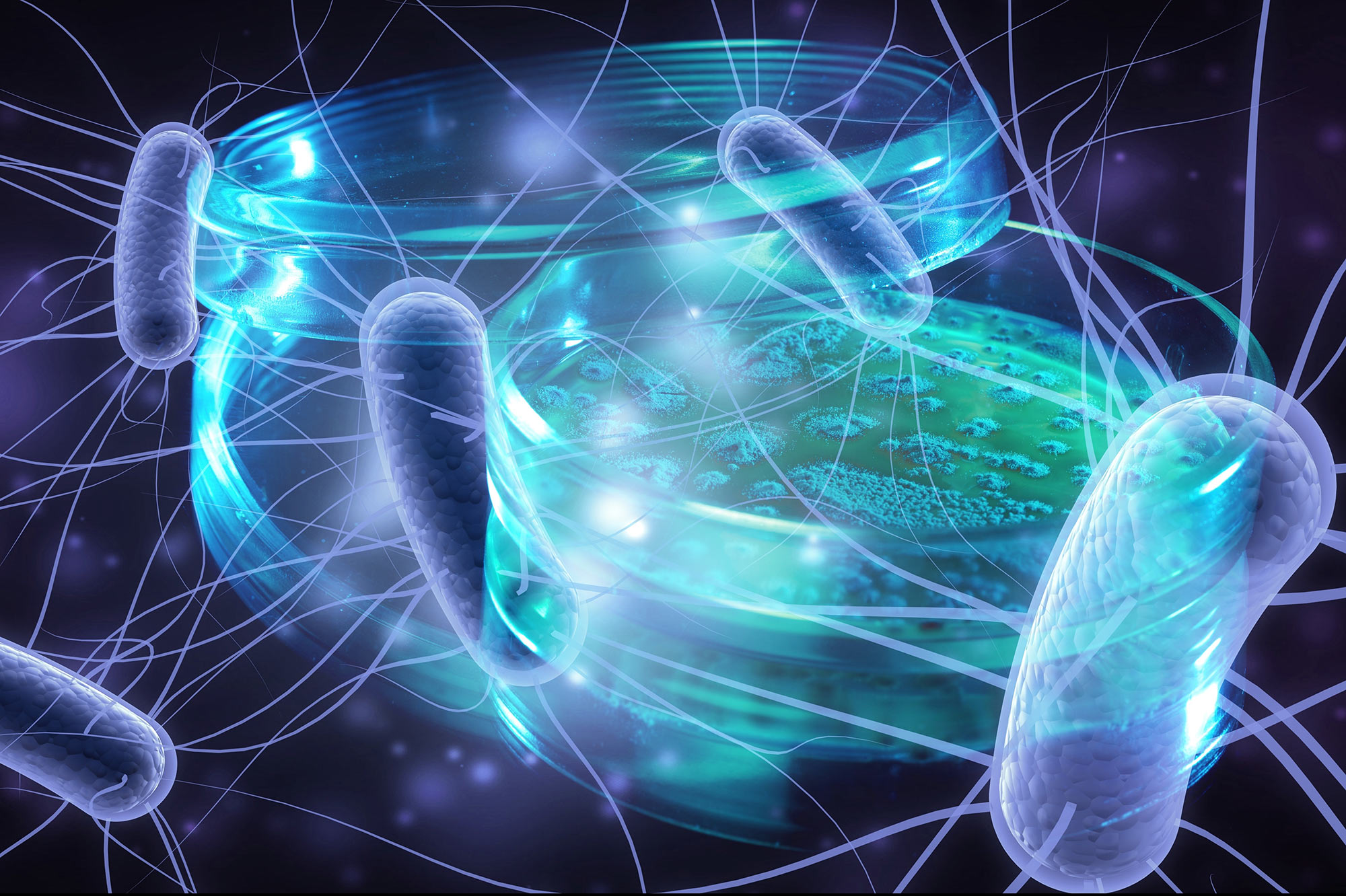
Scientists used patterned plastic surfaces to trick bacteria into halting their own spread. These designs may prevent infections without the need for antimicrobial drugs.
Scientists at the University of Nottingham have identified surface patterns that significantly reduce the ability of bacteria to multiply on plastics. This discovery could help prevent infections on medical devices such as catheters.
The study, published in Nature Communications, found that when bacterial cells come into contact with surfaces featuring patterned grooves, they lose their ability to form biofilms. Biofilms are slimy, surface-attached structures that protect bacteria from the body’s natural immune defenses. Disrupting biofilm formation means infections can be stopped before they take hold, while also triggering the immune system to eliminate any remaining bacteria.
The research was led by Professor Paul Williams from the School of Life Sciences, in collaboration with Professor Morgan Alexander from the School of Pharmacy and colleagues from the School of Computer Science at the University of Nottingham, as well as Jan DeBoer in the Netherlands. The work was supported by the EPSRC and the Wellcome Trust.
The problem with plastic medical devices
Many medical implants, such as catheters and breathing tubes, are made from plastic and are commonly used in hospitals. Once bacteria attach to these plastic surfaces and form a biofilm, they become very difficult to treat with antibiotics.
To address this problem, researchers have focused on reducing the chances of bacterial attachment by adding antibiotics and other antimicrobial agents to the plastic materials.
In this new study, the team describes how they identified patterns that prevented biofilm formation by screening over 2000 designs made in different plastics including polyurethane, which is commonly used to make medical devices.
A surface trick to stop bacteria
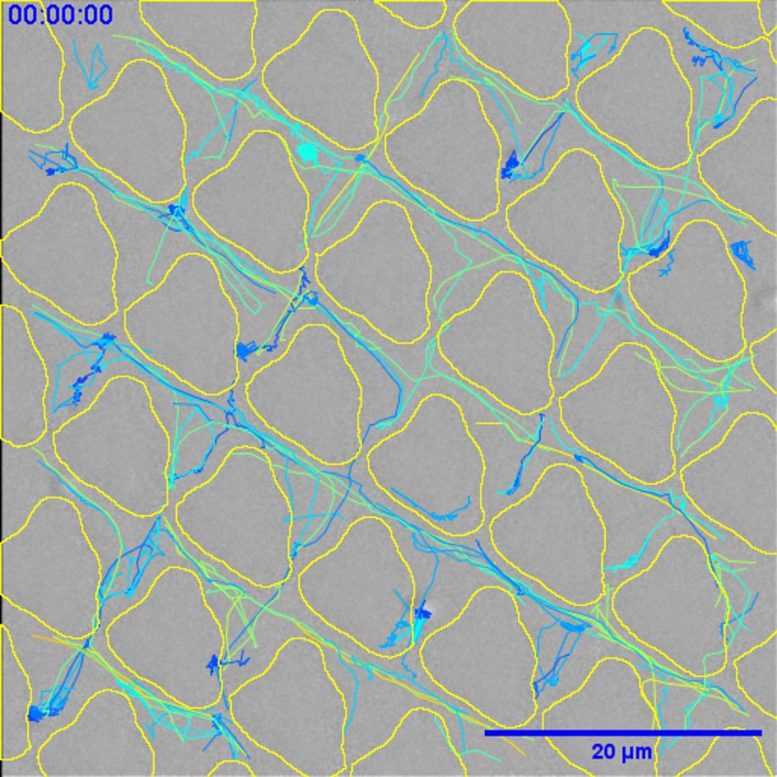
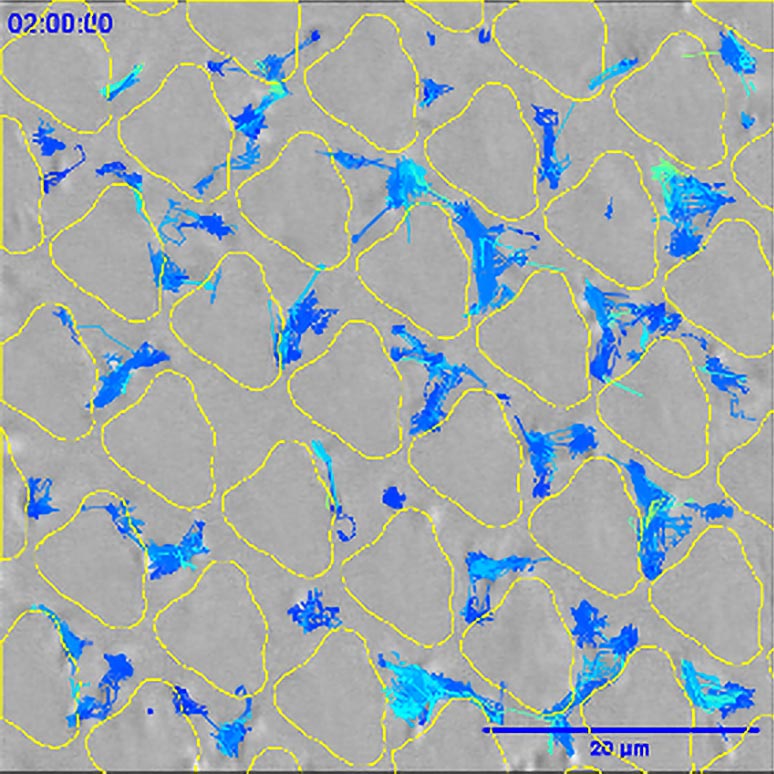
On the best biofilm inhibitory pattern, they discovered that small crevices in the raised patterns trapped the bacterial cells, tricking them into producing a lubricant which stops them sticking to the plastic surface. This in turn blocks biofilm formation and makes it easier for the host’s immune defense cells to clear the infecting bacteria and so prevent infection.
Professor Williams, an expert in Molecular Microbiology, said: “Previous research has shown that introducing antibiotics to medical devices has flaws, such as driving the development of antibiotic resistance. Our study took this idea one step further as we wanted to find out if we could create a simple landscape on a catheter, made of the same material that bacteria didn’t like and couldn’t form biofilms on.
“We tested different species of bacteria on over 2000 different shapes. We had to use machine learning to figure out which of these shapes was best at preventing biofilms forming. We then looked at why certain bacteria didn’t like this surface.
“Our findings could help to reduce the high number of infections in healthcare settings associated with medical devices. Not only could this method prevent bacteria sticking but also activate the body’s immune system to kill any bacteria that have stuck to the surface.”
Professor Alexander, whose research focuses on the control of cells with polymer surfaces, said, “Using physically patterned surfaces has the advantage over coating approaches that it can be applied to existing device materials, reducing the barrier to commercial application. Our discovery could save the NHS a lot of money.”
The researchers hope to expand this in current UK-RI funding to practical medical devices in collaboration with medical device companies.
Reference: “Combinatorial discovery of microtopographical landscapes that resist biofilm formation through quorum sensing mediated autolubrication” by Manuel Romero, Jeni Luckett, Jean-Frédéric Dubern, Grazziela P. Figueredo, Elizabeth Ison, Alessandro M. Carabelli, David J. Scurr, Andrew L. Hook, Lisa Kammerling, Ana C. da Silva, Xuan Xue, Chester Blackburn, Aurélie Carlier, Aliaksei Vasilevich, Phani K. Sudarsanam, Steven Vermeulen, David A. Winkler, Amir M. Ghaemmaghami, Jan de Boer, Morgan R. Alexander and Paul Williams, 18 June 2025, Nature Communications.
DOI: 10.1038/s41467-025-60567-x
Never miss a breakthrough: Join the SciTechDaily newsletter.
Follow us on Google and Google News.