
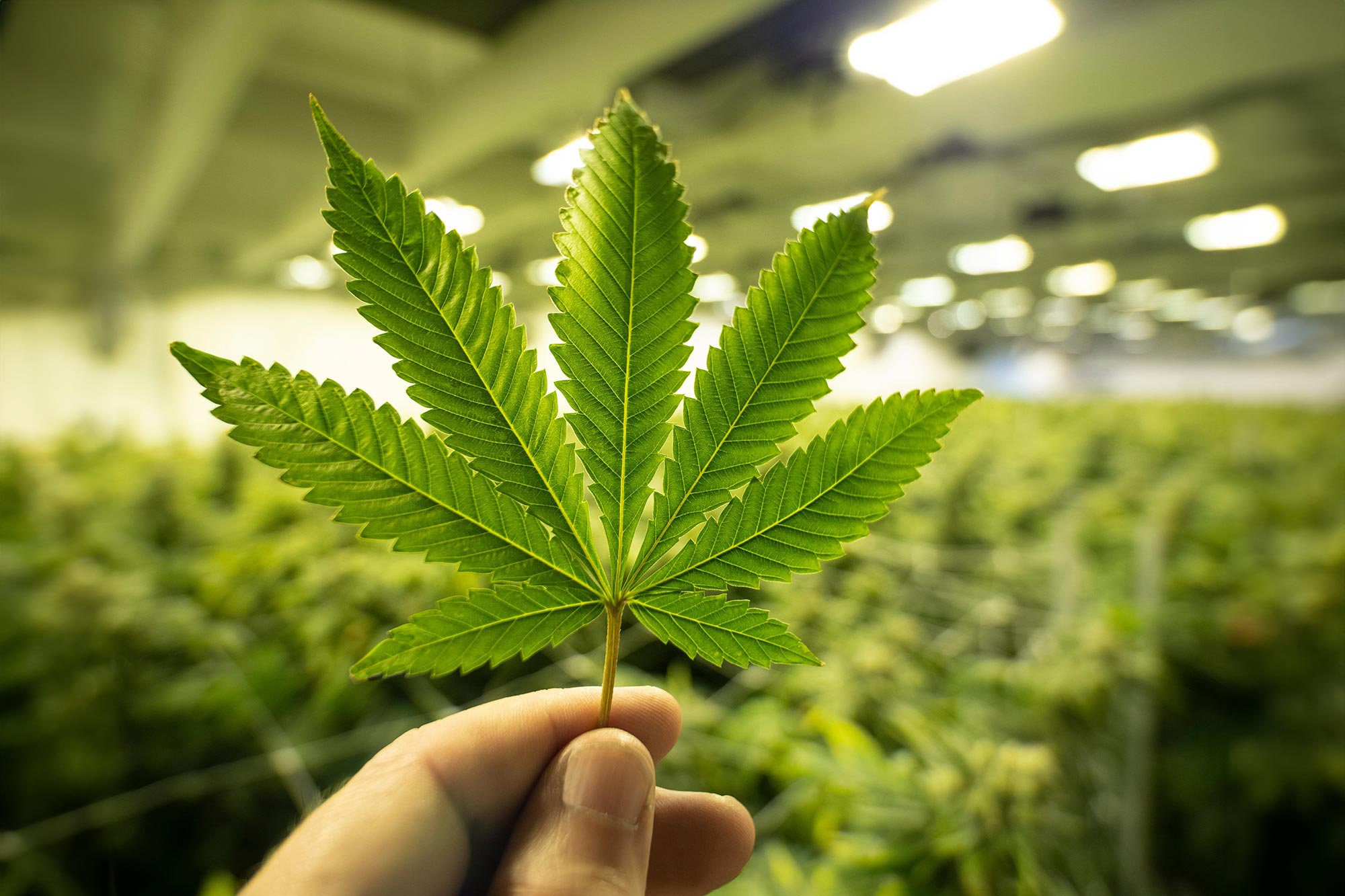
Reconstructed ancient enzymes reveal how cannabis evolved specialized cannabinoid production while offering new tools for biotechnology and medicine.
Where do familiar cannabis compounds such as THC, CBD, and CBC come from? Scientists at Wageningen University & Research have shown for the first time, through direct experiments, how cannabis evolved the ability to make these cannabinoids. Along the way, they also identified enzymes that could be useful for producing cannabinoids through biotechnology for medical use.
The findings were published in the journal Plant Biotechnology Journal. In the study, the researchers recreated enzymes that no longer exist but were active millions of years ago in early relatives of today’s cannabis plants. Enzymes are central to cannabinoid production in cannabis, as they drive the chemical steps that form these bioactive compounds, many of which have recognized medicinal potential
From generalists to specialists
In present-day cannabis plants, separate enzymes are responsible for producing THC, CBD, and CBC, with each enzyme tuned to make a specific compound. The Wageningen team found that this specialization developed over time. The earliest ancestor of these enzymes could generate several cannabinoids at once. Later in cannabis evolution, gene duplications allowed these enzymes to diverge, eventually leading to distinct enzymes that each focused on producing a single cannabinoid.
To uncover this history, the researchers applied a method called ancestral sequence reconstruction. By comparing DNA from modern plants, the approach allows scientists to estimate what ancient enzymes looked like millions of years ago. These recreated ‘ancestral enzymes’ were produced in the laboratory and tested experimentally. The results provide the first direct evidence that cannabinoid biosynthesis, including the production of THC, arose in a relatively recent ancestor of cannabis and became progressively more specialized over evolutionary time.
Fundamental insight and new opportunities
The study shows how fundamental research into plant DNA can deepen our understanding of evolution while also enabling innovative applications. The reconstructed ancestral enzymes proved to be easier to produce in microorganisms, such as yeast cells, than their modern counterparts. This is significant, as cannabinoids are increasingly produced using biotechnological approaches.
“What once seemed evolutionarily ‘unfinished’ turns out to be highly useful,” says WUR researcher Robin van Velzen, who conducted the study together with his colleague Cloé Villard. “These ancestral enzymes are more robust and flexible than their descendants, which makes them very attractive starting points for new applications in biotechnology and pharmaceutical research.”
As an example, Van Velzen points to one of the reconstructed ‘evolutionary intermediates’ that produces CBC very specifically – a cannabinoid known for its anti-inflammatory and analgesic properties. “At present, there is no cannabis plant with a naturally high CBC content. Introducing this enzyme into a cannabis plant could therefore lead to innovative medicinal varieties.”
Reference: “Resurrected Ancestral Cannabis Enzymes Unveil the Origin and Functional Evolution of Cannabinoid Synthases” by Cloé Villard, Idil Baser, Arjen C. van de Peppel, Katarina Cankar, M. Eric Schranz and Robin van Velzen, 26 December 2025, Plant Biotechnology Journal.
DOI: 10.1111/pbi.70475
Never miss a breakthrough: Join the SciTechDaily newsletter.
Follow us on Google and Google News.
4 Comments
If this happened through “evolution” the scientists have failed to explain why.
According to scientific consensus: “Evolution serves to explain how species change over time through processes like natural selection and genetic variation, leading to adaptations that enhance survival and reproduction in changing environments.”
So what advantage did these cannabis plants get from “evolving” to produce these enzymes separately over millions of years?
There is zero proof, explanation of how these enzymes benefit the plant itself, survival, or reproduction.
Just another “random” evolution for no apparent reason but coincidentally worked out?
Cold tolerance, avoid repeat predation by causing forgetfulness, increase speed of swallowing to keep seed intact?
These are nice theories but you are just literally throwing out things with no evidence or data to prove them.
This whole article and you cant tell us where they came from? I heard China, but who knows if that is true since you failed to include that information in the article.