
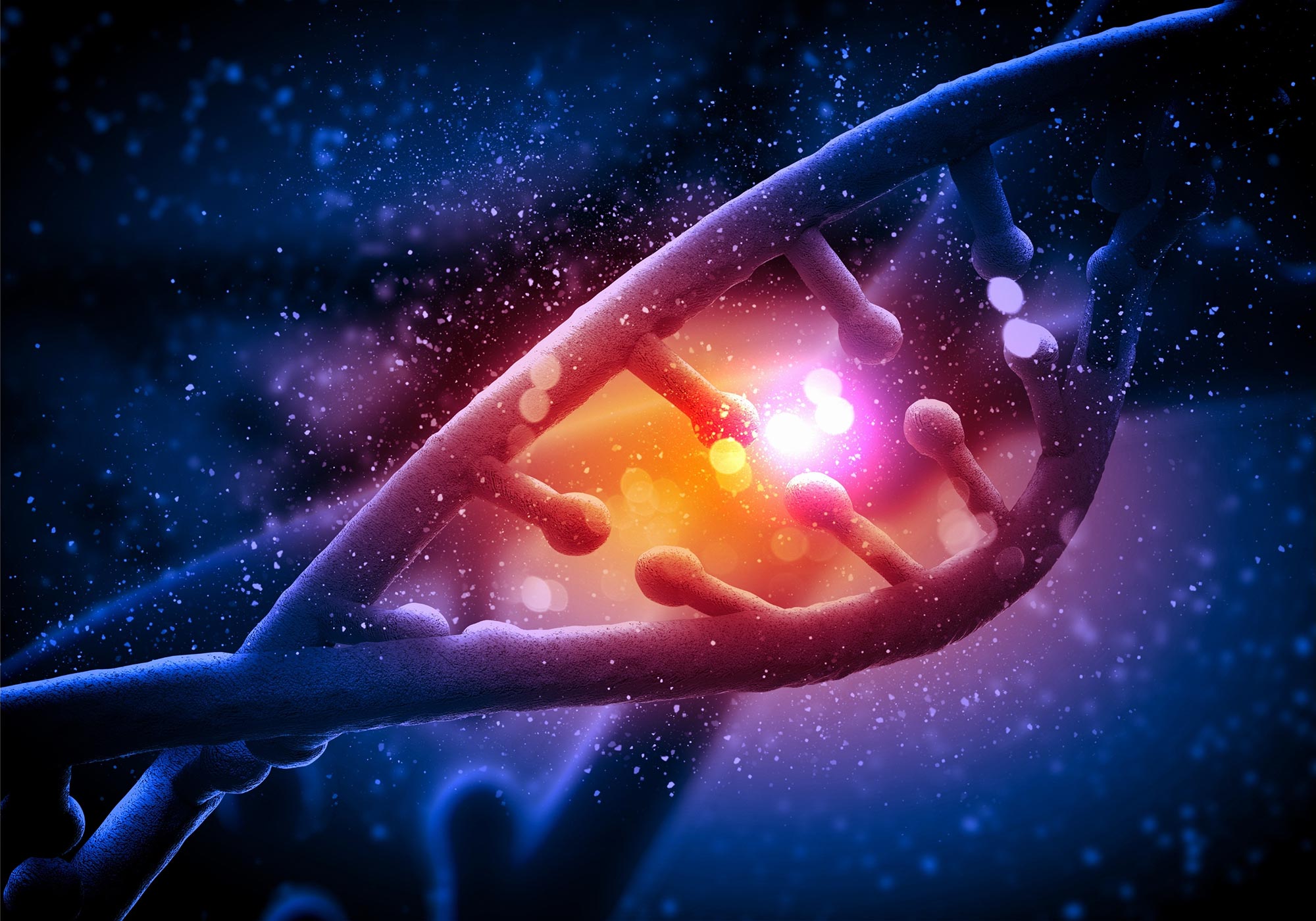
An archaeon reads the same codon in two different ways, overturning a doctrine that has stood for 60 years.
Living organisms usually read the DNA code in a very strict and predictable way. Every codon, which is a set of three nucleotides in a gene, corresponds to one specific amino acid that becomes part of a growing protein.
Researchers at the University of California, Berkeley have now discovered that one type of microorganism can tolerate uncertainty in this process. Their work challenges a long-held belief that the genetic code must always be interpreted with complete precision.
This microbe, a methane-producing member of the Archaea, reads one particular three-letter sequence in two different ways. Although the codon normally serves as a stop signal that ends protein production, the organism sometimes treats it as a cue to continue building the protein instead. As a result, it forms two versions of the protein, and the choice appears partly influenced by environmental conditions. The species, Methanosarcina acetivorans, remains healthy while operating with this flexible decoding system, showing that life can function with a genetic code that is slightly imperfect.
Scientists think this ambiguity may have evolved so the organism could add a rare amino acid called pyrrolysine to an enzyme that helps it break down methylamine, a common environmental compound found even in the human gut.
Ambiguity as an Advantage
“Objectively, ambiguity in the genetic code should be deleterious; you end up generating a random pool of proteins,” said Dipti Nayak, a UC Berkeley assistant professor of molecular and cell biology and senior author of a paper describing the findings published November 6 in the journal Proceedings of the National Academy of Sciences. “But biological systems are more ambiguous than we give them credit to be and that ambiguity is actually a feature — it’s not a bug.”
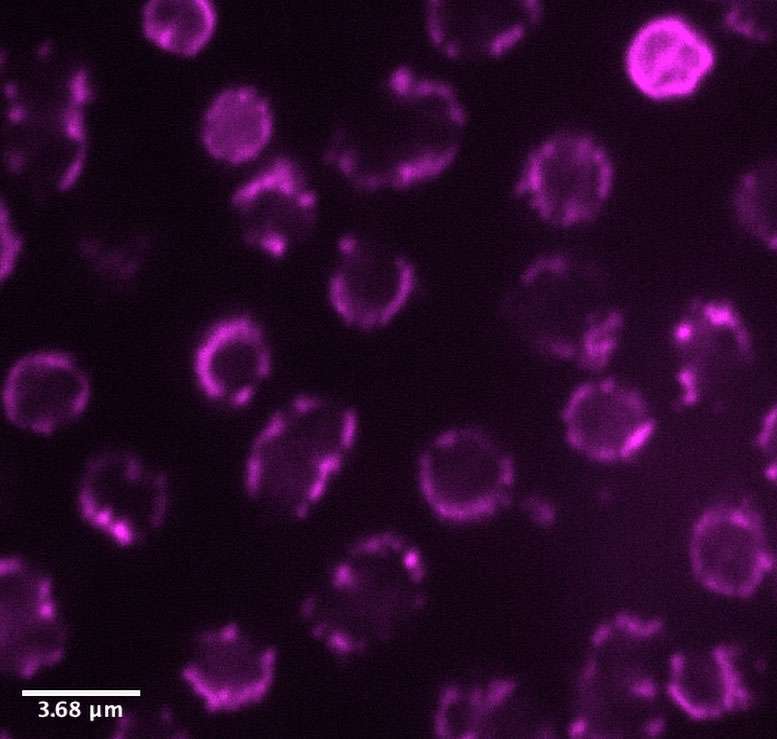
Archaea that eat methylamines, and bacteria that may have acquired that ability too, play an important role in the human body. In the liver, metabolites released by red meat are turned into trimethylamine N-oxide, which is associated with cardiovascular disease. We rely upon these microbes to remove those methylamines before they reach the liver.
The findings have implications for future disease therapies. Some researchers have speculated that introducing some imprecision into the translation machinery might help treat diseases caused by a premature stop codon in important genes, which produces nonfunctional proteins. That includes about 10% of all genetic diseases, including cystic fibrosis and Duchenne muscular dystrophy. Making a stop codon a bit leaky could allow enough of the normal protein to be produced to alleviate symptoms.
The genetic cipher
The DNA in the genome is initially transcribed into RNA, and that genetic code is then read by cellular machinery to produce proteins. The nucleic acids that comprise RNA come in four varieties — adenine (A), cytosine (C), guanine (G) and uracil (U). In most organisms investigated to date, groups of three nucleic acids or codons are either assigned to a single amino acid or a so-called stop codon, which terminates synthesis of that protein. When the RNA gets translated into a string of amino acids, the machinery always abides by this one-to-one association.
Not all organisms decode RNA in the same way, however. Some assign a different amino acid to a given codon, some have more than the standard 20 amino acids per organism, and codons are redundant — several can code for the same amino acid. But uniformly across the tree of life, each codon has only one meaning — no ifs, ands or buts.
“It’s essentially like a cipher,” Nayak said. “You’re taking something in one language and translating it into another, nucleotides to amino acids.”
A Surprise in the Archaea
Scientists have known for a long time that many members of the Archaea produce pyrrolysine, giving them 21 amino acid options instead of the usual 20 from which to make proteins. It has advantages, Nayak said.
“Now that you have a new amino acid, the world’s your oyster,” she said. “You can start playing around with the much larger code. It’s like adding one more letter to the alphabet.”
But these organisms were thought to have merely changed the interpretation of the UAG stop codon to code for pyrrolysine instead.
In the new study, Nayak and former graduate student Katie Shalvarjian surveyed the Archaea and found pyrrolysine production in many lineages.
“We found that the machinery required to create pyrrolysine is widespread in the Archaea, especially amongst these methanogenic archaea that consume methylated amines,” said Shalvarjian, now a postdoctoral researcher at Lawrence Livermore National Laboratory.
The Fork in the Code
She was curious, however, how having 21 instead of 20 amino acids affects these organisms and their physiology. While investigating the methanogen’s genetic control of pyrrolysine production, she noticed that the UAG codon was not always interpreted as pyrrolysine (Pyl).
“The UAG codon is like a fork in the road, where it can be interpreted either as a stop codon or as a pyrrolysine residue,” Shalvarjian said. “We think whether or not a protein exists primarily in its elongated or in its truncated form might form a regulatory cue for the cell.”
Nayak and Shalvarjian looked for sequence or structure dependent cues that might affect interpretation of the UAG codon, but found none.
“The methanogens have not recoded UAG, nor have they added any new factors to make it deterministic,” Nayak said. “They’re flip-flopping back and forth between whether they should call this a stop or whether they should keep going by adding this new amino acid. They cannot decide. They just do both, and they seem to be fine by making this random choice.”
A Cellular Balancing Act
Preliminary evidence suggests that the supply of pyrrolysine in the cell may be the determining factor. If it’s flooding the cell, it may bias the interpretation of UAG more toward incorporating the amino acid into a protein. There are between 200 and 300 genes in this organism that contain the UAG codon and thus have the ability to produce a protein containing pyrrolysine. With little of the amino acid around, however, UAG is interpreted as a stop codon, yielding a different protein that may or may not be functional, depending on the context.
“This really opens the door to finding interesting ways to control how cells interpret stop codons,” Nayak said.
Reference: “Methanogenic archaea encoding Pyrrolysine maintain ambiguous amber codon usage” by Katie E. Shalvarjian, Grayson L. Chadwick, Paloma I. Pérez, Philip H. Woods, Victoria J. Orphan and Dipti D. Nayak, 6 November 2025, Proceedings of the National Academy of Sciences.
DOI: 10.1073/pnas.2517473122
The work was funded by the Searle Scholars Program, a Rose Hills Innovator Grant, a Beckman Young Investigator Award, an Alfred P. Sloan Research Fellowship, a Simons Foundation Early Career Investigator in Marine Microbial Ecology and Evolution Award, and a Packard Fellowship in Science and Engineering. Nayak is also a Chan-Zuckerberg Biohub-San Francisco investigator.
Other co-authors are Grayson Chadwick and Paloma Pérez of UC Berkeley and Philip Woods and Victoria Orphan of the California Institute of Technology.
Never miss a breakthrough: Join the SciTechDaily newsletter.
Follow us on Google and Google News.