
Scientists found that sweeteners can behave unexpectedly inside a simulated gut, especially when combined with common medications.
Cambridge researchers have found that many widely used sweeteners can directly slow or alter the growth of bacteria found in the human gut. The strongest effect appeared when isosteviol, a sweetener used in foods and beverages, was combined with the antidepressant duloxetine.
In laboratory experiments, that combination sharply reduced two important bacterial species associated with digestive health and blood sugar regulation. It also produced changes that could influence inflammation and immune activity.
The researchers caution that the findings come from controlled laboratory tests, not studies involving people. More work will be needed to determine whether the same interactions occur inside the human body and whether they have meaningful health consequences.
Sweeteners May Not Be Biologically Inactive
Sweeteners are found in a wide range of everyday products, including soft drinks, candy, desserts, snacks, cereals, and some medications. They are often promoted as alternatives that provide sweetness with less sugar or fewer calories.
However, growing evidence has linked the consumption of some sweeteners with conditions including type 2 diabetes, obesity, and cancer. These associations do not necessarily prove that sweeteners directly cause those diseases, but they have raised questions about how the compounds behave inside the body.
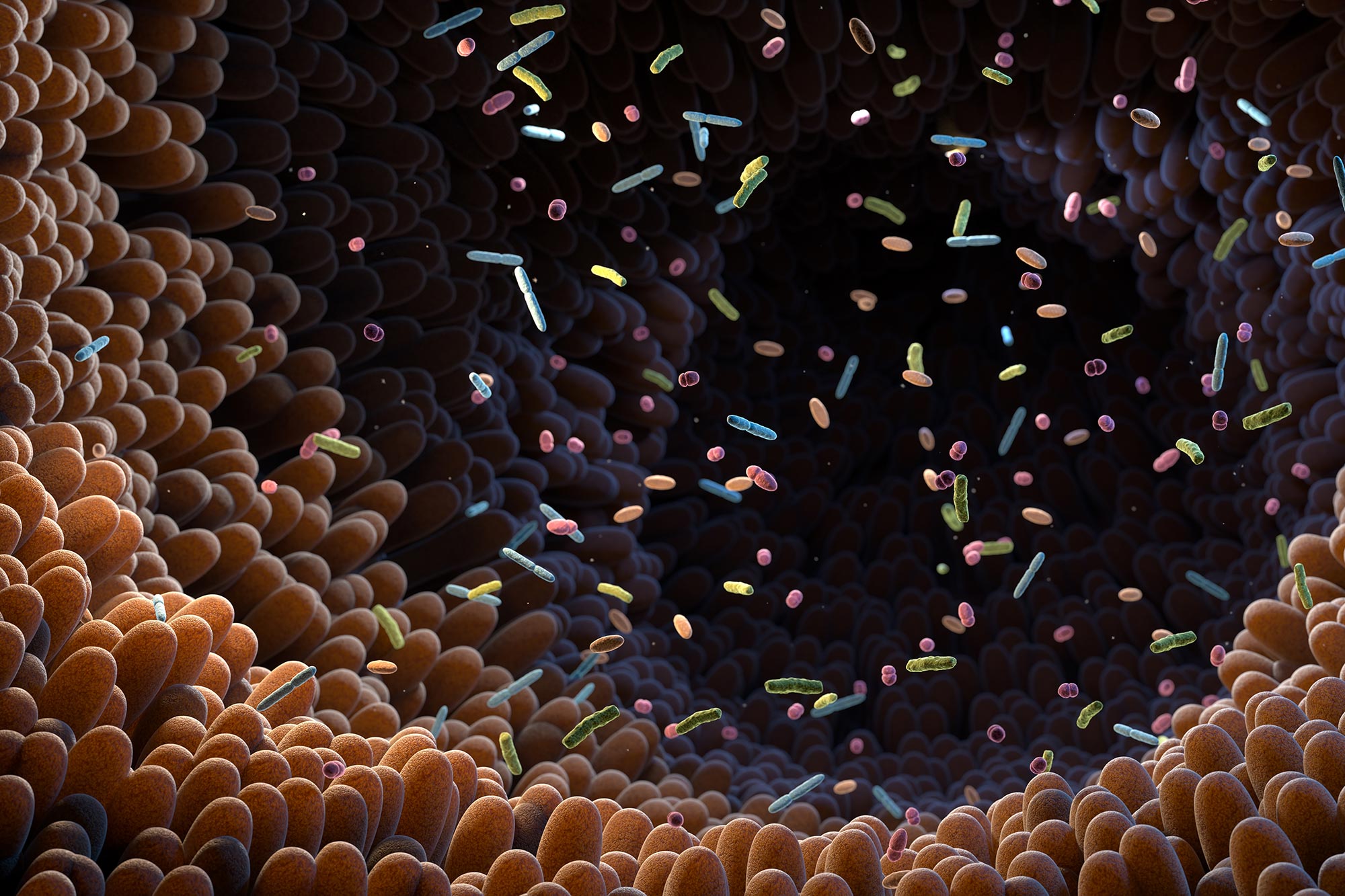
One possible link is the gut microbiome, the enormous community of bacteria and other microorganisms living throughout the digestive tract. These microbes help break down food, produce useful compounds, support the intestinal barrier, and communicate with the immune system.
Despite the widespread use of sweeteners, relatively few studies have examined whether they interact directly with individual gut bacteria.
Professor Kiran Patil from the Medical Research Council (MRC) Toxicology Unit at the University of Cambridge said: “Most of what we know about the potential impact of sweeteners on our health comes from animal research or from population studies. While these studies have indicated involvement of the microbiome in mediating the effect of sweeteners, it’s difficult to know how sweeteners act in the body – is it through direct interactions with our gut bacteria?”
“Answering this is further complicated by the fact that we rarely ever take sweeteners by themselves – we take them with drinks, in snacks, or even in medication to mask bitterness,” added Dr. Sonja Blasche, a lead author of the study, also the MRC Toxicology Unit.
Researchers Tested 39 Common Sweeteners
For the study, published in Molecular Systems Biology, Dr. Blasche and her colleagues investigated how artificial and low-calorie sweeteners affect gut bacteria under laboratory conditions. They also examined whether those effects changed when the sweeteners were mixed with other substances commonly consumed at the same time.
The team grew 25 bacterial species individually. The collection included microbes considered beneficial, neutral, or potentially harmful.
Each bacterial culture was then exposed to 39 commercially used sweeteners, including both natural and artificial varieties. The researchers measured whether the bacteria continued multiplying normally, grew more slowly, or stopped growing.
About three-quarters of the sweeteners altered the growth of at least one bacterial species. Some significantly slowed or completely halted the growth of microbes associated with a healthy gut.
More Than 100 Hidden Interactions
People rarely consume sweeteners in isolation, so the scientists next combined them with other common compounds. These included caffeine, vanillin (vanilla extract), advantame (an artificial sweetener), and eight widely used medications.
The results revealed more than 100 interactions in which a sweetener affected bacteria differently when another compound was present. In 34 cases, the second substance strengthened the sweetener’s effect. In 68 cases, it weakened the effect.
This suggests that the biological impact of a sweetener may depend partly on what is eaten, drunk, or taken with it.
One Sweetener and Antidepressant Stood Out
The most dramatic response involved isosteviol and duloxetine. Isosteviol is used in the food and beverage industry, while duloxetine is prescribed for depression and several other conditions.
Together, the two compounds strongly suppressed Roseburia intestinalis and Parabacteroides merdae. Both bacteria are associated with functions that help maintain digestive and metabolic health.
Duloxetine is also widely prescribed. In the US in 2023, more than 4.2 million patients received the medication.
Studying bacteria individually can reveal direct effects, but the gut is a crowded ecosystem in which many species constantly interact. A change affecting one organism may therefore spread through the wider microbial community.
To better approximate those conditions, the researchers built a synthetic community containing all 25 bacterial species. They allowed the community to develop and then exposed it to different combinations of sweeteners and medications.
The scientists tracked which species became more or less abundant and whether the diversity of the community changed.
Gut Microbial Diversity Declined
The combination of isosteviol and duloxetine reduced microbial diversity in the simplified gut community. Greater microbiome diversity is generally considered a feature of a healthy and resilient digestive system, although the precise meaning of diversity can vary from person to person.
The combination also changed the balance of the community, allowing some bacterial species to thrive while others declined.
Additional experiments found that the altered microbial community became more toxic to certain host cells. It also interfered with cells involved in inflammation and immune responses.
These findings suggest that interactions between sweeteners and medications may influence more than bacterial growth alone. They could potentially affect how microbial communities communicate with the body.
Dr. Blasche said: “Sweeteners are often marketed as metabolically neutral, but our study challenges this idea. We found that they can directly affect gut bacteria, particularly when mixed with other compounds such as medication and food additives. These common combinations could have unintended effects on our gut microbiome.”
Human Health Effects Remain Unclear
The researchers emphasize that the experiments were conducted in laboratory cultures rather than in people. The human digestive system is much more complex and includes hundreds of microbial species, changing chemical conditions, food components, and interactions with organs and immune cells.
The concentrations of sweeteners and medications reaching the gut may also differ from those used in laboratory testing. As a result, the study cannot show that consuming a particular sweetener while taking duloxetine will cause harm.
Instead, the findings identify combinations that deserve closer investigation in animals and humans.
Professor Patil, the study’s senior author, added: “Our study suggests that artificial sweeteners don’t just pass through the body passively — they can interact with gut microbes, and these effects can be amplified or altered by other substances like medications. These findings can help guide new studies towards understanding how sweeteners might influence health in unexpected ways.”
Reference: “Common xenobiotics modulate gut microbial responses to low‑calorie sweeteners in vitro” by Sonja Blasche, Vinita Periwal, Nonantzin Beristain Covarrubias, Anna Lindell, Indra Roux, Stephan Kamrad, Simone Mozzachiodi, Rob Bradley, Hilal Ozgur, Bini Ramachandran, Vladimir Benes and Kiran Raosaheb Patil, 25 June 2026, Molecular Systems Biology.
DOI: 10.1038/s44320-026-00225-6
The research was funded by the European Union’s Horizon 2020 program and the UK Medical Research Council.
Never miss a breakthrough: Join the SciTechDaily newsletter.
Follow us on Google and Google News.