
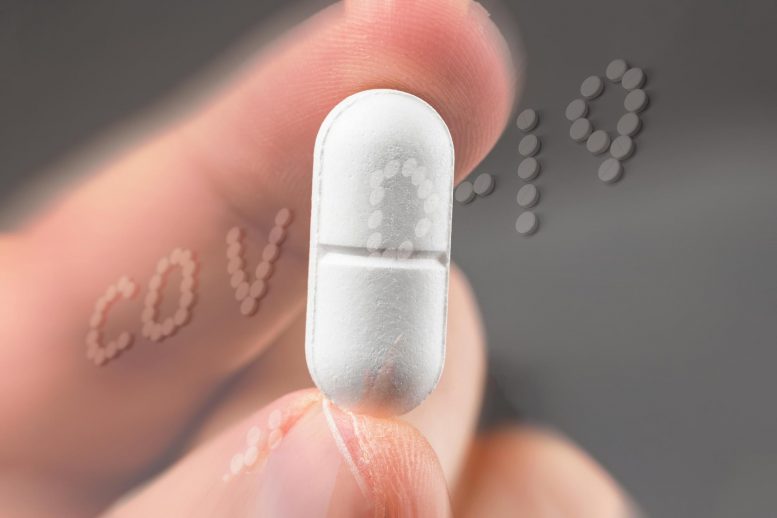
Restrict antimalarial usage to healthy people at highest risk and those testing positive but still symptomless, suggest doctors.
Limited global supplies may scupper proposals to use the antimalarial drugs, chloroquine and hydroxychloroquine, to lessen the symptoms of COVID-19 infection or ward it off altogether, say Italian doctors in a letter published online today in the Annals of the Rheumatic Diseases.
The results of preliminary lab tests have prompted scientists to propose that these drugs be used to treat patients with pneumonia caused by COVID-19 infection. This approach has already been included in Chinese guidelines on how best to manage the disease.
Various studies over the past decade have shown that antimalarial drugs can lessen the impact of viral infections, including COVID-19. And clinical trials are now underway to see whether these drugs might help ward off the disease altogether.
Chloroquine and hydroxychloroquine have been used to treat autoimmune diseases, including rheumatic diseases, since the 1940s, and have proved safe and well tolerated in most cases, say the authors.
Side effects are generally mild to moderate, with serious complications, such as retinal and cardiac damage, rare and related to cumulative doses over a long period of time.
There is an ethical issue, however, as there is as yet no hard evidence from clinical trials that these drugs can prevent the spread of COVID-19, they point out.
“Is it permissible to take a controlled risk in the event of a pandemic?” they ask. “In such a case: would it be reasonable to consider antimalarials as primary prophylaxis in healthy subjects living in highest risk regions or, at least, to use them in those testing positive for COVID-19, but still asymptomatic?”
The safety and effectiveness of these drugs make them good candidates for mass preventive treatment programs, they add, and scientists seem to be leaning towards adopting this approach.
But, conclude the authors: “If mass prophylaxis was accepted as an option worldwide, this would raise the question of whether there is enough supply of [chloroquine] and [hydroxychloroquine] to support this approach.”
The European League Against Rheumatism (EULAR), which co-owns the Annals of the Rheumatic Diseases with BMJ, says that the use of these drugs to tackle COVID-19 could have serious implications for people with rheumatic diseases across Europe.
EULAR President, Professor Iain McInnes, says that global efforts to boost the evidence base for the use of these antimalarial drugs to treat COVID-19 are extremely welcome.
But he adds: “EULAR is concerned, however, that the diversion of drug supplies away from people with rheumatic and musculoskeletal diseases may compromise the health of this important and sizeable group of patients in Europe and beyond.”
EULAR’s patient membership group (PARE) is now calling on the manufacturers of these drugs to rapidly increase production to meet the projected surge in demand.
“A balanced approach that meets the imperatives of the ongoing pandemic, but which also takes account of the needs of patients already taking these drugs is essential,” insists Professor McInnes.
Reference: “To consider or not antimalarials as a prophylactic intervention in the SARS-CoV-2 (Covid-19) pandemic” by Francesca Romana Spinelli, Fulvia Ceccarelli, Manuela Di Franco and Fabrizio Conti, 2 April 2020, Annals of the Rheumatic Diseases.
DOI: 10.1136/annrheumdis-2020-217367
Never miss a breakthrough: Join the SciTechDaily newsletter.
Follow us on Google and Google News.
2 Comments
There are MULTIPLE peer reviewed studies demonstrating the efficacy of using hydroxychloroquine to treat Covid-19 when started within the first three or four days of infection. Those were published in 2020 and 2021 when MSM talking heads referred to it as horse dewormer.
Due to disinformation about hydroxychloroquine by our government and MSM most early testing only used hydroxychloroquine as a last resort and past the early stages where it was beneficial.
Unsure what “disinformation” you’re talking about.
BEFORE there were effective vaccines available, as has now been the case for YEARS, people were trying unproven remedies out of desperation.
Current studies show only moderate effectiveness for that approach, which is, again, redundant given the widely available, and generally HIGHLY effective, mRNA vaccines.
https://journals.plos.org/plosmedicine/article?id=10.1371%2Fjournal.pmed.1004428,
for example, concludes:
“In this large placebo-controlled, double-blind randomised trial, HCQ and CQ were safe and well tolerated in COVID-19 chemoprevention, and there was evidence of moderate protective benefit in a meta-analysis including this trial and similar RCTs (Randomly Controlled Trials).