
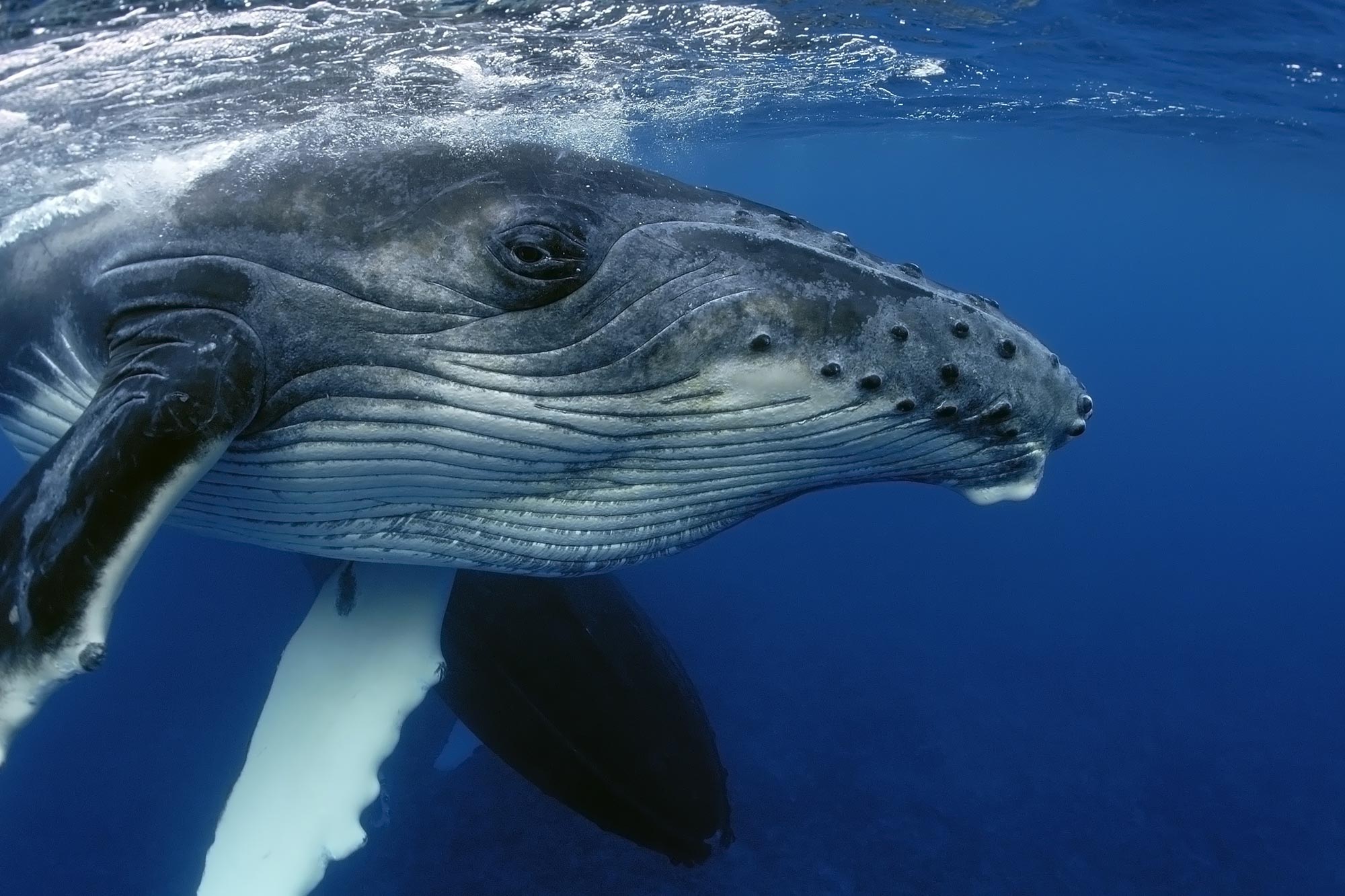
Two humpback whales crossed entire oceans between Australia and Brazil, setting migration records and surprising scientists.
Scientists have documented an extraordinary feat of long-distance travel by humpback whales, confirming for the first time that individual animals have moved between breeding areas off eastern Australia and Brazil.
The discovery reveals ocean crossings of more than 14,000 kilometers and establishes new records for the greatest distances ever confirmed between sightings of individual humpback whales anywhere in the world.
“Discoveries like this are only possible because of investment into long-term multi-decadal research programs and international collaboration,” Griffith University PhD candidate and co-author Stephanie Stack said.
“These whales were photographed decades apart, by different people, in opposite parts of the world, separated by two different oceans, and yet we can connect their journey.”
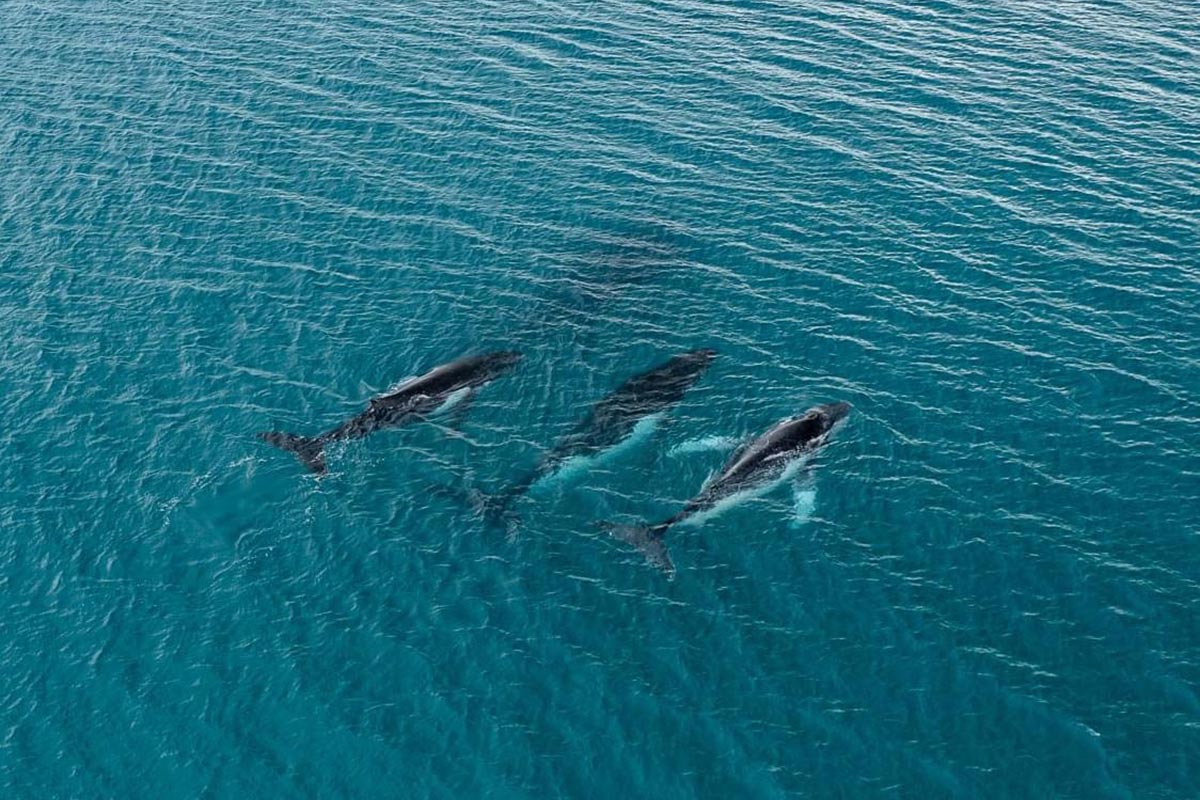
Decades of Whale Photos Reveal Epic Migrations
To make the discovery, researchers compared tens of thousands of photographs of humpback whale tails, known as flukes. Because each whale’s fluke has a unique pattern, scientists can use the images much like fingerprints to identify individual animals over time.
The team found two whales that had been photographed in both eastern Australia and Brazil.
One of the whales was first photographed in Hervey Bay, Queensland, in 2007. It was seen again in the same region in 2013 before being photographed off São Paulo, Brazil, in 2019.
The straight-line distance between those two breeding regions is about 14,200 kilometers, roughly equivalent to the distance between Sydney and London.
Because researchers only know where the whale was photographed and not the exact route it followed, the total distance it actually swam could have been even greater.
Longest Humpback Whale Journey Ever Recorded
The second whale set an even more remarkable record.
Researchers first photographed it in 2003 at Abrolhos Bank, Brazil’s primary humpback whale nursery off the coast of Bahia. At the time, it was part of an energetic group of nine adult whales.
Twenty-two years later, in September 2025, the same whale was spotted alone in Hervey Bay, Australia.
The distance between those sightings was approximately 15,100 kilometers, making it the longest documented distance ever recorded between sightings of the same individual humpback whale.
Citizen Scientists Helped Solve the Mystery
The research relied on 19,283 high-quality fluke photographs collected between 1984 and 2025 from eastern Australia and Latin America.
Images came from both professional researchers and members of the public who contributed observations through the global whale identification platform Happywhale.
Scientists used an automated image recognition system to scan the photographs for potential matches. Every match was then independently reviewed by researchers to confirm the identification.
“This kind of research highlights the value of citizen science,” said lead researcher Dr. Cristina Castro from Pacific Whale Foundation.
“Every photo contributes to our understanding of whale biology and, in this case, helped uncover one of the most extreme movements ever recorded.”
Rare Crossings With Big Implications
The researchers emphasized that these journeys appear to be exceptionally uncommon.
Across more than four decades of data covering nearly 20,000 identified humpback whales, only two individuals were found to have traveled between the Australian and Brazilian breeding grounds. That represents just 0.01 percent of all identified whales in the study.
“Despite their rarity, these exchanges matter for the long-term health of whale populations,” Ms. Stack said.
“Occasional individuals moving between distant breeding grounds can help maintain genetic diversity across populations and may even carry new song styles from one region to another – humpback whale songs are known to spread culturally across ocean basins, much like music trends in human populations.”
Antarctic Feeding Grounds May Hold the Answer
The findings also lend support to what scientists call the Southern Ocean Exchange hypothesis.
According to this idea, humpback whales from different breeding populations occasionally encounter one another while feeding in Antarctic waters. Some whales may then return along a different migration route, eventually joining an entirely new breeding population.
Researchers suggest that environmental changes in the Southern Ocean could influence how often these rare movements occur.
Climate-driven shifts in sea ice and changes in the distribution of Antarctic krill (the whale’s main prey) may be increasing the likelihood of whales making these unusual ocean crossings.
The study, “First evidence of bidirectional exchange between distant humpback whale breeding populations in eastern Australia and Brazil,” was published in Royal Society Open Science.
Reference: “First evidence of bidirectional exchange between distant humpback whale breeding populations in eastern Australia and Brazil” by Cristina Castro Ayala, Stephanie H. Stack, Milton C. C. Marcondes, Julio Cardoso, Ted Cheeseman, Jens J. Currie, Arlaine Francisco, Marilia Olio, Bianca Righi, Silke Stuckenbrock and Renata S. Sousa-Lima, 20 May 2026, Royal Society Open Science.
DOI: 10.1098/rsos.260251
Never miss a breakthrough: Join the SciTechDaily newsletter.
Follow us on Google and Google News.
3 Comments
How fascinating this article is! Such amazing & beautiful mammals whales are for sure. It is said that the whales are record keepers from way back into Atlantis times. It is heartening to see them in all their glory.
Thank you for your ongoing research.
How fascinating this article is! Such amazing & beautiful mammals whales are for sure. It is said that the whales are record keepers from way back into Atlantis times. It is heartening to see them in all their glory.
Thank you for your ongoing research.
Marine Biologists have known for years that many whales have incredible migration patterns and distances.