
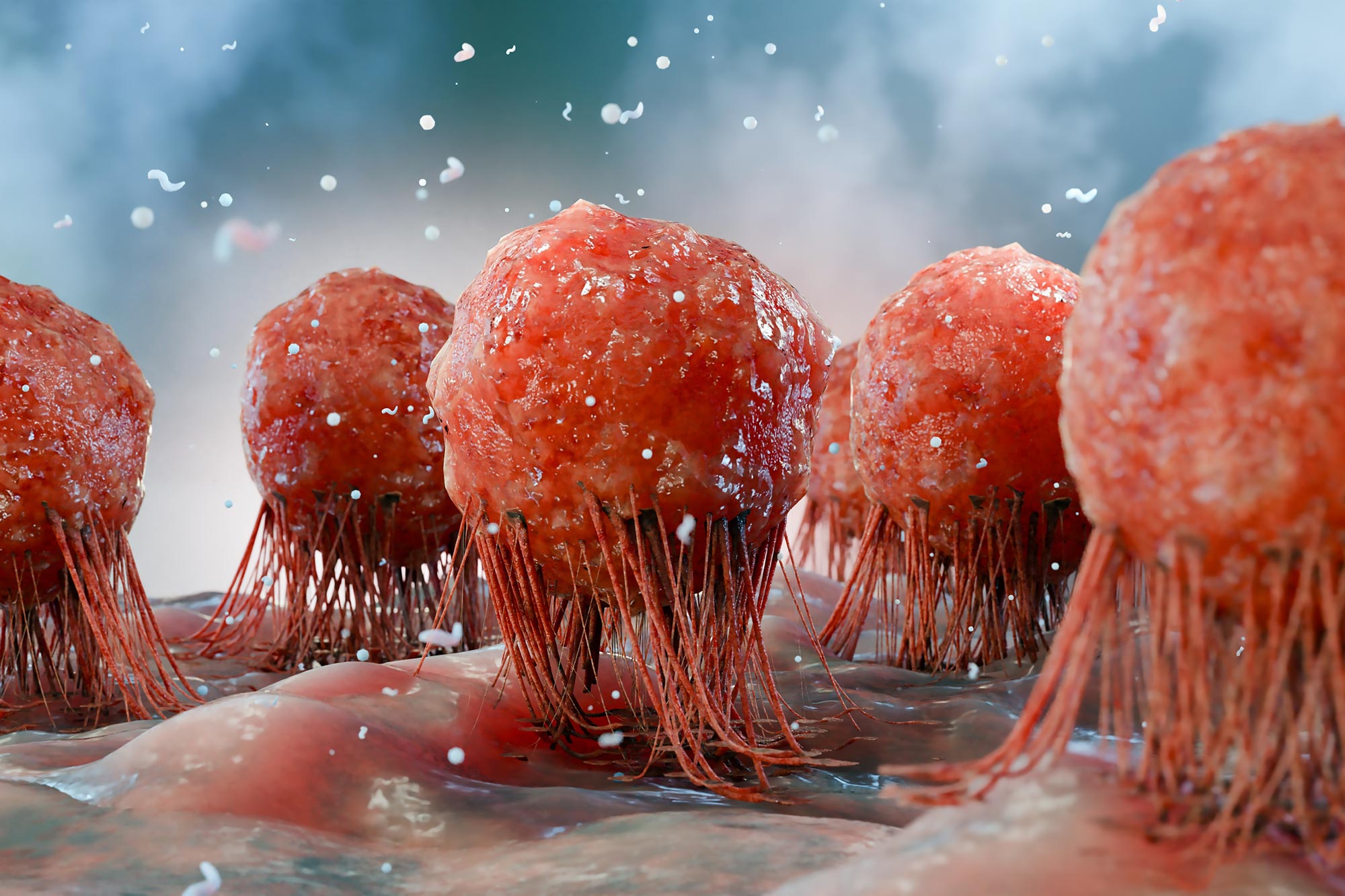
The same diet may slow cancer in one part of the intestine while accelerating it just a few inches away.
The same diet may protect one part of the gut while increasing cancer risk in another. In a new study published in Nature, MIT researchers found that ketogenic diets, high in fat and extremely low in carbohydrates, produced sharply different effects in the colon and small intestine.
Earlier research suggested that ketosis could help suppress colon tumors. But the new findings show that in the small intestine, heavy reliance on dietary fat may stimulate stem-cell activity and accelerate tumor growth. The study highlights a broader scientific challenge: diets cannot always be classified as simply beneficial or harmful, because their effects may vary dramatically across tissues.
“Ketogenic diets have distinct effects on different tissues even within the gastrointestinal tract. I think the message here is that we need to be very careful in generalizing the effects that these diets can have, because what might be beneficial for one tissue may be detrimental for another tissue,” says Omer Yilmaz, director of the MIT Stem Cell Initiative, an associate professor of biology at MIT, and a member of MIT’s Koch Institute for Integrative Cancer Research.
How Ketosis Changes Metabolism
Ketogenic diets were introduced in the 1920s as a treatment for epilepsy, particularly in children whose seizures did not respond to medication. In recent decades, the diet has become popular for weight loss and has also drawn interest from researchers studying aging, metabolism, and cancer.
The diet contains large amounts of fat, very little carbohydrate, and normal or reduced amounts of protein. Because the body receives little glucose from food, it begins breaking down fatty acids for energy.
That shift produces ketone bodies, primarily β-hydroxybutyrate (BHB) and acetoacetate, as byproducts of fatty acid metabolism. The same compounds appear during fasting or very low-calorie diets, when the body begins drawing on its own fat reserves.
Ketones have attracted intense interest because they are not simply waste products. They can also act as signaling molecules that influence inflammation, gene activity, and cellular metabolism.
A Surprising Small Intestine Risk
A 2022 Nature study found that a ketogenic diet reduced colon tumor formation and suggested that BHB—the most abundant ketone body—was responsible. The MIT team set out to determine whether the diet would produce a similar benefit in the small intestine.
Instead, they found the opposite.
The researchers studied mice genetically predisposed to intestinal cancer. The animals were fed either a ketogenic diet, a control diet, or a high fat/high calorie diet designed to promote obesity.
Mice on the ketogenic diet developed small intestinal tumors more frequently than those on the control diet. They did not become obese, yet their tumor rates were similar to or even higher than those of mice consuming the obesogenic high fat/high calorie diet.
Dietary Fat Fuels Tumor Growth
The increased cancer risk did not appear to come from ketones. Further experiments showed that BHB and other ketone bodies played little role in driving tumor growth.
The key factor was the unusually large supply of dietary fat.
Cells lining the small intestine began burning more of that fat through a process called fatty acid oxidation. This metabolic activity stimulated proteins known as PPARs, which regulate how cells use fat and respond to changes in their energy supply.
When activated, PPARs encouraged intestinal stem cells to divide more rapidly. These stem cells continually replace worn or damaged cells in the intestinal lining, one of the most frequently renewed tissues in the body.
Stem Cell Repair Comes With a Cost
That ability is essential for healing, but it comes with a tradeoff. Every round of cell division creates another opportunity for mutations or abnormal growth to occur.
“Having more stem cells means that when you injure the small intestine, it can repair itself better, but the downside is that having more active stem cells can lead to tumor formation,” Yilmaz says.
The colon responded very differently. As reported in the earlier Nature study from 2022, the ketogenic diet reduced colon tumor formation. Yet the new experiments suggest that ketone bodies were not directly responsible for that protection either.
“Given how much attention has been paid to ketone bodies like BHB, both as a commercial health trend and in recent high-profile studies suggesting BHB suppresses colon cancer, we fully expected them to be the direct drivers. Instead, our experiments in genetically engineered mice revealed that these molecules are essentially metabolic bystanders. The real surprise is that tumor acceleration is driven entirely by how stem cells process and burn the heavy influx of dietary fat itself,” Yilmaz says.
Why the Colon Responds Differently
“The deeper question is why the same diet has opposite consequences in two adjacent parts of the gut. That is what we are working to understand next,” Chi says.
The findings also draw a distinction between following a ketogenic diet and consuming ketone drinks or supplements. Because the tumor effects were driven by the way intestinal cells processed dietary fat, rather than by ketones themselves, commercial ketone products would not be expected to reproduce either the increased small intestinal tumor growth or the protective effect observed in the colon.
The findings may be especially relevant for people with inherited disorders that already raise the risk of intestinal tumors, including familial adenomatous polyposis. That concern has become more pressing as cases of small intestinal cancer have risen in recent decades.
Reference: “Ketogenic diet mediates intestinal tumorigenesis through lipids not ketones” by Jessica E. S. Shay, Fangtao Chi, Constantine N. Tzouanas, Shixun Han, Xiao Zhang, Johanna Ten Hoeve, Kevin J. Williams, Seda Neptun, Tolga Sever, Isabela Fuentes, Sangeeta N. Bhatia, Gizem Calibasi-Kocal, Matthew G. Vander Heiden, Alex K. Shalek and Ömer H. Yilmaz, 15 July 2026, Nature.
DOI: 10.1038/s41586-026-10779-y
The research was funded, in part, by the National Institutes of Health, a Pew-Stewart Trust scholar award, the Kathy and Curt Marble cancer research award, a Koch Institute-Dana Farber/Harvard Cancer Center Bridge project grant, the American Federation for Aging Research, the MIT Stem Cell Initiative, a Damon Runyon Postdoctoral Research Fellowship, and the Koch Institute Support (core) grant from the National Cancer Institute.
Never miss a breakthrough: Join the SciTechDaily newsletter.
Follow us on Google and Google News.
4 Comments
FESTIVAL OF LIFE
IMPORTANT: Alternatives to Proscription Drugs:
Mission Statement: The Festival of Life is to offer Safe Alternatives to Prescription Drugs and Thus Save Lives, and Serious and Often Deadly Damage to the Human Body Updates on Medical Innovations and AI.
Natural Methods and Procedures that can achieve miracles in healing, and improve health, appearance, and Quality of Life.:
The Festival offers highlights on the ever-evolving field of medicine, technological advancements continue to revolutionize the way we diagnose, treat, and manage diseases. These innovations are not only extending life expectancy but are also improving the quality of life for patients around the world.
Goal: Providing and sharing information. Pay special attention to 2025 Economic costs.
As you are aware medical expenses are rising.
The cost of Medical can be reduced by sharing information on supplements and vitamins that are safer and more effective than many prescription drugs,
Overall effect is healthier patients
Savings can go towards medical innovations that are more effective and safer such as nonsurgical diagnosis through DNA and Blood testing, and many other innovations. Details in attached documents or website references
This summary includes:
25 New Medical Technologies That Are Saving Lives Today
Suggested reading material and education and resources on AI include KevinMD and Harvard Medical School.
As you are aware, Prescription Drugs often have dangerous and life-threatening side effects.
Natural healing methods Numerous and much safer, with minimal side effects.
Examples include. Binaural Beats* (See note below, detail on Binaural Beats), Isochronic Tones Generators, Brain Beats of all kinds, music, and movement, from many sources. Sounds being Physiological Physiology Therapy, are essentially of the body.
Contributing entities will include:
Doctors, surgeons, pharmacies, health care professionals, Drugs.com, Mayo Clinic, churches, and the general public. (additional resources will be provided).
Consult Your Local Directories.
Pharmacies (Such as Victory Medical Compounding Pharmacy, Peoples Pharmacy Health Care Professionals, Such as Central Health, Lifestyle Consultants on subjects such as Acupuncture, Binaural Beats, Chiropractic, Hypnotic Suggestion, Massage, Pressure Points, Meditation, Cryotherapy, Red Light Therapy, Light Therapies in General, , can provide a wealth of information, programs, healing techniques, inspiration, resources, and products.
Numerous alternatives to Prescription Drugs are available. Will list resources in separate document.
On the other side of this issue:
Prescription Drugs are ever evolving modern miracles when used properly and as needed and directed.
Consult outside experts as to the side effects of drugs so you and your providers are informed of any risks. (Some of the best sources are for example Drugs.Com. Mayo Clinic (See notes below), your Local Pharmacists, and your Physician/Surgeons).
25 New Medical Technologies That Are Saving Lives Today
Author: DISCOVERWILDSCIENCE
In the ever-evolving field of medicine, technological advancements continue to revolutionize the way we diagnose, treat, and manage diseases. These innovations are not only extending life expectancy but are also improving the quality of life for patients around the world. Here, we explore 25 groundbreaking medical technologies that are making a significant impact today.
1. Telemedicine
Telemedicine has transformed healthcare delivery by providing remote patient consultations through digital communication platforms. This technology extends medical services to underserved areas, enhances patient convenience, and reduces travel costs and waiting times.
2. Artificial Intelligence (AI) in Diagnosis (see attachment AI)
AI is enhancing diagnostic accuracy and efficiency, identifying patterns in medical data that might be overlooked by humans. AI-powered algorithms are now used to detect conditions such as cancer, cardiovascular diseases, and eye ailments, often with greater precision than traditional methods.
3. 3D Printing of Organs and Prosthetics
3D printing technology is enabling the creation of patient-specific prosthetics and even synthetic organs. This technology not only provides customized solutions for patients but also promises a future where organ transplant shortages might be mitigated.
4. Wearable Health Devices
Wearable devices such as smartwatches and fitness trackers monitor various health parameters, including heart rate, sleep patterns, and physical activity. These devices empower individuals to manage their health proactively and provide valuable data for healthcare professionals.
5. Gene Editing: CRISPR-Cas9
The CRISPR-Cas9 technology is revolutionizing genetic engineering by offering a precise method of editing genes. It holds immense potential for treating genetic disorders and advancing personalized medicine.
6. Robotics in Surgery
New Disease Threats Follow Trump Administration’s Health Program Cuts
By Stephanie Armour and KFF Health News HealthDay Reporters
Medically reviewed by Carmen Pope, Senior Medical Editor, B. Pharm. Last updated on July 6, 2026.
via HealthDay
MONDAY, July 6, 2026 — As beachgoers flock to water this summer, danger could be lurking in some areas.
Researchers this spring discovered flesh-eating bacteria in water in several coastal locations across New York’s Long Island, and town officials in the Hamptons vacation destination posted an alert about the findings. Eight people in Florida have been infected this year, and Mississippi health officials in June urged people to take precautions.
About 1 in 5 people infected by the bacteria die, sometimes within a day or two of becoming ill, according to a U.S. Centers for Disease Control and Prevention (CDC) fact sheet. The bacteria, Vibrio vulnificus, can enter open wounds and cause tissue death and systemic sepsis.
“Many people with Vibrio vulnificus infection can get seriously ill and need intensive care or limb amputation,” the CDC says.
The risk of such public threats is mounting because climate change is expanding the territory of certain pathogens, but researchers say there’s another concern. The Trump administration has cut investments in programs and agencies that prevent, track and respond to health hazards the federal government is now confronting.
Consider the reemergence of screwworm, which can infest and kill livestock, in the U.S. in June. The U.S. Department of Agriculture lost 18% of its workforce in the first six months of 2025, according to a report from the USDA’s Office of Inspector General, and the agency’s winnowed-down inspection service is helping lead the response to the parasite.
1. We aren’t mice. Mice process macro-nutrients in a fundamentally different way than humans.
2. The “ketogenic diet” they are feeding these mice are incomparable to what humans would actually eat.
3. A “ketogenic diet” can be anything inducing ketosis, which says nothing about the nutritional quality of the food. Eating nothing is also ketogenic.
Please look beyond the clickbait headline.
What this study demonstrated is that mice genetically engineered to be predisposed to intestinal cancer and fed a ketogenic diet containing starch, sucrose, food dyes, lard, and soybean oil … wait for it … developed more cancer!
If you have also been engineered to develop cancer, perhaps you have bigger problems than which diet to adopt.