
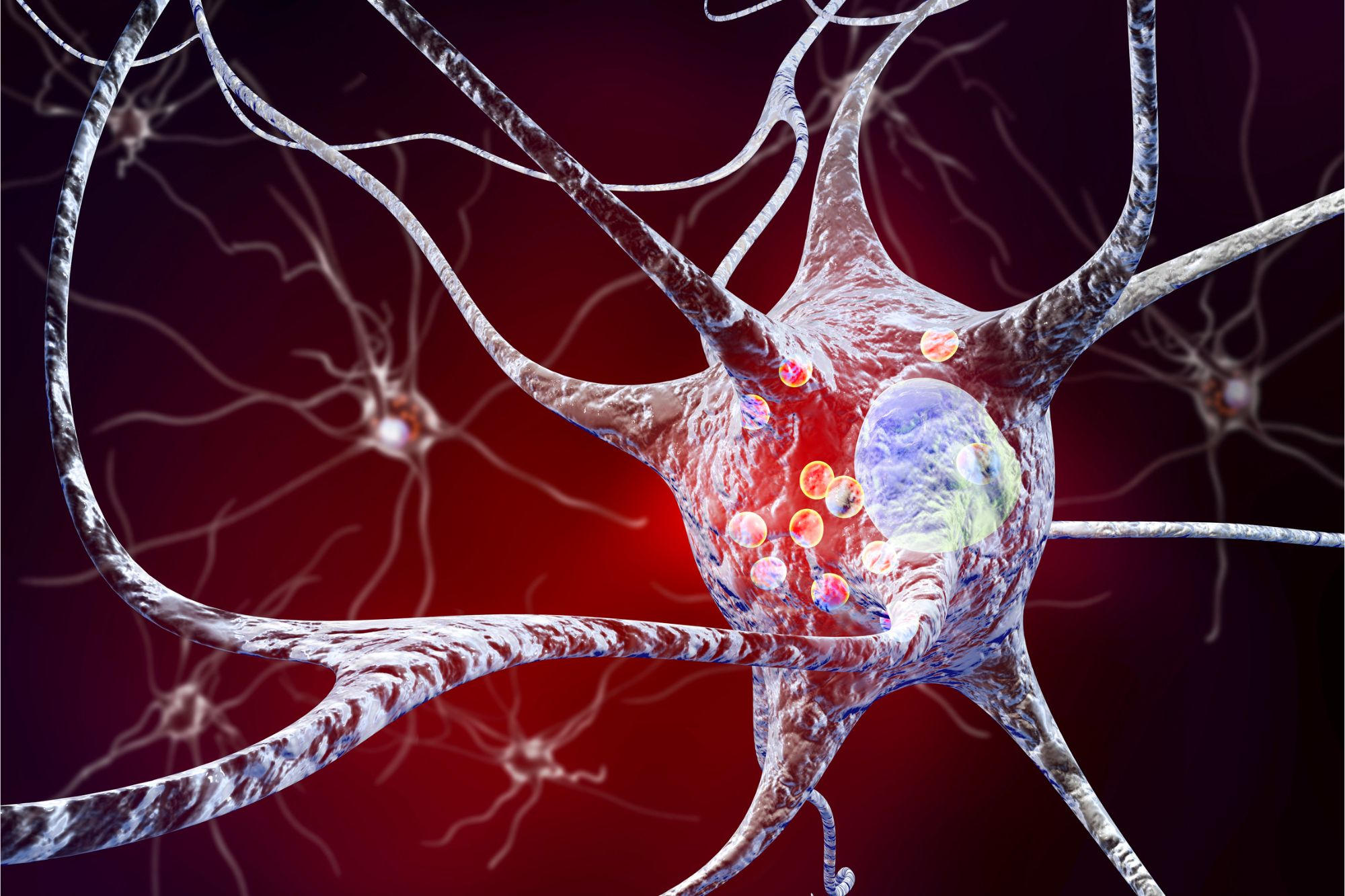
A naturally occurring anti-inflammatory protein fragment is showing promise in early Parkinson’s disease research.
Parkinson’s disease affects millions of people worldwide, yet current treatments mainly address symptoms rather than the underlying damage occurring in the brain.
Now, researchers in Brazil have identified a promising new approach that targets a different aspect of the disease: inflammation. In experiments involving mice, a naturally derived peptide helped protect vulnerable brain cells from degeneration, raising the possibility of future treatments that could slow or even prevent some of the damage caused by Parkinson’s.
Researchers at the Federal University of São Paulo (UNIFESP) reported the findings in the journal Neuropharmacology.
Supported by FAPESP, the study examined a peptide called Ac2-26, which is derived from the protein Annexin A1. This protein occurs naturally in both humans and rodents. Previous animal research has suggested that Annexin A1 helps regulate the brain inflammation linked to Parkinson’s disease and may limit the loss of neurons.
A Different Approach to Parkinson’s Treatment
Parkinson’s disease is characterized by the gradual loss of neurons that produce dopamine, a neurotransmitter that plays a key role in movement, motivation, reward, and pleasure. As these cells die, dopamine levels decline, leading to symptoms such as tremors and freezing of gait (difficulty walking).
“It’s still an experimental study in its very early stages, but it offers an interesting approach by presenting a different strategy from conventional treatment. The peptide acts on neuroinflammation rather than on dopamine replacement. That’s important because, in neurodegenerative diseases, there’s an inflammatory reaction that affects not only neurons, but also surrounding cells, and the peptide mitigates that process, consequently protecting the brain from cell death,” said Cristiane Damas Gil, head of the Department of Morphology and Genetics at the São Paulo School of Medicine (EPM) at UNIFESP and an author of the study.
There is currently no cure for Parkinson’s disease. Most treatments are designed to manage symptoms caused by the loss of dopamine. The standard approach relies on levodopa, a compound that the body converts into dopamine and that primarily targets dopamine-producing neurons.
“This medication is considered the gold standard, offering significant benefits, especially in the early stages or during acute treatment, when it leads to a marked improvement in motor symptoms. However, long-term use diminishes its effectiveness and can lead to the development of motor complications and fluctuations in the therapeutic response. That’s why it’s essential to seek treatment alternatives for such a complex disease as Parkinson’s,” explained Luiz Philipe de Souza Ferreira, a FAPESP scholarship recipient who led the research.
Investigating the Anti-Inflammatory Peptide
Ac2-26 is a well-known anti-inflammatory peptide that has been investigated for other conditions, although it has not yet been developed as a drug. Research has also shown that Annexin A1 is altered in people with Parkinson’s disease and is linked to both brain inflammation and the neurons responsible for controlling movement.
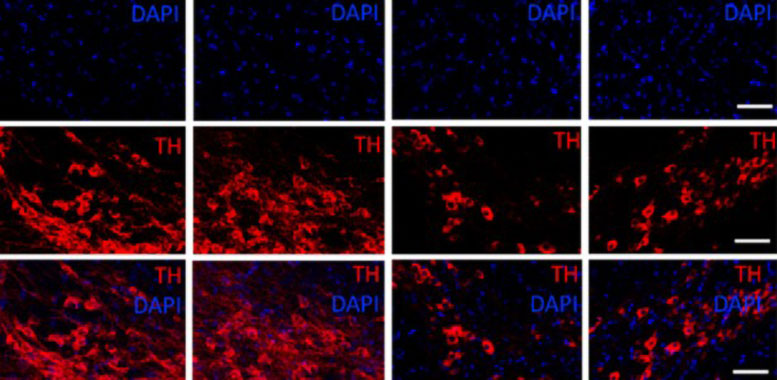
To create a Parkinson’s-like condition in mice, the researchers injected a neurotoxic compound into the animals’ brains. The treatment caused neuronal loss and symptoms similar to those seen in the disease. Around the same time, the team administered the peptide intraperitoneally (into the abdomen).
The results revealed notable differences between male and female mice. Females initially performed better in movement tests after the injury, although this advantage faded over time.
“That greater resilience was present even in the absence of the Annexin A1 protein,” said Gil.
The researchers studied both normal mice and genetically modified mice that lacked the protein.
“In males, however, the loss of neurons was more evident, which allowed us to clearly assess the effects of treatment with the Ac2-26 peptide, which is capable of protecting against degeneration,” said Ferreira.
The experiments also showed that inducing the disease significantly disrupted the reproductive cycle of female mice, pointing to broader effects of Parkinson’s disease on the endocrine system.
“This reinforces the need for specific protocols for each biological sex,” Ferreira emphasized.
Next Steps for the Research
The findings suggest that the peptide may work as a preventive treatment by acting at the earliest stages of damage.
“Our next step is to investigate whether the peptide can reverse the damage caused by Parkinson’s disease. If that’s proven, then the peptide becomes a more promising treatment candidate,” Gil concludes.
Reference: “Annexin A1 and its N-terminal peptide Ac2-26 regulate dopaminergic degeneration and neuroinflammation in a 6-OHDA model of Parkinson’s disease” by Luiz Philipe de Souza Ferreira, Rafael André da Silva, Nilma R.L.L. Janisset, Adilson da Silva Alves, Joaquim S. Almeida, Renata R. Vieira, Diego D. Santos, Samara U. de Oliva, Sonia M. Oliani, Fabio C. Cruz, Livia M.M. Dati and Cristiane D. Gil, 23 March 2026, Neuropharmacology.
DOI: 10.1016/j.neuropharm.2026.110942
Never miss a breakthrough: Join the SciTechDaily newsletter.
Follow us on Google and Google News.