
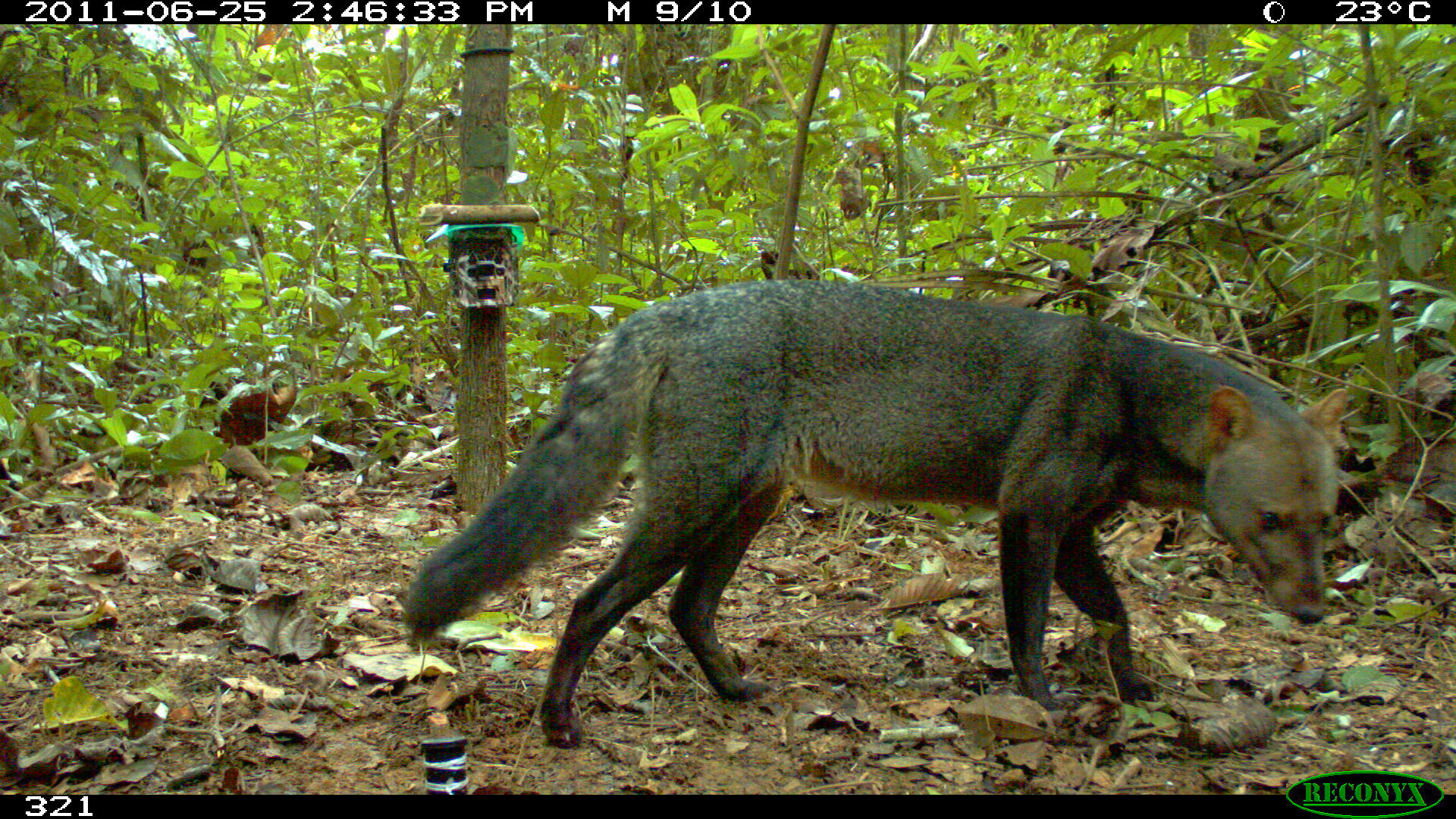
Camera traps are revealing that the Amazon’s “ghost dog” is less rare than feared but still depends on protected forests.
For decades, the short-eared dog (Atelocynus microtis) has ranked among the least understood carnivores in Latin America, and perhaps among the least understood canids anywhere. Its secretive behavior, sharp hearing, and powerful sense of smell have helped it avoid people, leaving biologists with only rare direct observations in the wild.
Now, a new study published in the open-access journal Neotropical Biology and Conservation is offering a clearer look at this elusive Amazon predator.
The Power of Remote Sensing
According to the study’s lead author, Robert Wallace, remote sensing changed what scientists could learn about the ghost dog. Researchers began capturing images of the species with camera traps in 2001, and those first photos made it clear that a broader study could reveal something important.
Across nearly 25 years, scientists organized 500 distribution records from Bolivia and carried out 34 intensive camera trap surveys. The surveys covered lowland areas of Bolivia and Peru, with a focus on the Greater Madidi Tambopata and Llanos de Moxos Biocultural Landscapes.
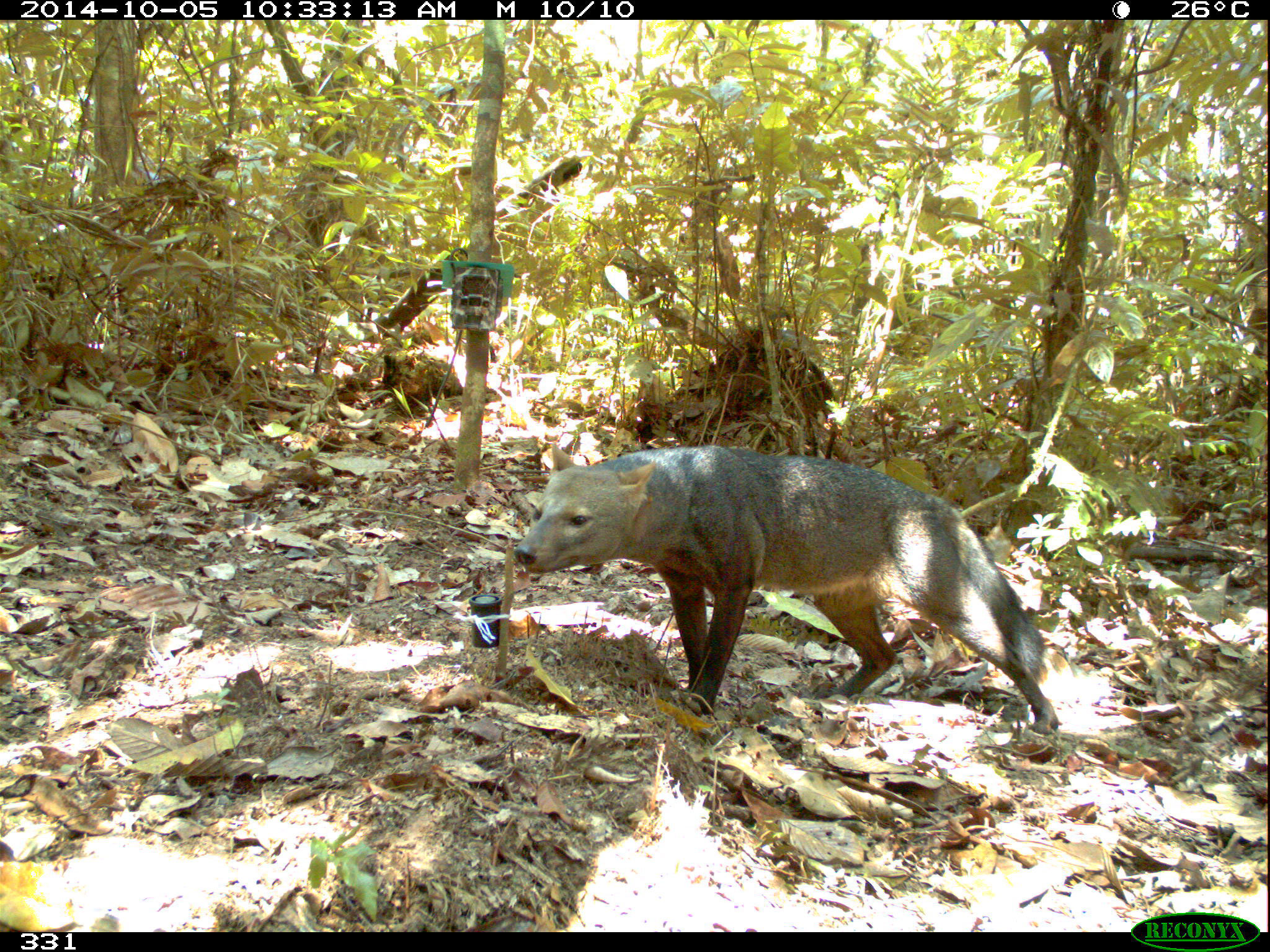
The work produced 594 independent photographic events, creating the largest set of confirmed short-eared dog records anywhere in the species’ known range. The lead author highlighted that this research is a “wonderful example of how conservation technology and remote sensing – in this case, the intensive use of camera traps – can provide substantial data on one of the least known species of the Amazonian rainforests”.
Unveiling the Ghost
So what does the ghost dog actually look like? Camera traps documented a distinctive animal with a dense dark coat that ranges from blackish gray to reddish brown, a large head, very small, rounded ears, short legs, and a long bushy tail. The species also has partially webbed paws, a feature not found in other Amazonian canids.
Its appearance, however, was not the most unexpected result.
Short-eared dog on a video. Credit: Wallace et al., 2026
“The most surprising aspect of the results was that despite being an almost mythical beast, short-eared dogs are much more abundant than we had imagined,” noted the researchers.
The species is still not common, but the camera trap capture rates and an estimated density of 15 individuals per 100 square kilometers suggest it is less rare than scientists once thought. The results indicate that short-eared dogs are more abundant than larger carnivores such as jaguars, though less abundant than medium-sized carnivores such as ocelots. The study also revealed part of their behavioral ecology: they are mainly diurnal, meaning they are most active during daylight hours, with activity peaking between 6:00 a.m. and 12:00 p.m.
A Forest Specialist in Need of Protection
The data show that ghost dogs are closely tied to intact forests. The short-eared dog is a forest specialist with a strong preference for terra firme, the upland forests found away from rivers. This reliance on dense, specialized habitat helps explain why people so rarely see the species.
Because the animal depends on continuous intact forest, its conservation relies heavily on protected areas that are created and managed effectively. The study found that short-eared dogs were relatively more abundant in national protected areas and in Indigenous territories that overlap with those protected zones than in unprotected areas.
“The most important management strategy is the protection of Amazonian forest canopy for which the creation and effective management of protected areas is the most important element, in combination with the sustainable management of Indigenous territories”, the researchers explained.
The study shows that this elusive canid is quietly persisting in the deep forests of Bolivia and Peru, but its future depends on keeping those forests intact.
Reference: “Unveiling the ghost: short-eared dog (Atelocynus microtis) distribution, activity patterns, habitat use, relative abundance, and occupancy in Bolivia” by Robert B. Wallace, Guido Ayala, Maria Viscarra and Zulia Porcel, 27 March 2026, Neotropical Biology and Conservation.
DOI: 10.3897/neotropical.21.e183324
Never miss a breakthrough: Join the SciTechDaily newsletter.
Follow us on Google and Google News.
1 Comment
I am surprised Amazon is selling Ghost Dogs.