

Close Menu
    Facebook X (Twitter) Instagram
    SciTechDaily
    • Biology
    • Chemistry
    • Earth
    • Health
    • Physics
    • Science
    • Space
    • Technology
    Facebook X (Twitter) Pinterest YouTube RSS
    SciTechDaily
    Home»Health»Common Nutrients Could Make Alzheimer’s Treatments Safer and More Effective
    Health

    Common Nutrients Could Make Alzheimer’s Treatments Safer and More Effective

    By University of WaterlooJune 25, 2026No Comments3 Mins Read
    Facebook Twitter Pinterest Telegram LinkedIn WhatsApp Email Reddit
    Share
    Facebook Twitter LinkedIn Pinterest Telegram Email Reddit
    Erasing Brain Alzheimer's Dementia
    Researchers have identified a potential way to enhance Alzheimer’s treatment by combining existing therapies with small molecules derived from natural compounds. Credit: Shutterstock

    A study found that combining antibody therapy with molecules found in some common foods may make treatment more effective and reduce side effects.

    Despite decades of research, Alzheimer’s disease remains one of medicine’s greatest challenges. Current treatments can modestly slow the disease but often come with potentially dangerous side effects, leaving researchers searching for safer and more effective approaches.

    Now, a new study suggests that combining existing Alzheimer’s antibody therapies with small molecules inspired by naturally occurring compounds found in foods such as grapes, berries, peanuts, and turmeric could improve treatment while reducing its risks.

    In Alzheimer’s disease, toxic amyloid proteins accumulate in the brain. Researchers from the University of Waterloo’s School of Pharmacy paired amyloid-targeting antibodies already used in clinical treatment with small molecules that also disrupt amyloid buildup. The combination more effectively neutralized the harmful protein clumps than either approach alone, pointing to a promising new combination therapy strategy.

    Alzheimer’s disease is the leading cause of dementia. Nearly 750,000 people in Canada are living with dementia, and that number is expected to reach one million by 2030. Although there is still no cure, anti-amyloid antibody therapies can slow disease progression. However, they also carry potentially serious side effects, including brain swelling and bleeding, highlighting the need for safer treatment options.

    Lower doses may reduce risk

    “We already know the small molecules resveratrol or curcumin, which are found in some common foods, block the buildup of amyloid,” said Dr. Praveen Nekkar Rao, a professor in the School of Pharmacy at Waterloo. “What’s new and exciting is our combination of these molecules with the anti-amyloid antibodies. This approach could allow clinicians to use lower doses of antibodies, potentially reducing the risk of serious treatment-related side effects.”
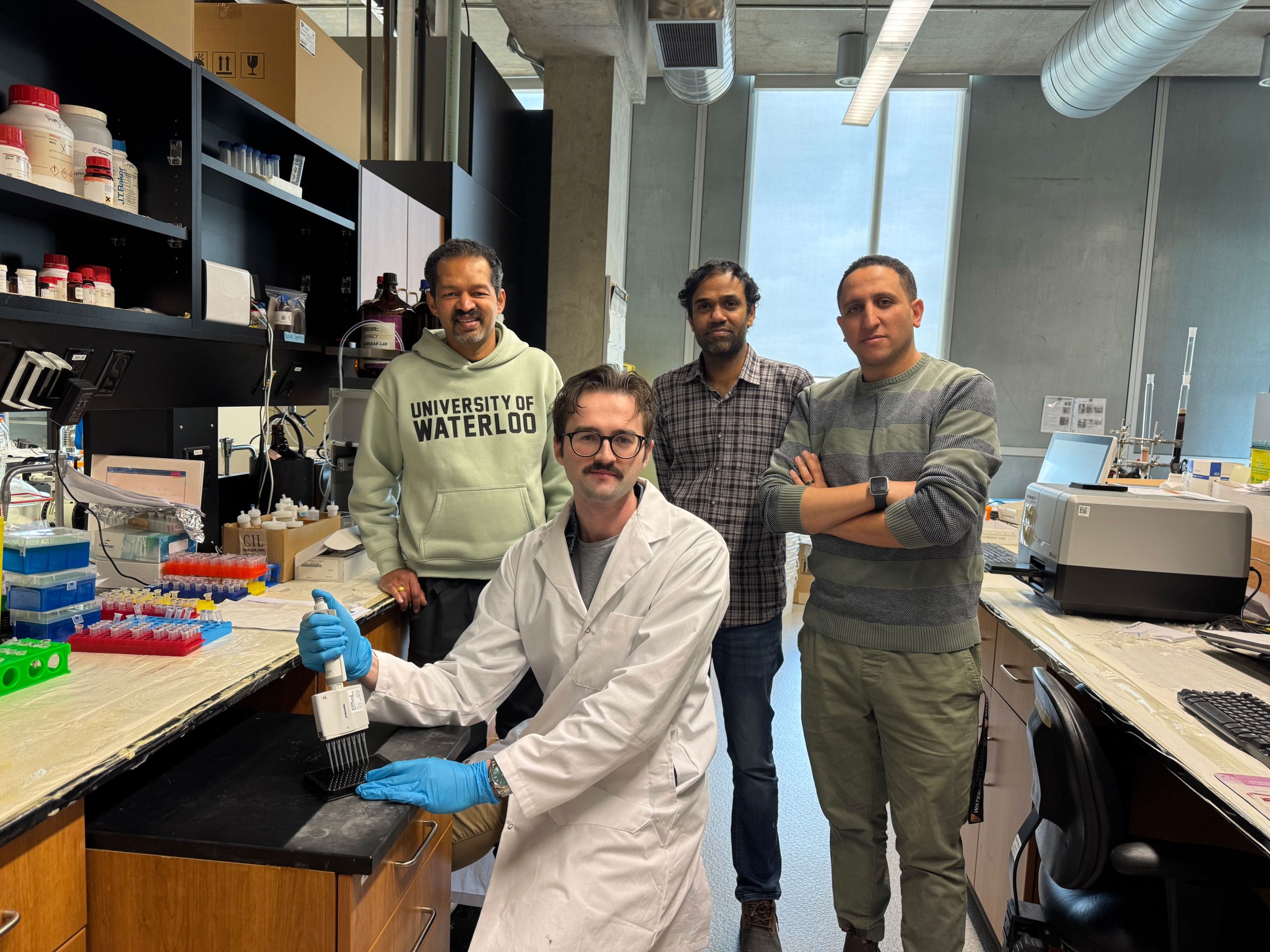
    Praveen Nekkar Rao and the Nekkar Rao Team
    Dr. Praveen Nekkar Rao (left) and the other researchers who explored combination therapy for the treatment of Alzheimer’s disease. Credit: University of Waterloo

    Because Alzheimer’s has so few effective treatment options, the Waterloo group examined whether combining two approaches could outperform either strategy on its own. They focused on resveratrol and curcumin because both natural compounds are known to reduce amyloid buildup and inflammation.

    “I was inspired by chemotherapy, which involves taking multiple medications for effective treatment,” Nekkar Rao said. “Alzheimer’s is a complex disease, but there are very few combination therapy approaches. Our results show that the way forward is definitely combination therapy.”

    Supplements are not the answer

    The Waterloo group stresses that these findings do not mean people should take resveratrol or curcumin supplements to prevent or treat dementia. Reaching the brain would require unsafe amounts. The next stage of the work will focus on creating next-generation drugs that can enter the brain more effectively, interact favorably with amyloids, and work smoothly alongside antibody treatments.

    Reference: “Combination of Resveratrol and Curcumin with Anti-Amyloid Monoclonal Antibodies Aducanumab and Lecanemab Leads to Greater Inhibition of Amyloid-Beta Aggregation” by William Le Boeuf, Ahmed A. Hefny, Rahul C. Karuturi and Praveen P.N. Rao, 20 February 2026, ACS Chemical Neuroscience.
    DOI: 10.1021/acschemneuro.5c00760

    Never miss a breakthrough: Join the SciTechDaily newsletter.
    Follow us on Google and Google News.

    Alzheimer's Disease Amyloid-ß Dementia Neuroscience University of Waterloo
    Share. Facebook Twitter Pinterest LinkedIn Email Reddit

    Related Articles

    New Research Overturns Decades of Thinking on Fat’s Role in Alzheimer’s

    Breakthrough Discovery: Freezing Alzheimer’s Progress by Pausing Amyloid Fibrils

    “Cognitive Clock” – Researchers Develop New Measure of Brain Health

    Dementia Linked to Poor Kidney Function in New Research

    Toxic Gas in Rat Brains Reveals Potential for New Dementia Treatments

    Identifying “The Terrorist Inside My Husband’s Brain” – Living Brain Imaging Can Clearly Differentiate Between Types of Dementia

    Pulse Pressure: A Game Changer in the Fight Against Dementia

    The Combination of Foods You Eat Together May Raise Dementia Risk

    An Aspirin a Day Does Not Keep Dementia at Bay – No Difference Than Placebo

    Leave A Reply Cancel Reply

    • Facebook
    • Twitter
    • Pinterest
    • YouTube

    Don't Miss a Discovery

    Subscribe for the Latest in Science & Tech!

    Trending News

    Can Time Flow in Reverse? A Quantum Breakthrough Challenges Our Assumptions

    Hidden Alzheimer’s Biomarker Could Change How Doctors Prescribe Hormone Therapy

    Koalas Nearly Vanished 100,000 Years Ago – Long Before Humans Arrived

    Scientists Discover a Gene That Boosts Youth – but It Comes With a Cost

    After 50 Years, Astronomers Finally Found What the Milky Way’s Black Hole Was Hiding

    The Most Powerful Drug of All Isn’t Found in a Pill Bottle

    Scientists Capture Immune Cells Eating Live Cancer Cells for the First Time

    Why Older Adults Need To Pay Closer Attention to Vitamin B12

    Follow SciTechDaily
    • Facebook
    • Twitter
    • YouTube
    • Pinterest
    • Newsletter
    • RSS
    SciTech News
    • Biology News
    • Chemistry News
    • Earth News
    • Health News
    • Physics News
    • Science News
    • Space News
    • Technology News
    Recent Posts
    • Common Nutrients Could Make Alzheimer’s Treatments Safer and More Effective
    • Scientists Discover How the Gut May Trigger Multiple Sclerosis
    • Shingles Vaccine Linked to 24% Lower Dementia Risk in Older Adults
    • The Secret Language Behind Animal Cooperation Across Species
    • Scientists Finally Solve a 100-Year Mystery About France’s Famous Ice Age Cave Paintings
    Copyright © 1998 - 2026 SciTechDaily. All Rights Reserved.
    • Science News
    • About
    • Contact
    • Editorial Board
    • Privacy Policy
    • Terms of Use

    Type above and press Enter to search. Press Esc to cancel.