
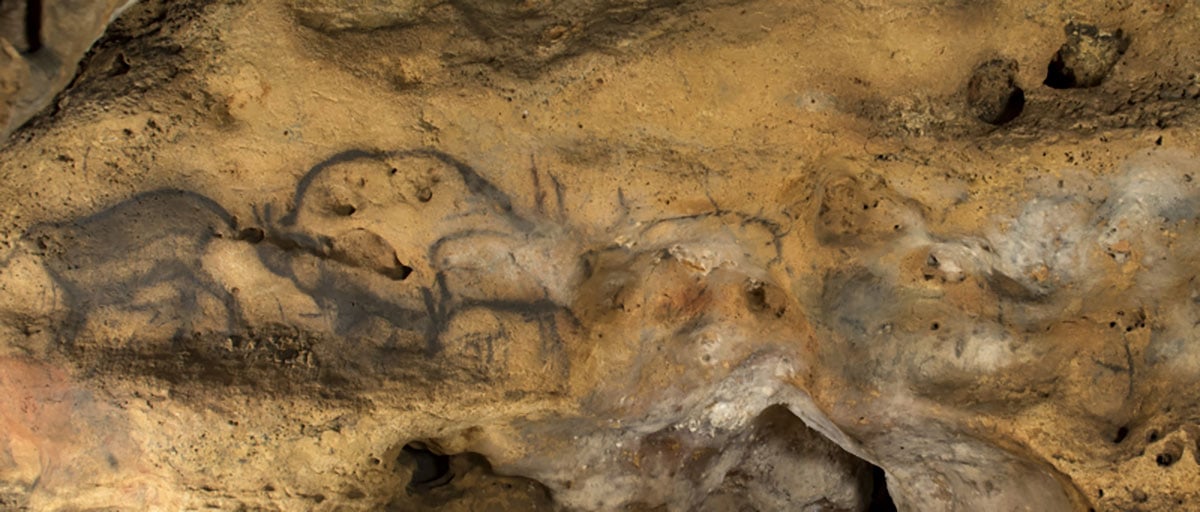
A new analysis detected hidden charcoal in black cave paintings at Font-de-Gaume, allowing scientists to accurately date the artworks for the first time.
For more than a century, the spectacular cave paintings of France’s Dordogne region have captivated archaeologists, yet one basic question remained unanswered: exactly how old are they? Now, researchers have achieved a breakthrough by directly dating paintings in the UNESCO-listed Font-de-Gaume cave for the first time, opening a new chapter in the study of Paleolithic art.
A research team led by a CNRS researcher accurately dated several cave paintings at Font-de-Gaume in Les Eyzies, southwestern France. The findings, published in PNAS on March 9, 2026, could transform how scientists study prehistoric art across the region.
Until now, it had not been possible to precisely date Paleolithic cave art from this region, including the artwork at Lascaux, using radiocarbon methods. The reason was that the paintings were thought to contain only iron and manganese oxides. However, no previous study had actually verified that carbon was absent.
To check this, the scientists analyzed the chemical makeup of two black drawings, one showing a bison and the other a mask. They used Raman microspectrometry and hyperspectral imaging, both noninvasive techniques.
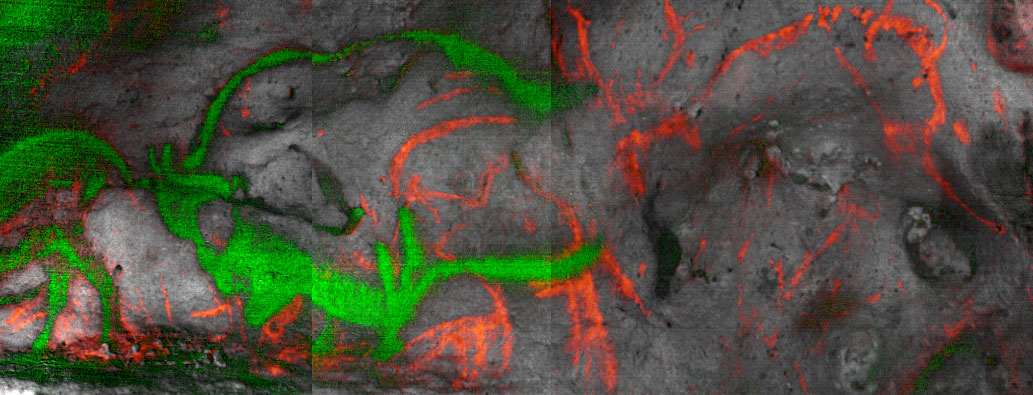
These methods detected traces of charcoal in the black pigments. Because the charcoal appeared consistently throughout the black lines of the figures, the scientists ruled out contamination from graffiti or tourist activity inside the cave.
Exceptional permission was granted to collect micro samples for carbon-14 dating. The process was difficult because only tiny amounts of material were available, but the analyses confirmed dates in the Upper Paleolithic that were slightly more recent than earlier estimates.
The bison was painted between 13,461 and 13,162 calBP. Different parts of the mask were dated to between 8,993 and 8,590 calBP, between 15,981 and 15,121 calBP, and between 15,297 and 14,246 calBP.
With this new analytical method, the scientists hope to accurately date other Paleolithic figures. That could help build a clearer picture of cave art and the people who created it.
Reference: “Radiocarbon dating and chemical imaging of carbon black–based Paleolithic cave art in the Dordogne region (France)” by Ina Reiche, Lucile Beck, Ingrid Caffy, Yvan Coquinot, Matthias Alfeld, Anne Maigret, José Tapia, Marc Martinez, Anthony Lescale and Patrick Paillet, 9 March 2026, Proceedings of the National Academy of Sciences.
DOI: 10.1073/pnas.2524751123
Never miss a breakthrough: Join the SciTechDaily newsletter.
Follow us on Google and Google News.