
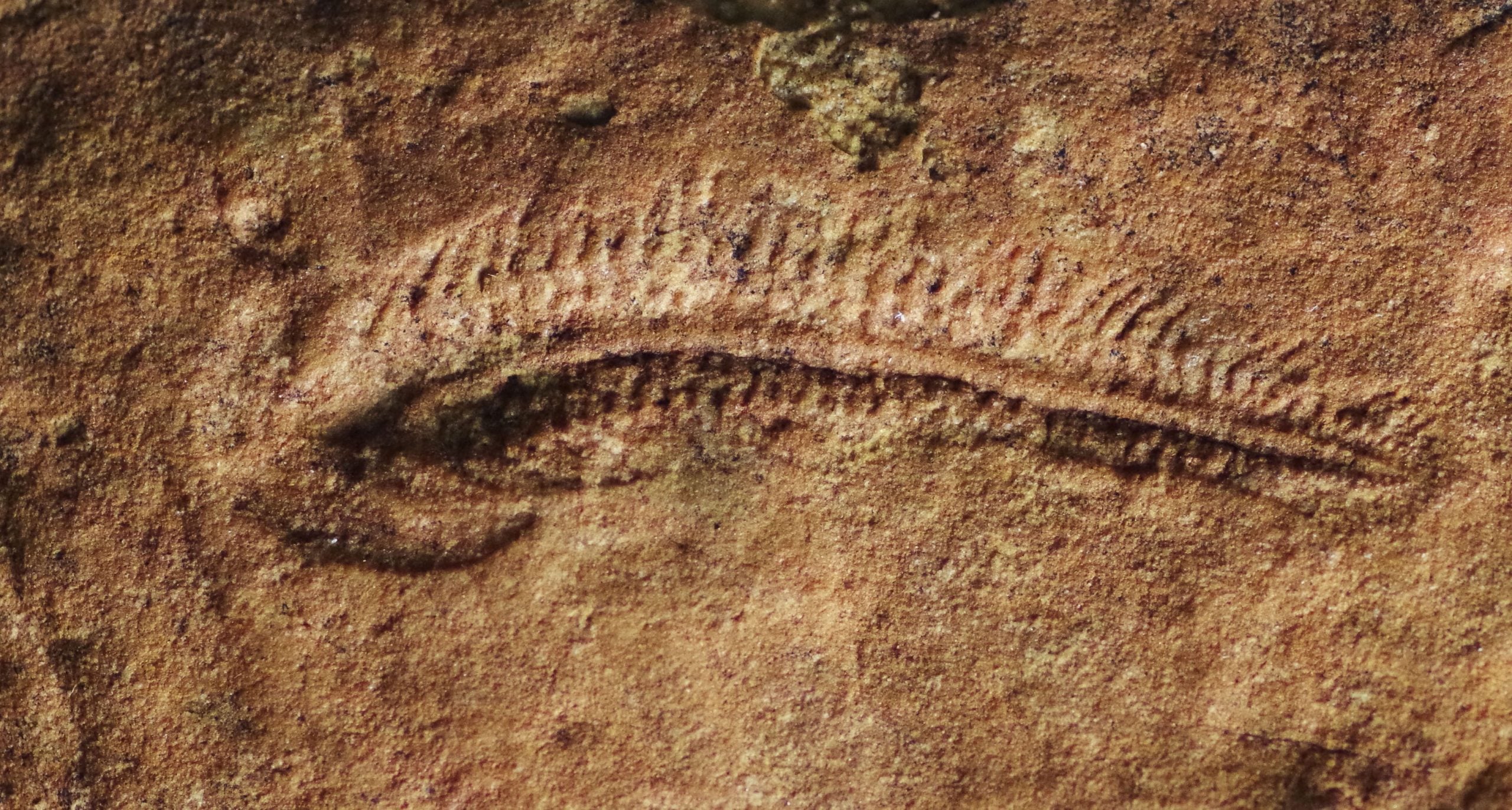
New research suggests that the ancient animal Spriggina floundersi tended to bend to the right, making it the oldest known example of lateralized behavior.
More than 550 million years ago, a small, flattened animal moved across the seafloor and repeatedly favored one direction. Fossils of Spriggina floundersi suggest that when it bent its body, it tended to turn right.
That preference may represent the oldest-known example of lateralized behavior, in which an animal consistently favors one side of its body over the other. The evidence pushes the roots of this behavior back to the Ediacaran Period, long before the emergence of most familiar animal groups.
The study, published in Scientific Reports, was led by researchers at the American Museum of Natural History, Florida State University, Harvard University, and the University of California, Riverside. By examining how Spriggina fossils were curved, the researchers found a population-wide pattern rather than a random mix of leftward and rightward movement.
“When we talk about being right-or-left-handed, most people likely think about how they hold a pencil or kick a soccer ball. But our research shows that an animal without hands or feet, living over 500 million years ago, may have had its own version of handedness,” said lead author Scott Evans, assistant curator of invertebrate paleontology at the museum.
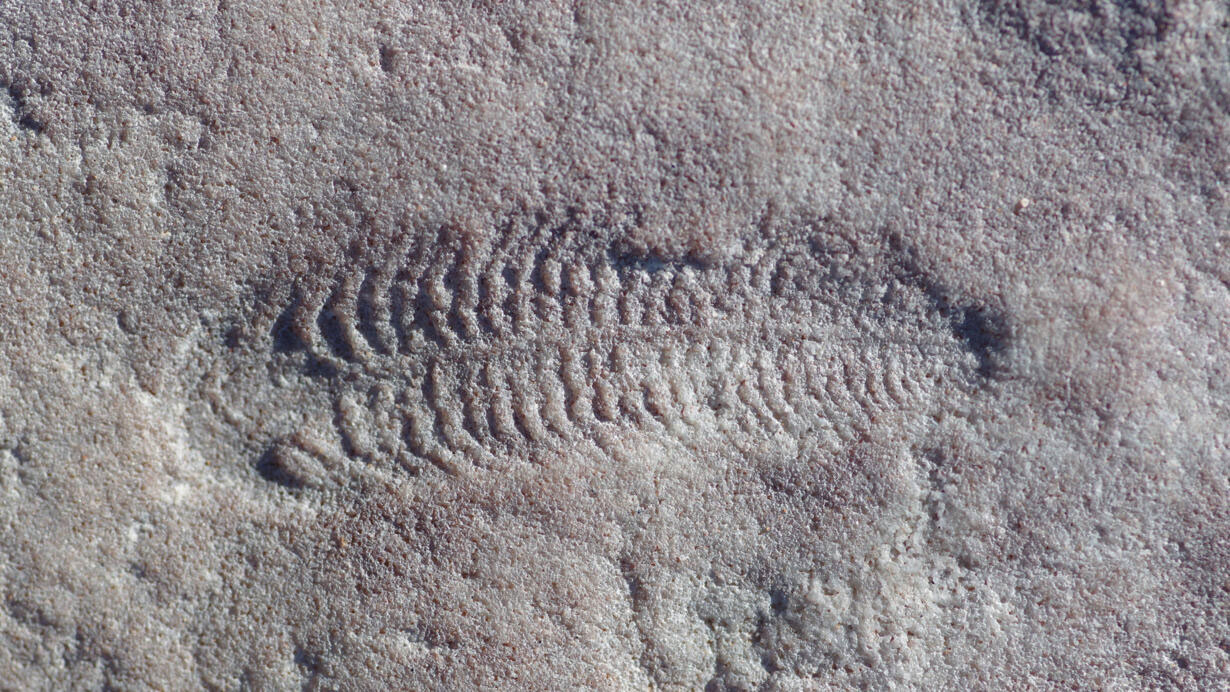
Complex behavior emerged before modern animals
The Ediacaran Period (about 635–538 million years ago) records a major transition in the history of life. Organisms that had once been microscopic began forming larger, multicellular bodies that could be seen without a microscope. Some were also capable of movement and other increasingly complex behaviors.
Evidence from this era is rare, but the Flinders Ranges and nearby areas of South Australia preserve an unusually detailed fossil record. At Nilpena Ediacara National Park, storms rapidly buried entire seafloor communities, preserving scenes from roughly 550 million years ago.
These fossil beds include Spriggina, one of the earliest known animals with bilateral symmetry—a body plan divided into front and back, left and right, and top and bottom. Humans and most living animals share this same basic organization.
Spriggina is also the state fossil of South Australia. Its name honors Reg Sprigg, who recognized the importance of the Ediacara biota in the Australian outback more than 75 years ago.
Fossils reveal a consistent rightward preference
To determine whether Spriggina favored one side, the researchers examined differences in the shapes of more than 100 exceptionally preserved specimens. The fossils came from Nilpena and the collections of the South Australia Museum in Adelaide.
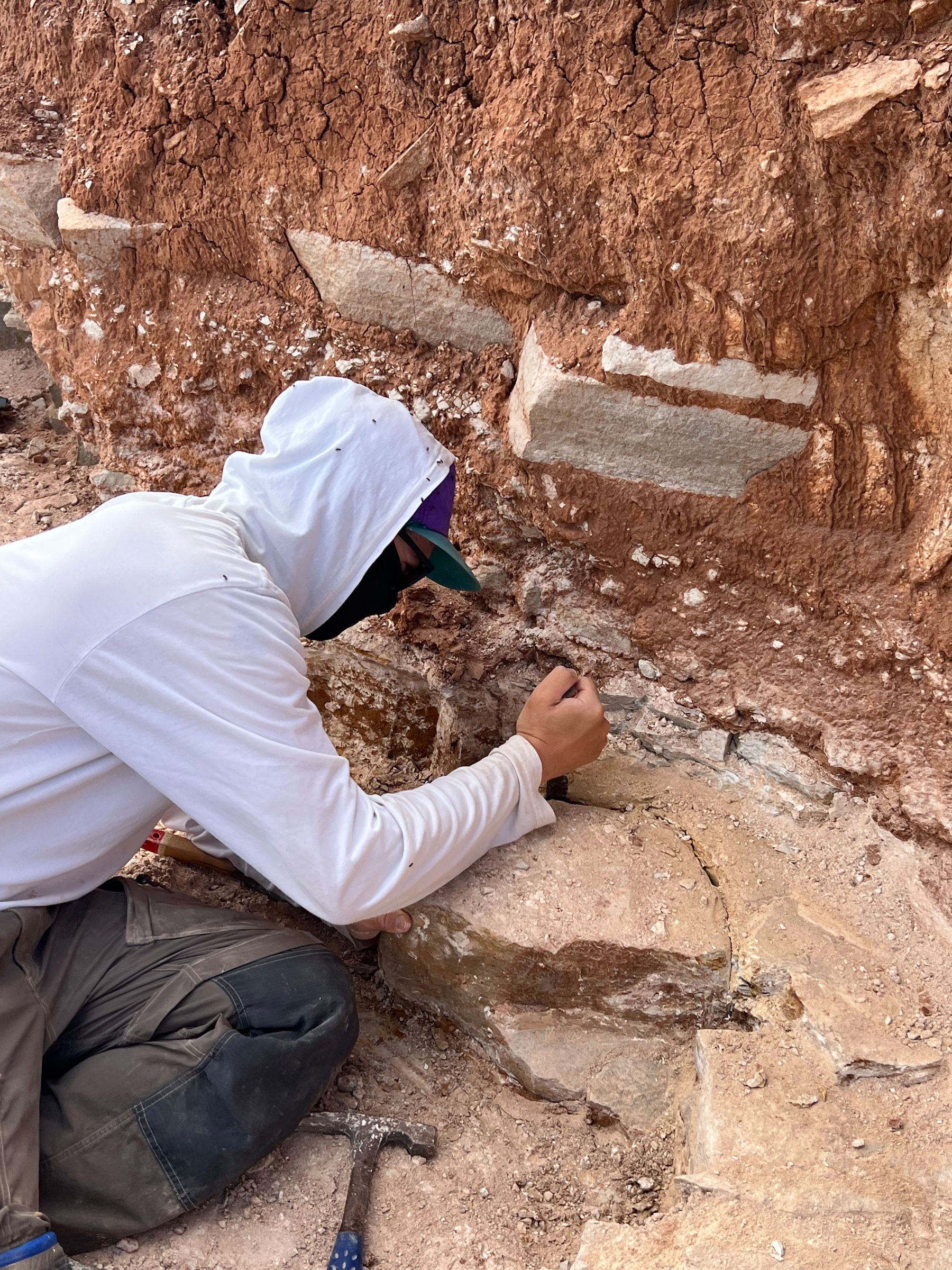
The challenge was that the fossils do not preserve the animals directly. They are mirror image impressions left in the rock, so the direction visible in a fossil is opposite to the direction the animal bent while alive.
Roughly twice as many specimens appeared to curve left as right. Once the mirror image effect was taken into account, the pattern indicated that living Spriggina bent to the right about twice as often.
Because this preference appeared across the population, the researchers concluded that the pattern was unlikely to be accidental. Spriggina may therefore be the oldest-known animal to show population-wide “handedness.”
“It’s a reminder that some of the traits we take for granted today have incredibly ancient origins,” said study coauthor Mary Droser, a paleontologist at the University of California, Riverside.
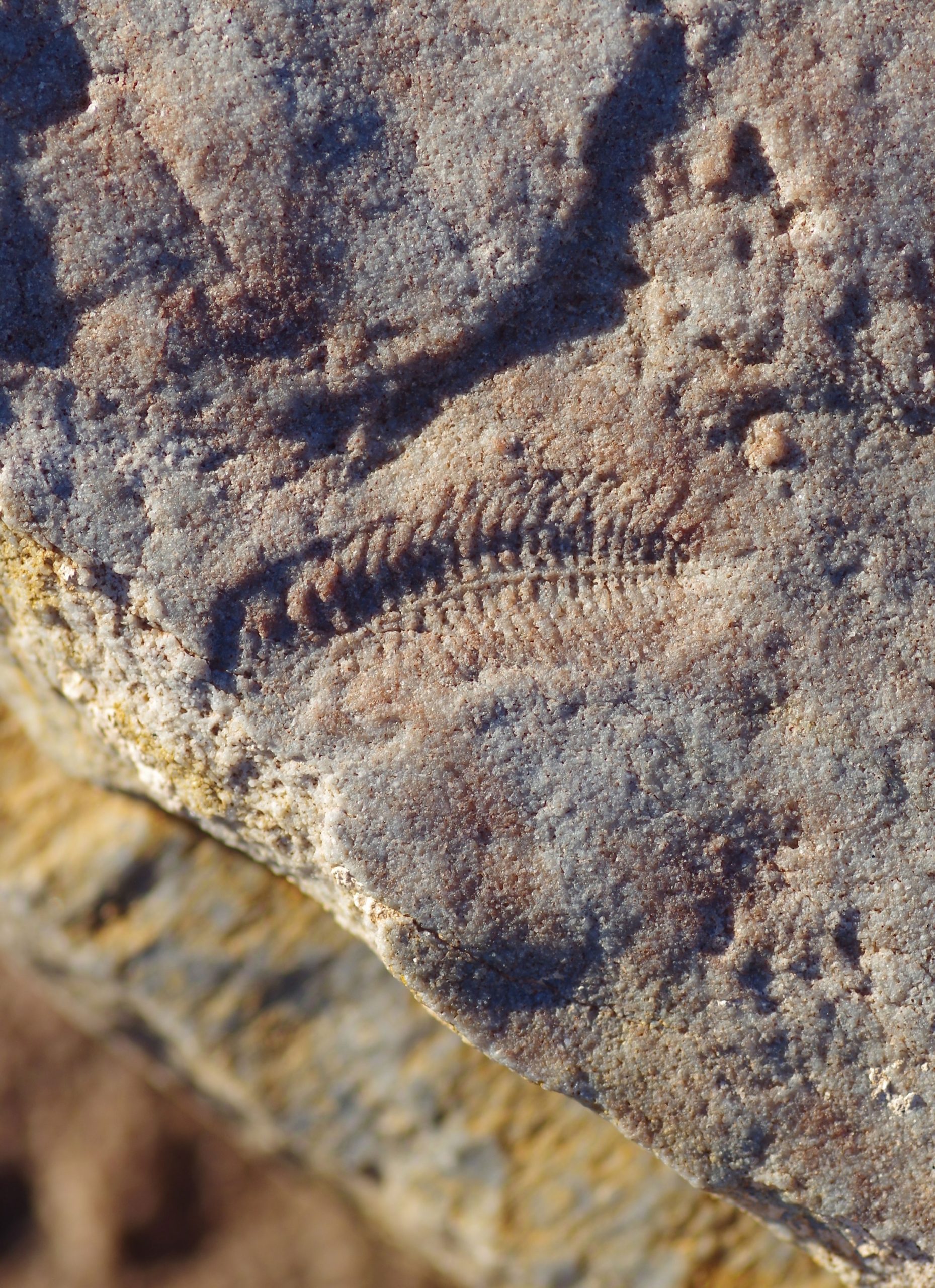
Handedness hints at a complex nervous system
The preference may reveal more than the direction in which Spriggina moved. Choosing one side consistently could indicate that the animal processed sensory information in a more organized way than its simple appearance suggests.
In living animals, lateralized behavior is often associated with complex sensory abilities and nervous systems. Finding a similar pattern in Spriggina raises the possibility that some of these neurological features had already begun developing during the Ediacaran Period.
“We know that living animals with this sort of handedness, from insects to octopi to birds and mammals, have complex sensory abilities,” Evans said. “So this may be telling us that the nervous system of Spriggina was relatively complex and more similar to those of animals that we know today.”
Reference: “Earliest evidence of behavioural handedness in the Ediacaran motile bilaterian Spriggina floundersi” by Scott D. Evans, Jenson Webb, Ian V. Hughes, William Parker and Mary L. Droser, 9 July 2026, Scientific Reports.
DOI: 10.1038/s41598-026-53857-x
This work was supported in part by NASA Exobiology grant #80NSSC19K0472.
Never miss a breakthrough: Join the SciTechDaily newsletter.
Follow us on Google and Google News.
2 Comments
It’ seems to me that several things are becoming clear. Eidiacarian animals were more complex and mobile than the passive filter feeders we used to think. And that they really should consider adding the Eidiacarian to the Phanerozoic. They used to think they were a group unrelated to animals, we now know that’s not the case. We used to think they were just unique forms that vanished before the Cambrian, we now know that’s jot the case. We used to think they were very simple forms with no advanced physical or behavioral characteristics, we now know that’s not the case.
It seems to me that several things are becoming clear. Eidiacarian animals were more complex and mobile than the passive filter feeders we used to think and that they really should consider adding the Eidiacarian to the Phanerozoic. They used to think they were a group unrelated to animals, we now know that’s not the case. We used to think they were just unique forms that vanished before the Cambrian, we now know that’s not the case. We used to think they were very simple forms with no advanced physical or behavioral characteristics, we now know that’s not the case.