
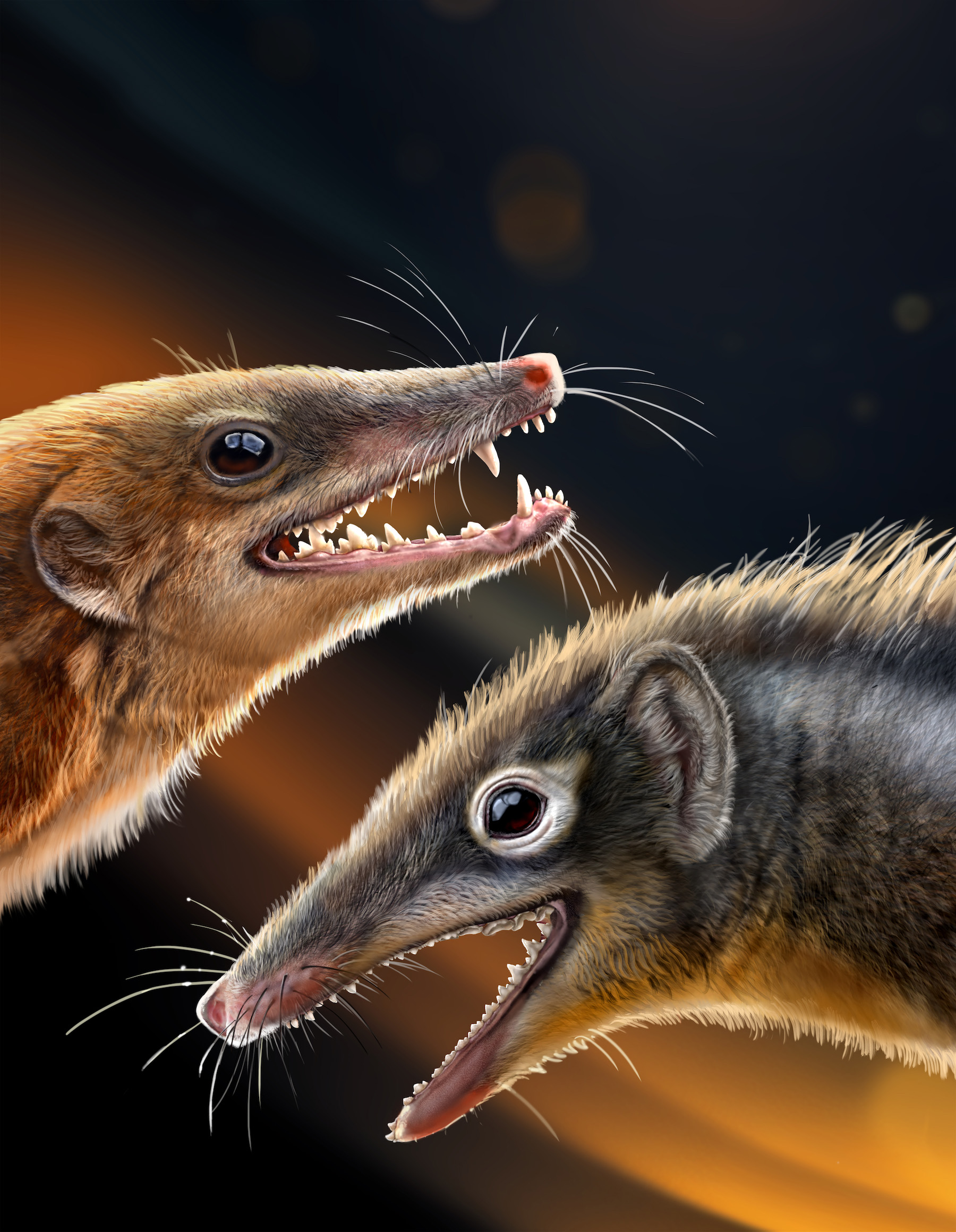
Specimens from the Jurassic period found in China illuminate the evolution of teeth, jaws, and ears in mammals.
An international team of paleontologists led by the American Museum of Natural History and the Chinese Academy of Sciences has discovered new sets of fossils from the Jurassic period that provide fresh insights into the early evolution of mammals. The findings, detailed today in two back-to-back studies in the journal Nature, could change how scientists reconstruct the earliest branches in the mammalian tree of life.
The first paper focuses on shuotheriids, a family of mouse-sized mammals with molars that are different from those in any living mammal. The evolutionary position of these animals has been heavily debated, but they have been linked to the australosphenidans, the group that includes today’s monotremes—mammals that lay eggs, such as the platypus. Analyzing two newly discovered and well-preserved skeletal fossils of shuotheriids that lived between 168–164 million years ago in what is now Inner Mongolia, the researchers found that the molars of these animals were more like those of another extinct mammal group called the docodontans. They also determined that these two specimens belong to a new genus and species, which they named Feredocodon chowi.
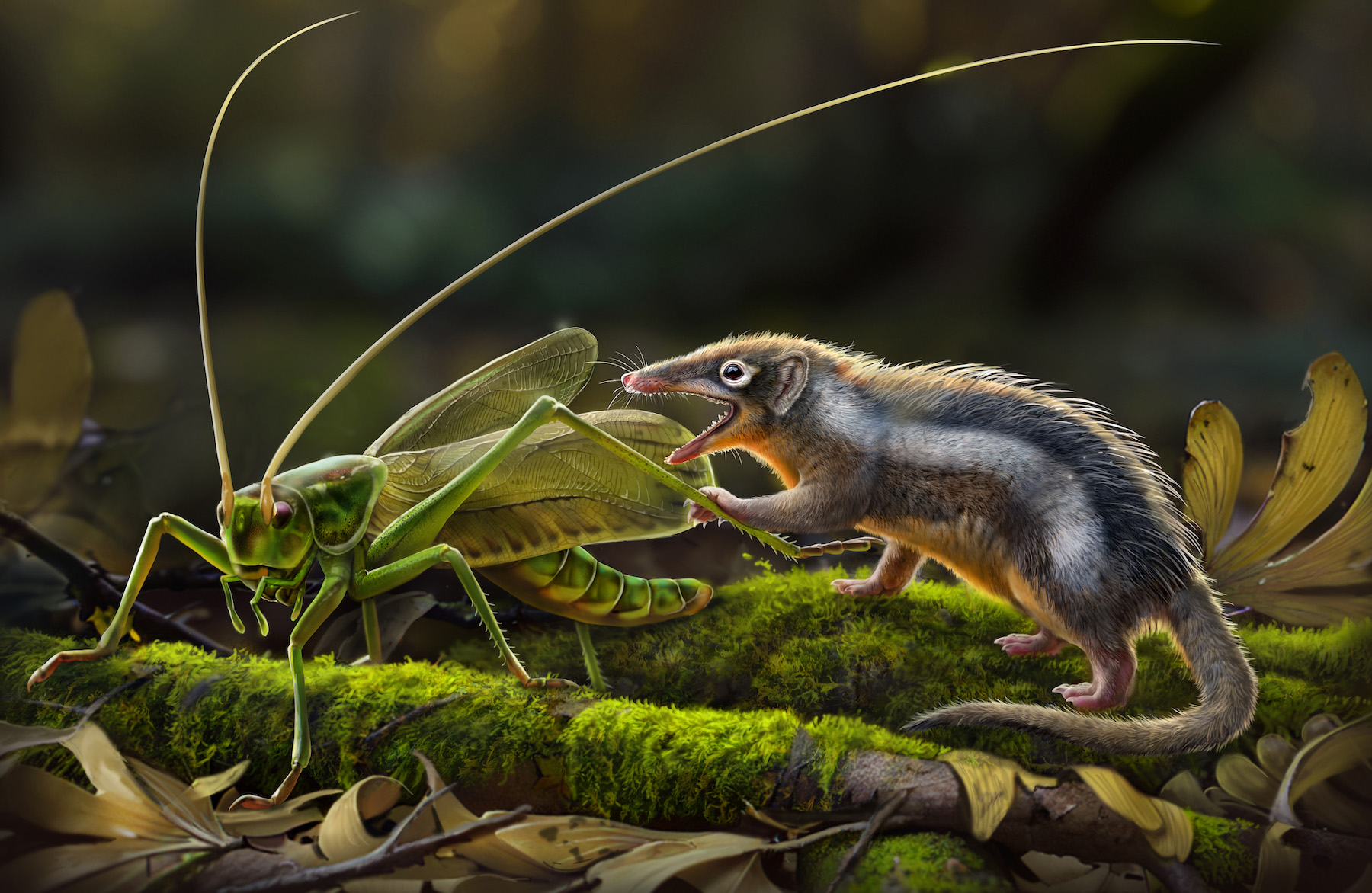
“When you look at the fossil record, both for mammals and many other sorts of animals, teeth are the part of the body that you are most likely to recover,” said Jin Meng, curator in the American Museum of Natural History’s Division of Paleontology and a corresponding author on both Nature papers along with Fangyuan Mao from the Chinese Academy of Sciences. “Yet since the 1980s, the perplexing tooth shape seen in shuotheriids has been a barrier to our efforts to understand early mammal evolution. These new specimens have allowed us to solve this longstanding problem.”
Evolution of the Mammalian Middle Ear
The second study, also led by Meng and Mao, is based on the fossil skulls of Feredocodon chowi as well as a second new species, named Dianoconodon youngi, which lived between 201–184 million years ago. In this study, the researchers looked at the structure of the middle ear, which gives modern mammals the sharpest hearing on Earth.
The modern mammalian middle ear, the area just inside the eardrum that turns vibrations in the air into ripples in the inner ear’s fluids, has three bones, or auditory ossicles—a feature that is unique to mammals. Reptiles and birds only have one middle-ear bone. Scientists know that during the early evolution of mammals from the group that includes lizards, crocodilians, and dinosaurs, bones formed the joints of the jaw were separated, and became associated with hearing. The newly described specimens provide convincing fossil evidence of this transition in action.
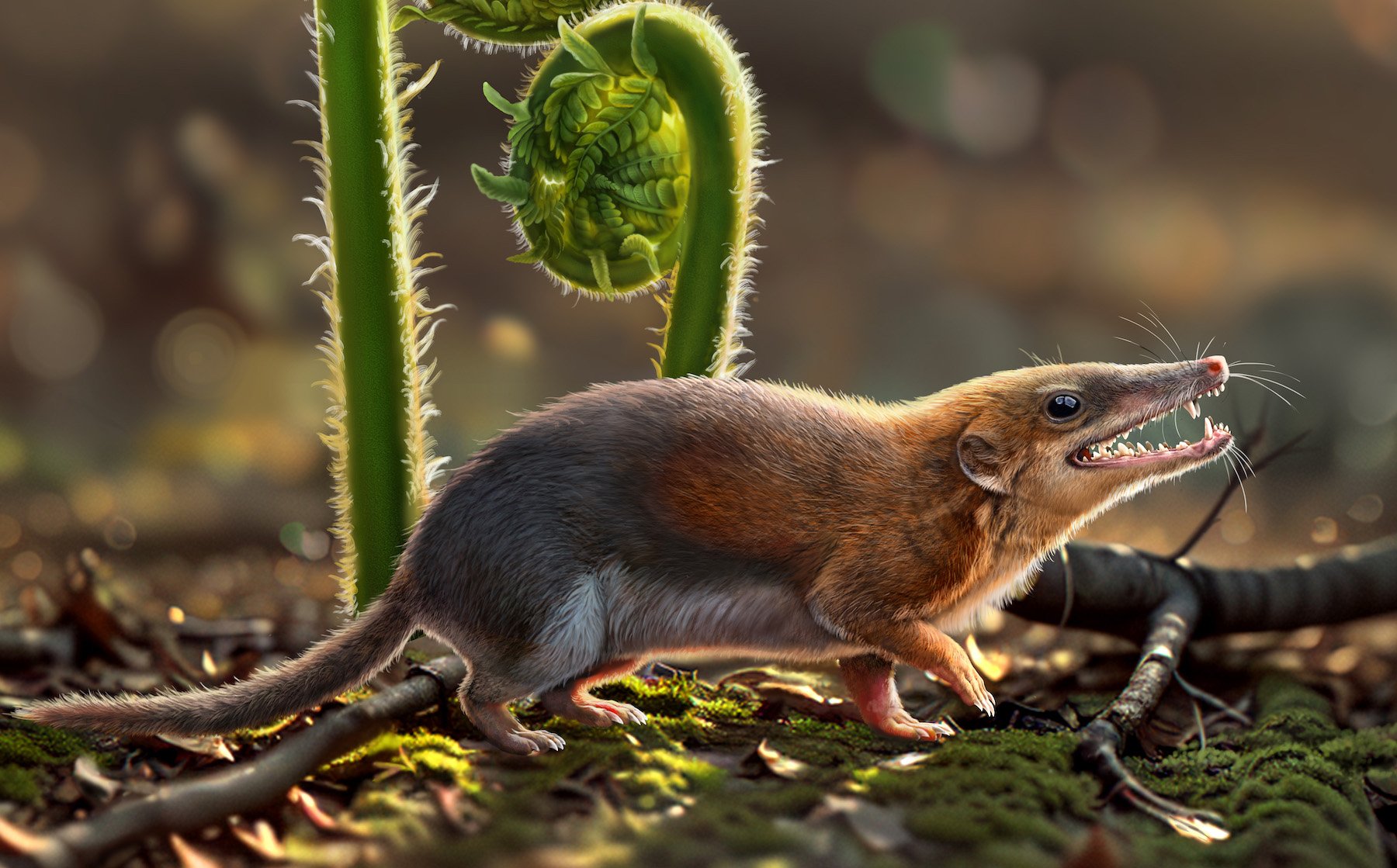
The transition started from an ancestral animal that had a double jaw joint, a feature with the joint of a mammal on the outside and a reptilian joint on the inside. Analyses on the older fossil (Dianoconodon youngi) show that one of its two joints, the reptilian one, was starting to lose its ability to handle the forces created by chewing. The younger specimen (Feredocodon chowi) already had a middle ear of mammals formed and adapted exclusively for hearing.
“Scientists have been trying to understand how the mammalian middle ear evolved since Darwin’s time,” said Meng. “While paleontological discoveries have helped reveal the process during the last a few decades, these new fossils bring to light a critical missing link and enrich our understanding of the gradual evolution of the mammalian middle ear.”
References: “Jurassic shuotheriids show earliest dental diversification of mammaliaforms” by Fangyuan Mao, Zhiyu Li, Zhili Wang, Chi Zhang, Thomas Rich, Patricia Vickers-Rich and Jin Meng, 3 April 2024, Nature.
DOI: 10.1038/s41586-024-07258-7
“Fossils document evolutionary changes of jaw joint to mammalian middle ear” by Fangyuan Mao, Chi Zhang, Jicheng Ren, Tao Wang, Guofu Wang, Fakui Zhang, Thomas Rich, Patricia Vickers-Rich and Jin Meng, 3 April 2024, Nature.
DOI: 10.1038/s41586-024-07235-0
Never miss a breakthrough: Join the SciTechDaily newsletter.
Follow us on Google and Google News.