
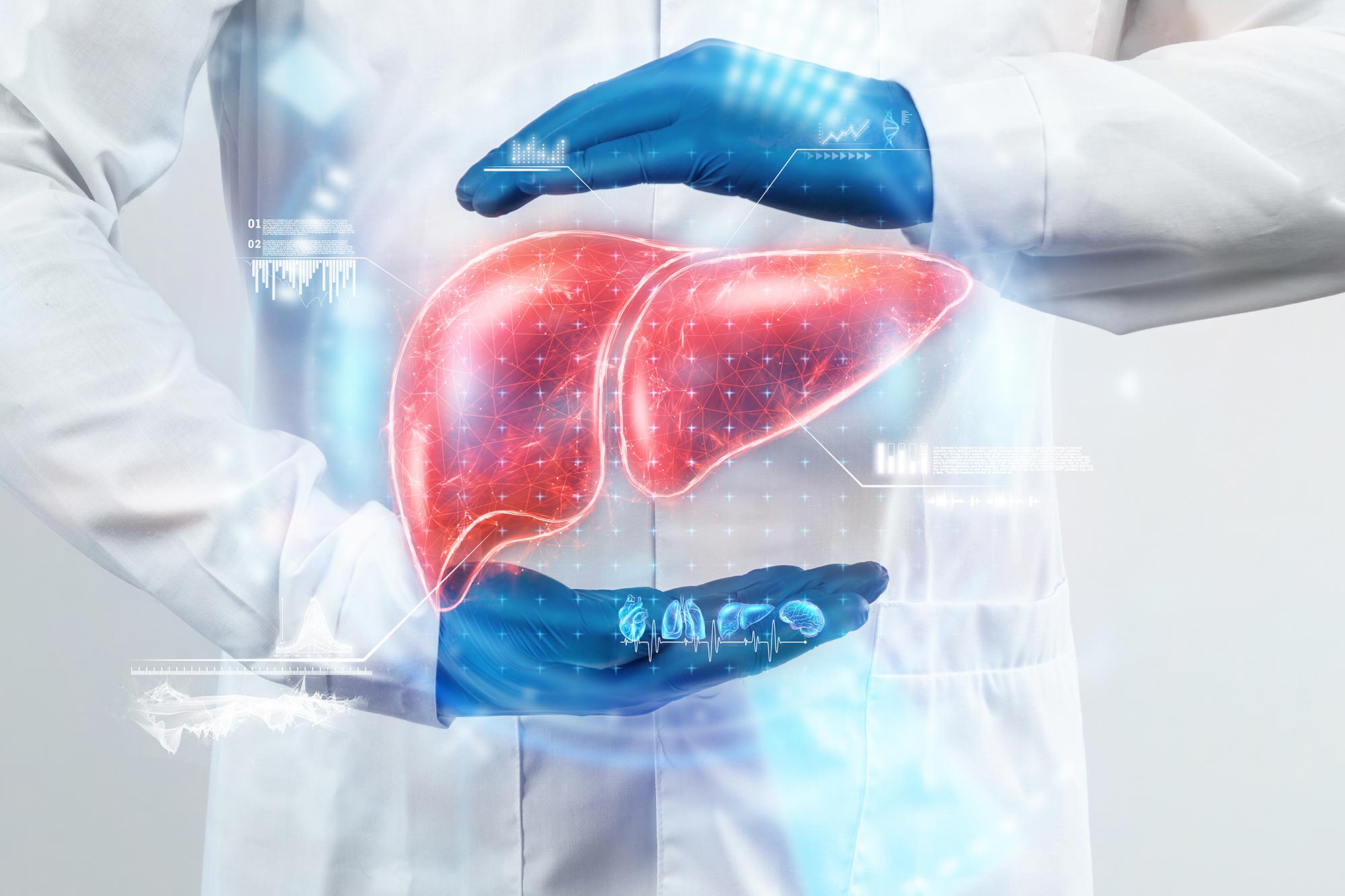
GDF15 may protect against liver inflammation and scarring through a newly identified pathway that operates independently of weight loss.
A hormone already known for reducing appetite and supporting weight loss may have another important function: protecting the liver from damaging inflammation. Researchers at McMaster University found that GDF15 works through a previously unknown signaling pathway, revealing a potential new way to address advanced fatty liver disease.
The study, published in Cell Metabolism, found that GDF15 can reduce liver inflammation and slow the development of liver scarring even when weight loss does not occur. The result challenges the idea that the hormone’s benefits are primarily tied to its effects on appetite and body weight.
Metabolic dysfunction-associated steatohepatitis (MASH) affects millions of people worldwide and can advance to cirrhosis, liver cancer, and liver failure. Although newer weight loss medications have improved outcomes for many people, inflammation in the liver can remain despite substantial weight reduction. The McMaster findings identify a pathway that directly regulates that inflammation, raising the possibility that future treatments could be used alongside therapies that reduce weight and liver fat.
“Our findings show that GDF15 does much more than regulate appetite and body weight,” says Gregory Steinberg, professor in McMaster University’s Department of Medicine, co-director of the Center for Metabolism, Obesity and Diabetes Research (MODR), and senior author of the study. “We discovered that GDF15 activates a natural brain-to-liver signaling pathway that helps suppress liver inflammation and reduce fibrosis. This changes how we think about the hormone and suggests it may be part of the body’s own defense system against chronic liver injury.”

Brain signaling suppresses liver inflammation
To uncover how GDF15 was acting, the researchers studied mouse models designed to closely resemble human MASH and combined genetic, pharmacological, genomic, and spatial transcriptomics methods. They found that GDF15 triggers signaling from the brain through the nervous system, leading to the release of glucocorticoids, steroid hormones involved in metabolism, immune function, and the stress response. These hormones reduced inflammation in the liver independently of food intake, body weight, or liver fat. GDF15 also helped slow liver fibrosis, the accumulation of scar tissue that accompanies advanced disease.
“GDF15 helps reprogram liver cells to reduce inflammation and scarring by advanced spatial technology,” says Dongdong Wang, first and corresponding author of the study and assistant professor McMaster’s Department of Medicine. “Instead of causing liver damage, GDF15 appears to help calm the liver’s immune system. It shifts immune cells into a more protective and less active state, helping reduce inflammation and prevent damage to the liver.”
GDF15 has a second protective role
Research published by Steinberg and Wang in 2023 found that GDF15 helps sustain calorie burning during weight loss. The latest findings uncover a separate function, showing that the hormone can protect the liver through a previously unknown anti-inflammatory pathway.
Taken together, the two studies could help shape future treatments aimed directly at liver inflammation, which remains difficult to treat and is a major factor driving MASH progression.
Future treatments may target inflammation
Steinberg, an executive member of NexusHealth at McMaster and chief scientific officer, shareholder, and co-founder of Espervita Therapeutics, recently co-authored preclinical research describing a promising drug candidate for advanced liver disease. While that research examined a potential therapeutic compound, the latest study instead reveals a natural pathway the body uses to control liver inflammation, providing another possible direction for developing future treatments.
“Current therapies largely focus on reducing body weight and liver fat,” says Steinberg. “Our work suggests there may be value in combining those approaches with therapies that directly target inflammation. By understanding how the body naturally protects the liver, we can identify new opportunities to develop more effective treatments for people living with MASH.”
Reference: “GDF15 suppresses liver inflammation independently of weight loss through neuroendocrine glucocorticoid signaling” by Dongdong Wang, Maria Joy Therese Jabile, Fiorella Di Pastena, Logan K. Townsend, Elham Ahmadi, Annabelle Hoegl, Alice Payne, Declan C.T. Lavoie, Battsetseg Batchuluun, Jaya Gautam, Marisa R. Morrow, James S.V. Lally, Rune E. Kuhre, Sebastian B. Jørgensen and Gregory R. Steinberg, 10 August 2026, Cell Metabolism.
DOI: 10.1016/j.cmet.2026.07.008
Never miss a breakthrough: Join the SciTechDaily newsletter.
Follow us on Google and Google News.
1 Comment
In the first illustration the two hands are in a distinctly Masonic position.