
Close Menu
    Facebook X (Twitter) Instagram
    SciTechDaily
    • Biology
    • Chemistry
    • Earth
    • Health
    • Physics
    • Science
    • Space
    • Technology
    Facebook X (Twitter) Pinterest YouTube RSS
    SciTechDaily
    Home»Health»Women With Irregular Periods May Be at Risk for Nonalcoholic Fatty Liver Disease
    Health

    Women With Irregular Periods May Be at Risk for Nonalcoholic Fatty Liver Disease

    By The Endocrine SocietyMarch 3, 2022No Comments3 Mins Read
    Facebook Twitter Pinterest Telegram LinkedIn WhatsApp Email Reddit
    Share
    Facebook Twitter LinkedIn Pinterest Telegram Email Reddit
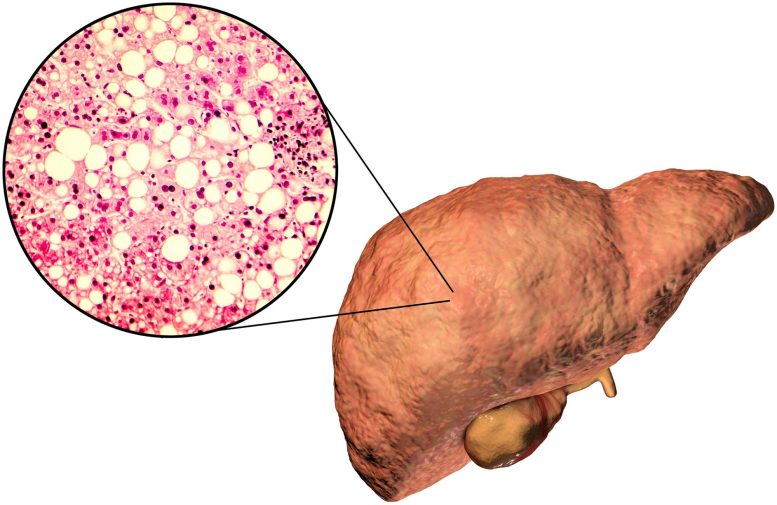
    Fatty Liver Illustration and Micrograph
    Fatty Liver illustration and micrograph.

    Women with long or irregular periods are at a higher risk of NAFLD, according to a new study. The risk is independent of obesity, highlighting the need for lifestyle changes to reduce potential health impacts.

    Women with long or irregular periods are known to have a higher risk of type 2 diabetes and heart disease, but researchers found these women may also be at risk for nonalcoholic fatty liver disease (NAFLD), according to a new study published in the Endocrine Society’s Journal of Clinical Endocrinology and Metabolism.

    About 24% of U.S. adults have NAFLD, a chronic disease in which excess fat builds up in your liver. This buildup of fat is not caused by heavy alcohol use. NAFLD can progress to chronic liver damage and is associated with a higher risk of death. Diet and exercise are the standard of care for NAFLD as no medicines have been approved to treat the disease.

    “Our study results show that long or irregular menstrual cycles may be associated with an increased risk of developing NAFLD, and this link was not explained by obesity,” said Seungho Ryu, M.D., Ph.D., of the Center for Cohort Studies, Total Healthcare Center, Kangbuk Samsung Hospital, Sungkyunkwan University School of Medicine in Seoul, South Korea. “Previous studies have shown that long or irregular menstrual cycles are associated with type 2 diabetes and cardiovascular disease, but our study is the first to find a link between long or irregular menstrual cycles and NAFLD.”

    The researchers studied a data set of 72,092 women under 40 years old. About 28% of these women had long or irregular menstrual cycles, and 7% had NAFLD. The researchers followed up four years later and found new cases of NAFLD occurred in almost 9% of the women. The researchers concluded that there was an association between long or irregular menstrual cycles in young, premenopausal women and an increased risk of NAFLD.

    “Young women with long or irregular menstrual cycles may benefit from lifestyle changes to reduce the risk of NAFLD as well as other cardiometabolic diseases,” Ryu said.

    Reference: “Long or Irregular Menstrual Cycles and Risk of Prevalent and Incident Non-Alcoholic Fatty Liver Disease” by In Young Cho, Yoosoo Chang, Jae-Heon Kang, Yejin Kim, Eunju Sung, Hocheol Shin, Sarah H Wild, Christopher D Byrne and Seungho Ryu, 3 March 2022, The Journal of Clinical Endocrinology & Metabolism.
    DOI: 10.1210/clinem/dgac068

    Other authors of this study include: In Young Cho, Yoosoo Chang, Jae-Heon Kang, Yejin Kim, Eunju Sung and Hocheol Shin of Kangbuk Samsung Hospital, Sungkyunkwan University School of Medicine in Seoul, South Korea; Sarah Wild of the University of Edinburgh in Edinburgh, U.K; and Christopher Byrne of the University of Southampton and the University Hospital Southampton in Southampton, U.K.

    The study received funding from Sungkyunkwan University and the Southampton NIHR Biomedical Research Centre.

    Never miss a breakthrough: Join the SciTechDaily newsletter.
    Follow us on Google and Google News.

    Endocrine Society Endocrinology Liver
    Share. Facebook Twitter Pinterest LinkedIn Email Reddit

    Related Articles

    Men With Sex Addiction May Have Higher Levels of “Love Hormone” Oxytocin

    Intermittent Fasting Can Help Prevent and Manage Chronic Diseases Such As Diabetes and Heart Disease

    A Common Type of Antacid May Improve Blood Sugar Control in People With Diabetes

    Exposure to Harmful Chemicals in Plastics and Personal Care Products May Contribute to Postpartum Depression

    New Once-Weekly Insulin Helps Patients With Type 2 Diabetes Achieve Similar Results to Daily Insulin

    Over 80% of Hospitalized COVID-19 Patients Have Vitamin D Deficiency, Study Finds

    Doctor’s Warn: COVID-19 May Cause Deadly Blood Clots – Higher Risk for Some Women

    Greater Weight Loss for Obese Patients That Get Bariatric Surgery Before Diabetes Develops

    Burn Twice as Many Calories: Eat a Big Breakfast Rather Than a Large Dinner

    Leave A Reply Cancel Reply

    • Facebook
    • Twitter
    • Pinterest
    • YouTube

    Don't Miss a Discovery

    Subscribe for the Latest in Science & Tech!

    Trending News

    The Universe Is Expanding Too Fast and Scientists Can’t Explain Why

    “Like Liquid Metal”: Scientists Create Strange Shape-Shifting Material

    Early Warning Signals of Esophageal Cancer May Be Hiding in Plain Sight

    Common Blood Pressure Drug Shows Surprising Power Against Deadly Antibiotic-Resistant Superbug

    Scientists Uncover Dangerous Connection Between Serotonin and Heart Valve Disease

    Scientists Discover a “Protector” Protein That Could Help Reverse Hair Loss

    Bone-Strengthening Discovery Could Reverse Osteoporosis

    Scientists Uncover Hidden Trigger Behind Stem Cell Aging

    Follow SciTechDaily
    • Facebook
    • Twitter
    • YouTube
    • Pinterest
    • Newsletter
    • RSS
    SciTech News
    • Biology News
    • Chemistry News
    • Earth News
    • Health News
    • Physics News
    • Science News
    • Space News
    • Technology News
    Recent Posts
    • A Common Diabetes Drug May Hold the Key to Stopping HIV From Coming Back
    • Ancient “Syphilis-Like” Disease in Vietnam Challenges Key Scientific Assumptions
    • Drinking Alcohol To Cope in Your 20s Could Damage Your Brain for Life
    • Scientists Crack Alfalfa’s Chromosome Mystery After Decades of Debate
    • Ancient Ant-Plant Alliance Collapses As Predatory Wasps Move In
    Copyright © 1998 - 2026 SciTechDaily. All Rights Reserved.
    • Science News
    • About
    • Contact
    • Editorial Board
    • Privacy Policy
    • Terms of Use

    Type above and press Enter to search. Press Esc to cancel.