

A peer-reviewed study highlights how encapsulated leptin-producing cells can accelerate circadian realignment in preclinical models.
Jet lag and shift work can throw the body’s internal clock off course for days, disturbing sleep, altering metabolism, and contributing to other health effects. Researchers at Rice University, supported by the Rice Biotech Launch Pad, and Northwestern University have developed an implantable cell therapy that may help the body adjust more quickly when its normal schedule is disrupted.
In the study, researchers used encapsulated cells engineered to continuously release leptin, a hormone involved in metabolism. The treatment shortened the time animals needed to adjust to changes in the light-dark cycle designed to simulate jet lag and shift work. Published in Advanced Science, the results provide early evidence that metabolic signaling delivered through engineered cells could be used to influence circadian rhythms.
“Current approaches for adjusting circadian rhythms rely heavily on precisely timed behaviors such as light exposure, meal schedules or melatonin administration,” said Omid Veiseh, professor of bioengineering at Rice and faculty director of the Rice Biotech Launch Pad. “We wanted to explore whether a temporary cell therapy could provide a more practical way to help the body adapt to changing schedules.”
Engineered cells provide temporary leptin support
The treatment uses human retinal pigment epithelial cells modified to produce leptin, a hormone widely known for its role in appetite and metabolism. Researchers enclosed the cells inside microscopic spheres made from alginate, which shield them from the immune system while still allowing therapeutic proteins to enter the body. After a subcutaneous injection beneath the skin, the cells temporarily raise leptin levels in the bloodstream before gradually losing viability.
“Metabolism and circadian rhythms are closely connected, but the therapeutic potential of that relationship remains largely unexplored,” said Martha Hotz Vitaterna, professor of neurobiology at Northwestern University and co-corresponding author on the study. “These findings suggest that metabolic signals can be leveraged to accelerate adaptation to circadian disruptions.”
Animals adapted faster to shifted schedules
In experiments with mice, those given the leptin-producing cells adjusted significantly faster to both advances and delays in the light-dark cycle. When their schedule was delayed by four hours, treated mice adapted 50% faster than control animals.
The researchers then tested the approach in cynomolgus macaques to examine whether the results might translate to an animal with sleep-wake patterns more similar to those of humans. The treatment was well tolerated and shortened adjustment following six-hour schedule changes by about one day compared with controls.
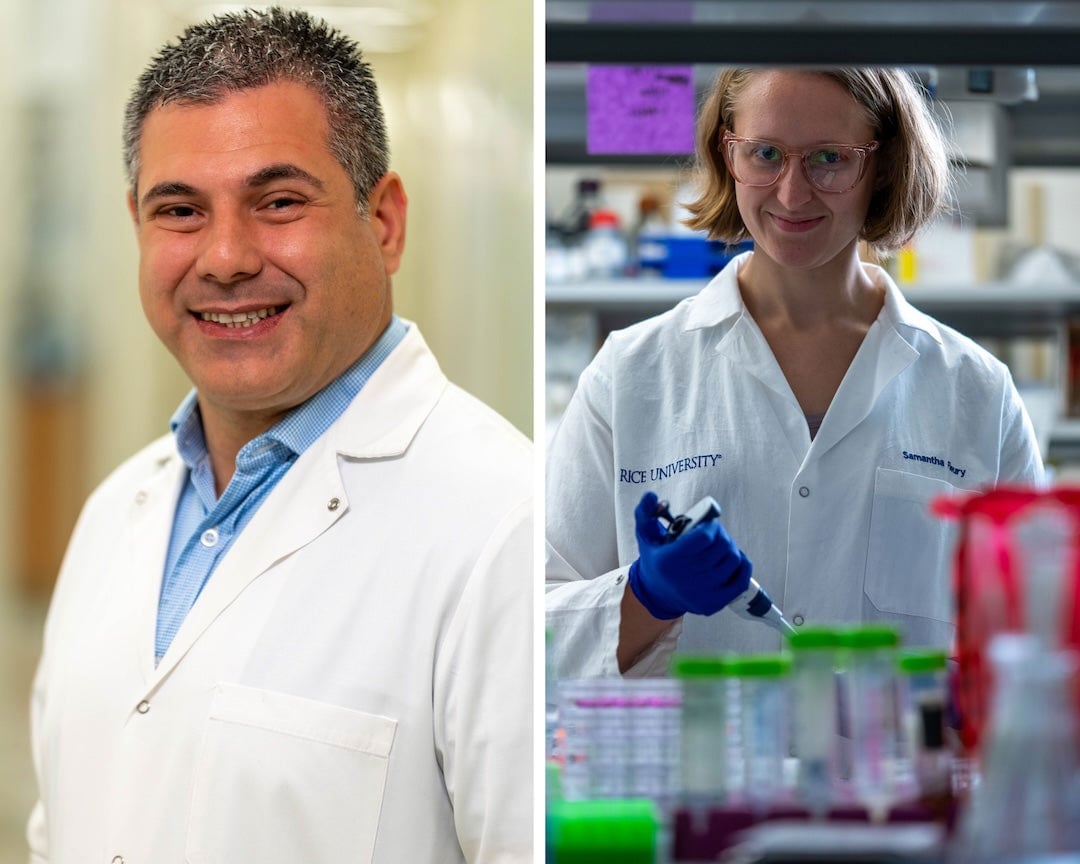
“The fact that we observed similar effects in both rodents and non-human primates suggests that the underlying biology may be conserved across species,” said Fred Turek, director of Northwestern’s Center for Sleep and Circadian Biology and a senior author on the study.
To determine how completely the animals had adjusted, researchers tracked several physiological measures associated with circadian alignment, including activity, heart rate, and core body temperature. Across these indicators, animals receiving the leptin-producing implants reached the new schedule faster than untreated controls.
The treatment also did not appear to interfere with sleep. Analysis in non-human primates found no decrease in total sleep time, rapid eye movement sleep, or non-REM sleep. After some schedule changes, researchers also recorded greater slow-wave sleep activity, which suggested that sleep quality during recovery may have improved.
The therapy was temporary and well tolerated
The researchers also examined the platform’s safety and practical characteristics. Blood testing and clinical monitoring found no evidence of significant toxicity in non-human primates, while animals given multiple doses over one year showed no long-term adverse effects. The encapsulated cells continued functioning for several days before naturally declining, making the treatment temporary and reversible.
“Our goal was not to permanently alter the circadian system,” Samantha Fleury, first author on the publication, said. “We wanted a therapy that could provide short-term support during periods of disruption and then naturally resolve.”
The researchers say the technology could eventually be investigated for situations involving repeated disruption of the body clock, including shift work, military operations, international travel, and other circumstances that require rapid adjustment to changing schedules.
“This work provides further evidence that metabolic pathways can be harnessed to influence circadian biology,” said Jonathan Rivnay, professor of biomedical engineering and materials science and engineering at Northwestern University and a senior author on the study. “More broadly, it demonstrates how engineered cell therapies can be used to deliver biologically active molecules in ways that would be difficult to achieve through conventional dosing.”
The researchers next plan to study how leptin influences circadian regulation and develop new versions of the platform that could provide adjustable or repeatable support for realigning the body clock.
Reference: “Encapsulated Leptin-Producing Cells Facilitate Entrainment of Circadian Rhythms in Rodents and Nonhuman Primates” by Samantha T. Fleury, Xuanyi Lin, Peter D. Rios, Christopher Olker, Eun Joo Song, Alejandra Cobos Perez, Cody Fell, Daisy Lopez, Ira Joshi, Hafsa Nasir, Cecelia Curtis, Danna Muringi, Kaiyuan Wang, José Oberholzer, Fred W. Turek, Isaac B. Hilton, Jonathan Rivnay, Martha Hotz Vitaterna and Omid Veiseh, 13 August 2026, Advanced Science.
DOI: 10.1002/advs.77191
The research was supported by the 711th Human Performance Wing and the Defense Advanced Research Projects Agency under agreement number FA8650-21-1-7119.
Never miss a breakthrough: Join the SciTechDaily newsletter.
Follow us on Google and Google News.