
Close Menu
    Facebook X (Twitter) Instagram
    SciTechDaily
    • Biology
    • Chemistry
    • Earth
    • Health
    • Physics
    • Science
    • Space
    • Technology
    Facebook X (Twitter) Pinterest YouTube RSS
    SciTechDaily
    Home»Science»Giant Crocodylians Ruled South America’s Ancient Food Chain
    Science

    Giant Crocodylians Ruled South America’s Ancient Food Chain

    By Juha Merimaa, University of HelsinkiAugust 23, 2026No Comments3 Mins Read
    Facebook Twitter Pinterest Telegram LinkedIn WhatsApp Email Reddit
    Share
    Facebook Twitter LinkedIn Pinterest Telegram Email Reddit
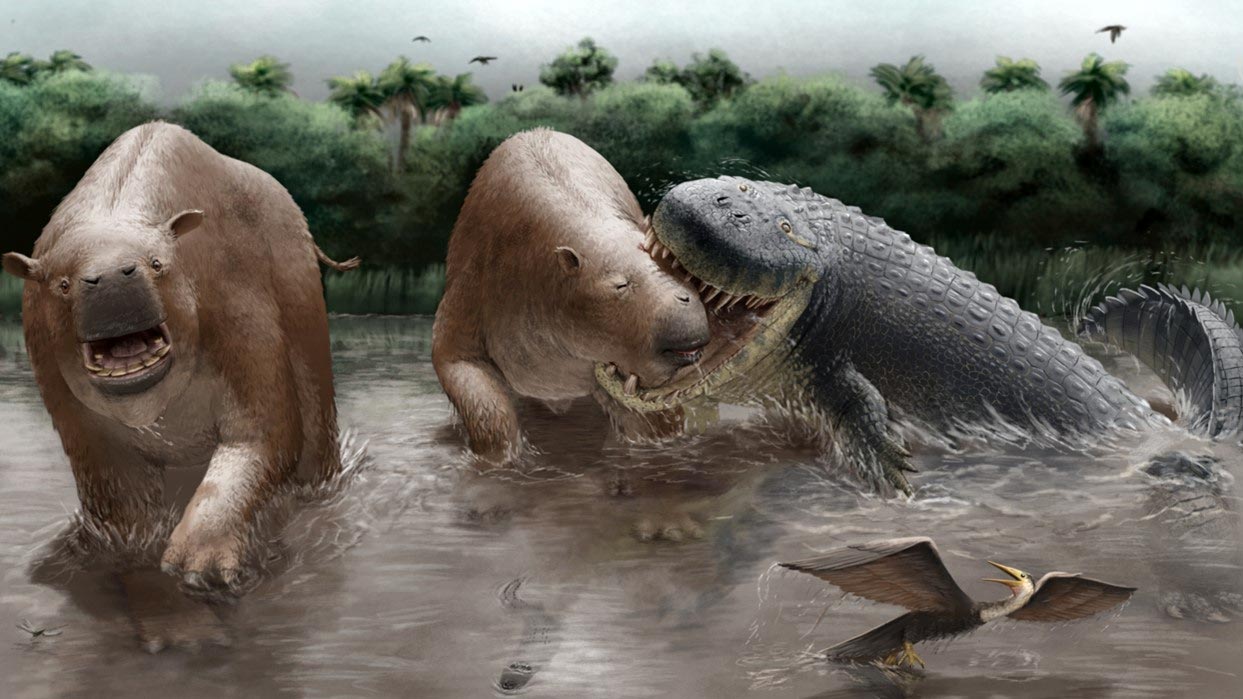
    Purussarus neivensis Attacking Pericotoxodon platignathus
    Reconstruction of Purussarus neivensis attacking Pericotoxodon platignathus. Credit: Miguel Hernandez

    Fossil bite marks suggest giant crocodylians, especially Purussaurus neivensis, dominated large prey hunting in Miocene South America.

    More than 10 million years ago, a vast lake spread across much of South America, surrounded by an extraordinary collection of predators and prey. Giant turtles and crocodylians occupied its waters, while anacondas, saber-toothed mammals, flightless “terror birds,” and sebecids, terrestrial relatives of crocodylians, hunted along its shores.

    Among all of these predators, new research suggests that crocodylians played the dominant role in this Miocene ecosystem.

    “There was so much prey available that mammalian predators couldn’t have eaten it all,” says Oscar Wilson, postdoctoral researcher at the University of Helsinki.

    “Our new study shows that crocodylians in particular were the region’s most important predators, especially when it came to hunting large prey.”
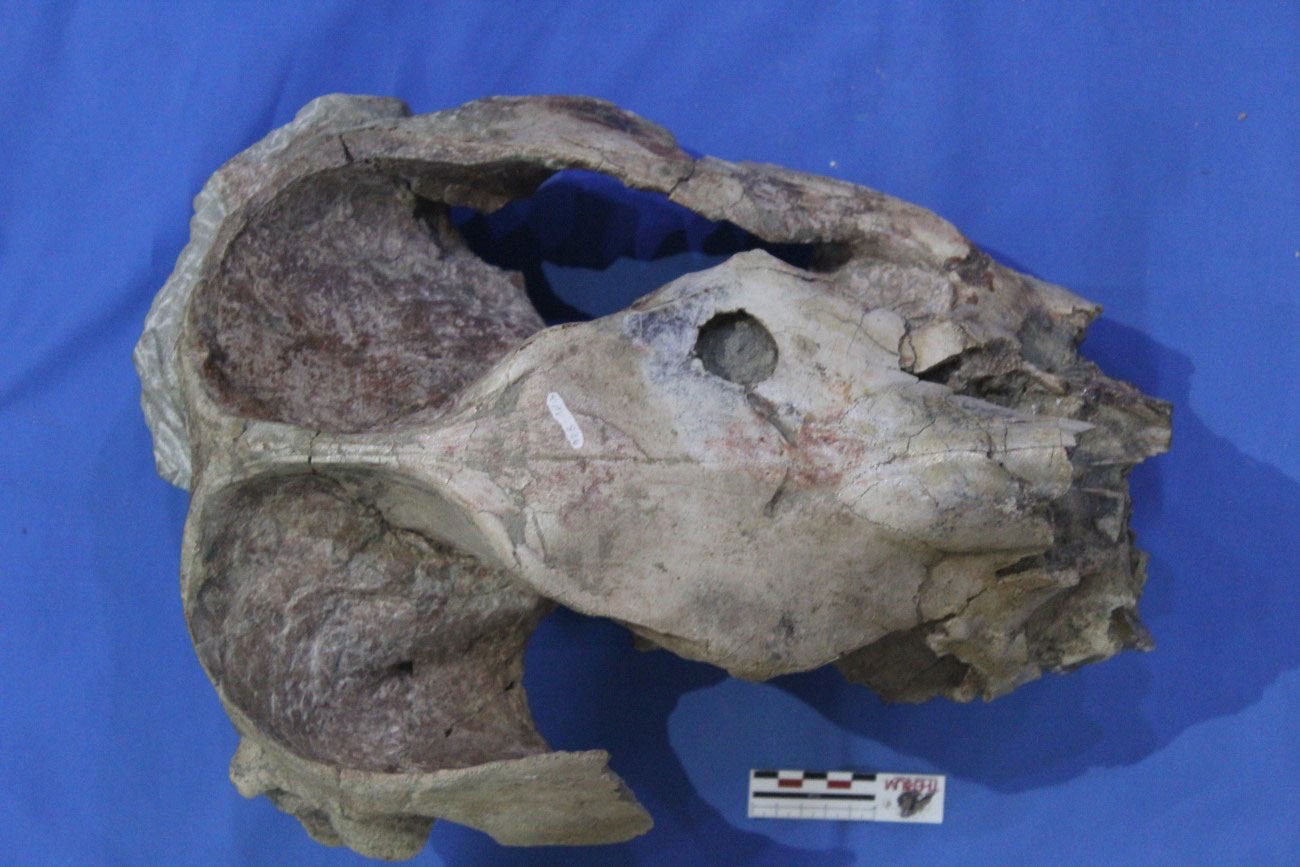
    Skull of Pericotoxodon Platignathus
    Skull of Pericotoxodon platignathus showing the puncture mark likely made by Purussaurus neivensis. Credit: University of Helsinki

    Giant crocodylians dominated large prey

    The lakeshore supported an equally impressive range of herbivores. Giant ground sloths, glyptodonts, which were relatives of armadillos, and several groups of ungulates lived there, including astrapotheres (“lightning beasts”) and toxodontids. Some of these ungulates could weigh well over a metric ton.

    Their predators could reach enormous sizes as well. The largest known predator in the ecosystem was Purussaurus neivensis, a relative of modern caimans that grew to about seven meters long and weighed roughly 1,800 kilograms. As an apex predator, it may even have helped shape the size of local herbivore populations, according to the study.
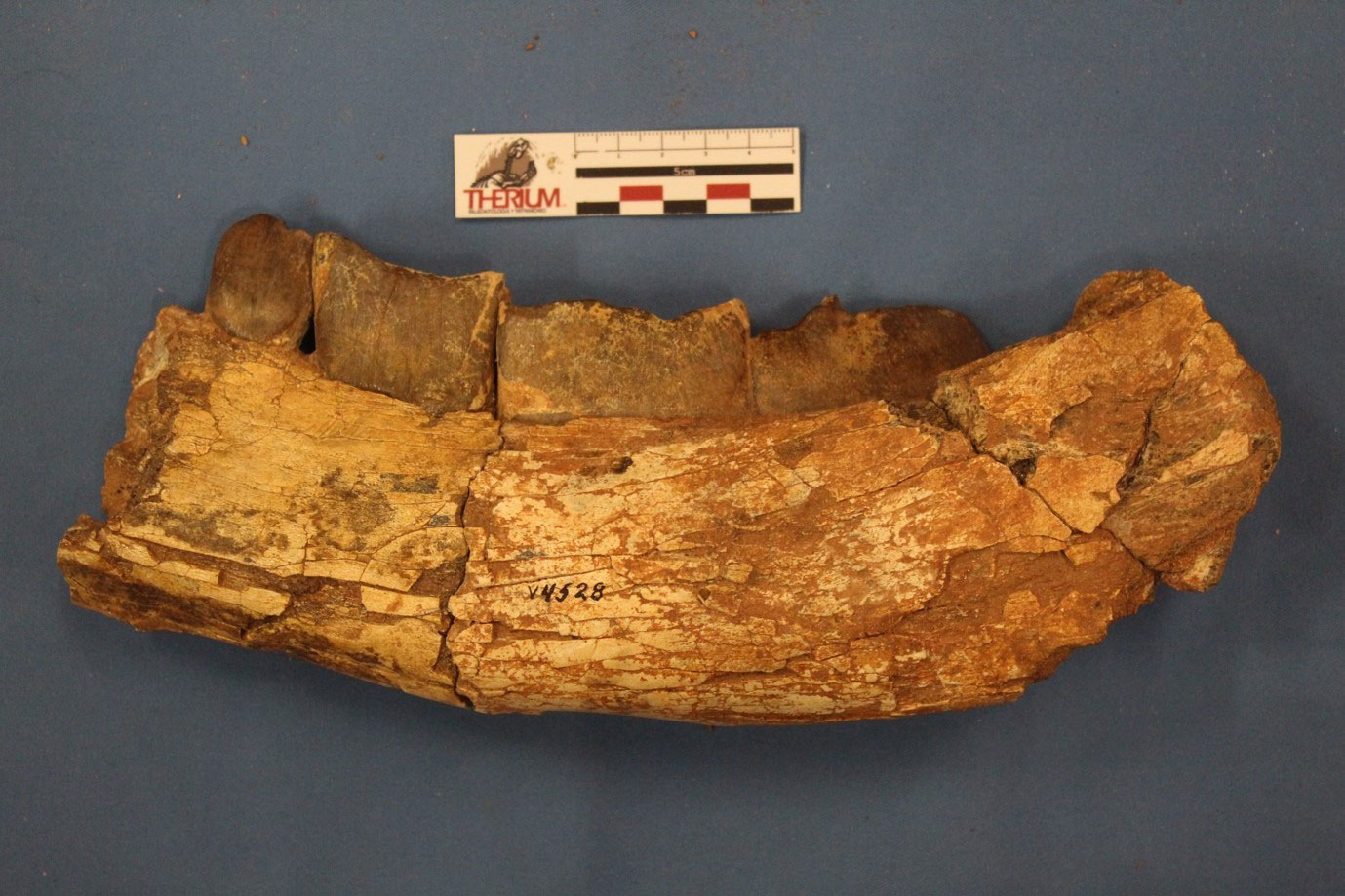
    Jawbone of Xenastrapotherium Kraglievichi
    Jawbone of Xenastrapotherium kraglievichi that features marks of both predation by Purussaruus neivensis and possible scavenging by Langstonia huilensis. Credit: University of Helsinki

    Bite marks reveal the predator hierarchy

    To reconstruct these ancient interactions, researchers examined fossils preserved in museum collections. Bite and tooth marks left on herbivore remains provide the only direct evidence that particular predators interacted with their prey. The fossils included in the analysis ranged from 10.5 million to 16 million years old.

    “The frequency of marks likely made by Purussaurus suggests that it was an important predator in these tropical ecosystems,” Wilson comments.

    Reference: “Physical evidence of crocodylian predation on ungulates in the Middle Miocene of Colombia” by Oscar E. Wilson, Jorge W. Moreno-Bernal, Catalina Suarez, Frank Cardozo Tovar, Andrés Vanegas, Rubén Vanegas, Ethan A. Shirley, Patricia A. Holroyd and John-Paul Zonneveld, 16 August 2026, Journal of Vertebrate Paleontology.
    DOI: 10.1080/02724634.2026.2701154

    Never miss a breakthrough: Join the SciTechDaily newsletter.
    Follow us on Google and Google News.

    Crocodiles Fossils Paleontology Popular University of Helsinki
    Share. Facebook Twitter Pinterest LinkedIn Email Reddit

    Related Articles

    This Fossil Upends a Decades-Old Debate About Snake Evolution

    Scientists Reconstruct a Giant 31-Foot “Dinosaur-Killer” Crocodile in Unprecedented Detail

    One of the Oldest Ever Found: New Ancient “Marine Crocodile” Discovered

    Carnufex Carolinensis – North America’s Top Predator Before Dinosaurs?

    Prehistoric Fossilized Eocene Epoch Turtles Died Locked In Coitus

    27-Foot Long Crocodylus Thorbjarnarsoni Roamed Kenya

    Cretaceous Period Sankofa Pyrenaica Fossilized Eggs Are Unusually Shaped

    Microraptor Feathers Were Black With Iridescent Sheen

    Hundreds of Lost Fossils From the Darwin Collection Rediscovered by the British Geological Survey

    Leave A Reply Cancel Reply

    • Facebook
    • Twitter
    • Pinterest
    • YouTube

    Don't Miss a Discovery

    Subscribe for the Latest in Science & Tech!

    Trending News

    Giant Crocodylians Ruled South America’s Ancient Food Chain

    Scientists Warn of a Nearly 400% Increase in Toxic Liver Injuries – One Common Drug Leads the List

    JWST Finds a “Star” 100 Billion Times Brighter Than Any Star Should Be

    Scientists Find a Hidden Biological Link Across Different Forms of Autism

    Astronomers Discover a Ghostly River of Stars That Could Reveal Dark Matter

    Why Is Colorectal Cancer Rising in People Under 50? New Clues Point to the Environment

    Quantum Fluctuations Break a Crystal’s Symmetry Rules

    Why Does an Irregular Heartbeat Strike 40 Years Early in Some People?

    Follow SciTechDaily
    • Facebook
    • Twitter
    • YouTube
    • Pinterest
    • Newsletter
    • RSS
    SciTech News
    • Biology News
    • Chemistry News
    • Earth News
    • Health News
    • Physics News
    • Science News
    • Space News
    • Technology News
    Recent Posts
    • A 20-Year Study Finds Preschool Can Influence Success for Years
    • 55-Million-Year-Old Penguin Fossils Preserve Clues to a Warmer Antarctica
    • A 35,000-Year-Old Neanderthal Pelvis May Explain Why Men and Women Walk Differently
    • Hidden Brain Wiring May Help Preserve Thinking As Gray Matter Shrinks
    • Dual Stem Cell Treatment Restores Vision in First Human Trial
    Copyright © 1998 - 2026 SciTechDaily. All Rights Reserved.
    • Science News
    • About
    • Contact
    • Editorial Board
    • Privacy Policy
    • Terms of Use

    Type above and press Enter to search. Press Esc to cancel.