
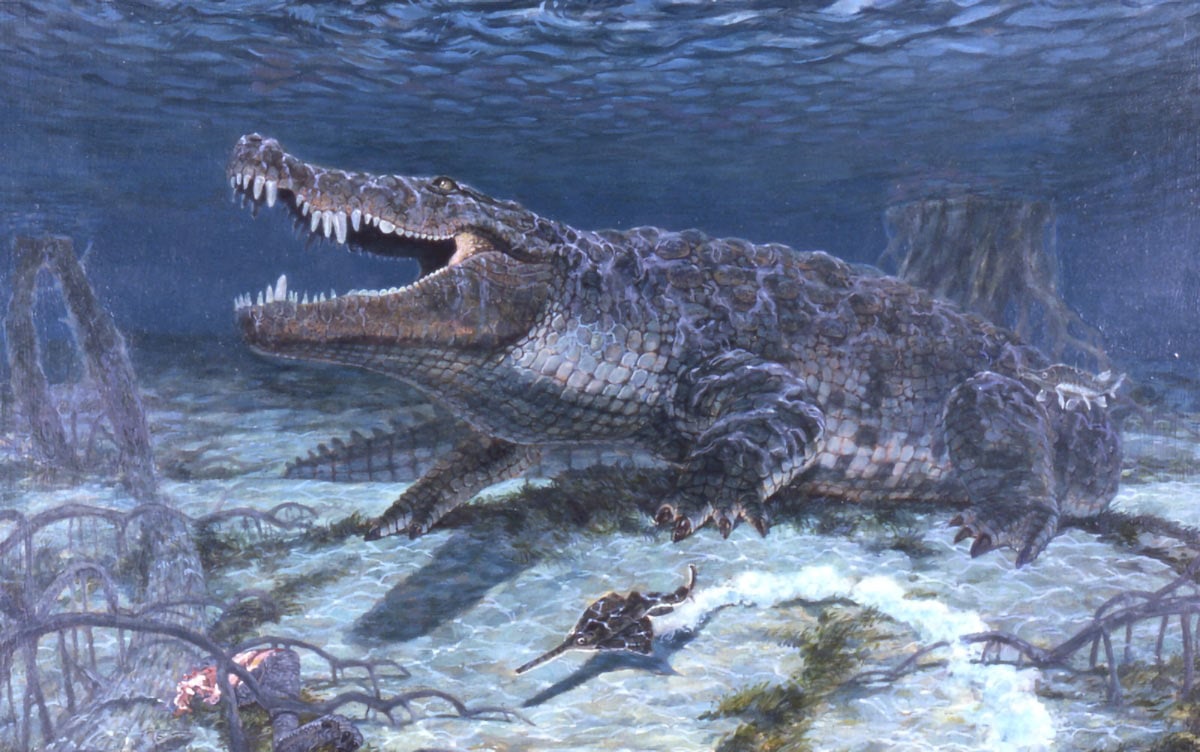
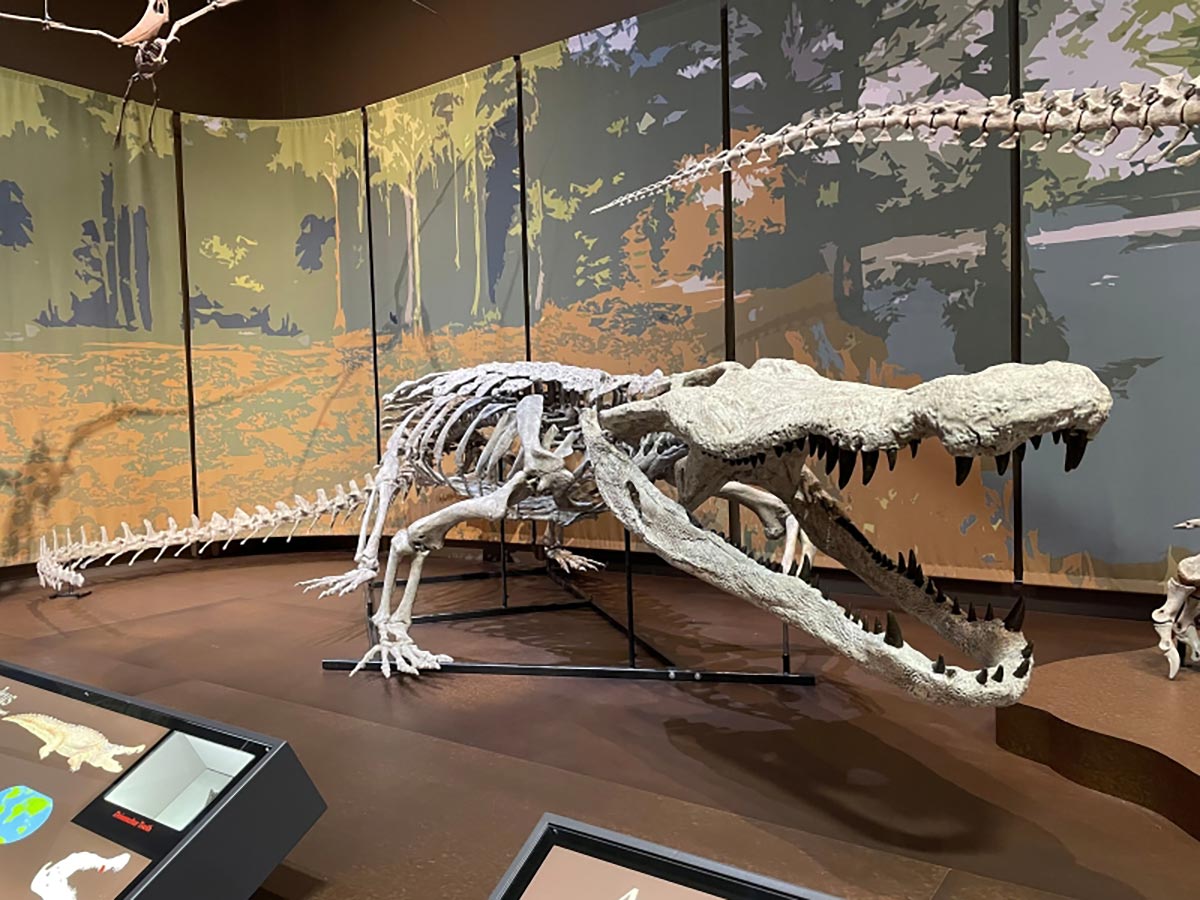
A full-scale Deinosuchus schwimmeri skeleton brings decades of paleontological research into a single, scientifically precise exhibit.
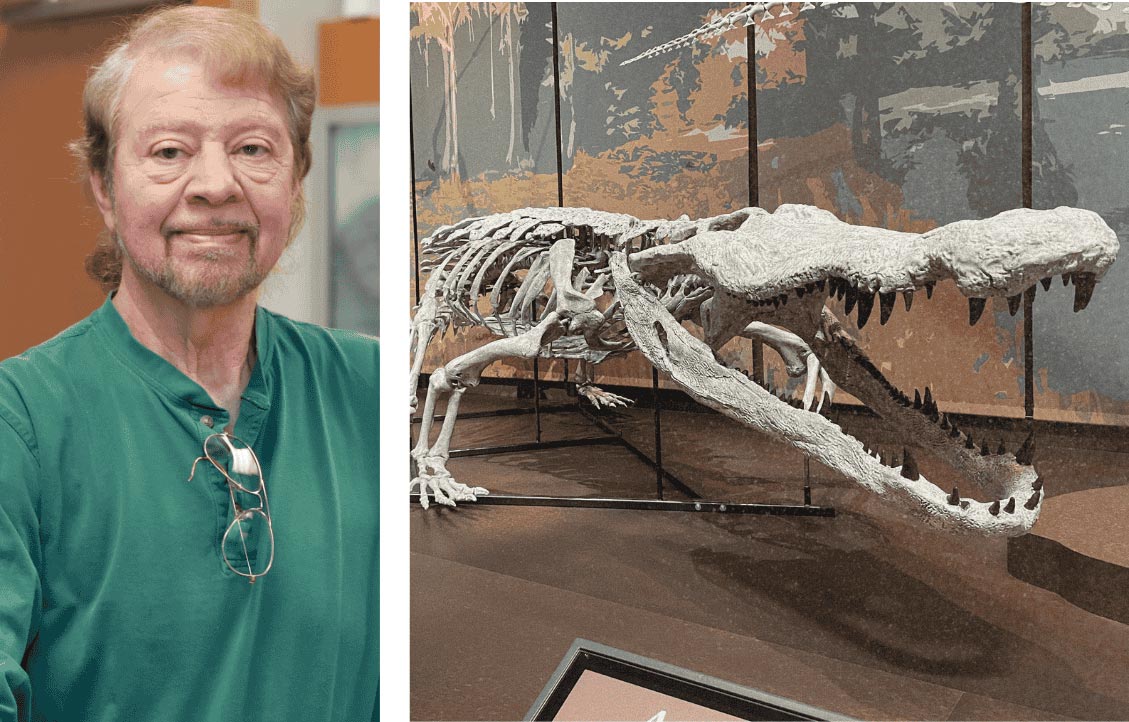
Dr. David Schwimmer, a geology professor at Columbus State University and an internationally recognized authority on the giant prehistoric crocodilian genus Deinosuchus, has helped bring a long extinct predator into public view. His research informed the creation of the first scientifically accurate, fully mounted skeleton replica of Deinosuchus schwimmeri. Long described as a “dinosaur-killer,” Deinosuchus is widely regarded as the dominant predator of its environment during the Late Cretaceous.
Deinosuchus schwimmeri lived in what is now the eastern United States between 83 million and 76 million years ago. A massive relative of modern alligators, it fed on dinosaurs and reached lengths of up to 31 feet (9.45 meters), roughly the size of a school bus.
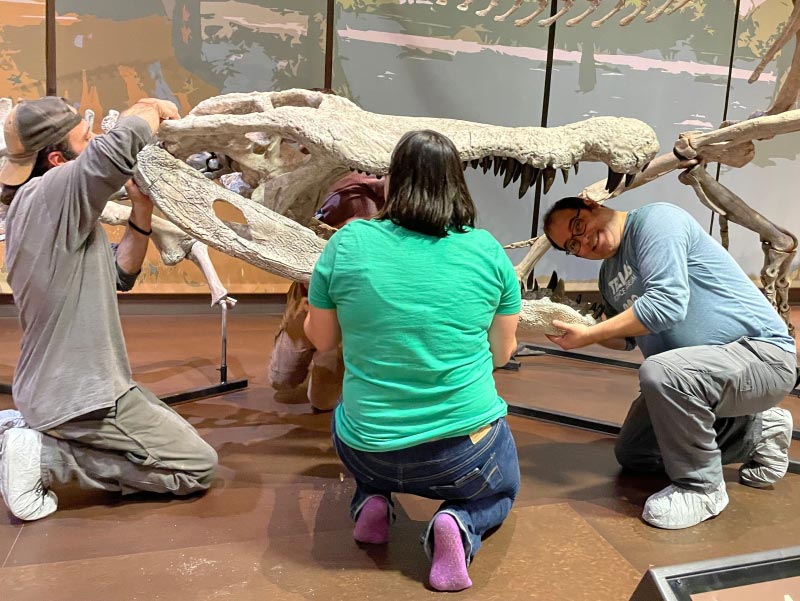
The newly completed replica was commissioned by the Tellus Science Museum in Cartersville, Georgia, where it has recently been installed. Its creation reflects two years of close collaboration between Schwimmer and Triebold Paleontology Inc., a company known worldwide for producing museum-quality fossil skeletons.
Bringing an apex predator back to life
“Each year, we have thousands of students visit us from across Georgia and neighboring states,” said Hannah Eisla, director of education at the Tellus Science Museum. “Many of these students come on school field trips specifically to learn more about the region they call home and how it has changed over time. The addition of Deinosuchus schwimmeri allows us to provide a more detailed picture of this area’s ecosystem in the Cretaceous Period.”
Rebecca Melsheimer, the museum’s curatorial coordinator, emphasized the impact of encountering the replica in person. “Tellus is currently the only museum to have a cast of Deinosuchus schwimmeri, so this is an experience our visitors can’t get anywhere else,” she said. “The scale of the dinosaurs and other creatures that lived during [the Late Cretaceous epoch] is hard to capture in words or pictures. We can tell you that Deinosuchus is 30 feet long, but seeing it is far more impactful.”
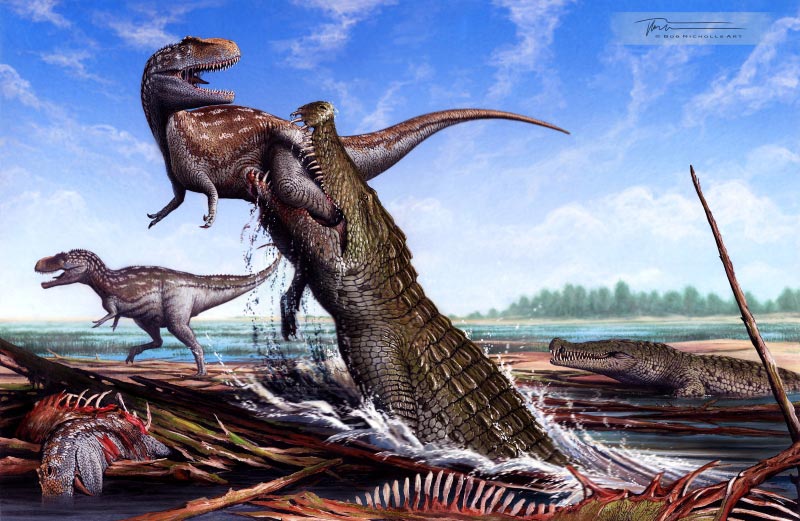
In 2020, a team of paleontologists formally identified and named the species Deinosuchus schwimmeri in recognition of Schwimmer’s decades of detailed fossil research. Their study, published in the Journal of Vertebrate Paleontology in July 2020, cited his extensive body of work, including peer-reviewed articles, conference presentations, and his 2002 book on giant North American Cretaceous crocodilians. The authors noted that the name honors “his tireless work on the Late Cretaceous paleontology of the Southeast and Eastern Seaboard, USA.”
Decades of fossils behind one skeleton
Schwimmer has spent more than 40 years searching for and excavating fossil remains of Deinosuchus schwimmeri. His fieldwork, supported in part by grants from National Geographic, has taken him to fossil sites across Alabama, Georgia, and Texas. Specimens he helped recover are now housed in major repository institutions, including the Smithsonian Institution in Washington, D.C., the American Museum of Natural History in New York, and the Tellus Science Museum.
Transforming fragmentary fossil evidence into a life-sized, scientifically grounded skeleton required extensive technical work. Schwimmer explained that Triebold Paleontology used high-resolution 3D scans of fossil material to reconstruct the animal’s skeletal framework and distinctive dermal armor. The resulting replica reflects the most current scientific understanding of Deinosuchus anatomy and provides researchers and the public with a clearer picture of one of the largest predators ever to inhabit North America.
“These replicas are more than just creating a ‘scare factor,’” Schwimmer explained. “Understanding dinosaurs’ predatory habits helps us decode some of nature’s greatest survival strategies. By studying these ancient apex predators, we are essentially looking back in time to see exactly how life adapted and dominated a changing world.”
Research decades in the making
Schwimmer grew up in New York City just 10 blocks from the American Museum of Natural History, and it was there that a terrifying skull display sparked his fascination with Deinosuchus. Since finding his first Deinosuchus fossil remains in 1979—a year after joining Columbus State (then Columbus College)—his research has focused on piecing together the life and environment of this creature.
Today, his research on Deinosuchus has made him a worldwide expert on life in the Late Cretaceous epoch (100.5 million years ago to 66 million years ago) in the Southeast U.S. His research, dating back to the 1980s, led to the discovery of evidence for specific “firsts” in Georgia: flying reptiles (pterodactyls), the first dinosaurs, and the first Deinosuchus.
Schwimmer—who once worked as a science writer for pioneering ocean explorer Jacques-Yves Cousteau—detailed the first two decades of his research findings in his popular 2002 book, “King of the Crocodylians: The Paleobiology of Deinosuchus.” It was an Amazon top-seller in its category for several weeks and a popular book-of-the-month selection by science-oriented reading clubs, such as one organized by the Discovery Educator Network.
The book, which Schwimmer is currently updating, has helped shape the understanding of Deinosuchus and other Mesozoic animals in Georgia and garnered him international recognition as a top paleontology scholar. Since then, respected museums like Atlanta’s Fernbank Museum of Natural History, the University of Texas’ Vertebrate Paleontology Laboratory, and the Tellus Museum have sought his expertise on their fossil collections and educational displays.
In 2010, Schwimmer drew international attention for two published fossil studies linked to Deinosuchus: his research on dinosaur-bone bite marks, and research on fossilized dung (coprolites) by 2010 undergraduate environmental science and geology major Samantha (Harrell) Stanford, whom he supervised. Those studies appeared in the special symposium volume of the “New Mexico Museum of Natural History and Science Bulletin,” a publication with an international reputation, and at the March 2010 Geological Society of America Northeastern-Southeastern Annual Meeting. Harrell was cited as contributing to both studies.
Training the next generation in the field
Schwimmer pointed out that specialties like paleontology and other natural, Earth, and space sciences offer students opportunities to conduct “backyard research” with faculty at regional universities like Columbus State. He said that locally based research opportunities are plentiful for students wishing to get their hands dirty, as well as offering other benefits.”
“[Harrell] came out in the field and collected fossils with me. At most universities, undergraduates rarely collaborate on or publish peer-reviewed research. Institutions of our size provide undergraduate students like Samantha with greater one-on-one access to faculty mentors and field-based research opportunities like this that, while local, are still quite impactful on the field,” Schwimmer said.
With several Deinosuchus sites within 40 miles of Columbus, the area has been a rich bed of discovery for Schwimmer and the student researchers who have tagged along on his expeditions. Schwimmer said that proximity is also what makes the Tellus Science Museum a natural place for one of the first Deinosuchus fossil replicas.
“Bones and fossils tell us only part of the story,” Schwimmer concluded. “Fully assembled, life-size replicas become a blueprint for better understanding the dynamic animals that creatures like Deinosuchus really were.”
Reference: “A systematic review of the giant alligatoroid Deinosuchus from the Campanian of North America and its implications for the relationships at the root of Crocodylia” by Adam P. Cossette and Christopher A. Brochu, 29 July 2020, Journal of Vertebrate Paleontology.
DOI: 10.1080/02724634.2020.1767638
Never miss a breakthrough: Join the SciTechDaily newsletter.
Follow us on Google and Google News.
7 Comments
Amazing people will believe this tripe.
Nothing prehistoric about this creature, its a Crocodile !
LMAO
You must be an uneducated maga sheep
Nothing political here. Just wondering how animals at that stage of Earth’s evolution enabled creatures to grow to such enormous sizes. Was there a different chain of DNA in them that enabled growth unknown in our time or was it a different food chain developing?
The environment and atmosphere. It was way hotter and there was more oxygen. This contributed to animals extreme sizes combined we ith DNA and competing with other animals for survival.
My understanding is that it was due to the overall environmental differences. The air was more oxygen rich, vegetation packed more nutrients, and when one species grew large it triggered growth in other species that needed to be large in order to hunt larger prey or needed to be large in order to defend from predators.
Obviously, there were also biological/genetic advantages, such as a more efficient lung capacity and lighter hollow bones that could support the weight of gigantic bodies better than more heavy solid bones.
I believe I once read their was a higher oxygen level in the air at a earlier time it allowed for larger animals to exist/
The environment and atmosphere. It was way hotter and there was more oxygen. This contributed to animals extreme sizes combined we ith DNA and competing with other animals for survival.