
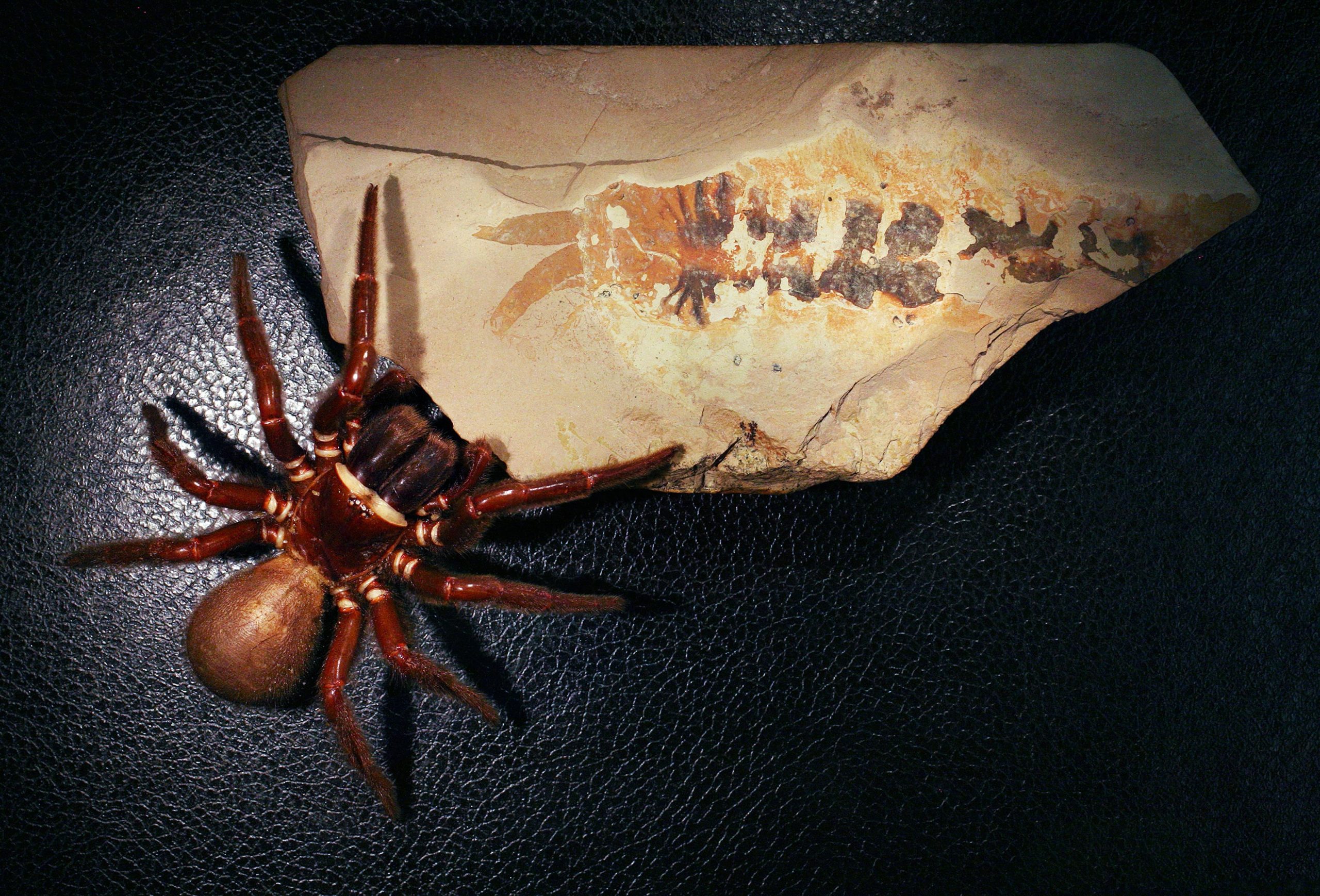
A tiny claw in a 500-million-year-old fossil just rewrote the origin story of spiders.
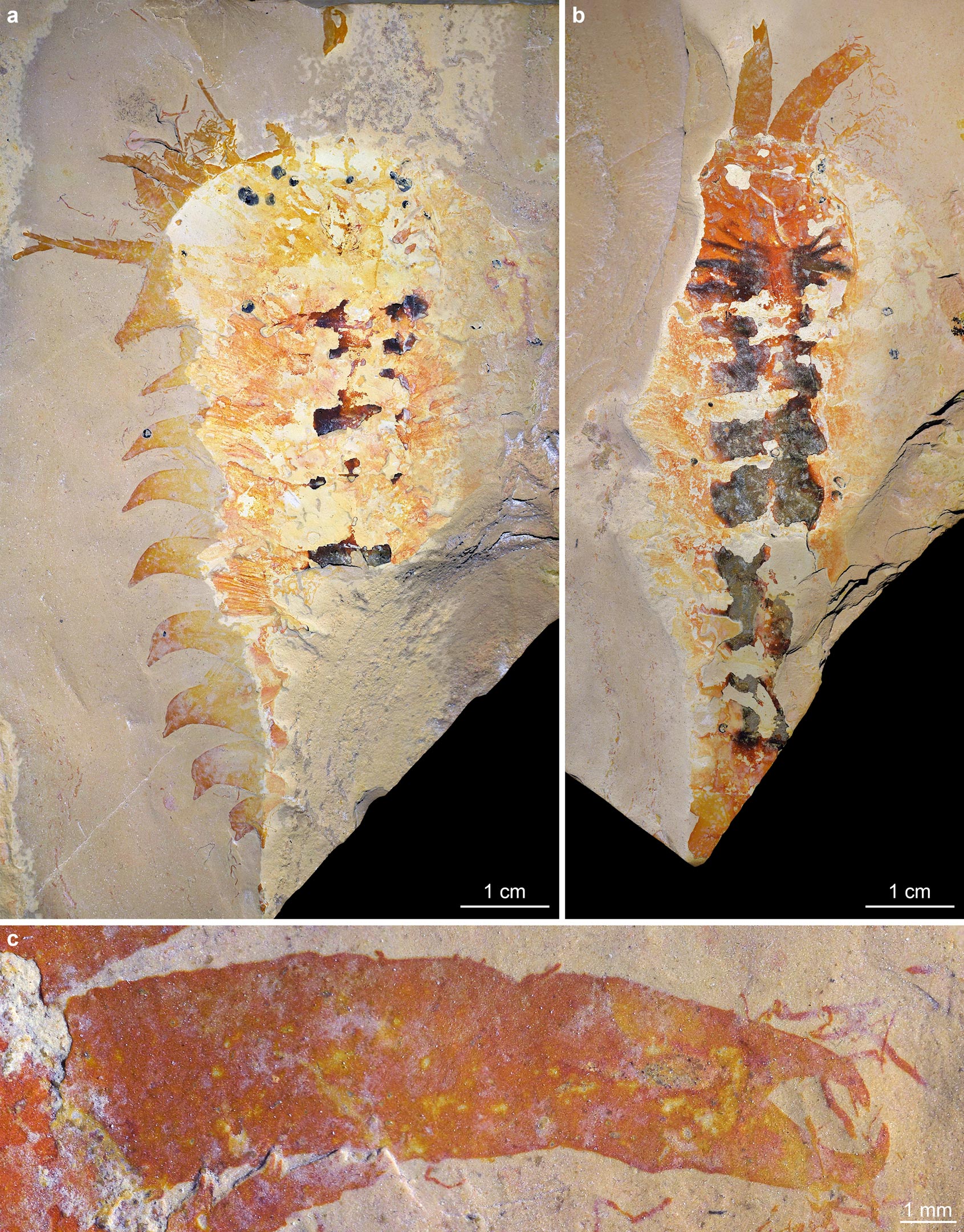
After a full day of teaching, Rudy Lerosey-Aubril turned to a task he found especially rewarding: preparing a Cambrian arthropod fossil for study. As he carefully cleaned the specimen, it initially appeared typical for its age. But one detail quickly stood out. Where an antenna should have been, he saw something unexpected. It looked like a claw.
“Claws are never in that location in a Cambrian arthropod,” said Lerosey-Aubril, “It took me a few minutes to realize the obvious, I had just exposed the oldest chelicera ever found.”
Oldest Known Chelicerate Identified
In a study published today (April 1) in Nature, Lerosey-Aubril and Associate Professor Javier Ortega-Hernández, Curator of Invertebrate Paleontology in the Museum of Comparative Zoology – both in the Department of Organismic and Evolutionary Biology at Harvard – describe Megachelicerax cousteaui, a sea predator that lived about 500 million years ago in what is now Utah’s West Desert. This fossil represents the earliest known member of the chelicerates, a major arthropod group that includes spiders, scorpions, horseshoe crabs, and sea spiders. The find pushes the origin of this group back by roughly 20 million years.
“This fossil documents the Cambrian origin of chelicerates,” noted Lerosey-Aubril, “and shows that the anatomical blueprint of spiders and horseshoe crabs was already emerging 500 million years ago.”
A Detailed Look at Its Anatomy
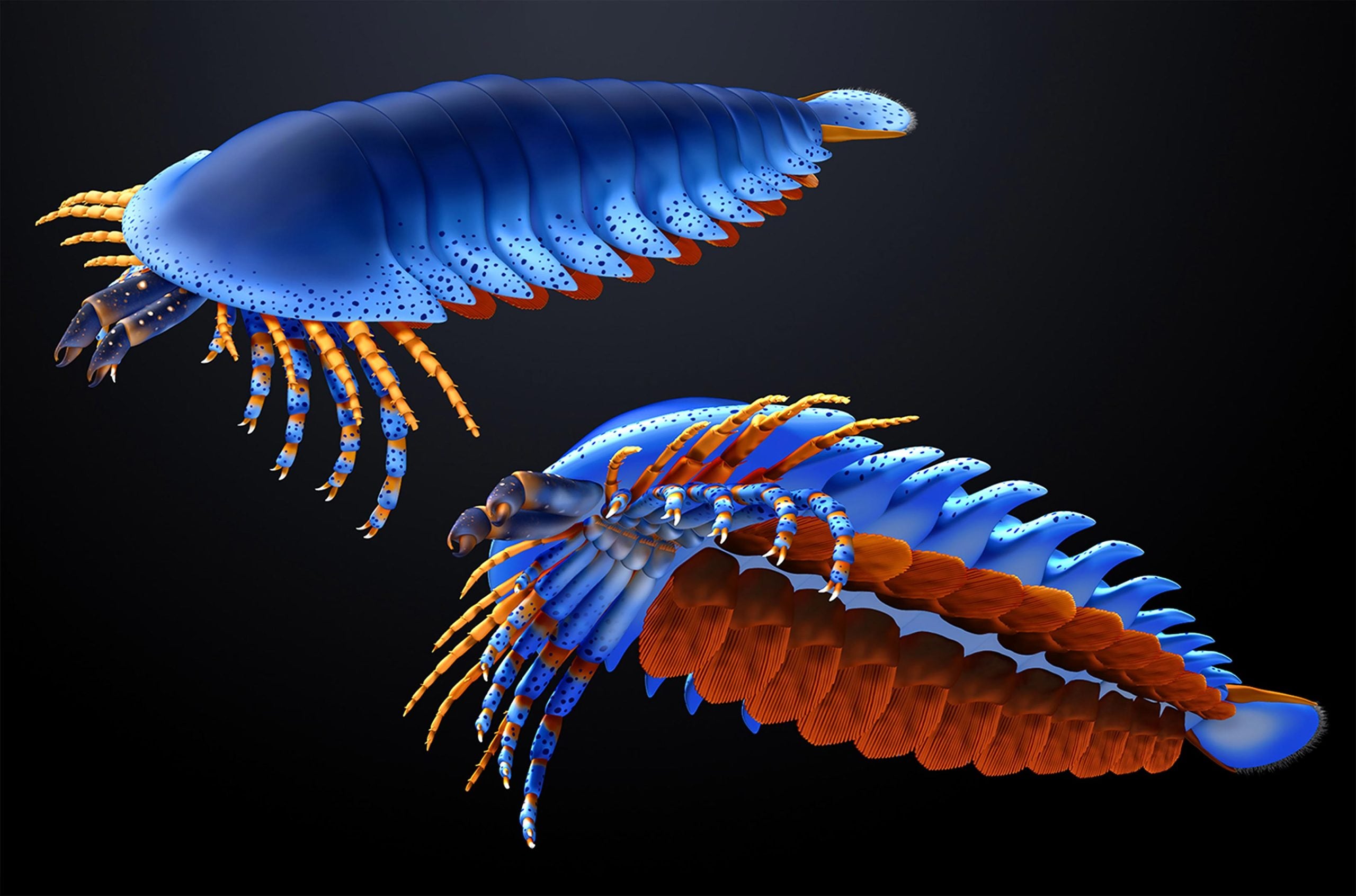
Revealing the fossil’s structure required patience. Lerosey-Aubril spent more than 50 hours working under a microscope, using a fine needle to expose its features. The animal measured just over 8 centimeters long and preserved a dorsal exoskeleton with a head shield and nine body segments. These regions had different types of appendages. The head shield carried six pairs of limbs adapted for feeding and sensing, while the underside of the body featured plate-like respiratory structures similar to the book gills seen in modern horseshoe crabs.
The most striking feature is its clear chelicera. These pincer-like appendages define chelicerates and set them apart from insects. Insects have antennae at the front of their bodies, while chelicerates use grasping tools that are often venomous. Despite the abundance of Cambrian fossils, scientists had never found a clear example of a chelicera from that time until now.
Filling a Major Gap in Evolution
Before this discovery, the oldest known chelicerates came from the Early Ordovician Fezouata Biota of Morocco, dating to about 480 million years ago. Finding M. cousteaui 20 million years earlier places it near the base of the chelicerate family tree. It serves as a transitional form, linking earlier Cambrian arthropods that appear to lack chelicera with later horseshoe crab-like species known as synziphosurines.
“Megachelicerax shows that chelicera and the division of the body into two functionally specialized regions evolved before the head appendages lost their outer branches and became like the legs of spiders today,” explained Ortega-Hernández, “it reconciles several competing hypotheses; in a way, everybody was partly right.”
The fossil captures an important stage in the development of the chelicerate body plan. It indicates that key features were already in place shortly after the Cambrian Explosion, a time of rapid evolutionary change.
“This tells us that by the mid-Cambrian, when evolutionary rates were remarkably high, the oceans were already inhabited by arthropods with anatomical complexity rivaling modern forms,” Ortega-Hernández added.
Early Complexity Without Immediate Success
Even with these advanced features, chelicerates did not immediately become dominant. For millions of years, they remained relatively rare and were overshadowed by other groups such as trilobites. Only later did they diversify and eventually move onto land.
“A similar evolutionary pattern has been documented in other animal groups,” said Lerosey-Aubril. “This shows that evolutionary success is not only about biological innovation — timing and environmental context matter.”
From Utah Fossil to Scientific Breakthrough
The fossil was collected from the middle Cambrian Wheeler Formation in Utah’s House Range. It was originally discovered by avocational fossil collector Lloyd Gunther and donated in 1981 to the Kansas University Biodiversity Institute and Natural History Museum. For decades, it remained part of a collection of unremarkable specimens until Lerosey-Aubril chose to study it as part of his research on early arthropods.
Named in Honor of Jacques Cousteau
The species name, Megachelicerax cousteaui, honors French explorer Jacques-Yves Cousteau. Lerosey-Aubril – who is also French – and Ortega-Hernández selected the name to recognize Cousteau’s role in inspiring public appreciation for ocean life.
“Cousteau and his crew inspired generations to look beneath the surface,” said Lerosey-Aubril, “it seemed fitting to name this ancient marine animal after someone who changed the way we see ocean life.” Just as Megachelicerax cousteaui has reshaped our understanding of chelicerates.
Why This Discovery Matters Today
Today, chelicerates include more than 120,000 species, ranging from spiders and scorpions to mites, horseshoe crabs, and sea spiders. They live in a wide variety of environments on land and in water.
“For thousands of years, these animals have quietly existed among us, deeply influencing our lives from pop-culture to medical and agricultural contributions,” Ortega-Hernández concluded. “This fossil discovery sheds new light on their origins.”
The Importance of Scientific Collections
The researchers also emphasized the importance of museum collections and the work of those who maintain them. Institutions like the University of Kansas Biodiversity Institute and Natural History Museum preserve fossils for decades, allowing new discoveries to emerge when fresh perspectives are applied. The authors specifically recognized B. Lieberman and J. Kimmig for their role in curating these valuable specimens, ensuring they remain available for future study.
Reference: “A chelicera-bearing arthropod reveals the Cambrian origin of chelicerates” by Rudy Lerosey-Aubril, and Javier Ortega-Hernández, 32 March 2026, Nature.
DOI: 10.1038/s41586-026-10284-2
Never miss a breakthrough: Join the SciTechDaily newsletter.
Follow us on Google and Google News.
1 Comment
Kill it with fire!