
Close Menu
    Facebook X (Twitter) Instagram
    SciTechDaily
    • Biology
    • Chemistry
    • Earth
    • Health
    • Physics
    • Science
    • Space
    • Technology
    Facebook X (Twitter) Pinterest YouTube RSS
    SciTechDaily
    Home»Science»Giant Ancient Shark Discovered in Australia Stuns Scientists
    Science

    Giant Ancient Shark Discovered in Australia Stuns Scientists

    By Swedish Museum of Natural HistoryNovember 30, 2025No Comments4 Mins Read
    Facebook Twitter Pinterest Telegram LinkedIn WhatsApp Email Reddit
    Share
    Facebook Twitter LinkedIn Pinterest Telegram Email Reddit
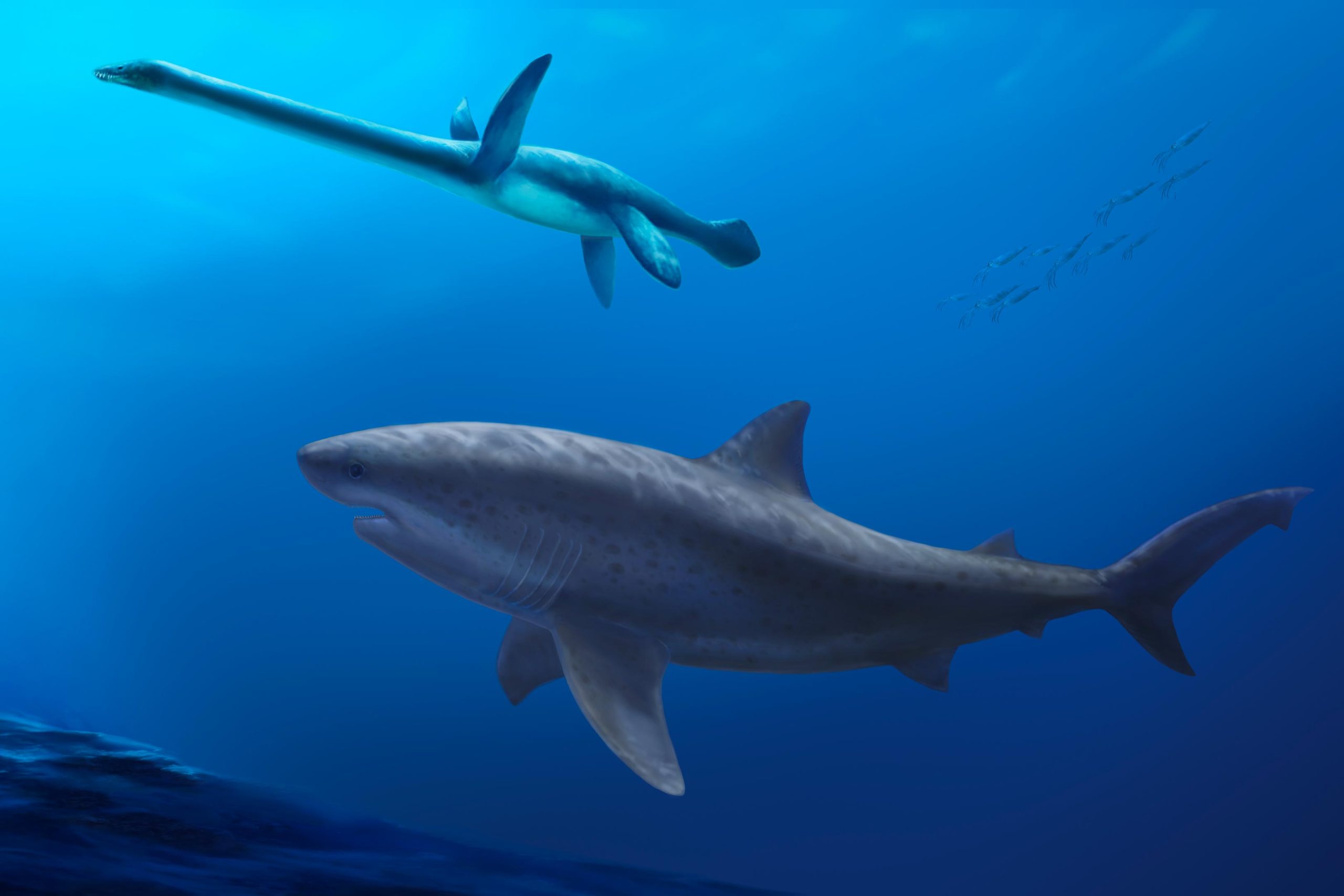
    Oldest Modern Shark Mega-Predator
    A gigantic 8 m long mega-predatory shark stalks an unwary long-necked plesiosaur in the seas off Australia 115 million years ago. Credit: Polyanna von Knorring, Swedish Museum of Natural History

    Scientists have uncovered evidence of a colossal shark that lived off northern Australia about 115 million years ago, revealing that modern shark lineages grew to immense sizes far earlier than expected.

    Rare vertebrae from rocks once part of the ancient Tethys ocean show that this early lamniform predator shared the seas with giant marine reptiles during the Age of Dinosaurs.

    Early Modern Sharks and Their Ancient Origins

    Sharks are well-known ocean predators, and their lineage stretches back more than 400 million years. The ancestors of today’s shark groups, however, began to appear during the Age of Dinosaurs, with the earliest fossils of these modern lineages dating to roughly 135 million years ago.

    These early forms, called lamniforms, were relatively small at around 1 m in length. Over millions of years, they eventually diversified into enormous species, including the well-known ‘Megalodon’, which may have reached lengths of more than 17 m, and the modern Great White shark, an apex predator that grows to about 6 m.

    Why Shark Teeth Dominate the Fossil Record

    Sharks have skeletons made of cartilage rather than bone, so most of their bodies do not fossilize easily. As a result, their fossil record consists mainly of teeth, which are shed continuously during feeding. These teeth often accumulate in ancient seafloor sediments. They are regularly found in the same layers as the bones and teeth of fishes and the enormous marine reptiles that ruled many prehistoric oceans.
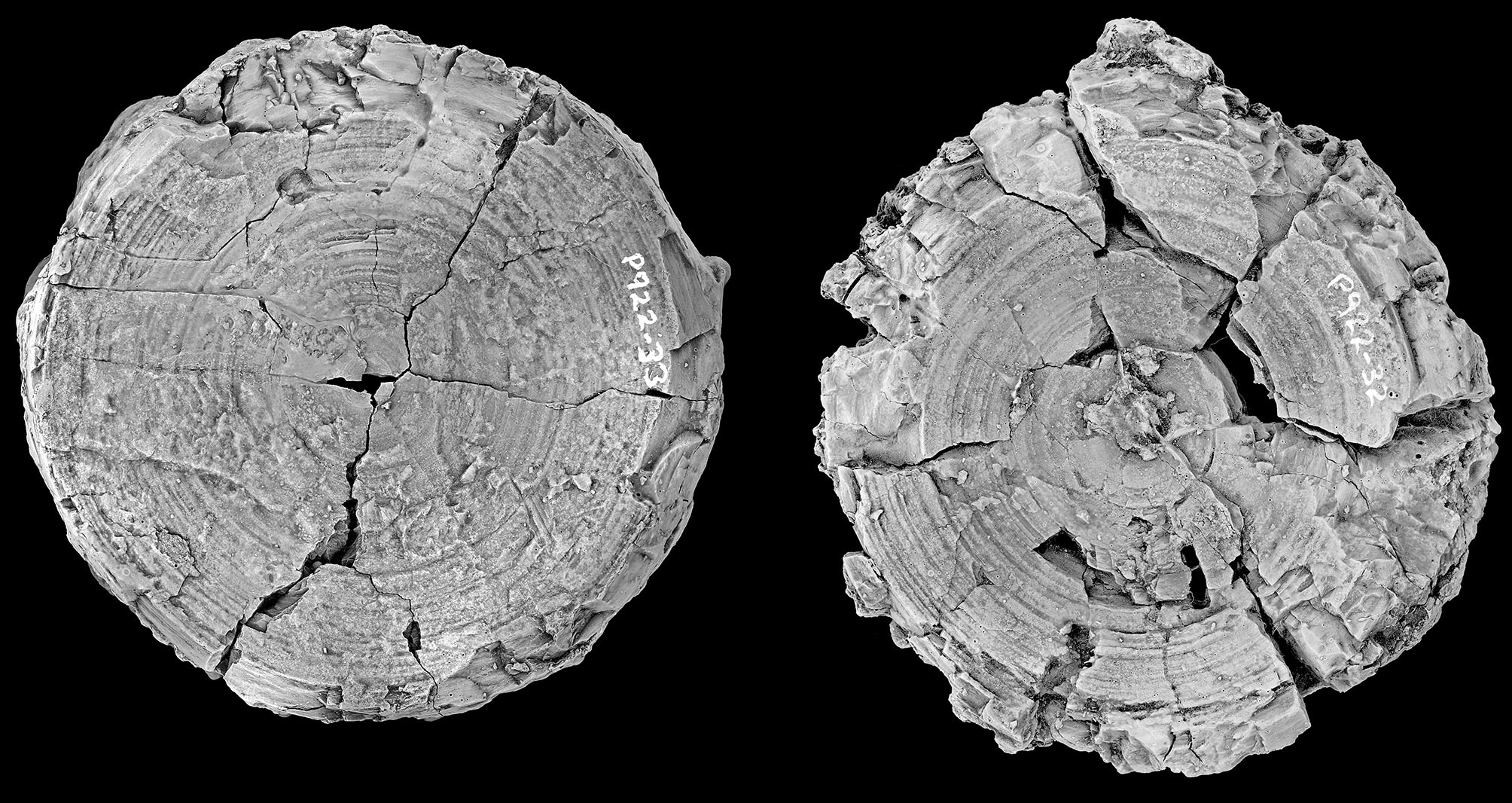
    Giant Fossil Shark Vertebrae From Australia
    115-million-year-old gigantic shark vertebrae. Credit: Mikael Siversson

    A Fossil Hotspot Along the Ancient Tethys Ocean

    The rocky coastal area near the city of Darwin in northern Australia was once part of the muddy bottom of the Tethys ocean, a vast waterway that extended from Gondwana (now Australia) to the island regions of Laurasia (now Europe).

    Numerous remains of ancient marine life have been discovered in this region, including plesiosaurs (long-necked marine reptile resembling the popular image of the Loch Ness monster), ichthyosaurs (‘fish-lizards’), and large bony fish. Among these finds, several exceptionally large vertebrae stand out because they point to a previously unknown giant lamniform shark.

    Vertebrae Reveal a Massive Early Cardabiodontid

    Five vertebrae were recovered, each partially mineralized, which helped them survive through time. Their shape closely matches the vertebrae of modern Great White sharks. However, while adult Great Whites typically have vertebrae about 8 cm wide, the vertebrae from the Darwin specimen measured more than 12 cm across. Their distinctive features identify them as part of the cardabiodontid group, which consists of huge predatory sharks that lived around 100 million years ago.

    The Darwin shark is especially significant because it appears to be about 15 million years older than other known cardabiodontids and had already reached the large body size characteristic of the group.
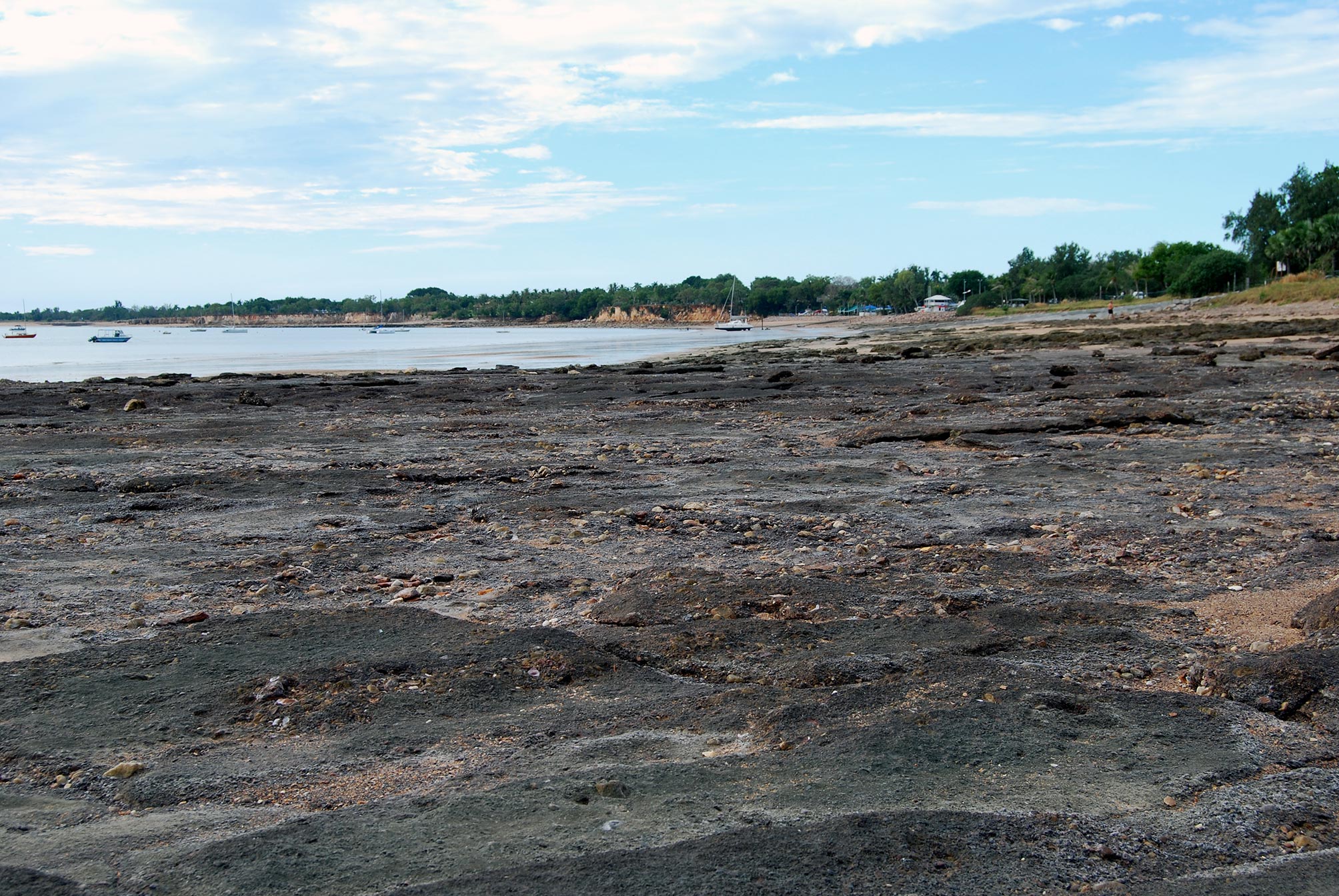
    115-Million-Year-Old Sea Floor Deposits Exposed Near Darwin in Northern Australia
    115-million-year-old sea floor deposits exposed near Darwin in northern Australia. These rocks produce fossils of an ancient marine ecosystem that included the earliest modern shark mega-predator. Credit: Benjamin Kear

    Reconstructing the Size of an Early Mega-Predator

    To determine how large this early modern shark might have been, a broad international team of scientists collaborated on a detailed analysis. The group included paleontologists and tomographic specialists from the U.S.A., Sweden, and Australia, along with ichthyologists from South Africa and the U.S.A.

    The paper was published in the Nature portfolio journal Communications Biology. Ancient shark fossils from the Age of Dinosaurs are on public display at the Swedish Museum of Natural History.

    Reference: “Early gigantic lamniform marks the onset of mega-body size in modern shark evolution” by Mohamad Bazzi, Mikael Siversson, Sabine Wintner, Michael Newbrey, Jonathan L. Payne, Nicolás E. Campione, Aubrey J. Roberts, Lisa J. Natanson, Stephen Hall, Tatianna Blake and Benjamin P. Kear, 25 October 2025, Communications Biology.
    DOI: 10.1038/s42003-025-08930-y

    Never miss a breakthrough: Join the SciTechDaily newsletter.
    Follow us on Google and Google News.

    Evolution Fossils Marine Biology Paleobiology Paleontology Popular
    Share. Facebook Twitter Pinterest LinkedIn Email Reddit

    Related Articles

    How a Global Freeze 445 Million Years Ago Changed Life Forever

    Textbooks Were Wrong: 249-Million-Year-Old Fossil Discovery Upends Timeline of Evolution

    “One-of-a-Kind” Fossil Discovery Could Solve the Mystery of Modern Bird Intelligence

    Scientists Discover New “Primitive Cousins of T. Rex” – Finding Sheds Light on the End of the Age of Dinosaurs in Africa

    Giant Ambush-Predator Worms May Have Colonized the Seafloor Around 20 Million Years Ago

    Solved: Mystery That’s Been Puzzling Scientists Since 1852 – Bizarre Giraffe-Necked Reptile Hunted Underwater

    MIT’s New Evidence on Dinosaur Evolution

    “Enigmatic and Strange” – 300-Million-Year-Old Fish Resembles a Sturgeon, but With Key Differences

    Ancient Sea-Worm Mystery Solved by Student After 50 Years in “Wastebasket”

    Leave A Reply Cancel Reply

    • Facebook
    • Twitter
    • Pinterest
    • YouTube

    Don't Miss a Discovery

    Subscribe for the Latest in Science & Tech!

    Trending News

    Scientists Call for a Complete Rethink of Alzheimer’s Treatment

    Scientists Identify Molecular Switch That Lets Exercise Reverse Muscle Aging

    Why Your Most Vivid Dreams Might Be the Key to Deep, Restful Sleep

    A Bright Star Hid a Massive Secret for 50 Years: Mystery of Gamma Cassiopeiae Finally Solved

    Scientists Identify Protein That Slows Key Effects of Aging

    Revolutionary Submarine Mysteriously Disappears Without a Trace – Scientists Are Now Preparing for a Bold Return

    Why Drinking More Water Isn’t Enough To Stop Kidney Stones

    New Study Reveals Surprising Effect of Drinking Coffee at Night

    Follow SciTechDaily
    • Facebook
    • Twitter
    • YouTube
    • Pinterest
    • Newsletter
    • RSS
    SciTech News
    • Biology News
    • Chemistry News
    • Earth News
    • Health News
    • Physics News
    • Science News
    • Space News
    • Technology News
    Recent Posts
    • Your BMI Might Be Wrong: Study Finds Millions Are Misclassified
    • More Than Half of U.S. College Students Are Lonely, Major Study Reveals
    • Scientists Reveal Biological Signal Behind Mysterious Alzheimer’s Drug Side Effect
    • A Simple Blood Test Could Predict Dementia Risk 25 Years Early
    • Scientists Uncover Unexpected Behavior Deep Inside Earth’s Mantle
    Copyright © 1998 - 2026 SciTechDaily. All Rights Reserved.
    • Science News
    • About
    • Contact
    • Editorial Board
    • Privacy Policy
    • Terms of Use

    Type above and press Enter to search. Press Esc to cancel.