
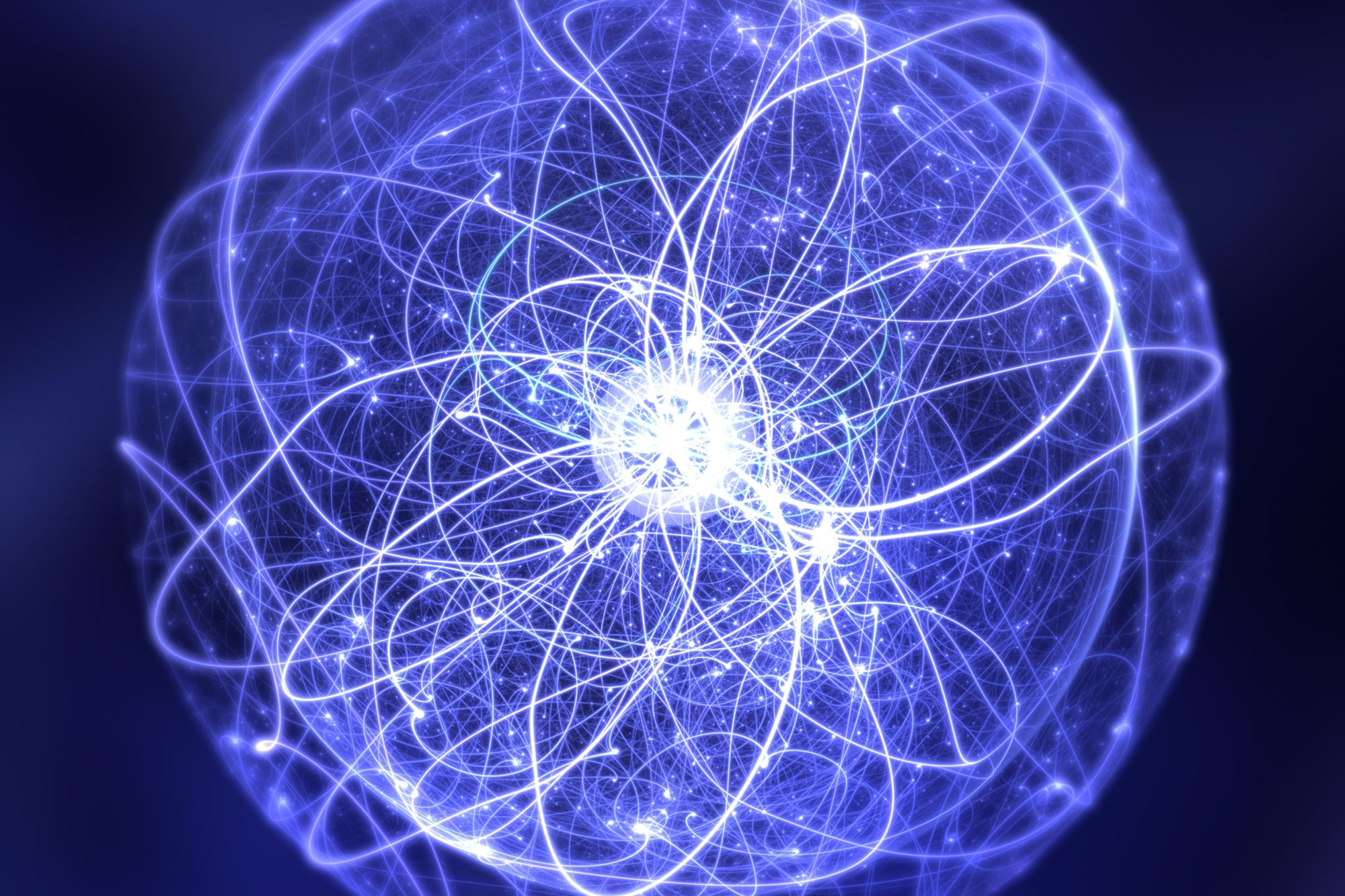
Researchers predict that strongly interacting bosons and fermions can form stable quantum droplets that may be testable with current experiments.
Two very different kinds of quantum particles may be able to join together in a stable form of matter that physicists once considered unlikely. Researchers at Monash University predict that ultracold bosons and fermions can combine under the right conditions to create self-bound “quantum droplets.”
Bosons and fermions follow fundamentally different quantum rules, yet the new theoretical work indicates that strongly interacting mixtures of the two can remain bound together. The result challenges the long-held expectation that stable droplets would be difficult to form in strongly interacting Bose-Fermi systems.
The prediction gives experimental physicists a new state of matter to search for and could improve understanding of quantum materials relevant to technologies ranging from ultra-precise sensors to quantum computing.
Lead author and Monash PhD candidate Sam Foster from the School of Physics and Astronomy said the findings make it possible to investigate previously unexplored quantum states.
“Quantum systems can behave in ways that seem impossible in our everyday world. We’ve shown that these two very different types of particles can balance each other perfectly to create a stable droplet that effectively holds itself together.”
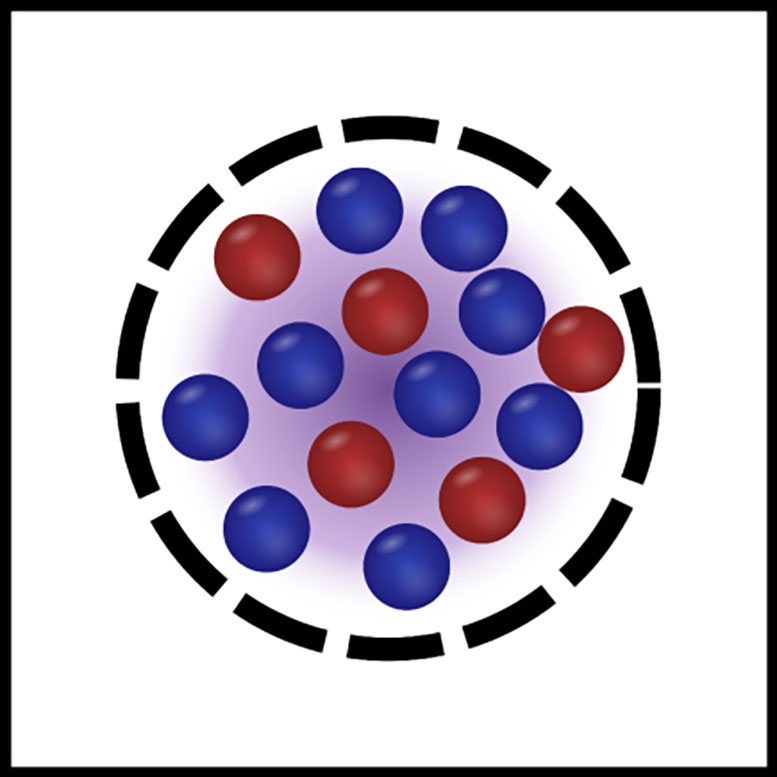
Quantum pressure prevents the droplets from collapsing
A quantum droplet is held together differently from an ordinary liquid droplet. Here, attraction between the particles is balanced by pressure generated by the fermions, stopping the system from collapsing even as the particles bind together.
Sam said the new theoretical framework addresses a long-standing limitation in describing these systems.
“Previous theories could only describe these systems when the particles interacted relatively weakly. Our new approach lets us explore what happens when those interactions become much stronger, which is where the most interesting physics emerges.”
Existing experiments could test the prediction
The calculations indicate that these droplets should be possible to create using ultracold atom experiments that already exist, making experimental verification a realistic next step.
The researchers also found signs of quantum behavior resembling the transition between a liquid and a gas. That result suggests the system can support a wider and more complex range of quantum phases than the droplets alone.
Sam said the implications extend beyond the study of ultracold atoms.
“Understanding how matter organizes itself under extreme quantum conditions gives us new tools for designing and controlling quantum systems. While this is fundamental research, discoveries like this often become the foundation for tomorrow’s quantum technologies.”
Reference: “Quantum Droplets in a Resonant Bose-Fermi Mixture” by Sam Foster, Olivier Bleu, Jesper Levinsen and Meera M. Parish, 14 August 2026, Physical Review Letters.
DOI: 10.1103/5pr6-5fmd
Never miss a breakthrough: Join the SciTechDaily newsletter.
Follow us on Google and Google News.
6 Comments
Understanding how matter organizes itself under extreme quantum conditions gives us new tools for designing and controlling quantum systems.
VERY GOOD.
Please ask researchers to think deeply:
1. How do you understand the matter organizes itself under extreme quantum conditions?
2. How do you understand quantum spin and topological spin?
3. Is self-organization related to spin?
4. Does the so-called quantum have a physical entity?
5. Is quantum a cat that is both dead and alive?
Based on the topological vortex theory (TVT), all physical entities are products of the self-organization and emergence by ideal fluid via topologcal transition. Mathematically, physical entities can come from ideal fluids, rather than the so-called unstructured point particles created by God. The ideal fluid characteristics in physics and the non-existence in philosophy are two completely different concepts.
Current physics and mathematics are flooded with overworshipped formalism: parity nonconservation, the pretense of infinitedimensional Hilbert spaces, abstract algebraic structures devoid of geometric reality, the alleged inherent asymmetry between topological vortices and antivortices, the halfdead cat, and the arbitrary definition of matter and antimatter unconstrained by time. These “theories” proliferate in academic journals because their proponents believe that by manipulating intricate mathematical symbols they can negate the empirical essence of nature and geometric entities.
—— https://zhuanlan.zhihu.com/p/2073043398915776696.
Nature is the final court of arbitration for scientific theories. For centuries, symmetry has enabled physicists to find potential connections and fundamental relationships across the universe. TVT provides the first rigorous statistical‑mechanical foundation for the paradigm of spacetime as an emergent phenomenon, and reveals the deep geometric origin of the second law of thermodynamics in topological matter. TVT insists on symmetry at the natural level, insisting that the velocity fields generated by topological vortices and their antivortices transform into each other under rotational transformations. The area law and bifractal behavior of circulation in turbulence are precisely the statistical manifestations of this symmetry.
Physical Review Letters (PRL)’ s refusal to engage with TVT’s interpretation of these phenomena is essentially a refusal to understand nature in nature’s own language – the dynamics of topological vortices and their fractal structures. By using artificially manipulated experimentsto negate nature’s inherent symmetry, and by erecting artificial review criteriato block the path back to nature, they have severely damaged and distorted scientific research and development. The APS and its publications’ nearly centurylong exclusion, suppression, and censorship will undoubtedly be recorded in the history of science as a classic case of academic corruption.The ubiquitous spin structures in nature have already rendered the final verdict through self-organization in a repeatable and observable manner.
—— https://zhuanlan.zhihu.com/p/2076322379769422276.
We are witnessing a fundamental shift across modern physics: observational and experimental data are forcing a move away from treating particles as isolated objects in a void, pointing instead toward a continuous, dynamic background matrix.Whether mapping cosmic scale structures or probing quantum states in the lab, recent breakthroughs tell the exact same story:Cosmology’s Shift: The widening cracks in the standard $\Lambda$CDM model—highlighted by Adam Riess and supported by JWST and DESI surveys—confirm that space is not a passive backdrop. With 91% of normal matter residing outside galaxies, the intergalactic medium acts as a continuous spatial atmosphere regulating field energy.Quantum Scale Stability: Monash University’s theoretical prediction of self-bound Bose-Fermi “quantum droplets” demonstrates that when inward bosonic forces balance against outward fermionic pressure, space forms a self-sustaining, containerless knot. Deep-Lattice Interrogation: By utilizing higher-energy, short-wavelength X-rays for quantum sensing, experimentalists can now bypass surface interference and phase-lock directly with internal quantum lattice states without destroying the sample. The boundary between “probe” and “target” is disappearing. Mainstream physics is moving past the era of treating space as empty vacuum, confirming that localized matter is simply the high-torque, self-bound peak of a continuous spatial matrix. Here is the Link , https://docs.google.com/document/d/1iHSMitywAsr2YbvXBW65bAR9g5bELPSy1meMg_ik7f8/edit?usp=drive_link
Are the “quantum droplets” an ideal fluid?
If the public understands that nature organizes itself through topological spin in an ideal fluid space, they will not be fooled and deceived by the absurdity and pseudoscience in mainstream physics. Quantum mechanics is algebra, the universe is not algebra, formulas, or numbers. The universe is the superposition, deflection, and entanglement of geometric shapes, is the interaction and balance between topological vortices and their fractal structures. Science and physics are striding towards the era of topology, and quantum and its half dead cat should have stepped down from the altar and entered history long ago.
Topological Vortex Theory (TVT) insists on topological spin parity conservation, holding that the apparent asymmetry observed in experiments can be explained as the result of topological spins forming more complex spacetime structures through self-organization. This position will not change because of rejection or suppression by any authoritative institution. The ubiquitous spin structures in nature have already rendered the final verdict through self-organization in a repeatable and observable manner.
Topological Vortex Theory (TVT) insists on topological spin parity conservation, holding that the apparent asymmetry observed in experiments can be explained as the result of topological spins forming more complex spacetime structures through self-organization. This position will not change because of rejection or suppression by any authoritative institution. The ubiquitous spin structures in nature have already rendered the final verdict through self-organization in a repeatable and observable manner.