
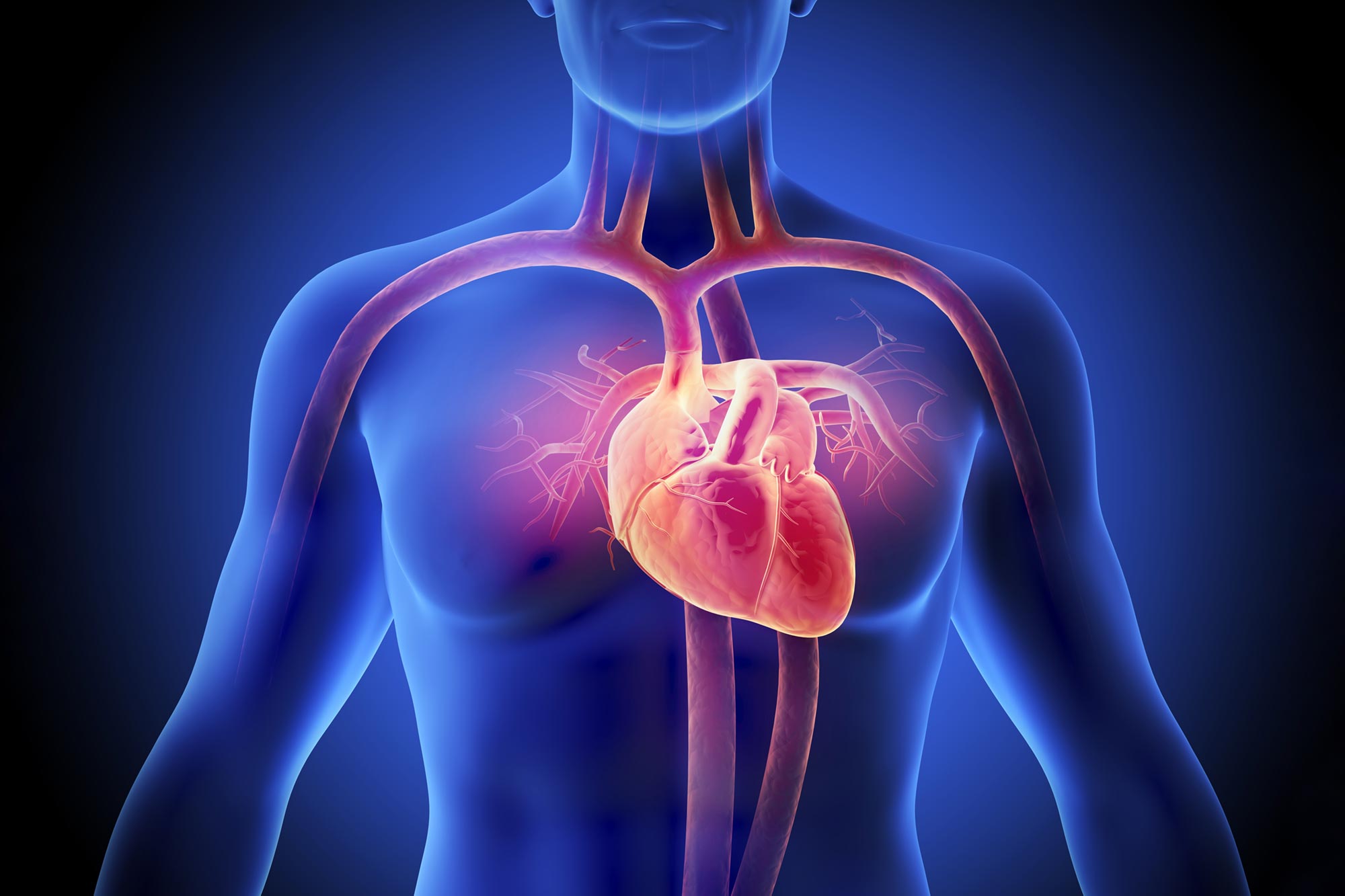
For millions of Americans, walking to the mailbox can feel like running out of air. Yet doctors still struggle to identify the form of heart failure responsible before it causes lasting damage.
About 3 million people in the United States live with heart failure with preserved ejection fraction, or HFpEF. Unlike better-known forms of heart failure, HFpEF does not necessarily prevent the heart from squeezing normally. Instead, the heart becomes too stiff to fill properly and supply the body with enough blood during activity.
The condition is more common in women, and its prevalence is rising alongside several major risk factors, including aging, hypertension, diabetes, and obesity. More than 80% of patients also develop high blood pressure in the lungs’ blood vessels, a complication called pulmonary hypertension. This combined illness, known as PH-HFpEF, can cause severe breathlessness, repeated hospitalizations, and an annual mortality rate of 15%.
“HFpEF is incredibly common,” says Farhan Raza, a cardiologist and researcher at the University of Wisconsin–Madison’s Cardiovascular Research Center. “Many patients feel profoundly breathless and have dramatically poor quality of life from this disease. Even simple daily activities, such as walking to the mailbox, can leave them breathless and exhausted.”
A Disease That Often Hides
The same medical problems do not affect everyone equally. Some people with obesity, hypertension, and diabetes develop HFpEF, while others with similar risk factors never do. Researchers still do not fully understand why.
The disease can also escape detection during its early stages, when intervention may offer the greatest benefit. By the time it is recognized, some patients have already developed kidney or liver failure, lost substantial muscle, or become severely frail.
“A big challenge is that we don’t know why some people develop HFpEF who have the same medical problems of obesity, hypertension, and diabetes, and why some people don’t,” says Raza. What’s more, “detection of the disease is a challenge. Then, when people have this problem, sometimes we recognize it too late and they’ve already developed damage to other parts of their body, like kidney failure or liver failure, and they’ve lost a lot of muscle mass and become very frail.”
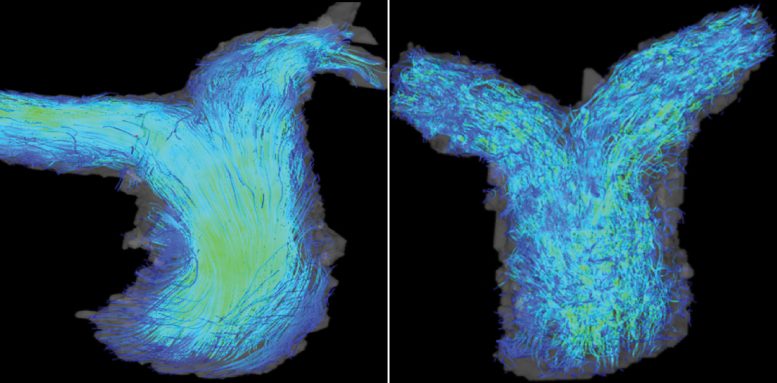
A new study published in the American Heart Association journal Circulation: Heart Failure may help clarify both the disease’s severity and its underlying biology. Led by Raza, researchers from the University of Wisconsin–Madison and the Morgridge Institute for Research identified right ventricular function as a powerful indicator of a patient’s outlook. They also uncovered molecular changes that could eventually become targets for precision treatments.
How Pressure Spreads Through the Heart
HFpEF begins primarily in the left ventricle, the chamber that pumps oxygen-rich blood throughout the body. Its muscular walls stiffen and thicken, limiting the chamber’s ability to fill with blood. Although the percentage of blood expelled with each contraction remains relatively normal, the heart may still be unable to increase its output enough to support physical activity.
Pressure then backs up from the left side of the heart into the lungs. This can damage the lungs’ blood vessels, produce pulmonary hypertension, and make breathing increasingly difficult. As the disease advances, the strain may eventually weaken the right ventricle (RV), which pumps blood to the lungs to receive oxygen.
Standard tests cannot fully reveal how this chain of events differs among patients. That blind spot may help explain why treatments aimed broadly at pulmonary hypertension have repeatedly disappointed. Trials testing drugs such as sildenafil failed to improve HFpEF outcomes, even though the medicines can help people with other forms of pulmonary hypertension.
“It’s almost like water flowing through a river, and instead of having normal flow, somebody throws a bunch of boulders in it that causes turbulence and high pressure,” says Raza. “Then, if you send more flow through that river, like with traditional pulmonary hypertension medicines such as sildenafil, it’s going to cause higher turbulence and flooding upstream in the lungs.”
Why Promising Treatments Keep Failing
More recently, oral levosimendan also failed in a clinical trial involving PH-HFpEF. The setback added to a growing list of unsuccessful studies and reinforced concerns that treating all patients as one group may conceal meaningful biological differences.
Raza argues that physicians need a more detailed picture of each patient’s cardiopulmonary physiology. A therapy that fails across a broad study population could still help a smaller subgroup if researchers can identify the mechanism driving that group’s disease.
To investigate those differences, the team studied 48 patients with PH-HFpEF who had undergone extensive cardiac evaluations, including invasive testing and cardiac magnetic resonance imaging. Twenty-nine had normal right ventricular function, while 19 had developed RV dysfunction.
Subsets of the participants received additional examinations, including catheter-based measurements inside the pulmonary arteries, cardiac imaging that tracked changes in blood flow over time, and heart tissue biopsies for molecular and genetic analysis.
The Right Ventricle Reveals the Risk
Patients with RV dysfunction experienced higher rates of hospitalization and death. Right ventricular performance also predicted their prognosis more effectively than other methods clinicians commonly use to classify HFpEF severity.
The findings suggest that abnormalities originating on the left side of the heart can eventually place damaging stress on the right side. Measuring the right ventricle could therefore provide a clearer view of how far the disease has progressed and help identify patients at greatest risk.
The tissue biopsies also revealed possible biological drivers. The strongest theme was reduced mitochondrial function. Mitochondria convert nutrients into energy that cells can use, a task that is especially important in heart muscle because it contracts continuously and requires a steady energy supply.
Researchers also found increased activity involving RNA metabolism and transport. Together, these signals support earlier evidence that disrupted energy production and altered RNA processing may contribute to heart disease.
An Energy Crisis Inside Heart Cells
“Based on our findings, one of the strongest biological themes is energy metabolism,” says Wei Guo, a muscle biologist at UW–Madison and coauthor of the study. “Many of the genes we identified are linked to mitochondrial function and cellular energy production, suggesting that disrupted energy metabolism may play an important role in HFpEF.”
The researchers examined RNA using long-read RNA sequencing. Conventional approaches often analyze RNA in small fragments, while long-read technology can capture entire molecules. This allows scientists to distinguish between longer and shorter versions produced from the same gene, which may perform different functions inside cells.
Several gene variants were expressed differently in patients with RV dysfunction and those with normal RV function. The results remain preliminary, but they offer clues that would be difficult to detect with less detailed sequencing methods.
One candidate is GATD3, a gene associated with mitochondrial function. A particular version of it appeared at much higher levels in patients whose right ventricles were impaired, making it a potential focus for future studies and treatment development.
Toward Precision Treatment for HFpEF
“GATD3 has a variant expressed much more highly in right ventricle dysfunction. Since GATD3 is involved in mitochondria function, it may be playing a role in HFpEF,” says Ron Stewart, a bioinformatics investigator at the Morgridge Institute whose group led the long-read RNA sequencing portion of the research.
The team plans to test the findings in larger groups and build a more detailed map of the molecular and cellular differences associated with RV dysfunction. Because the study included only 48 patients, the genetic findings will require further validation before they can influence routine care.
The long-term goal is to divide HFpEF into biologically meaningful subgroups. Doctors might one day analyze a patient’s heart tissue, identify the specific pathway pushing the right ventricle toward failure, and match that person with a treatment designed to counter the mechanism. Some useful drugs may already exist but have not been tested in the patients most likely to benefit.
Raza hopes that continuing this work will help “develop a very good pipeline of running a highly sophisticated analysis that can say, ‘This specific patient belongs in a subgroup where we know this one mechanism has kind of gone bonkers.’ Then, we can treat them with an already approved drug that addresses that exact mechanism. While these are early results, I think our study does a pretty good job of introducing this strong pipeline, which will translate into human precision clinical trials within a few years.”
“We are deeply grateful to every patient who has chosen to take part in this research,” Raza adds. “Their generosity and the trust they place in us is creating knowledge that will benefit countless patients and families in the years to come.”
Reference: “Multimodal Framework of Left Heart-Pulmonary Vascular Remodeling Underlying Right Ventricular Failure in PH-HFpEF” by Farhan Raza, Zachery R. Gregorich, Jack Freeman, Bethany Moore, Timothy Houston, Mariana Garcia-Arango, Christopher G. Lechuga, Yimin Chen, Aditya Sahai, Ahmed El Shaer, Claudia Korcarz, Kai Cui, Yeonhee Park, Kathryn Jones, Wanxin Tu, James Runo, Jefree J. Schulte, Prashant Nagpal, Ying Ge, Oliver Wieben, Ron Stewart, Naomi C. Chesler and Wei Guo, 24 August 2026, Circulation: Heart Failure.
DOI:10.1161/CIRCHEARTFAILURE.126.014620
This study was funded by NIH/National Heart, Lung and Blood Institute, Salm Biologics Fund, American Heart Association, NIH/National Center for Advancing Translational Sciences (NCATS).
Never miss a breakthrough: Join the SciTechDaily newsletter.
Follow us on Google and Google News.