
Close Menu
    Facebook X (Twitter) Instagram
    SciTechDaily
    • Biology
    • Chemistry
    • Earth
    • Health
    • Physics
    • Science
    • Space
    • Technology
    Facebook X (Twitter) Pinterest YouTube RSS
    SciTechDaily
    Home»Biology»Human Cardiac Cells Derived From Stem Cells Could Repair Damaged Hearts
    Biology

    Human Cardiac Cells Derived From Stem Cells Could Repair Damaged Hearts

    By SciTechDailyAugust 6, 2012No Comments2 Mins Read
    Facebook Twitter Pinterest Telegram LinkedIn WhatsApp Email Reddit
    Share
    Facebook Twitter LinkedIn Pinterest Telegram Email Reddit
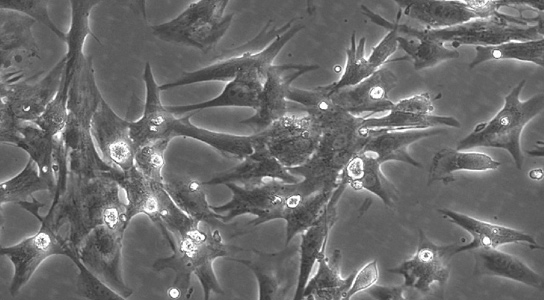
    Cardiomyocytes-human
    Recent research shows heart muscle cells derived from human embryonic stem cells could be reintegrated into existing heart muscle.

    Contrary to the skin and liver, damaged hearts rarely heal themselves but there is new research that might raise hope for cell therapies. It’s been recently shown that heart muscle cells differentiated from human embryonic stem cells could be reintegrated into an existing heart muscle.

    These new cells beat in sync with the rest of the heart, states Chuck Murry, a cardiovascular biologist at the University of Washington, who co-led the paper, which was published in the journal Nature.
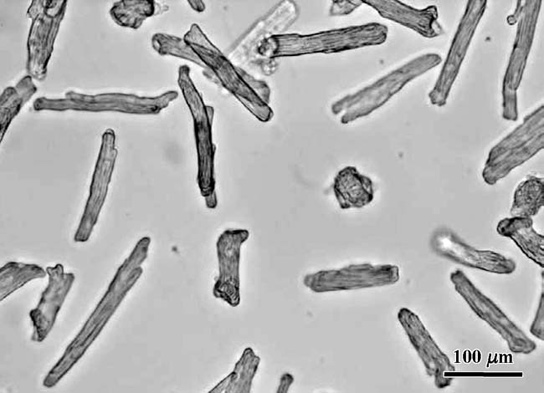
    Cardiomyocytes-rat

    These kinds of therapies have been fraught with difficulty as human cells cannot keep up with the high heart rates of some small rodents, used in testing these same therapies. Cardiomyocytes can only beat up to 240 times per minute, thanks to external electrical stimulation. Typically, rats and mice have heart rates of 400 and 600 beats per minute.

    However, guinea pigs are another matter. Their heart rates, of 200-250 beats per minute are near the limit of human cardiomyocytes. Once the researchers worked out how to suppress the guinea pigs’ immune system so that they wouldn’t reject human cells, the transplantation experiments could begin. The electrical stimulation was integrated using an inserted sensor gene into the human ES cells so that the cardiomyocytes would fluoresce when contracted.

    These implanted cells seemed to aid healing. Four weeks after researchers had killed some regions of the guinea pigs’ hearts, the hearts of the animals that had received the human cardiomyocytes exhibited stronger contractions than those that received other types of cells. The cardiomyocyctes did not seem to cause any irregular heartbeats.

    This is still far away from demonstrating any palpable therapeutic benefits. More research needs to be done before transplantable cardiomycocytes are ready for human trials.

    Reference: “Human ES-cell-derived cardiomyocytes electrically couple and suppress arrhythmias in injured hearts” by Yuji Shiba, Sarah Fernandes, Wei-Zhong Zhu, Dominic Filice, Veronica Muskheli, Jonathan Kim, Nathan J. Palpant, Jay Gantz, Kara White Moyes, Hans Reinecke, Benjamin Van Biber, Todd Dardas, John L. Mignone, Atsushi Izawa, Ramy Hanna, Mohan Viswanathan, Joseph D. Gold, Michael I. Kotlikoff, Narine Sarvazyan, Matthew W. Kay, Charles E. Murry and Michael A. Laflamme, 5 August 2012, Nature.
    DOI: 10.1038/nature11317

    Never miss a breakthrough: Join the SciTechDaily newsletter.
    Follow us on Google and Google News.

    Cardiology Cardiovascular Disease Heart Stem Cells
    Share. Facebook Twitter Pinterest LinkedIn Email Reddit

    Related Articles

    Researchers Identify Role of Mesp1 Gene in Cardiovascular Lineage Segregation

    Human Heart Precursor Cells Regenerate Decellularized Mouse Heart

    ITD-1 Molecule Turns Stem Cells Into Heart Cells

    3D X-Ray Reveals Fibers That Control Heart Rhythm

    Locomotion Restored in Mice With Huntington’s-Like Condition

    Stem Cells Help Re-grow Healthy Heart Muscle After Heart Attack

    Researchers Use Human Neurons to Investigate Parkinson’s Disease

    Working To Save Infants, Researchers Transform Stem Cells Into Cells That Form Blood Vessels

    Scientists Create Stem-Cell-Derived Neurons from Alzheimer’s Disease

    Leave A Reply Cancel Reply

    • Facebook
    • Twitter
    • Pinterest
    • YouTube

    Don't Miss a Discovery

    Subscribe for the Latest in Science & Tech!

    Trending News

    Artificial Sweeteners May Harm Future Generations, Study Suggests

    Splashdown! NASA Artemis II Returns From Record-Breaking Moon Mission

    What If Consciousness Exists Beyond Your Brain

    Scientists Finally Crack the 100-Million-Year Evolutionary Mystery of Squid and Cuttlefish

    Beyond “Safe Levels”: Study Challenges What We Know About Pesticides and Cancer

    Researchers Have Found a Dietary Compound That Increases Longevity

    Scientists Baffled by Bizarre “Living Fossil” From 275 Million Years Ago

    Your IQ at 23 Could Predict Your Wealth at 27, Study Finds

    Follow SciTechDaily
    • Facebook
    • Twitter
    • YouTube
    • Pinterest
    • Newsletter
    • RSS
    SciTech News
    • Biology News
    • Chemistry News
    • Earth News
    • Health News
    • Physics News
    • Science News
    • Space News
    • Technology News
    Recent Posts
    • What if Dark Matter Has Two Forms? Bold New Hypothesis Could Explain a Cosmic Mystery
    • Researchers Expose Hidden Chemistry of “Ore-Forming” Elements in Biology
    • Geologists Reveal the Americas Collided Earlier Than We Thought
    • 20x Difference: Study Reveals True Source of Airborne Microplastics
    • Scientists Uncover Hidden Force Powering Yellowstone’s Supervolcano
    Copyright © 1998 - 2026 SciTechDaily. All Rights Reserved.
    • Science News
    • About
    • Contact
    • Editorial Board
    • Privacy Policy
    • Terms of Use

    Type above and press Enter to search. Press Esc to cancel.