
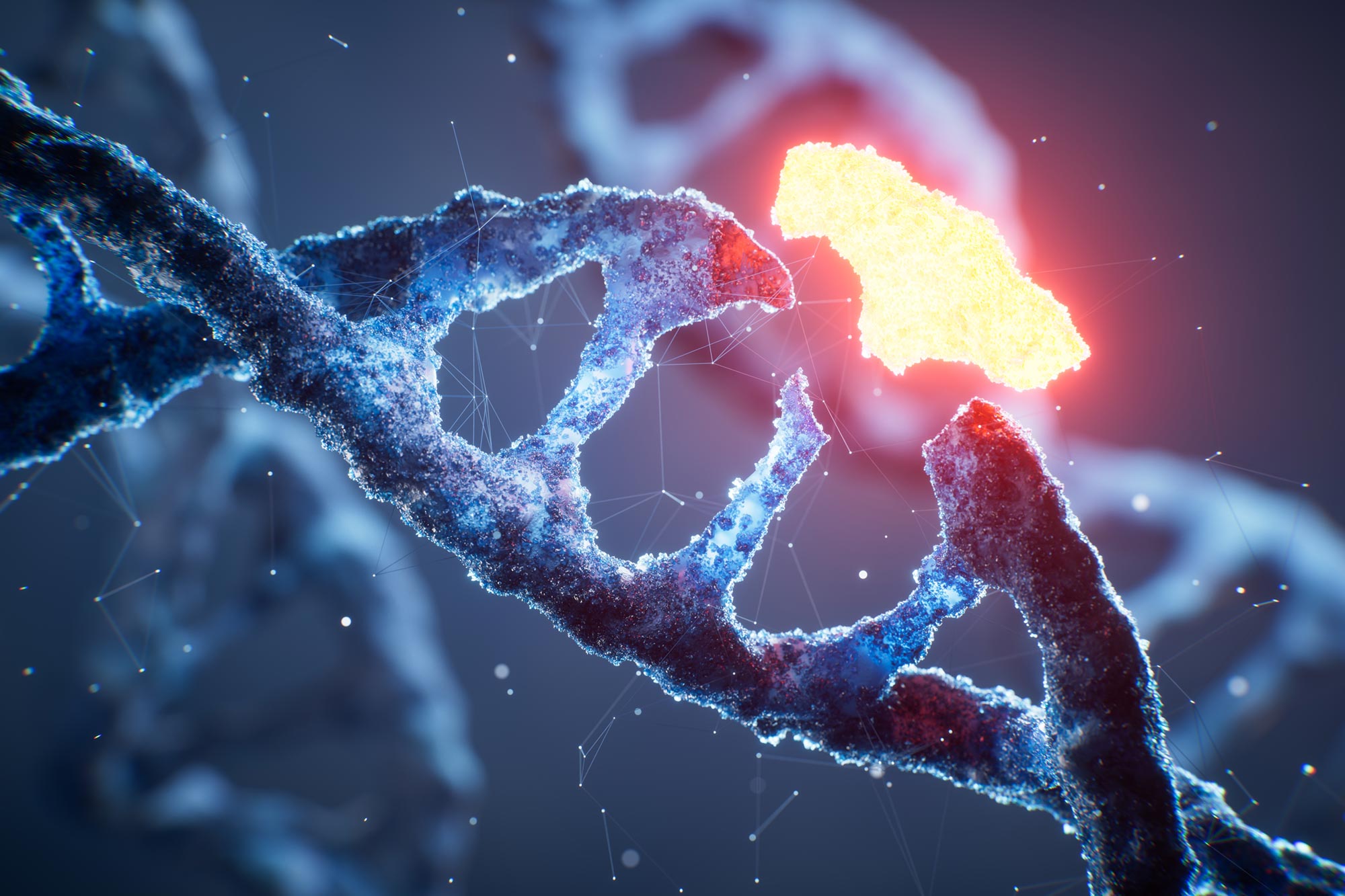
The findings suggest that chronic fatigue syndrome (ME/CFS), long COVID, posttraumatic stress disorder (PTSD), rheumatoid arthritis, and multiple sclerosis (MS) may share underlying biological mechanisms.
An infection and a traumatic experience have little in common, yet both can be followed by lasting exhaustion, brain fog, and disturbed sleep. Researchers at the University of East Anglia and Oxford BioDynamics have been investigating why conditions with very different origins can leave people struggling with such similar symptoms.
Their computational study found possible connections among five illnesses: long COVID, myalgic encephalomyelitis/chronic fatigue syndrome (ME/CFS), post-traumatic stress disorder (PTSD), rheumatoid arthritis, and multiple sclerosis (MS). Genes associated with these conditions appeared to connect to shared systems that regulate immunity, energy production, and responses to stress. The findings suggest possible common mechanisms, although they do not establish what causes the fatigue.
Lead researcher Professor Dmitry Pshezhetskiy, from UEA’s Norwich Medical School, described the question behind the work.
“Until now, illnesses including long Covid, PTSD, ME/CFS, multiple sclerosis and rheumatoid arthritis were viewed as seemingly unrelated and triggered by completely different events. ME/CFS often follows viral infection. Long Covid develops after SARS-CoV-2 infection. PTSD emerges after traumatic experiences. Rheumatoid arthritis is an autoimmune disease attacking the joints, while multiple sclerosis attacks the nervous system.”
He continues, “But one thing that links them all is that patients frequently report remarkably similar symptoms – overwhelming fatigue, brain fog, poor concentration, disturbed sleep, autonomic dysfunction and a dramatic reduction in everyday functioning. We wanted to find out why this is. What we discovered is something approaching a biological unifying theory of fatigue.”
Autonomic dysfunction refers to problems with processes the body usually controls automatically, such as heart rate and blood pressure.
The search for shared blood signatures
Identifying measurable biology behind these symptoms could help address a practical difficulty in diagnosing some of the conditions. Earlier, separate research using Oxford BioDynamics’ EpiSwitch platform had produced a blood-based ME/CFS test with promising diagnostic accuracy. That test still needed further validation for clinical use. The new study raises the possibility of finding biological signatures shared by several illnesses.
“This work adds to a growing body of evidence suggesting that persistent immune dysfunction may play a far larger role in chronic fatigue-related illnesses than previously recognized,” Pshezhetskiy said.
“Perhaps the most significant implication is what this could mean for diagnosis. ME/CFS and long Covid are currently diagnosed largely through symptoms, with no universally accepted laboratory test available. That has left many patients facing years of uncertainty.”
Different genes, shared biological networks
The new research, published in the Journal of Translational Medicine, did not collect new patient samples. It combined published genetic data for long COVID, PTSD, rheumatoid arthritis, and MS with three-dimensional genomic data from an earlier ME/CFS patient study. The published data came from genome-wide association studies, which look for genetic variations associated with a condition.
To investigate how those variations might connect, the researchers used Oxford BioDynamics’ EpiSwitch® Orion platform. It examines how DNA folds and interacts inside cells, where stretches that are far apart along a DNA sequence can come into contact. Those contacts help regulate gene activity.
“DNA is folded in our cells, so regions far apart in the linear sequence can touch, and those contact points are where genes get controlled. Orion predicts where these contact points are likely to be,” said Dr. Ewan Hunter, chief data officer at Oxford BioDynamics.
This allowed the team to look beyond whether the illnesses involved the same individual genes and examine the wider networks in which those genes operate.
“We expected to find at least some overlap in genes across the conditions. But we actually found the opposite,” Pshezhetskiy said. “At an individual gene level, there was surprisingly little direct overlap between ong Covid, ME/CFS, PTSD, multiple sclerosis and rheumatoid arthritis. But when we analyzed how those genes interact in complex biological networks, a completely different picture emerged. Suddenly, the diseases appeared deeply connected.”
He adds, “This is not something you can see by reading the genetic sequence alone, which is why these conditions may have looked unrelated for so long. Although these conditions are triggered by completely different events, they may ultimately disrupt the same fundamental biological systems and produce the similarly devastating exhaustion experienced by millions worldwide.”
Where immunity, energy, and stress intersect
The shared systems included immune and inflammatory signaling, energy production by mitochondria, and metabolism, the chemical processes that keep cells functioning. The analysis also identified connections involving stress responses and communication between the nervous system and hormones.
The researchers propose that different triggers could disturb these systems in ways that eventually produce overlapping symptoms.
“We now think the answer may lie in shared regulatory networks embedded within the body’s immune and metabolic systems,” Pshezhetskiy said.
“A Covid infection may trigger prolonged immune activation. Traumatic stress may disrupt stress-hormone pathways and inflammatory responses. But both disturbances appear capable of converging on common biological circuits controlling energy production, immune regulation and cellular resilience. When those systems become persistently dysregulated, the result may be the profound and disabling fatigue seen across multiple disorders.”
The team hopes these connections could eventually support diagnostic tools and treatments that work across several chronic conditions. Those applications remain possibilities for future research.
“We hope our work could pave the way for objective blood tests capable of identifying underlying biological signatures rather than relying solely on patient-reported symptoms,” Pshezhetskiy said.
He also outlined the broader interpretation the researchers draw from the analysis.
“Rather than viewing long Covid, ME/CFS, PTSD, rheumatoid arthritis and multiple sclerosis as entirely separate disorders, we now think they may be different manifestations of disturbed biological networks operating throughout the body. In that scenario, chronic exhaustion is not simply a symptom. It is the visible consequence of a deeper systems failure affecting immune function, metabolism, and stress-response pathways.”
“This study offers a framework for understanding how different triggers can converge to cause the exact same profound clinical exhaustion.”
Reference: “Beyond genes: EpiSwitch® and Orion platform-powered 3D genome architecture biomarkers reveal shared biology across ME/CFS, long COVID, PTSD, rheumatoid arthritis, and multiple sclerosis” by Ewan Hunter, Heba Alshaker, Dominik Vugrinec, Shekinah Bautista, Abel Gebregzabhar, Anya Virdi, Joseph Croxford, Ann Dring, Ryan Powell, Matthew Salter, Caroline Kingdon, Jayne Green, Alexandre Akoulitchev and Dmitri Pchejetski, 22 August 2026, Journal of Translational Medicine.
DOI: 10.1186/s12967-026-08874-9
This work was funded by Oxford BioDynamics plc.
Never miss a breakthrough: Join the SciTechDaily newsletter.
Follow us on Google and Google News.