
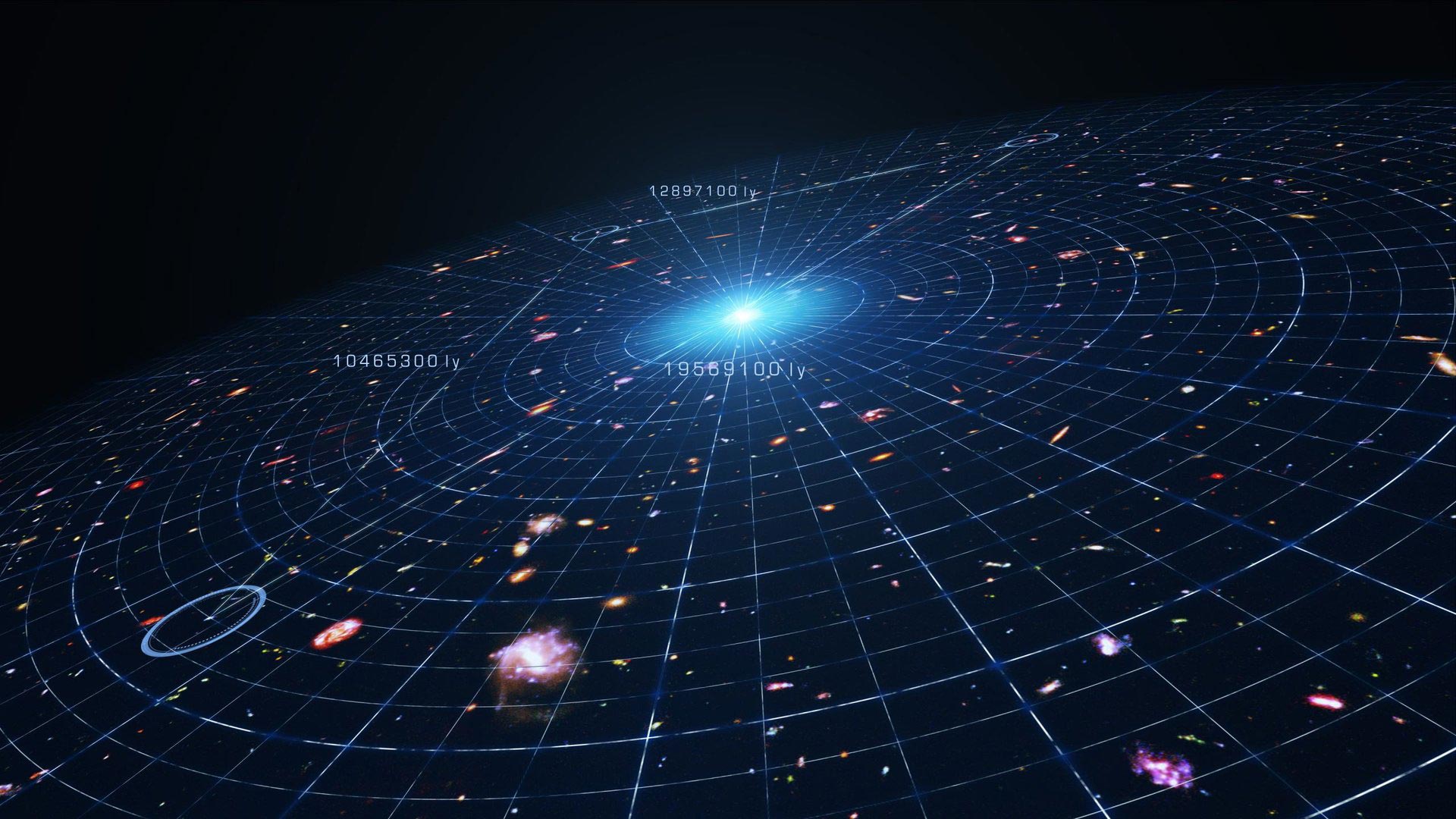
The universe still appears to be expanding at an accelerating rate, despite a recent study that suggested it may have started slowing down.
An international team of astrophysicists says the universe is still expanding at an accelerating rate, rejecting recent claims that cosmic expansion may have begun to slow.
The researchers challenged a study published last year claiming the growth of the universe is slowing and argue that the standard explanation involving dark energy remains intact. Dark energy is the mysterious force thought to be driving the universe’s accelerating expansion.
The team, which includes two Nobel Laureates and scientists from institutions around the world, says the controversy sparked by last November’s findings came from a scientific misunderstanding rather than a fundamental breakdown in modern cosmology.
Their results have been published in Monthly Notices of the Royal Astronomical Society.
A Challenge to Cosmic Acceleration
The new paper directly responds to research from a South Korean team that claimed the expansion of the universe may have entered a period of deceleration. That study suggested dark energy, which acts as a kind of anti-gravity, could be weakening over time.
“The previous and well-accepted measurements were, in fact, fine, and our current understanding of the fate of the universe remains robust,” said lead author Dr. Phil Wiseman, from the University of Southampton.
“Thankfully we have averted this crisis, but the mystery about why the rate of expansion of the universe is still accelerating remains.
“By proving our measurements are correct, we can get back to trying to understand what this dark energy actually is, rather than wondering if it exists at all.”
The international research team included Professor Adam Riess and Professor Brian Schmidt, who shared the 2011 Nobel Prize in Physics with Professor Saul Perlmutter.
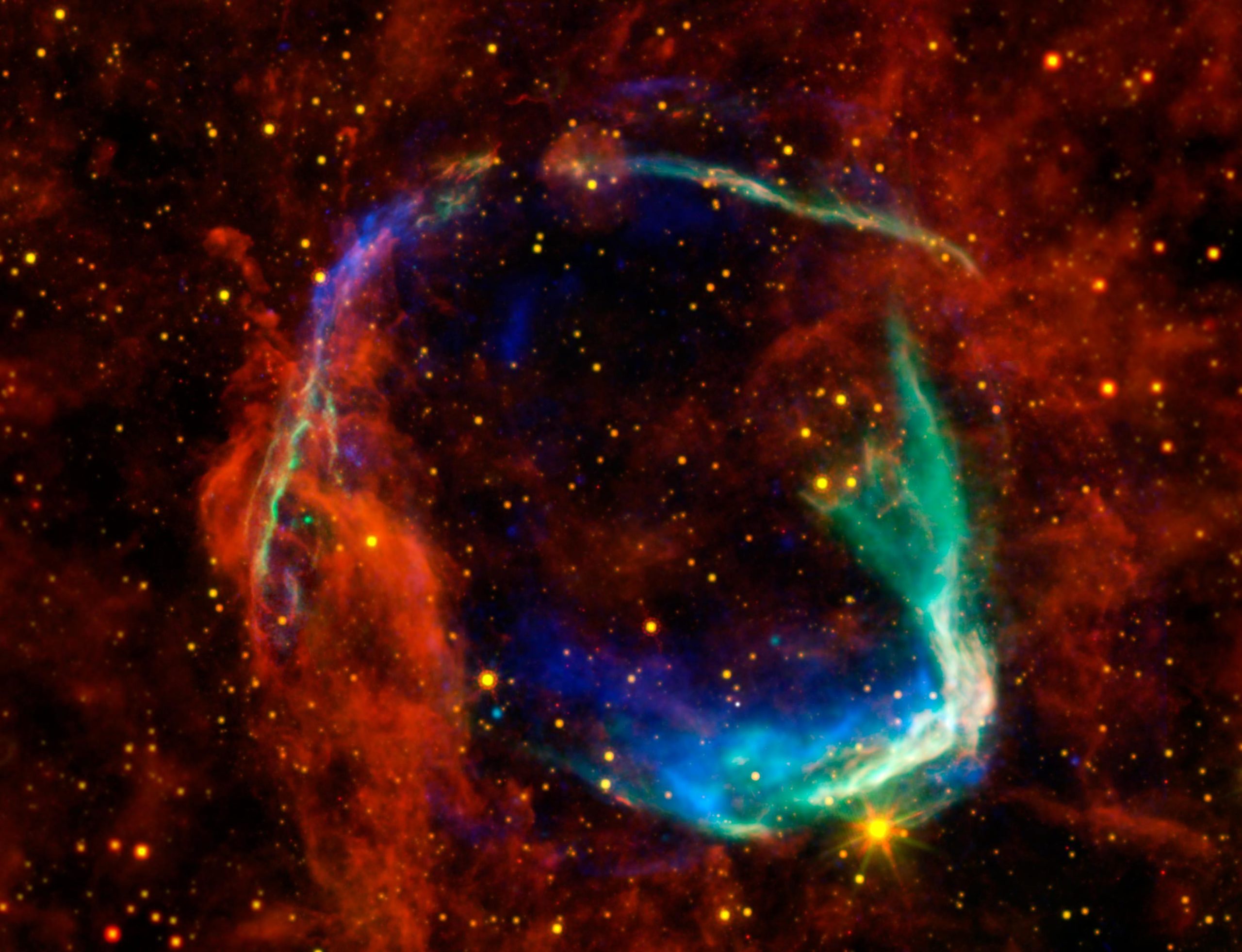
The Supernova Evidence Behind Dark Energy
Riess, Schmidt and Perlmutter helped establish the modern picture of an accelerating universe by studying Type Ia supernovae, violent, luminous explosions produced by white dwarf stars. Their observations showed that more distant objects appeared to be receding faster, supporting the conclusion that the expansion of the universe is speeding up.
That interpretation has remained widely accepted ever since.
Last year, however, the South Korean study raised a major challenge. It argued that Type Ia supernovae may not have had the same maximum brightness throughout cosmic history. If their brightness changed as the universe aged, astronomers could have mistaken those changes for evidence that the universe was accelerating when it was actually slowing down.
Researchers Find a Problem With the Age Estimates
The University of Southampton-led team says that conclusion was based on an error in how the ages of the exploding stars were estimated.
According to the researchers, the previous study treated the age of a galaxy as though it were the same as the age of the individual star that later exploded as a supernova. The new analysis argues that this assumption does not hold.
The researchers also say the earlier work did not properly account for the mass of the galaxies hosting the supernovae, a standard correction used in modern cosmology to improve the accuracy of these measurements.
Professor Riess added: “Extraordinary claims require especially careful testing.
“What we find is that when we calibrate these supernovae, accounting for different host environments and populations, the evidence for cosmic acceleration remains remarkably consistent.”
Dark Energy Still Holds Up
Professor Mark Sullivan, also from the University of Southampton, said questioning established theories and measurements is an essential part of scientific progress.
“This is how progress is made. Although this idea did not turn out to be correct, it has opened up new ways of thinking about how supernovae explode and how we can measure dark energy more accurately,” he added.
Fellow co-author Dr. Brodie Popovic agreed. “We’ve recently been really focused on astrophysics of the explosions and how they impact cosmology,” he said.
“This was a good opportunity to go back and go over all of our assumptions – it turns out, yes, we do understand this stuff, and we’re accounting for it in our cosmology measurement.”
Reference: “Still accelerating: type Ia supernova cosmology is robust to host galaxy age evolution” by Phil Wiseman, Brodie Popovic, Mark Sullivan, Adam G Riess, Dan Scolnic, Rebecca C Chen, Tamara M Davis, Lluís Galbany, Isobel M Hook, Saurabh W Jha, Lisa Kelsey, Yukei S Murakami, Mickaël Rigault, Benjamin M Rose, Brian Schmidt, Mat Smith and Maria Vincenzi, 10 June 2026, Monthly Notices of the Royal Astronomical Society.
DOI: 10.1093/mnras/stag797
Never miss a breakthrough: Join the SciTechDaily newsletter.
Follow us on Google and Google News.