
A new study challenges the idea that the Universe is expanding faster and faster.
Astronomers at Yonsei University corrected for stellar age effects in supernova data and found that dark energy may be losing strength, suggesting the cosmos has already begun slowing down.
A Stunning Reversal: The Universe May Be Slowing Down
The expansion of the Universe may no longer be speeding up as once believed. A new study suggests that cosmic growth could have already begun to slow, challenging one of modern astronomy’s most established ideas.
“Remarkable” findings published on November 6 in Monthly Notices of the Royal Astronomical Society raise serious questions about the long-held theory that an unknown force called “dark energy” is pushing galaxies apart at an accelerating pace.
Instead, the researchers report finding no clear evidence that the Universe’s expansion is still accelerating.
If confirmed, the discovery could reshape scientists’ understanding of dark energy, help resolve the “Hubble tension” (the disagreement over the Universe’s expansion rate), and reveal new insights into both the origin and ultimate fate of the cosmos.
A New Look at Cosmic Acceleration
Lead researcher Professor Young-Wook Lee of Yonsei University in South Korea explained: “Our study shows that the Universe has already entered a phase of decelerated expansion at the present epoch and that dark energy evolves with time much more rapidly than previously thought.
“If these results are confirmed, it would mark a major paradigm shift in cosmology since the discovery of dark energy 27 years ago.”
For nearly thirty years, the dominant view among astronomers has been that the Universe’s expansion has been accelerating, powered by dark energy—a mysterious, invisible force that counteracts gravity. This conclusion was based on measurements of distant type Ia supernovae, work that earned the 2011 Nobel Prize in Physics.
The Universe’s “Standard Candles” Under Scrutiny
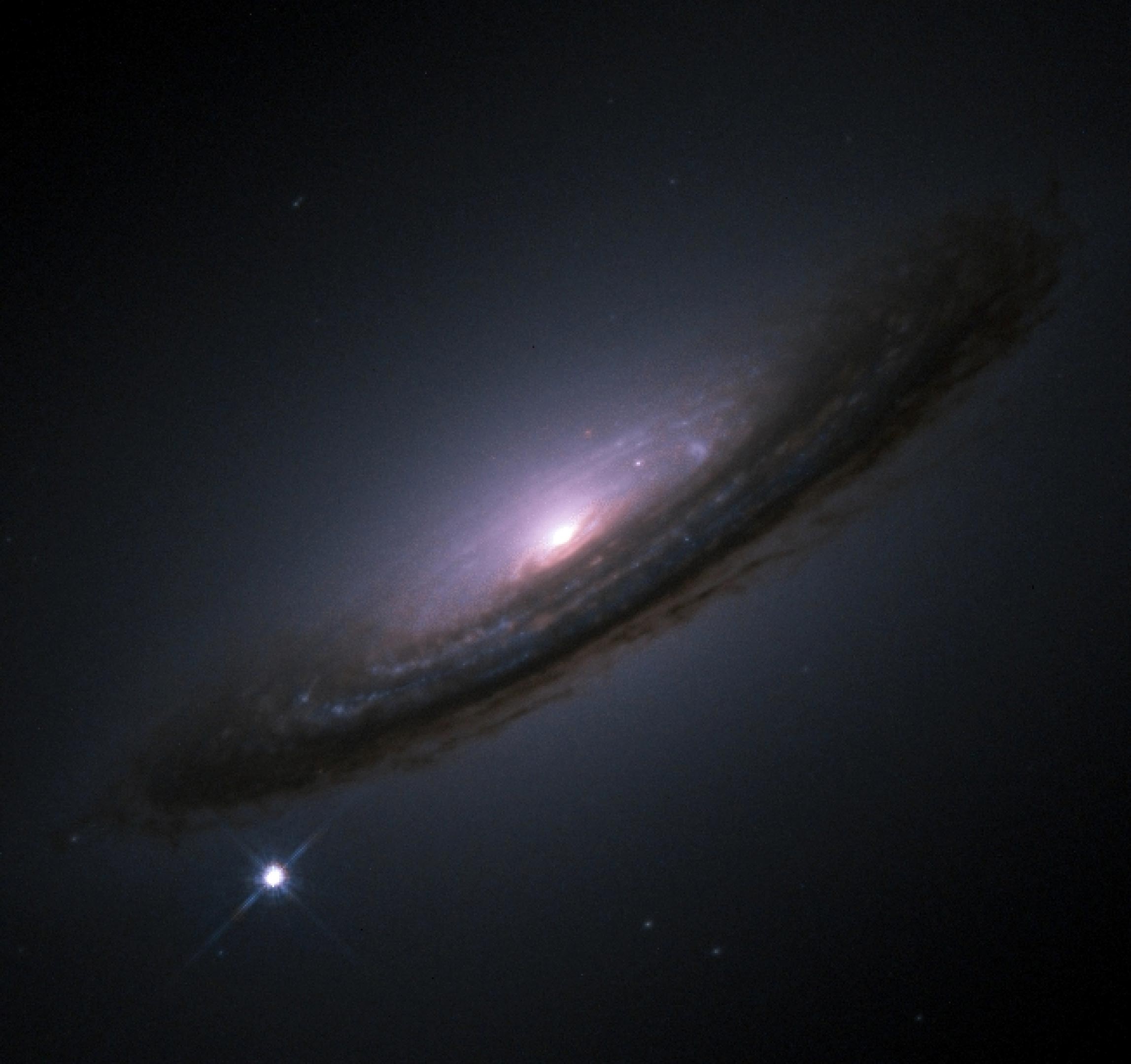
The Yonsei team, however, has found evidence that could upend this foundational measurement. Type Ia supernovae, exploding stars once considered reliable “standard candles” for gauging cosmic distances, appear to be influenced by the ages of the stars that created them.
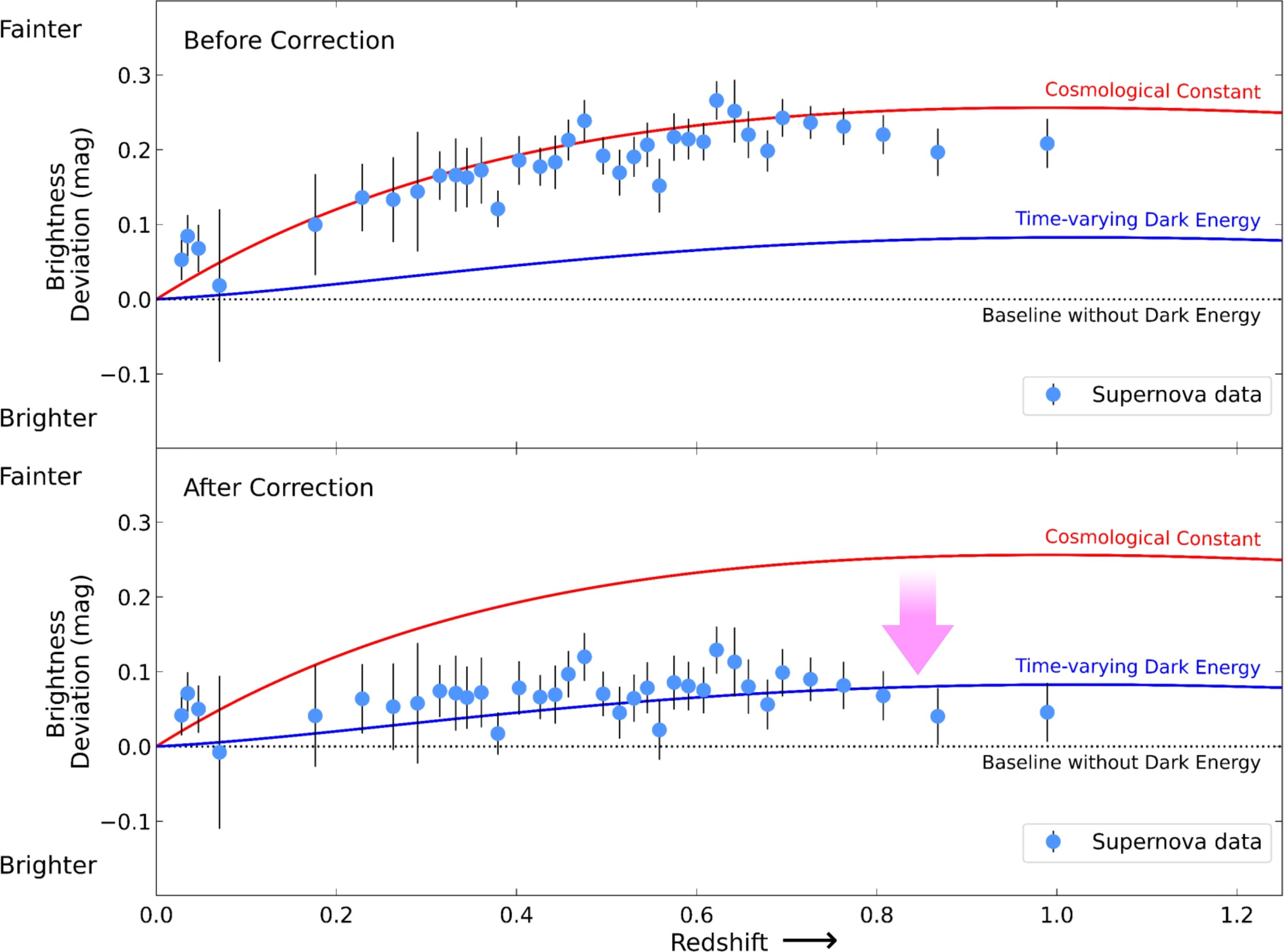
Even after standardizing their brightness, supernovae from younger stellar populations were found to be systematically dimmer, while those from older populations shone more brightly.
Drawing from a much larger dataset of 300 host galaxies, the researchers confirmed this age-related pattern with extraordinary statistical confidence (99.999%), suggesting that the observed dimming of distant supernovae may not be caused solely by the effects of cosmic expansion but also by differences in stellar evolution.
A Better Match for a New Cosmological Model
Once this age bias was corrected, the adjusted supernova data no longer fit the standard ΛCDM model, which describes a Universe expanding at an accelerating rate due to a constant form of dark energy.
Instead, the results matched much more closely with the model favored by the Dark Energy Spectroscopic Instrument (DESI) project. This alternative framework is based on measurements of baryonic acoustic oscillations (BAO), essentially the “sound waves” left over from the Big Bang, and observations of the cosmic microwave background (CMB).
Dark Energy That Weakens With Time
The corrected supernova data and the BAO+CMB-only results both indicate that dark energy weakens and evolves significantly with time.
More importantly, when the corrected supernova data were combined with BAO and CMB results, the standard ΛCDM model was ruled out with overwhelming significance, the researchers said.
Decelerating, Not Accelerating: A Cosmic Turning Point
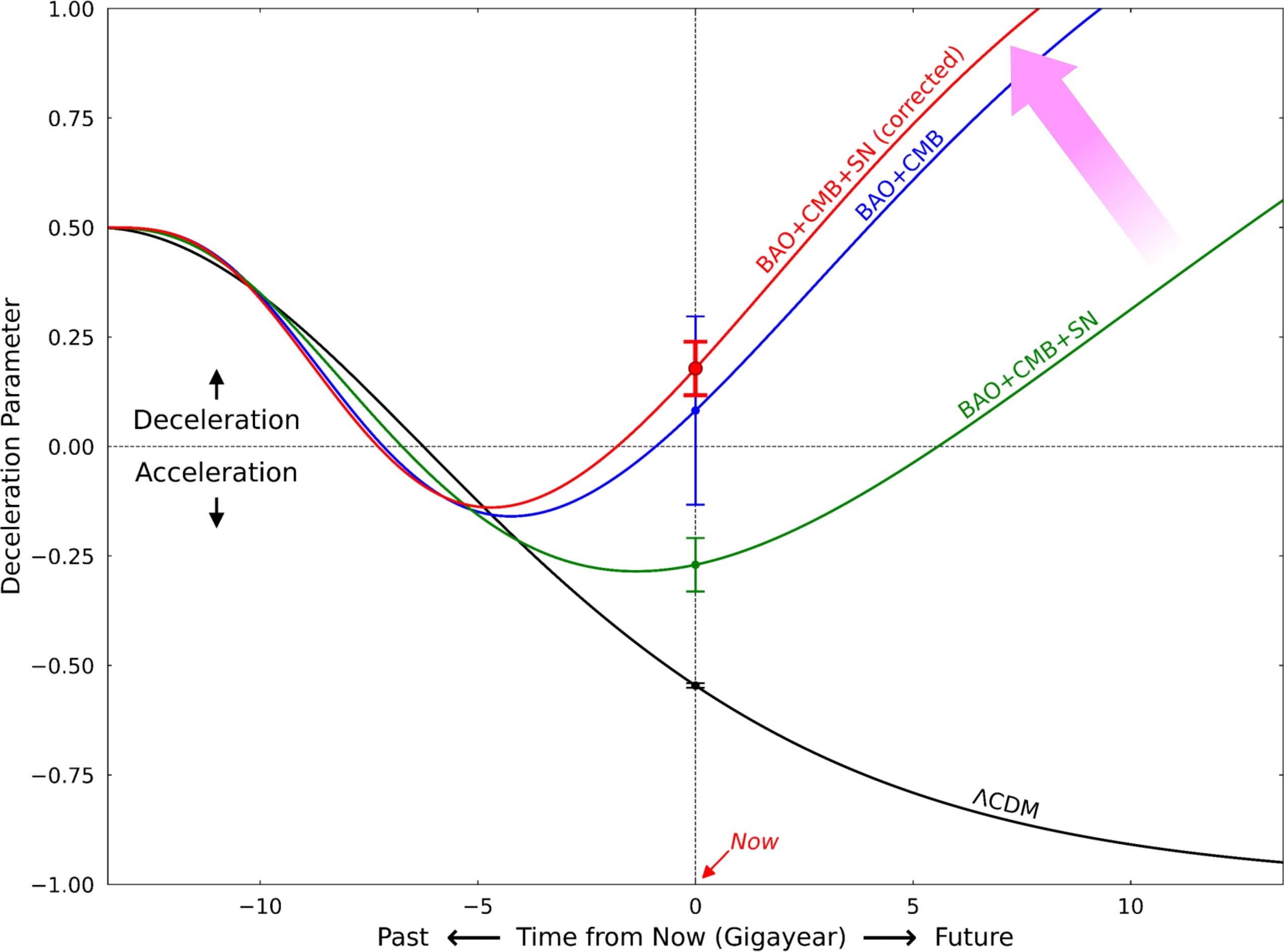
Most surprising of all, this combined analysis indicates that the Universe is not accelerating today as previously thought, but has already transitioned into a state of decelerated expansion.
Professor Lee added: “In the DESI project, the key results were obtained by combining uncorrected supernova data with baryonic acoustic oscillations measurements, leading to the conclusion that while the Universe will decelerate in the future, it is still accelerating at present.
“By contrast, our analysis — which applies the age-bias correction — shows that the Universe has already entered a decelerating phase today. Remarkably, this agrees with what is independently predicted from BAO-only or BAO+CMB analyses, though this fact has received little attention so far.”
Confirming the Findings: The “Evolution-Free” Test
To further confirm their results, the Yonsei team are now carrying out an “evolution-free test,” which uses only supernovae from young, coeval host galaxies across the full redshift range. The first results already support their main conclusion.
“Within the next five years, with the Vera C. Rubin Observatory discovering more than 20,000 new supernova host galaxies, precise age measurements will allow for a far more robust and definitive test of supernova cosmology,: said research professor Chul Chung, a co-lead on the study along with PhD candidate Junhyuk Son.
The Vera C. Rubin Observatory, which sits on a mountain in the Chilean Andes, is home to the world’s most powerful digital camera. It began scientific operations this year and could answer vital questions about our own solar system and the wider Universe.
After the Big Bang and the rapid expansion of the Universe some 13.8 billion years ago, gravity slowed it down. But in 1998, it was established that nine billion years after the Universe began, its expansion had started to speed up again, driven by a mysterious force.
The Growing Mystery of Dark Energy
Astronomers dubbed this dark energy, but despite it making up about 70 percent of the Universe, it is still considered to be one of the greatest mysteries in science.
Last year, data from DESI in Tucson, Arizona, suggested that the force exerted by dark energy had changed over time, evidence for which has been growing ever since.
The hope is that with these new tools in their arsenal, astronomers will now be better equipped to find clues about what exactly dark energy is and how it influences the Universe.
Reference: “Strong progenitor age bias in supernova cosmology – II. Alignment with DESI BAO and signs of a non-accelerating universe” by Junhyuk Son, Young-Wook Lee, Chul Chung, Seunghyun Park and Hyejeon Cho, 6 November 2025, Monthly Notices of the Royal Astronomical Society.
DOI: 10.1093/mnras/staf1685
Never miss a breakthrough: Join the SciTechDaily newsletter.
Follow us on Google and Google News.
1 Comment
Where did the vast quantities of gas come from to form a universe of galaxies? THE BIG BANG! ??? YEAH, right!