
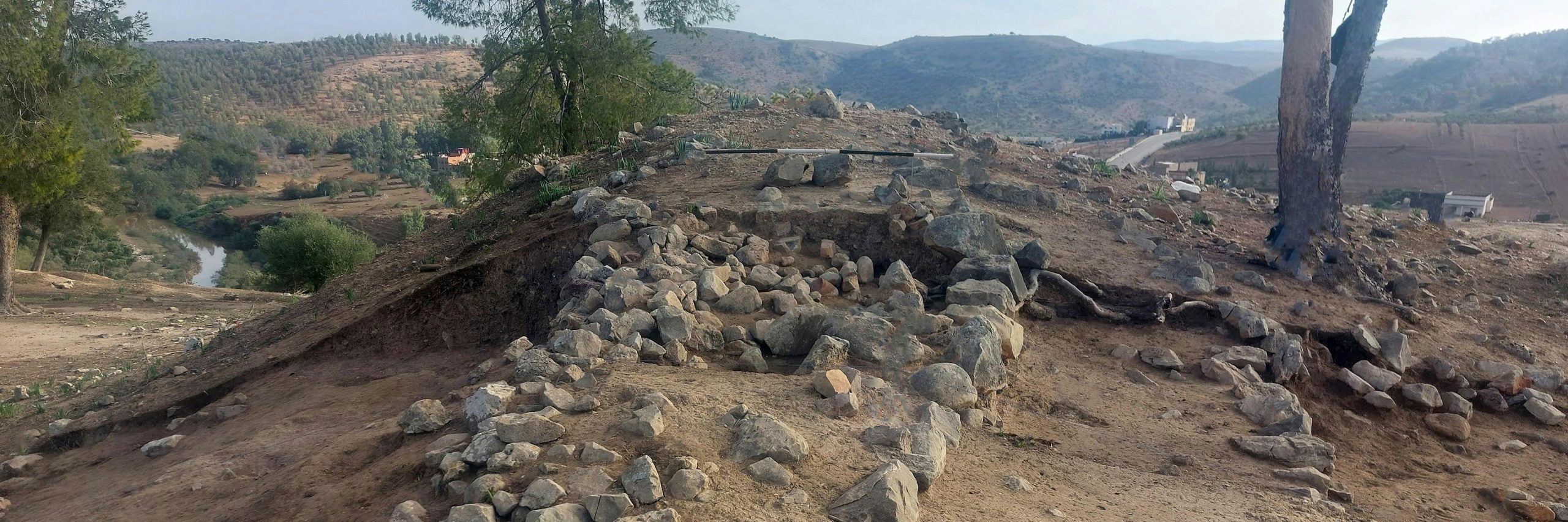
A probable defensive structure at Oued Beht suggests communities in northwestern Africa coordinated large building projects about 4,000 to 3,500 years ago.
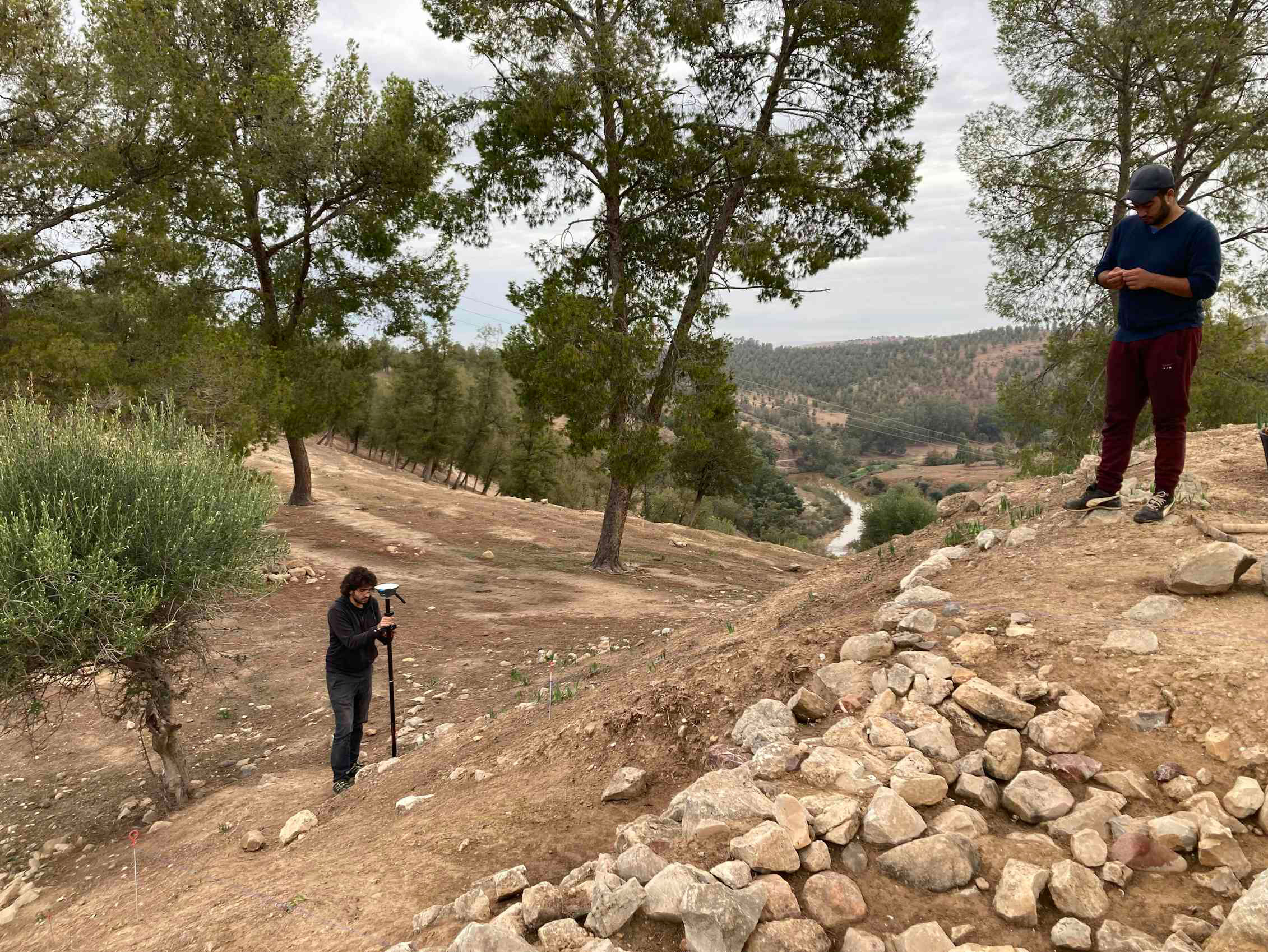
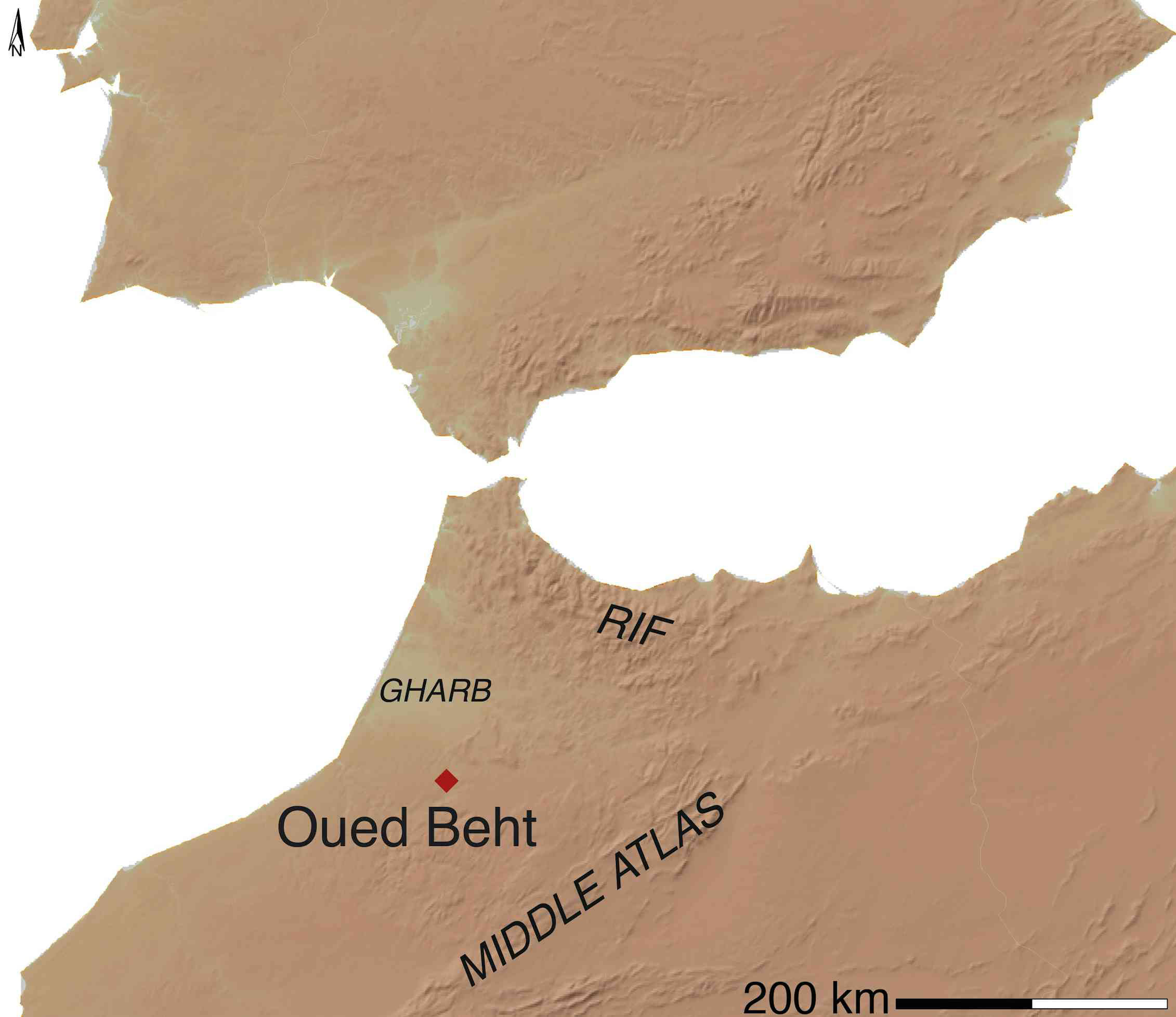
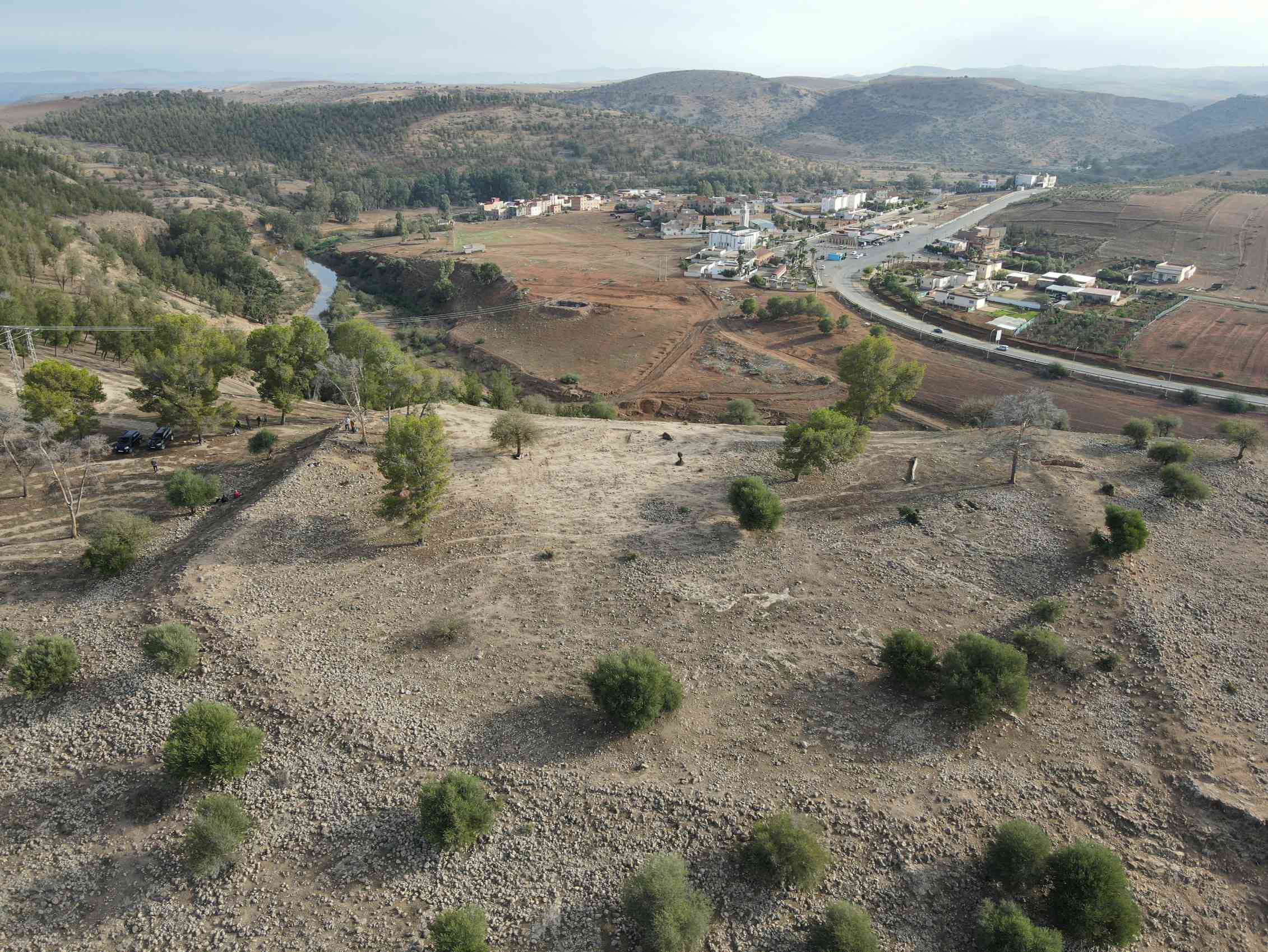
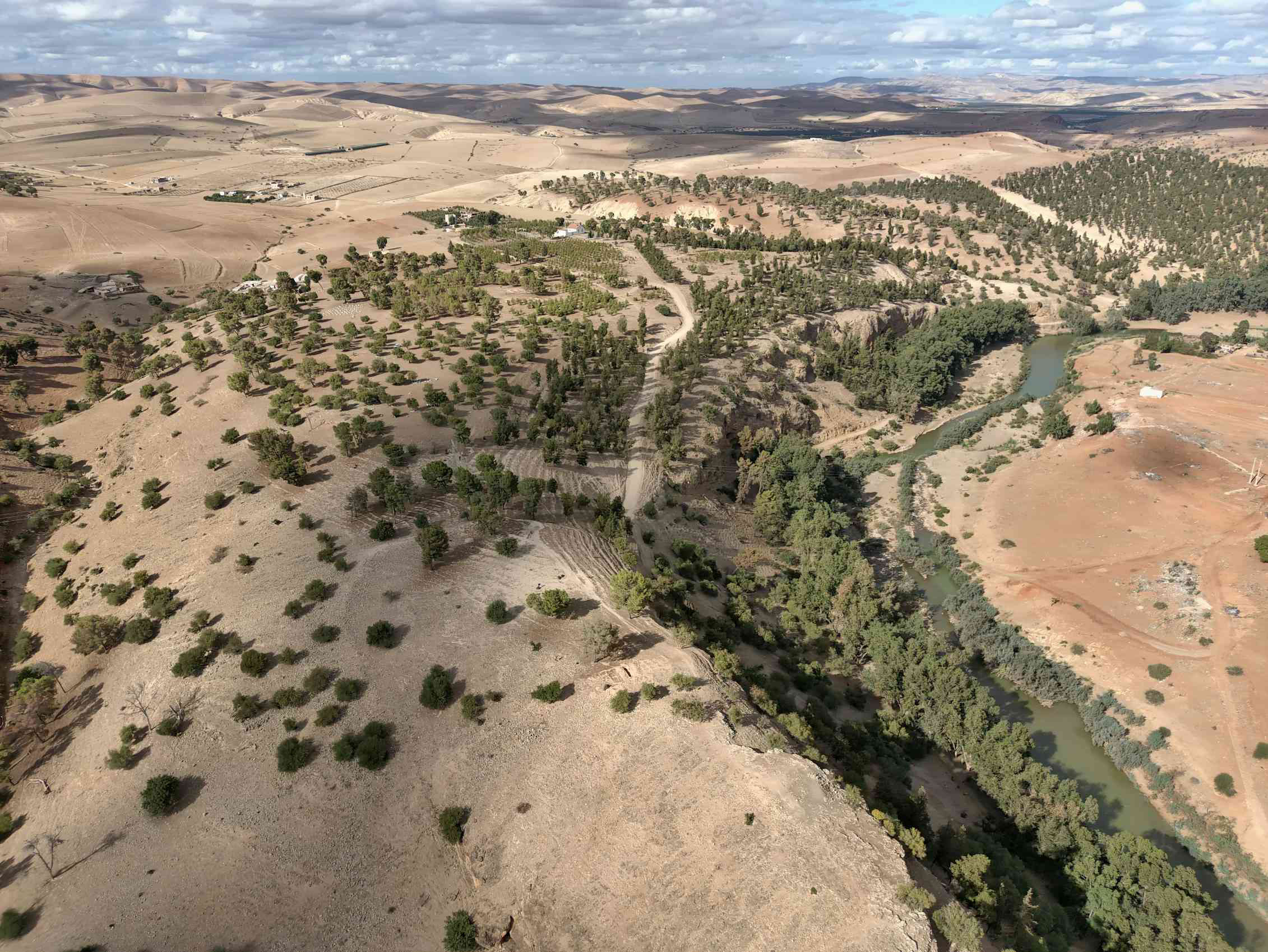
At Oued Beht, an archaeological site in the hills of northwestern Morocco, a large, wall-like structure suggests that people were protecting their communities or asserting control over the surrounding landscape about 4,000 to 3,500 years ago. The site sits on a ridge overlooking the river that gives it its name, a location that would draw people back to build again thousands of years later.
Uncovered during excavations in 2023, the structure is described in a new study as the earliest known large-scale construction with a probable defensive purpose in North Africa outside the Nile Valley. It dates to the second millennium BC, pushing back the evidence for organized defensive architecture in the Maghreb, the region encompassing northwestern Africa.
Protection and power on the ridge
Exactly what people might have been defending against remains unknown. The researchers suggest that competition over land, resources, and possibly control of routes through the landscape offers a more likely explanation than threats from “invaders”. Building such structures could have helped communities protect themselves or demonstrate their power over a strategically useful location.
The construction also suggests that societies in the region were more complex and organized than previously understood. The researchers interpret the discovery as evidence of communities actively reshaping their surroundings while participating in wider networks of interaction across the Mediterranean.
Oued Beht had already revealed evidence of a much earlier farming society. Previous work by the Oued Beht Archaeological Project identified what is likely the earliest and largest agricultural complex yet discovered in Africa outside the Nile Valley. Dating to around 5,400 to 4,900 years ago, that complex predates the newly reported structure.
The 2023 excavations also documented renewed use of the ridge during the medieval period, between the 11th and 13th centuries AD. People rebuilt the same probable defensive structure and established a hamlet or farm on a nearby hilltop. A cemetery occupied the ground between the two areas.
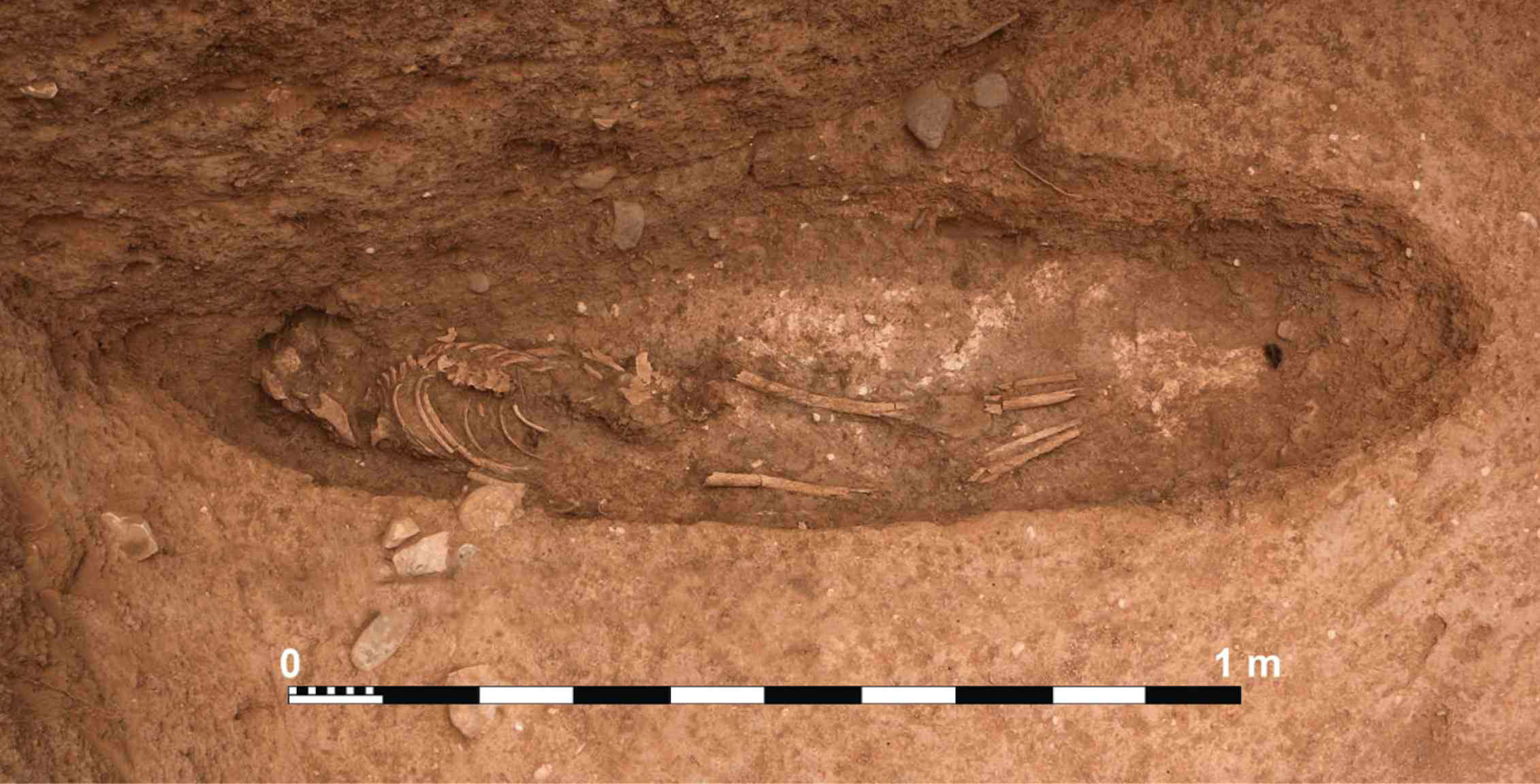
Together these findings provide rare archaeological insights into rural communities during both prehistoric and medieval times. They help us understand how societies developed and maintained themselves in a region too often left out of the history books.
Farming and crafts before the walls
For a long time, the later prehistory of north Africa’s Maghreb region (the Mediterranean countries of Morocco, Algeria, and Tunisia) has been poorly understood. Compared with neighboring areas such as Iberia in south-western Europe or Athens in the eastern Mediterranean, archaeological evidence was often fragmentary. In the last few years, this has changed completely.
Excavations at Oued Beht have revealed a large concentration of human activity spread across at least ten hectares. The earliest major phase dates to the mid-fourth and early third millennia BC, or the Final Neolithic period.
Environmental evidence from plant and animal remains in the prehistoric era indicates a farming community cultivating crops such as barley and wheat. They also exploited wild plants and kept livestock.
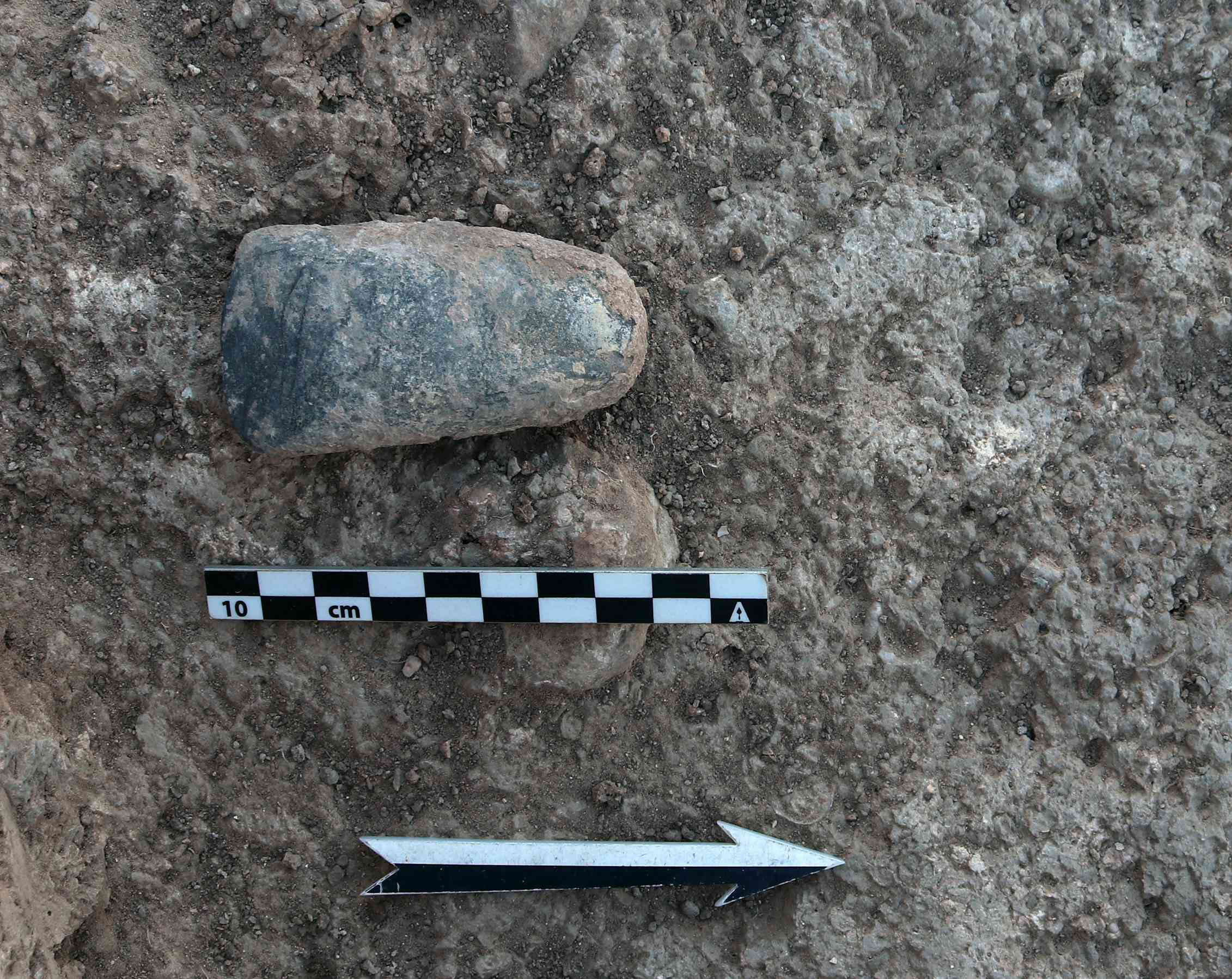
The site was also an important center of craft production. Thousands of polished stone axes and other tools have been discovered, along with finely made pottery, sometimes decorated with painted patterns.
It’s still uncertain whether prehistoric Oued Beht functioned as a permanent village, a seasonal center, or something less familiar. But it was clearly a major focus in the landscape of north-west Morocco.
The walls’ Bronze Age origins
The presence of potentially ancient earthworks and walls had been noted since the 1930s. The French archaeologist Armand Ruhlmann first documented a configuration of three walls, with the fourth side protected by the natural scarp of the ridge, describing a defensive éperon barré (barred spur). Their precise nature and date remained uncertain until now.
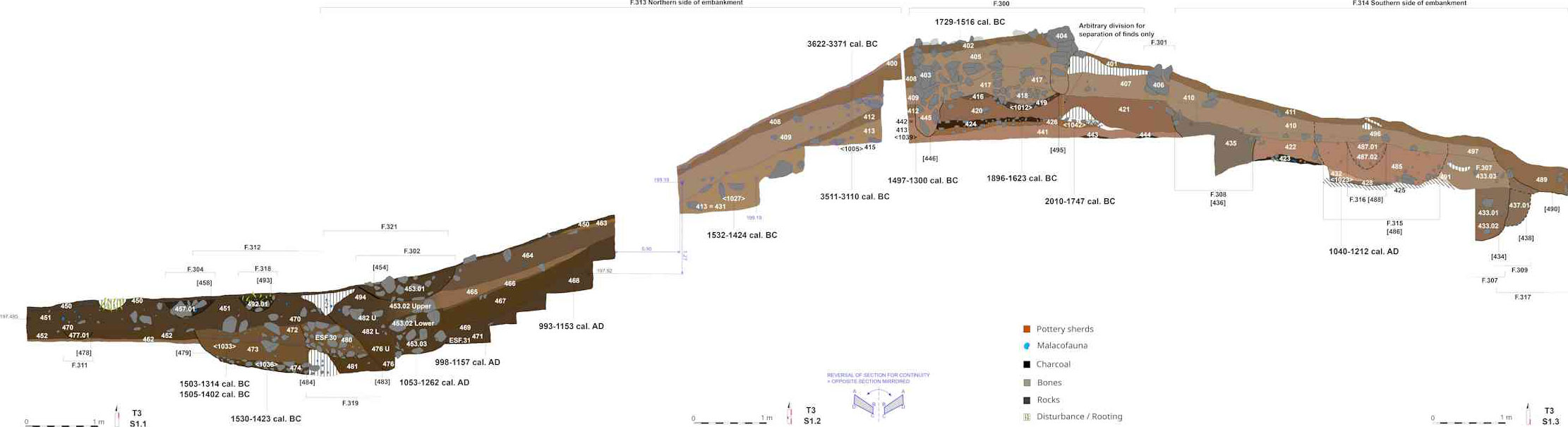
New excavations have clarified the existence of a multi-phase ditch, rampart and wall built across a narrow section of the Oued Beht ridge between the river and a ravine. This cut off and protected the ridge’s southern tip.
Radiocarbon dating of deposits associated with these structures gave us the timelines in our study.
They place its original construction at a time equivalent to the Bronze Age of the remaining western Mediterranean. This makes it the earliest confirmed defensive construction in north Africa outside Egypt.
This structure raises important questions about the society that built it. Building an embankment and ditch system required planning, coordination, and the mobilization of labor. This suggests a community capable of organizing complex construction initiatives.
During the earlier Neolithic phase, activity at Oued Beht focused on the larger and more open northern area of the site. By the period of our new study, focus had shifted to the narrower, more defensible southern ridge. This may reflect a shift in settlement strategies.
Oued Beht’s Mediterranean connections
The second millennium BC was a dynamic period across the Mediterranean. In southern Iberia, Argaric societies (about 2200-1550 BC) in today’s Europe were developing complex, often hilltop settlements. They were characterised by planned architecture, advanced metallurgy (especially bronze production), and marked social hierarchies visible in burial practices. These communities often constructed fortified sites, and strategically located settlements controlling surrounding territories.
Increasing evidence suggests that communities in north-west Africa were connected to wider Mediterranean networks. This includes today’s Spain and Portugal. The discoveries at Oued Beht indicate that the Maghreb was not isolated. It participated in broader processes shaping the western Mediterranean.
The defensive system at the site may reflect wider transformations in social organization and regional interaction. There may have been growing competition over resources, control of movement, and more formalized leadership structures.
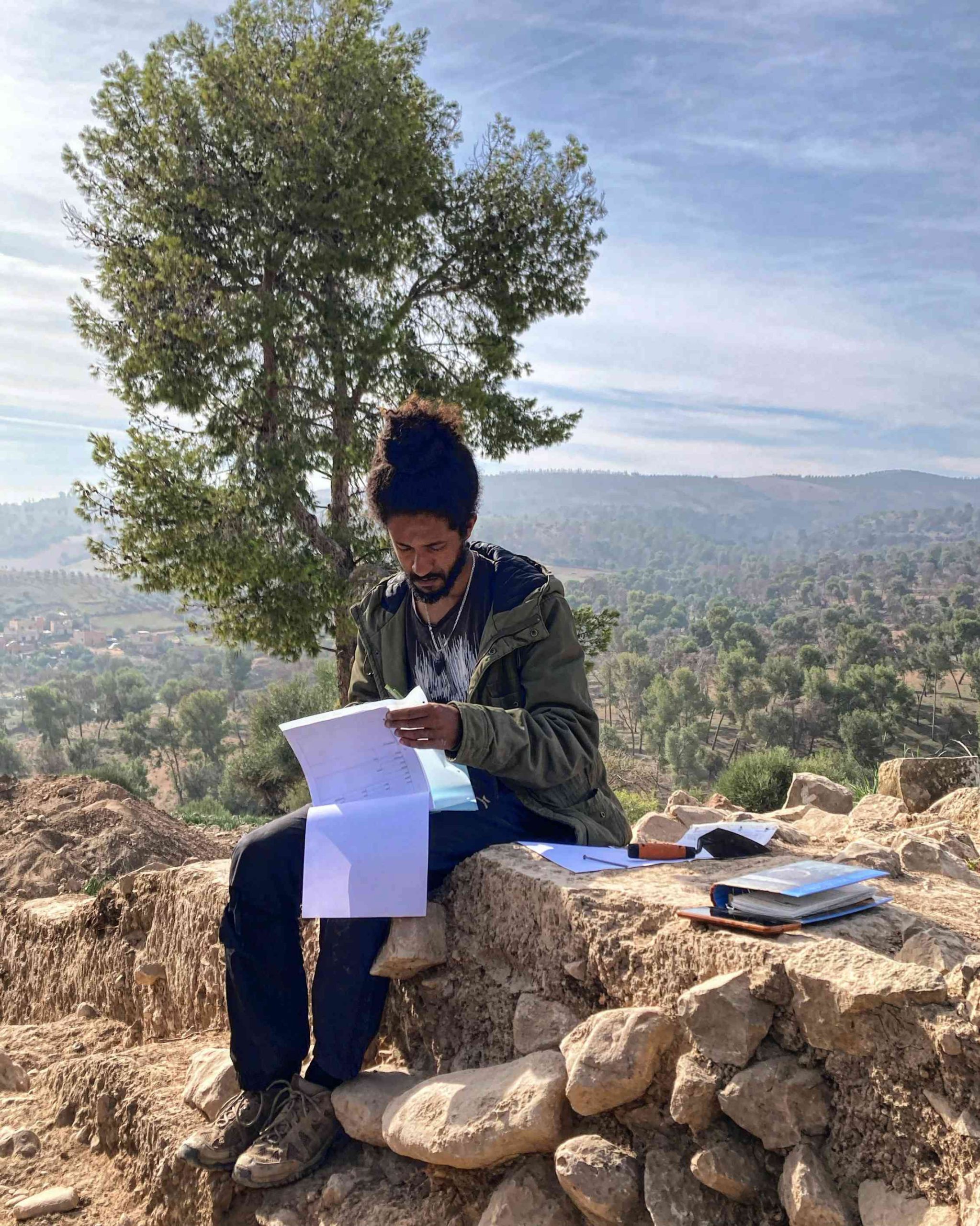
The discoveries at Oued Beht highlight how much remains to be learned about the deep history of north Africa. The defensive wall shows that communities here were able to coordinate large construction projects and points to social transformations that are only very tentatively beginning to be recognized.
The medieval remains demonstrate that the ridge was used again many centuries after the prehistoric settlement had been abandoned. Oued Beht was not simply a single-period settlement but a landscape repeatedly selected by different communities across millennia.
As research continues, this location may become key to understanding how societies in the Maghreb evolved from early farming communities to the medieval rural world.
Reference: “Expanding Oued Beht: Final Neolithic, Bronze Age, medieval and later discoveries from excavation and survey in 2023” by Giulio Lucarini, Youssef Bokbot, Toby Wilkinson, Hamza Benattia, Aïcha Bigoulimen, Alessia Brucato, Marlena Cygan, Lucy Farr, Hassan Hachami, Evangelia Kiriatzi, Rafael Laoutari, Lorena Lombardi, Adelaide Marsilio, Rafael Martínez Sánchez, Ilaria Mazzini, Jacob Morales, Giulia Muti, Jacques Pelegrin, Moad Radi, Francesco Michele Rega and Cyprian Broodbank, 7 September 2026, Libyan Studies.
DOI: 10.1017/lis.2026.10037
Adapted from an article originally published in The Conversation.
Never miss a breakthrough: Join the SciTechDaily newsletter.
Follow us on Google and Google News.