
Ancient bones and DNA reveal that dog diversity and their close relationship with migrating humans developed thousands of years ago.
Place a village dog beside a toy poodle and a mastiff, and the extraordinary physical range of a single species becomes obvious. An estimated 700 million dogs now live alongside or near humans worldwide.
Dogs serve as companions, working animals, and members of the family – and their history is closely bound to our own. Yet the origins of their remarkable variety, and the true age of their relationship with people, have remained difficult to trace.
Two studies published today in Science approach those questions from different directions. Allowen Evin of the University of Montpelier led an investigation of ancient skeletal remains, while Shao-Jie Zhang of the Kunming Institute of Zoology examined DNA from ancient dogs across Eastern Eurasia.
Taken together, the findings indicate that canine diversity and the connection between dogs and humans reach farther into the past, and developed through a more complicated history, than researchers once understood.
Dog diversity began thousands of years ago
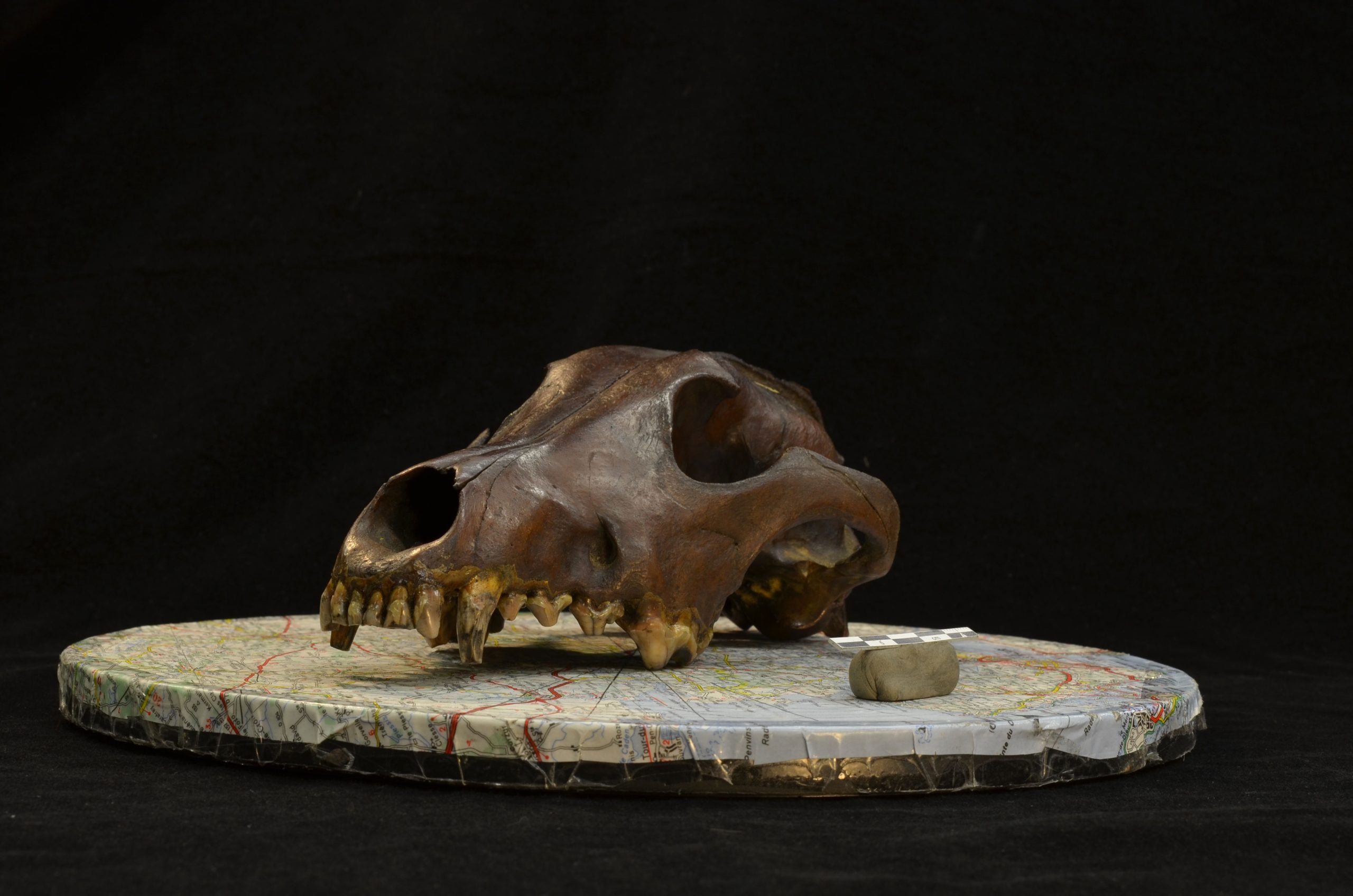
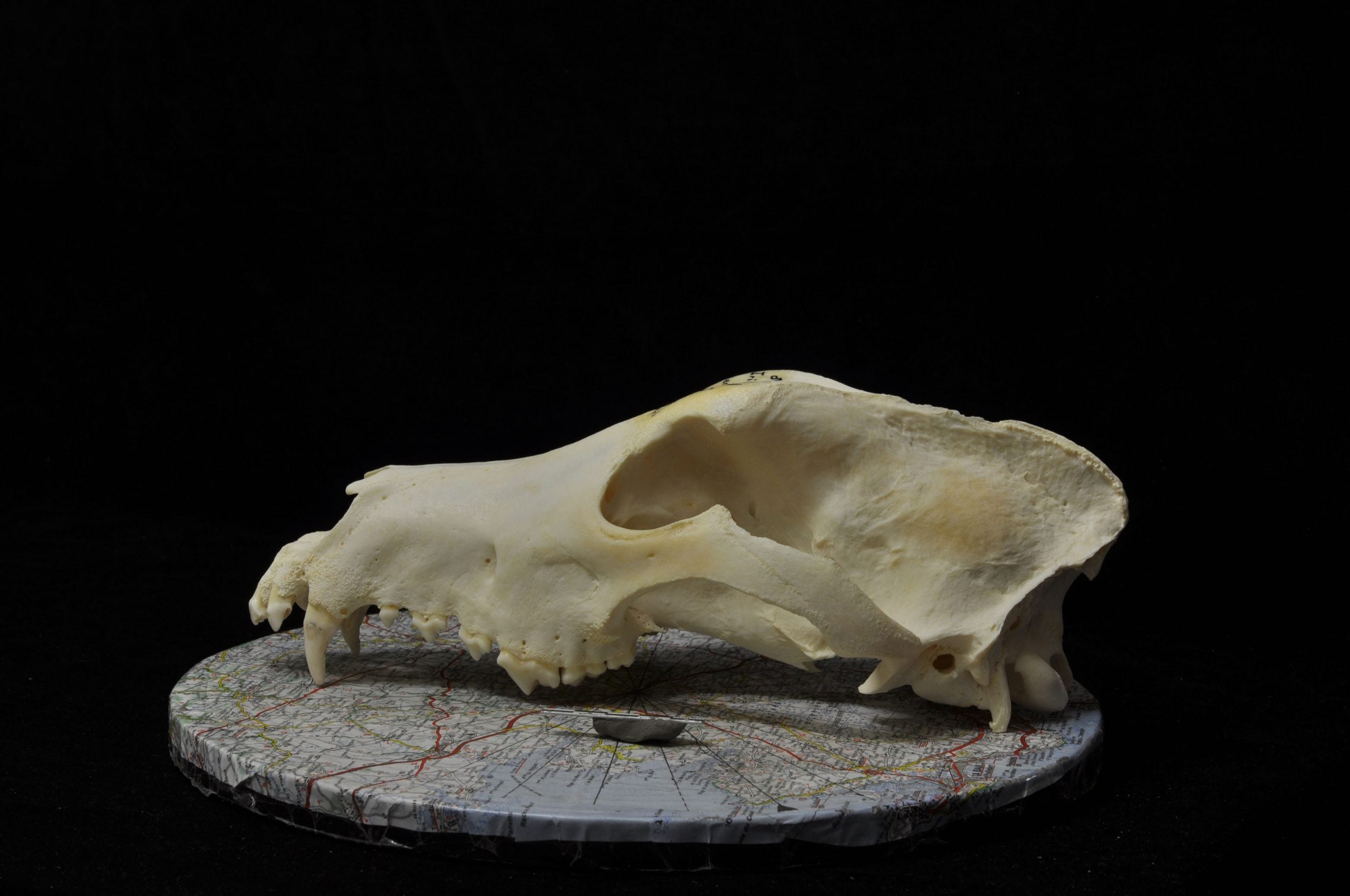
Evin and her colleagues examined 643 dog and wolf skulls covering a period of 50,000 years to investigate when the physical diversity seen in modern dogs began to emerge.
Their results indicate that the characteristic “dog-like” skull first appeared about 11,000 years ago during the Holocene epoch, the period following the most recent ice age. Dog skulls from that same era already displayed considerable variation in form.
This means the wide range of shapes and sizes dogs have today isn’t solely a product of the intense selective breeding programs that became popular in the last few centuries. Some of that variation emerged millennia earlier.
Early dogs still looked like wolves
The team reanalyzed the skull shapes of all 17 known dog or wolf skulls from the Late Pleistocene, a geological period from 129,000 to 11,700 years ago. Some skulls were 50,000 years old.
They found all of these Pleistocene skulls were essentially wolf-like in shape, including some previously identified as early dogs.
Importantly, this suggests that while the split between wolves and dogs likely occurred during the Pleistocene, the skull shape of early dogs didn’t start to change until closer to the Holocene – that is, 11,000 years ago. However, some Holocene dog skulls still retained wolf-like features.
This research suggests early dogs were much more diverse than previously thought. This diversity may have laid the groundwork for the extreme variations in size and shape of the dogs we have today.
Earlier genomic studies have uncovered four major dog lineages that likely originated about 20,000 years ago: Eastern (East Asian and Arctic) and Western (Europe and Near East) dogs.
The origins of these ancient dog lineages are still being untangled. However, studying shifts in the ancestry of dogs through time and between different regions can help us better understand both the origins of dogs and the movement of Neolithic (new stone-age) humans.
Dog DNA traces human migrations
The new study by Zhang and his colleagues used 73 ancient dog genomes spanning the last 10,000 years to explore how humans and dogs moved across Eastern Eurasia through time.
Analysis of these ancient dogs identified multiple shifts in the ancestry of dogs in Eastern Eurasia at times that correlate with the movement of specific human groups (hunter-gatherers, farmers, and pastoralists). This suggests that as different human cultural groups moved across Eurasia, their dogs often moved with them, carrying their unique genetic signatures.
There was some discrepancy between human and dog population ancestry in some parts of Asia. For example, Eastern hunter-gatherers from Veretye and Botai, who were more closely related to Western Eurasian humans, had largely Eastern (Arctic) dogs rather than the Western dogs observed with other Western Eurasian cultures at the time.
This means dogs may have been a key part of cultural exchange or trade between different human cultures or communities. It may also illustrate complexities in the evolution of dogs that we are yet to understand.
The work by Zhang and his team presents compelling evidence that in Eastern Eurasia thousands of years ago dogs played an indispensable role in human societies as crucial “biocultural packages” that moved with humans. In other words, humans took their companions with them on their journeys (and perhaps traded them), rather than simply acquiring new dogs after moving.
Dogs preserve a shared human history
These findings highlight the long-term, complex, and intertwined relationship between dogs and humans that spans more than 10,000 years.
The genetic ancestry of dogs can act as a living record of ancient human migrations, trade networks, and cultural exchanges. Studies on ancient dogs may also help us understand the environmental factors that contributed to the evolution of dogs, and their relationship with humans.
Together, these new studies profoundly reshape our understanding of how dogs became so diverse and how they have related to humans along the way.
Both studies underscore that the incredible diversity in modern dogs is not an entirely recent phenomenon. The genetic and morphological foundations for this variation were laid thousands of years ago, shaped by natural selection, human selection, and diverse environments, long before the structured breeding of the past few centuries.
Future studies investigating the physical diversity and ancestry of dogs through time could deepen our understanding of the complex origins and spread of dogs across the globe. Whatever their origins, this research deepens our appreciation for the unique and ancient bond between humans and dogs that was almost as diverse as canines themselves.
Reference: “The emergence and diversification of dog morphology” by Allowen Evin, Carly Ameen, Colline Brassard, Sophie Dennis, Ekaterina E. Antipina, Vincent Bonhomme, Myriam Boudadi-Maligne, Kate Britton, Francisco Gil Cano, Ruth F. Carden, Julien Claude, Lídia Colominas, Stefan Curth, Sergey Egorovich Fedorov, Joan Frances, Daniela C. Kalthoff, Andrew C. Kitchener, Rick Knecht, Pavel Kosintsev, Anna Linderholm, Robert Losey, Ilia Merts, Viktor Merts, Maria Mostadius, Mark Omura, Vedat Onar, Alan K. Outram, Joris Peters, André Rehazek, Erika Rosengren, Mikhail Sablin, Paul Sciulli, Maria Seguí, Z. Jack Tseng, Emma Usmanova, Victor Varfolomeev, Susan Crockford, Yaroslav Kuzmin, Laurent Frantz, Keith Dobney and Greger Larson, 13 November 2025, Science.
DOI: 10.1126/science.adt0995
Adapted from an article originally published in The Conversation.
Never miss a breakthrough: Join the SciTechDaily newsletter.
Follow us on Google and Google News.