
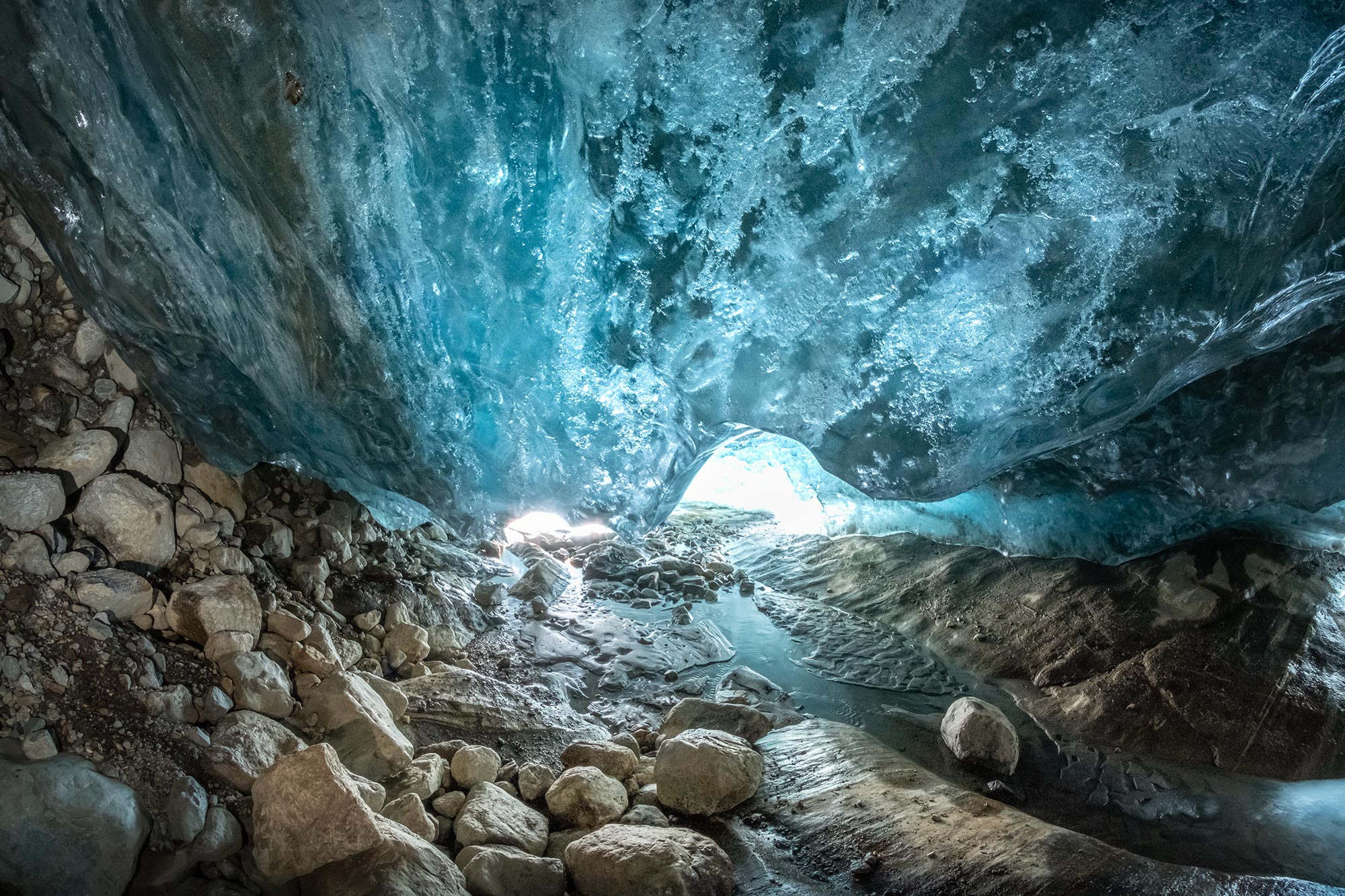
Researchers have found compelling evidence that ice on Tibet’s Guliya Plateau is far older than once thought.
Ice buried high on the Tibetan Plateau may have survived for more than 128,000 years, preserving a rare record of climate conditions dating back to the last ice age.
Researchers analyzing ice cores from the Guliya Plateau in northwestern Tibet found evidence that the deepest layers are far older than previous estimates suggested. If the new chronology is correct, Guliya contains the oldest ice cores yet recovered from the region and one of the longest mountain ice records found outside the polar regions.
Ice Older Than the Holocene
Earlier research had raised questions about whether Guliya’s oldest ice extended much beyond the Holocene, the geological epoch that began nearly 12,000 years ago. The new study indicates that at least some of the ice is considerably older and may extend well into the last glacial period.
“If we only had Holocene-era ice in Tibet, that would mean that the big ice sheets from the last ice age didn’t persist through the early Holocene,” said Lonnie Thompson, lead author of the study, professor of earth sciences and senior research scientist at the Byrd Polar Research Center at The Ohio State University. “But evidence shows that it did.”
The finding gives researchers a much longer archive for investigating how glaciers and climate changed across a region that is highly sensitive to shifts in temperature and precipitation.
Two Ice Cores Tell the Same Story
The researchers compared cores drilled from the Guliya ice cap in 1992 and 2015. Despite being collected 23 years apart, both contained similar patterns in their oxygen isotopes, chemical variations that can reflect past environmental conditions.
That agreement suggests the climate signals preserved in the ice are reproducible rather than artifacts of a single drilling site or sample.
“Reproducibility of the records within a given ice cap is extremely important,” Thompson said. “If you get an identical record a quarter of a century later, it can tell you a lot about the behavior of the ice over time.”
Radioactive Isotopes Help Date the Ice
Determining the age of ancient glacier ice is difficult because researchers need reliable chronological markers within the frozen layers. For the Guliya cores, the team used radioactive isotopes of beryllium and chlorine, whose known rates of decay can preserve evidence of environmental events over long periods.
The researchers used those isotopes to identify chemical evidence associated with the Leschamp Geomagnetic Excursion, a major disturbance in Earth’s magnetic field more than 41,000 years ago. The event provides a recognizable time marker that can help anchor the ice core chronology.
The team then compared the ice core results with oxygen isotope records from cave deposits elsewhere on the Tibetan Plateau. Together, those records suggest that the oldest Guliya ice may be more than 128,000 years old.
A Rare Mountain Climate Archive
Ice cores act as natural archives, trapping layers of snow, dust, gases, and chemical compounds that can preserve evidence of past climate and atmospheric conditions. Establishing an accurate timeline is essential because researchers must know when each layer formed before they can connect changes in the ice with events elsewhere in Earth’s climate system.
Mountain ice cores that extend deep into the last glacial period are especially uncommon. Thompson said ice cores recovered from Huascarán in the Peruvian Andes reach back more than 30,000 years, while the Guliya record appears to extend far beyond 100,000 years.
“It’s a really critical finding, because outside of the polar regions, this is the only ice core we have from the mountaintops that go back that far,” he said. “Records out of Huascarán only go back over 30,000 years, not over 100,000, so that makes Guliya a very unique record.”
Building a More Accurate Climate Timeline
Guliya’s landscape and ice cap structure may have helped preserve such old layers, but the study also highlights the importance of establishing a reliable timescale. Without accurate dating, scientists cannot confidently determine when glaciation intensified, how long ancient ice persisted, or when major periods of ice loss occurred.
“When did ice start forming on the planet and what did those natural processes of loss look like?” said Thompson. “We need to know those things, and the only way you can really demonstrate it is with accurate time scales on these records.”
The revised chronology could also change how researchers interpret other chemical and biological signals preserved in Guliya ice. Future samples may allow scientists to reassess past changes in climate, atmospheric chemistry, and environmental conditions across a much longer span of geological history.
What Comes Next
The team plans to analyze additional Guliya samples to determine how other climate indicators fit within the newly established chronology. Those measurements could provide a more detailed picture of environmental changes across multiple glacial and interglacial periods.
“The big picture is that our results tell a very consistent story,” Thompson said. “If you get the science right, it’s consistent. It’s our understanding of what it’s trying to tell us that has to catch up.”
Reference: “Additional evidence supports a timescale exceeding 100,000 years for the Guliya ice cap, Tibetan Plateau” by Lonnie G. Thompson, Mary E. Davis, Ellen Mosley-Thompson, Juerg Beer, Tandong Yao, Christof Vockenhuber, Ninglian Wang, Ling Fang and Marcus Christl, 30 September 2026, Science Advances.
DOI: 10.1126/sciadv.aeh2912
This research was supported by the U.S. National Science Foundation.
Never miss a breakthrough: Join the SciTechDaily newsletter.
Follow us on Google and Google News.