
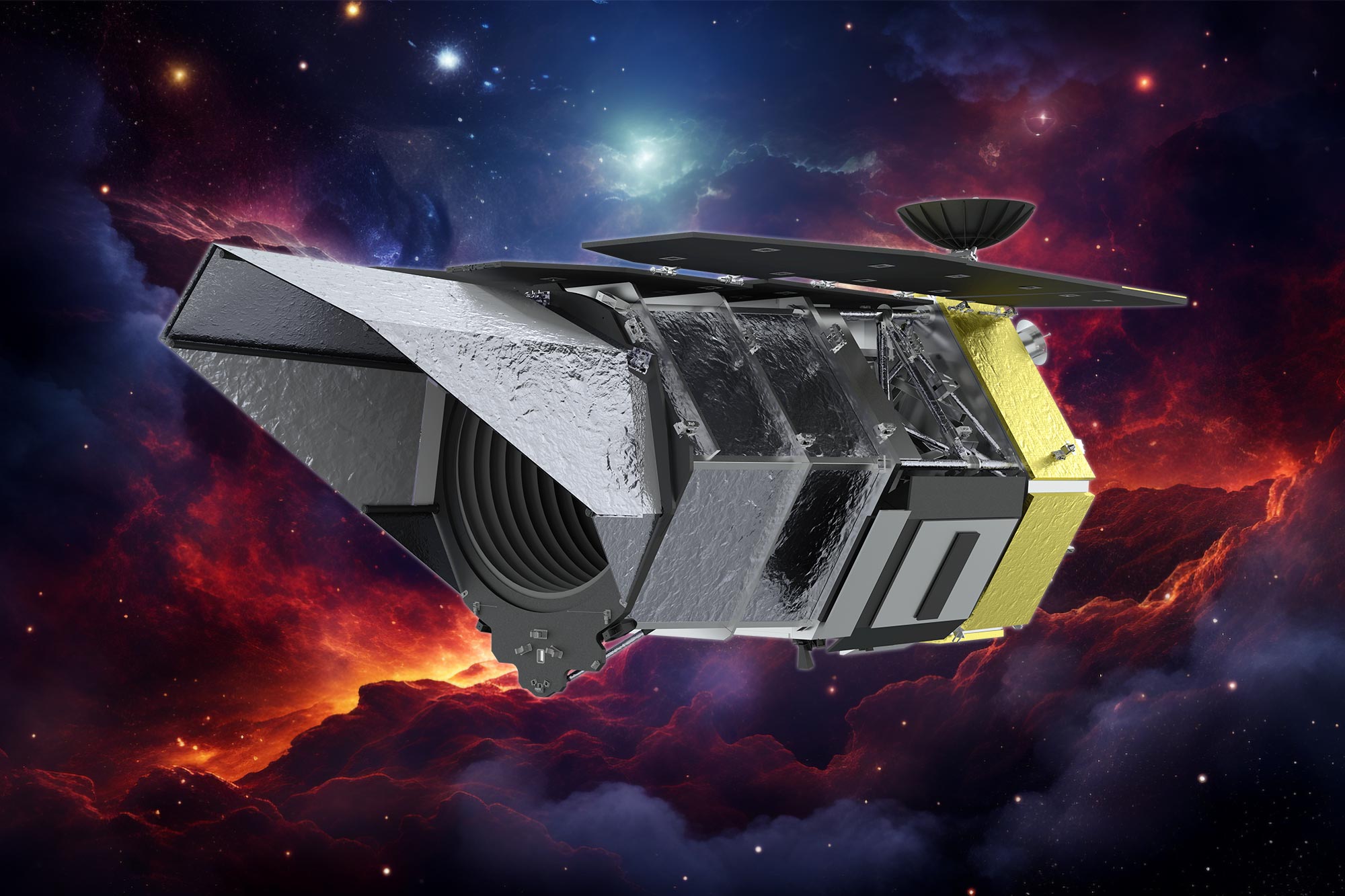
NASA’s Nancy Grace Roman Space Telescope has completed key guidance tests and given its Coronagraph Instrument its first look at the cosmos.
NASA’s Nancy Grace Roman Space Telescope has passed an important series of pointing tests, showing that it can remain extremely steady while observing distant targets. The tests, conducted from September 15 to 21, evaluated Roman’s fine guidance system, which helps keep the observatory locked onto the same part of the sky during long observations. One day later, on September 22, the mission’s Coronagraph Instrument detected cosmic light for the first time.
Roman’s Fine Guidance System Passes Key Tests
Roman’s main science camera, the Wide Field Instrument, contains 18 detectors. A small section of each detector has been set aside to repeatedly monitor a guide star, which is a star with a precisely known position that can be used as a reference.
The spacecraft’s attitude control system first points Roman toward the correct region of space. After that, the fine guidance system continuously checks the guide stars and helps correct any small drift. Without those adjustments, Roman would not be able to produce images with the same level of sharpness.
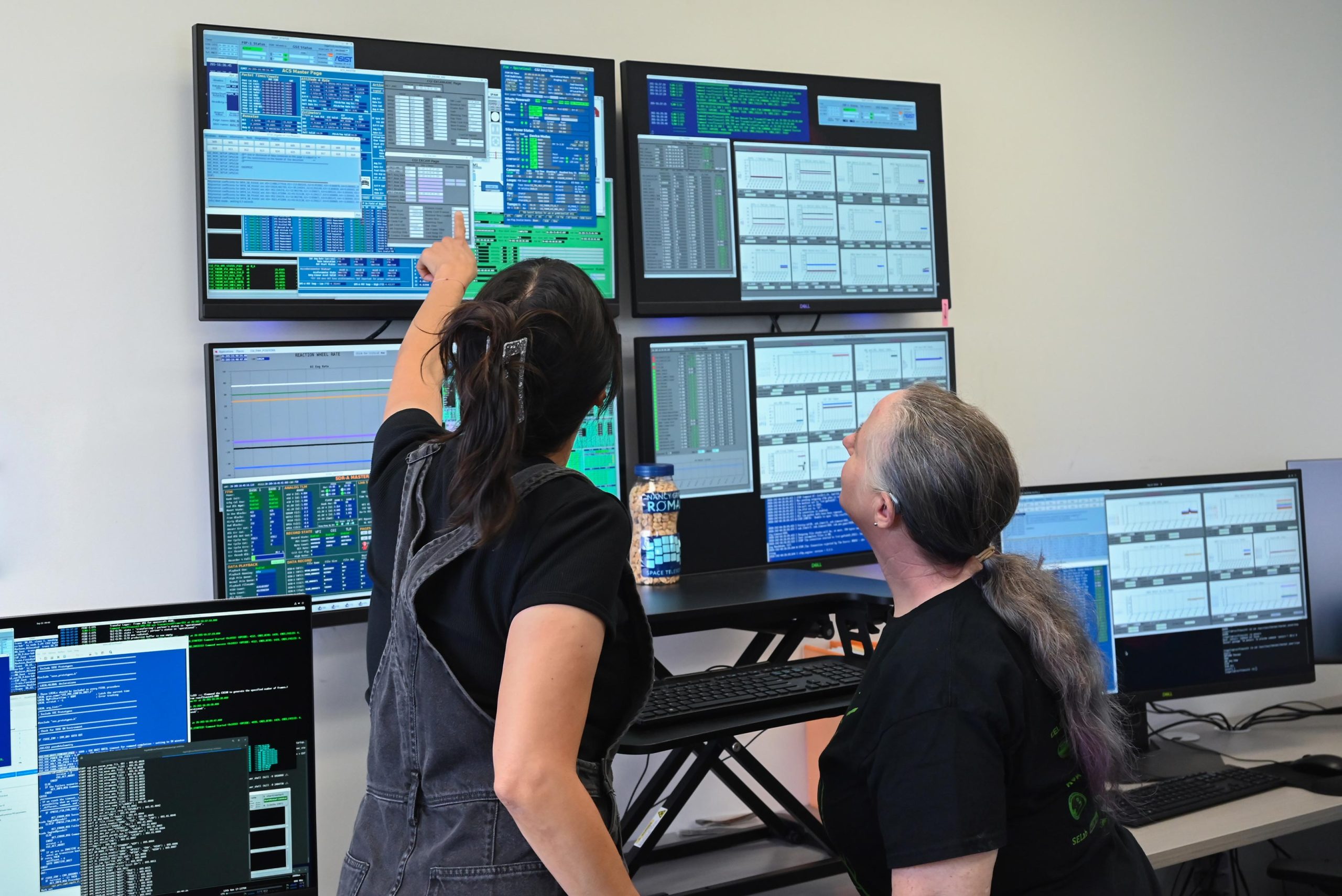
“Every Roman observation relies on its ability to stay precisely pointed at the correct region of space long enough to collect an image, which can take from minutes to hours for a deep exposure,” said Begoña Vila, Roman’s guiding instrument systems lead at NASA’s Goddard Space Flight Center in Greenbelt, Maryland. “The fine-guidance system reports the positions of the guide stars about four times each second to the attitude control system, which can move the observatory a tiny amount to counter any drift as needed. Our tests confirmed that we are able to keep the observatory very stable for science operations: better than 1/100,000 of a degree for half an hour at a time for Wide Field Instrument observations or for eight hours at a time for Coronagraph Instrument observations, which take much longer. This was a very exciting moment for the team.”
That level of stability is roughly comparable to keeping a laser beam focused on a U.S. dime from about 150 miles (about 240 kilometers) away. Engineers plan to refine the guidance system further, which could improve that comparison to about 230 miles (370 kilometers).
Roman will also test a completely new guiding method.
“Roman doesn’t have a separate guider instrument, like other space telescopes do,” Vila said. “Instead of tracking only a star’s point-like appearance, it will guide on detailed wavelength patterns called spectra. Because Roman is already equipped to measure spectra for science, it can use that same information to precisely position the telescope. We are looking forward to validating this spectral guiding mode in the coming weeks.”
Coronagraph Captures Its First Cosmic Light
On September 22 and 27, the Roman team paired the fine guidance system with the Coronagraph Instrument for additional tests. The coronagraph is designed to demonstrate advanced technology for blocking the glare of stars so that much fainter planets and dusty disks around nearby stars can be observed.
“Roman’s coronagraph also has its own internal stability process, making it much more stable even than the Wide Field Instrument,” Vila said.
That extra stability is essential. Even a very small vibration or pointing error could allow unwanted starlight to leak into the instrument, overwhelming the dim planets scientists hope to detect.
The coronagraph woke up on September 1 and stretched its digital, electronic, and mechanical “limbs” in the middle of the month. After confirming that the fine guidance system could keep the instrument stable, the team adjusted its focus and allowed it to take an initial, still imperfect look at space. Those early observations will help engineers sharpen and refine the coronagraph’s performance.
“This observation confirms that the instrument can produce a focused image,” said Vanessa Bailey, a Roman Coronagraph Instrument scientist at NASA’s Jet Propulsion Laboratory in Southern California. “It’s a very limited test that kicks off a methodical process of increasingly complex tasks that help us prepare for the instrument’s future observations.”
For the first test, the Coronagraph Instrument observed a faint star in the Large Magellanic Cloud, a nearby galaxy. The image contained extra “noise” because the detectors were intentionally kept warmer than their eventual operating temperature. Maintaining the higher temperature helps prevent contamination from sticking to the detectors.
“We were kicking the tires, making sure light goes through the system,” Bailey said. “The second step, on Sunday, was an observation that confirmed our pointing. The team cooled the detectors down for better sensitivity, and we observed a new location in the Large Magellanic Cloud where we expected to see many stars in a single image. And we did! We’re breathing a sigh of relief!”
Never miss a breakthrough: Join the SciTechDaily newsletter.
Follow us on Google and Google News.