
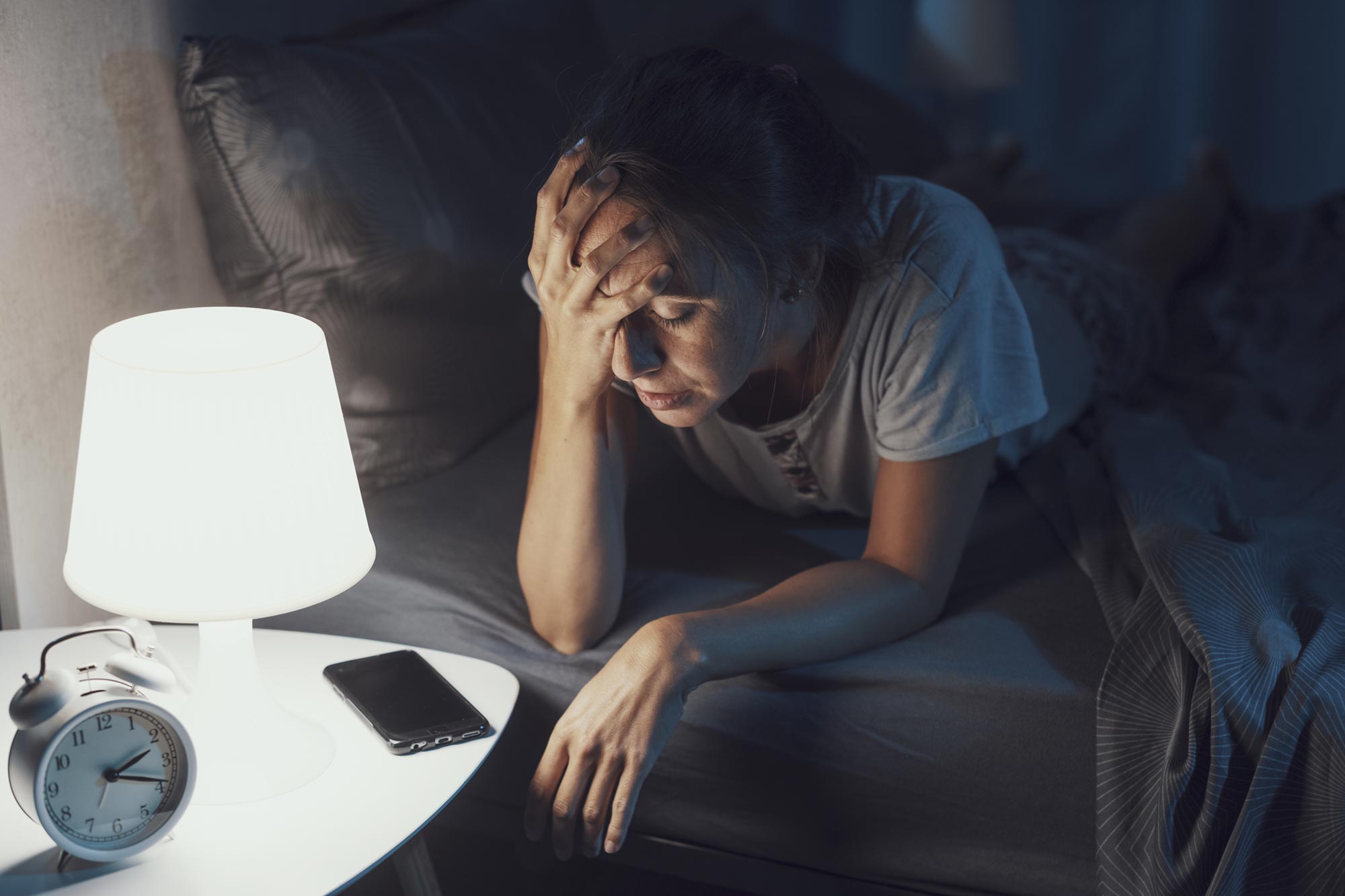
Night owls faced a 70% higher risk of receiving a disability pension than morning people in a Finnish study that tracked adults for 12 years.
Night owls were 70% more likely than morning people to receive a disability pension in a Finnish study tracking adults for 12 years.
When the morning alarm rings, getting up for work can mean pulling against a body clock that favors later hours. For night owls, difficulties in working life may extend well beyond those first sleepy minutes. A Finnish study found that people classified as evening types in their mid-40s were 1.7 times as likely as morning types to receive a disability pension over the following 12 years.
A body clock shaped by genes
A person’s natural timing for sleep, waking, and alertness is known as their chronotype. Morning types gravitate toward earlier hours, evening types favor later ones, and intermediate types fall between them.
These patterns reflect more than personal preference. Genetic information analyzed in the study supported chronotype’s strong inherited component, and previous research has found that it remains fairly stable throughout adulthood.
Earlier studies had linked evening chronotypes to poorer health and more difficulties at work, without firmly establishing whether those problems were associated with a greater likelihood of receiving a disability pension. In Finland, qualifying for that pension requires a severe and prolonged decline in health, making it a measure of substantial impairment rather than simply a preference to retire early.
Night owls faced higher disability pension risk
To track who eventually reached that point, researchers drew on a population study that began in 1966 and included 96% of people born that year in two northern Finnish provinces. Their analysis, published in Occupational & Environmental Medicine, connected participants’ reported sleep and waking patterns in middle age with national records of work and pensions.
At age 46 in 2012, participants answered questions about how easily they woke in the morning, how tired they felt during the first half hour, and when they preferred to work. They also identified whether they considered themselves morning or evening people. Those answers allowed the researchers to classify 5,679 adults, including 2,597 men and 3,082 women, by chronotype.
Evening types accounted for roughly one in 10 men and one in eight women. Morning types made up a much larger share, at 46% of men and 44% of women, while the remaining participants fell into the intermediate group. Linking these classifications to national registers allowed the researchers to follow pension outcomes across a population drawn from many occupations and sectors of the economy.
Over the next 12 years, 135 men, or 5.2%, and 249 women, or 8.1%, received their first disability pension. The elevated likelihood among evening types appeared in both men and women. Adjusting for socioeconomic differences, including education and occupation, left the association unchanged.
Poorer health may explain night owls’ risk
Finland’s requirement for a serious health decline before granting a disability pension led the researchers to suggest that poorer health among evening types was the main contributor to their higher pension incidence. They proposed that less healthy choices and disruption of the internal body clock could play a role, with that disruption potentially causing sleep problems. These were possible explanations for the pattern, rather than mechanisms the study demonstrated.
Following a large group across many kinds of work for 12 years strengthened the evidence, but the researchers could not establish that evening chronotype caused declining health or an early departure from employment. Health and personal circumstances may also have changed after the initial survey in ways the analysis did not capture.
“People who are E-type represent a significant proportion of the population and their health and ability to continue working until retirement age pose challenges for sustainable economies,” say the researchers. For some night owls still answering the morning alarm as they approach their 50s and 60s, the team suggests, deteriorating health may already be making it harder to stay in work.
Reference: “Evening chronotype and disability pensions: 12-year register-based follow-up of middle-aged adults from the Northern Finland birth cohort 1966” by Tapio Räihä, Ilona Merikanto, Iiro Nerg, Marko Korhonen, Katri Kantojärvi, Leena Ala-Mursula and Eveliina Heikkala, 30 September 2026, Occupational and Environmental Medicine.
DOI: 10.1136/oemed-2026-110995
Funding: NFBC1966 46-year follow-up study received financial support from University of Oulu grant No 24000692, Oulu University Hospital grant No 24301140, ERDF European Regional Development Fund grant No 539/2010 A31592. This study was funded by the North Ostrobothnia Regional Fund of the Finnish Cultural Foundation (recipient TR, grant No 60241591), by the European Research Council (recipient IM, grant No 101169653), and by HORIZON EUROPE (recipient IN, grant No 101137146) of the European Union.
Never miss a breakthrough: Join the SciTechDaily newsletter.
Follow us on Google and Google News.