
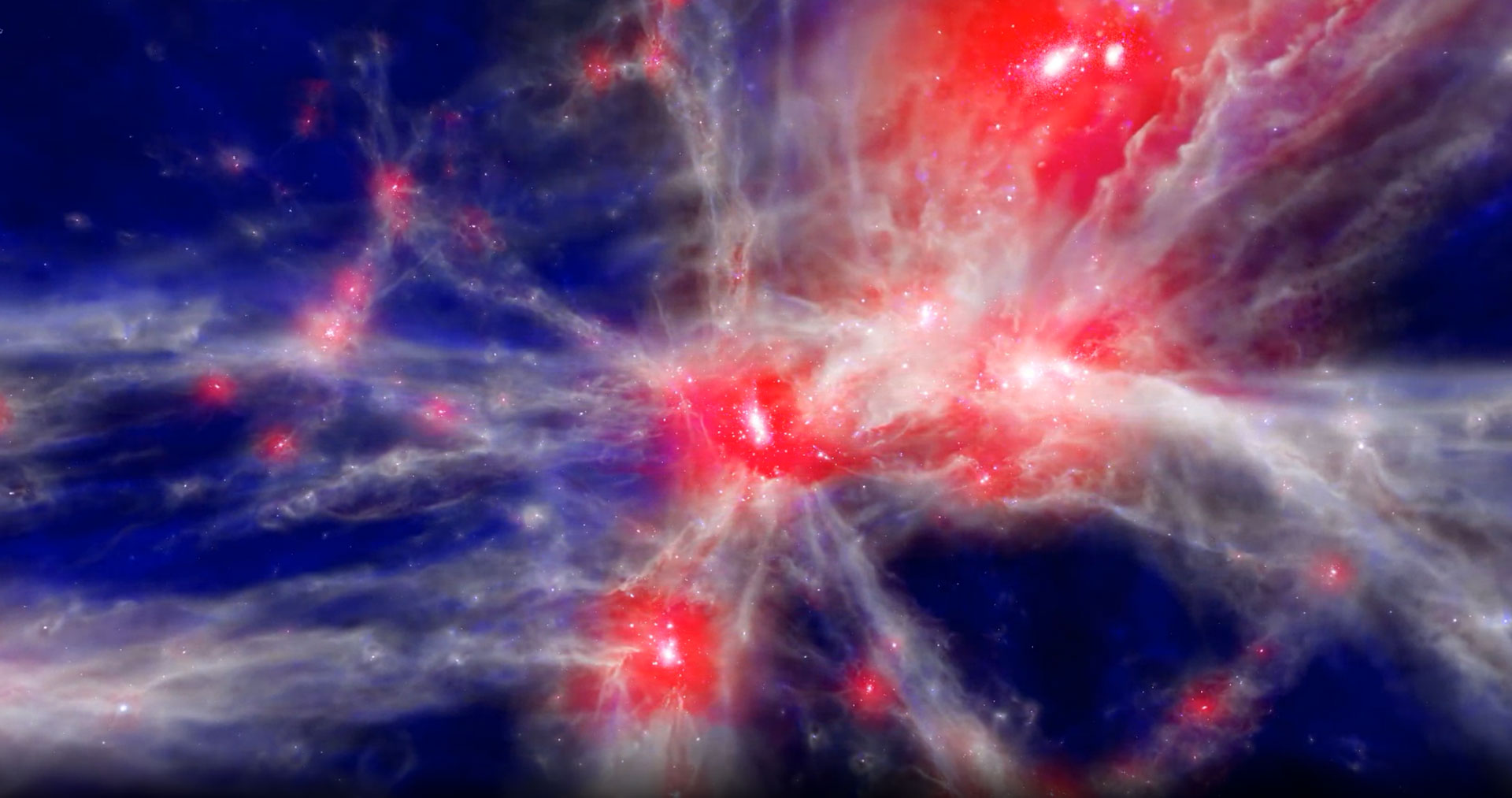
Galaxy simulations suggest the Milky Way offers some of the universe’s best conditions for life, while smaller, more crowded galaxies remain less forgiving.
Earth seems like a troubled place right now, but at least our cosmic surroundings appear peaceful. But this is not universally true, as explosions, collisions, and other dangers lurk in other places and times.
In our new research, published in Monthly Notices of the Royal Astronomical Society, we scoured simulated universes to find the friendliest locations for life.
We discovered something reassuring: the Sun, sitting here in the outskirts of the Milky Way galaxy, is about as good as it gets.
The Goldilocks zones
Regions of the universe that would be friendly towards life are known as habitable or Goldilocks zones – they’re just right.
Whether life is actually there is another question. As astronomers and biologists explore how life could form on exoplanets (planets outside the Solar System), astrophysicists follow the structure and evolution of the universe to identify the nicest places, as well as those where life could be snuffed out in an instant.
So, where should we look for life?
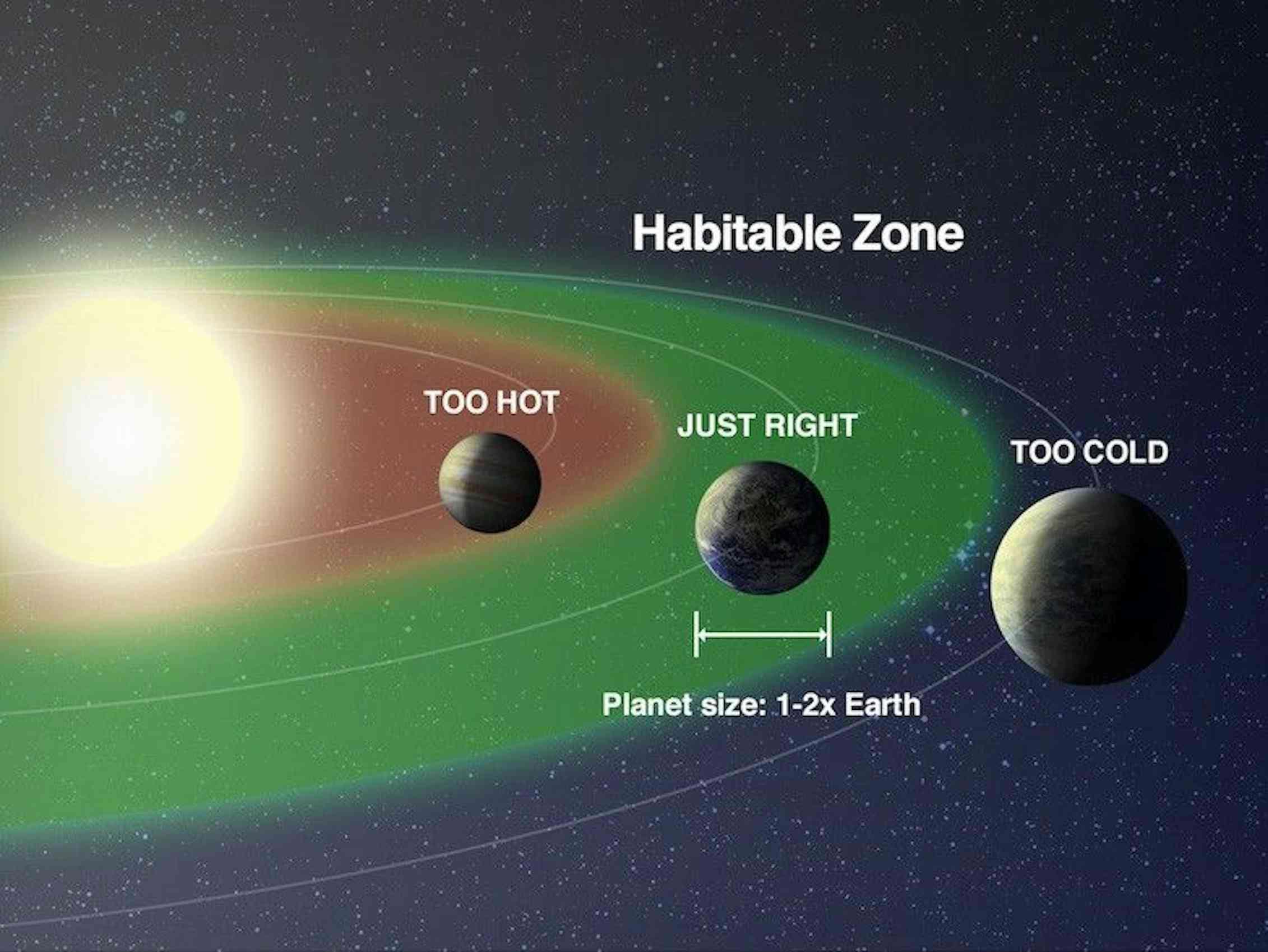
For example, there is a Goldilocks zone in the immediate neighborhood of stars. Too hot or too cold will not do. This “circumstellar habitable zone” is just right for liquid water instead of steam or ice.
Zooming out, we can look for the nicest places and times to live in our own Milky Way galaxy. A young star that’s too close to the galactic center will suffer in the hustle and bustle of all the nearby stars, whilst stars that are too far away will be in a sterile environment, devoid of the chemicals essential for life.
Just as Earth is in the Sun’s circumstellar habitable zone, the Sun is in the Milky Way’s “galactic habitable zone.”
Let’s zoom out even more. What about other galaxies?
Simulating the universe
We followed synthetic galaxy evolution using the EAGLE (Evolution and Assembly of GaLaxies and their Environments) project – one of the most realistic simulations of the observed universe.
They track the expansion of space, gravity’s pull, and the physics of gas, stars, and black holes, and provide us with a detailed map of what the universe looks like across hundreds of millions of light-years.
With such a map, we asked: where might life be most welcome?
Finding life, avoiding catastrophes
With no observations of alien life, we must make assumptions. The hydrogen and helium produced in the Big Bang are too simple to make organisms, so we focus on generations of stars that have seeded the cosmos with heavier elements essential for life.
Exoplanet observations reveal that Earth-like rocky planets require a certain concentration of those heavier elements. However, too much could produce a hot Jupiter, a gas giant that sweeps through the planetary system, eating rocky planets on the way. This is best avoided.
Our breakthrough involves detailed modeling of those things that are bad news for life. Big stars blow up, sterilizing their local environment. Bigger explosions, such as gamma-ray bursts, can fry a much larger volume. Paleontologists think that the Ordovician mass extinction 450 million years ago might have resulted from a nearby explosion.
There are other dangers to avoid. We wouldn’t want another star to wander through our Solar System and disrupt Earth’s nicely circular orbit. So, steer clear of crowded galactic neighborhoods.
Then there are the black holes. Most of these are small and don’t pose any danger, but in the hearts of galaxies lurk monsters. Weighing more than a million suns, these can roar into life as they swallow matter that gets too close. So, stay away as this can result in intense radiation that can strip the atmosphere off your planet.
A home among the galaxies
While we don’t know if life would form in these nice spots, they are the ones that offer the best conditions.
And the results tell us another thing: the Milky Way is rather nice.
This isn’t just a fondness for our own neighborhood. We could have found that life should exist in earlier galaxies, smaller ones, or farther from galaxy centers.
We find that our universe has created plenty of opportunities for habitation, though it seems to be slowing down as the rate of catastrophes catch up with the creation of new planets. Our Milky Way seems typical in the galaxies that have been efficient in turning the raw materials of the cosmos into life-friendly environments.
Similarly, the Milky Way, and its kindred, have put their energetic and dangerous days behind them and settled into a relaxed retirement. These days, even in a billion years of wandering around our Milky Way, less than one star in a thousand would experience an extreme, life-annihilating extinction event.
The story is different for smaller galaxies, which are far more numerous than the Milky Way, as they are too crowded and too energetic.
So, rest easy. And if you get the chance, buying a property in the Milky Way is probably a secure investment, astronomically speaking.
Reference: “Life in the cosmic neighbourhood: galactic habitable zones in the eagle simulations” by Luke A Barnes, Geraint F Lewis, Jaime Salcido, Pascal J Elahi, Miroslav D Filipovic and Richard G Bower, 5 October 2026, Monthly Notices of the Royal Astronomical Society.
DOI: 10.1093/mnras/stag1750
This work was supported by the Science and Technology Facilities Council (grant number ST/P000541/1); European Research Council (grant number GA 267291 ‘Cosmiway’); and by the Netherlands Organisation for Scientific Research (NWO, VICS grant 639.043.409).
Adapted from an article originally published in The Conversation.
Never miss a breakthrough: Join the SciTechDaily newsletter.
Follow us on Google and Google News.