

Evidence from large-scale cosmic patterns suggests the Universe may be fundamentally asymmetric.
For decades, cosmology has rested on the idea that the Universe looks the same in every direction, an assumption built into the standard model of cosmology. New research now challenges this foundational view by pointing to a mismatch between patterns seen in ancient cosmic radiation and the distribution of matter across the Uuniverse.
The shape of the Universe is not something we usually think about. However, my colleagues and I have published a new study suggesting that it may be asymmetric or lopsided, meaning it does not look the same in every direction.
Why does this matter? The current “standard cosmological model,” which describes the structure and behavior of the entire Universe, is built on the assumption that the cosmos is isotropic, meaning it appears the same in all directions, and homogeneous when viewed on very large scales.
Yet several so-called “tensions,” or mismatches between different sets of observations, are beginning to challenge this picture of a uniform Universe.
In our latest paper, we examine one of the most important of these discrepancies, known as the cosmic dipole anomaly. We find that this anomaly presents a serious challenge to the most widely accepted framework for describing the Universe, the standard cosmological model, also known as the Lambda CDM model.
So what is the cosmic dipole anomaly and why is it such a problem for attempts to give a detailed account of the cosmos?
A foundational assumption under strain
Let’s start with the cosmic microwave background (CMB), which is the relic radiation left over from the big bang. The CMB is uniform over the sky to within one part in a hundred thousand.
So cosmologists feel confident in modelling the Universe using the “maximally symmetric” description of space-time in Einstein’s theory of general relativity. This symmetric vision for the Universe, where it looks the same everywhere and in all directions, is known as the “FLRW description.”
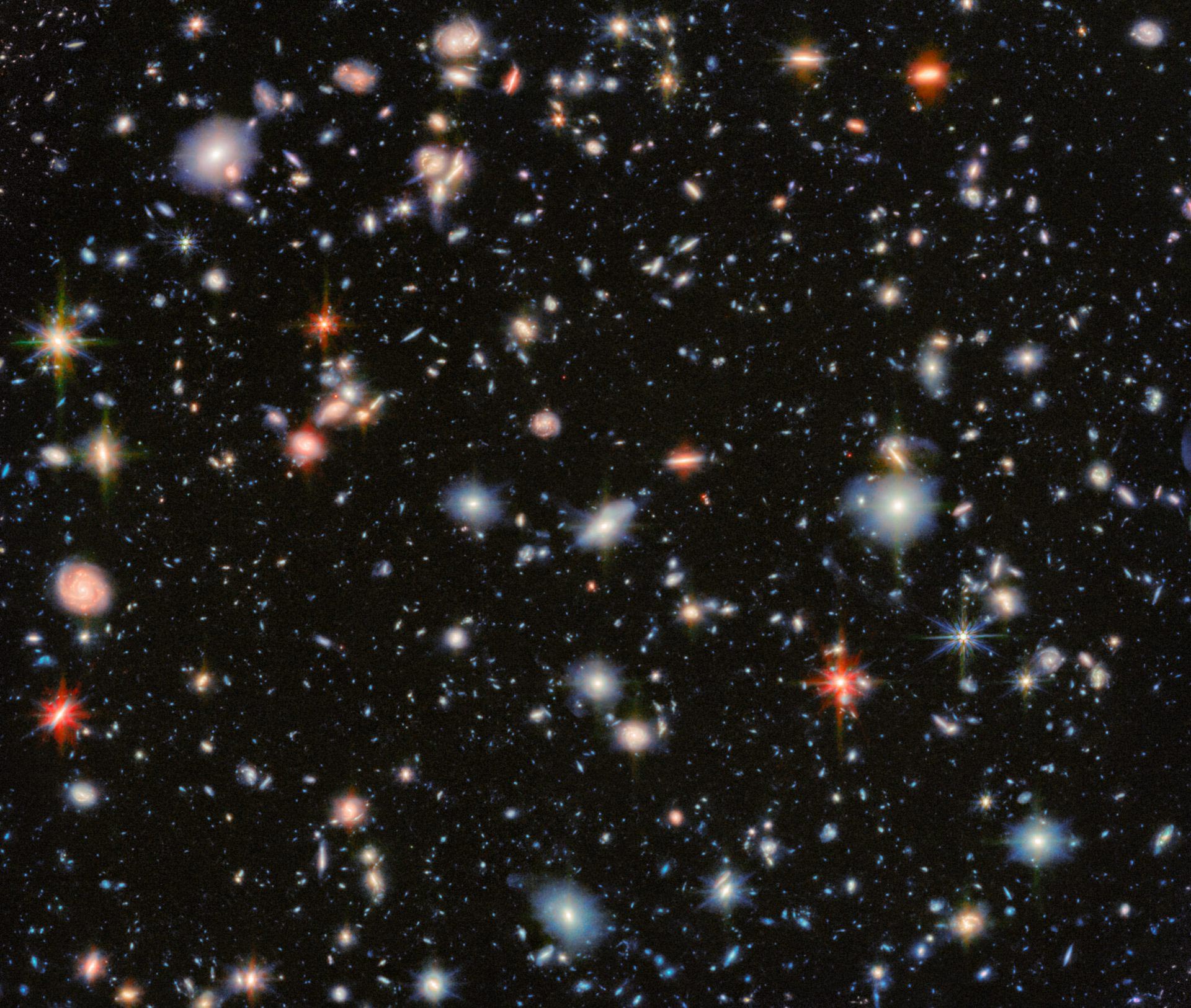
This vastly simplifies the solution of Einstein’s equations and is the basis for the Lambda-CDM model.
But there are several important anomalies, including a widely debated one called the Hubble tension. It is named after Edwin Hubble, who is credited with having discovered in 1929 that the Universe is expanding.
The tension started to emerge from different datasets in the 2000s, mainly from the Hubble Space Telescope, and also recent data from the Gaia satellite. This tension is a cosmological disagreement, where measurements of the Universe’s expansion rate from its early days don’t match up with measurements from the nearby (more recent) Universe.
The overlooked anomaly with deeper implications
The cosmic dipole anomaly has received much less attention than the Hubble tension, but it is even more fundamental to our understanding of the cosmos. So what is it?
Having established that the cosmic microwave background is symmetric on large scales, variations in this relic radiation from the Big Bang have been found. One of the most significant is called the CMB dipole anisotropy. This is the largest temperature difference in the CMB, where one side of the sky is hotter and the opposite side cooler – by about one part in a thousand.
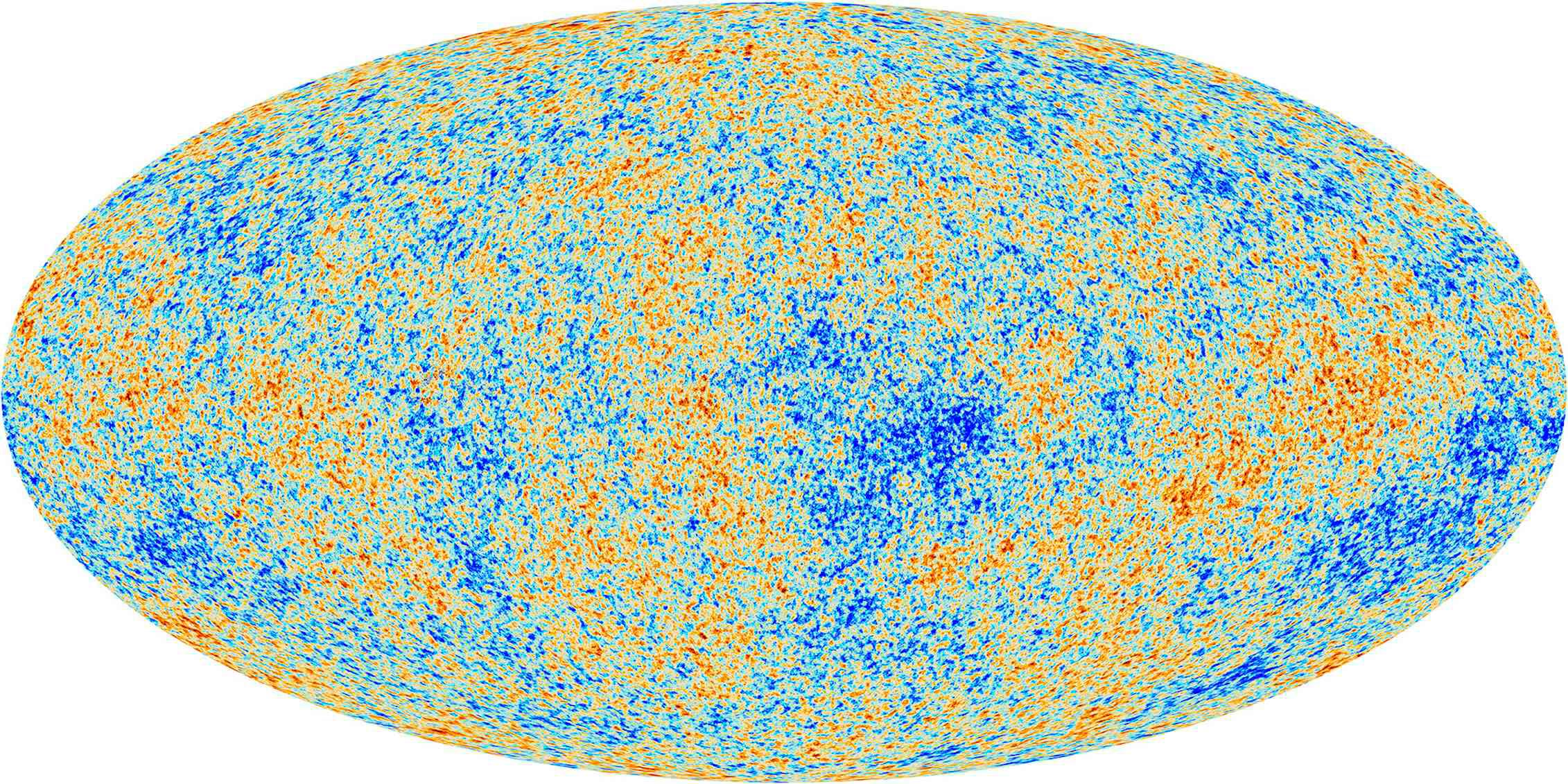
This variation in the CMB does not challenge the Lambda-CDM model of the Universe. But we should find corresponding variations in other astronomical data.
Testing symmetry with distant matter
In 1984, George Ellis and John Baldwin asked whether a similar variation, or “dipole anisotropy,” exists in the sky distribution of distant astronomical sources such as radio galaxies and quasars. The sources must be very distant because nearby sources could create a spurious “clustering dipole.”
If the “symmetrical Universe” FLRW assumption is correct, then this variation in distant astronomical sources should be directly determined by the observed variation in the CMB. This is known as the Ellis-Baldwin test, after the astronomers.
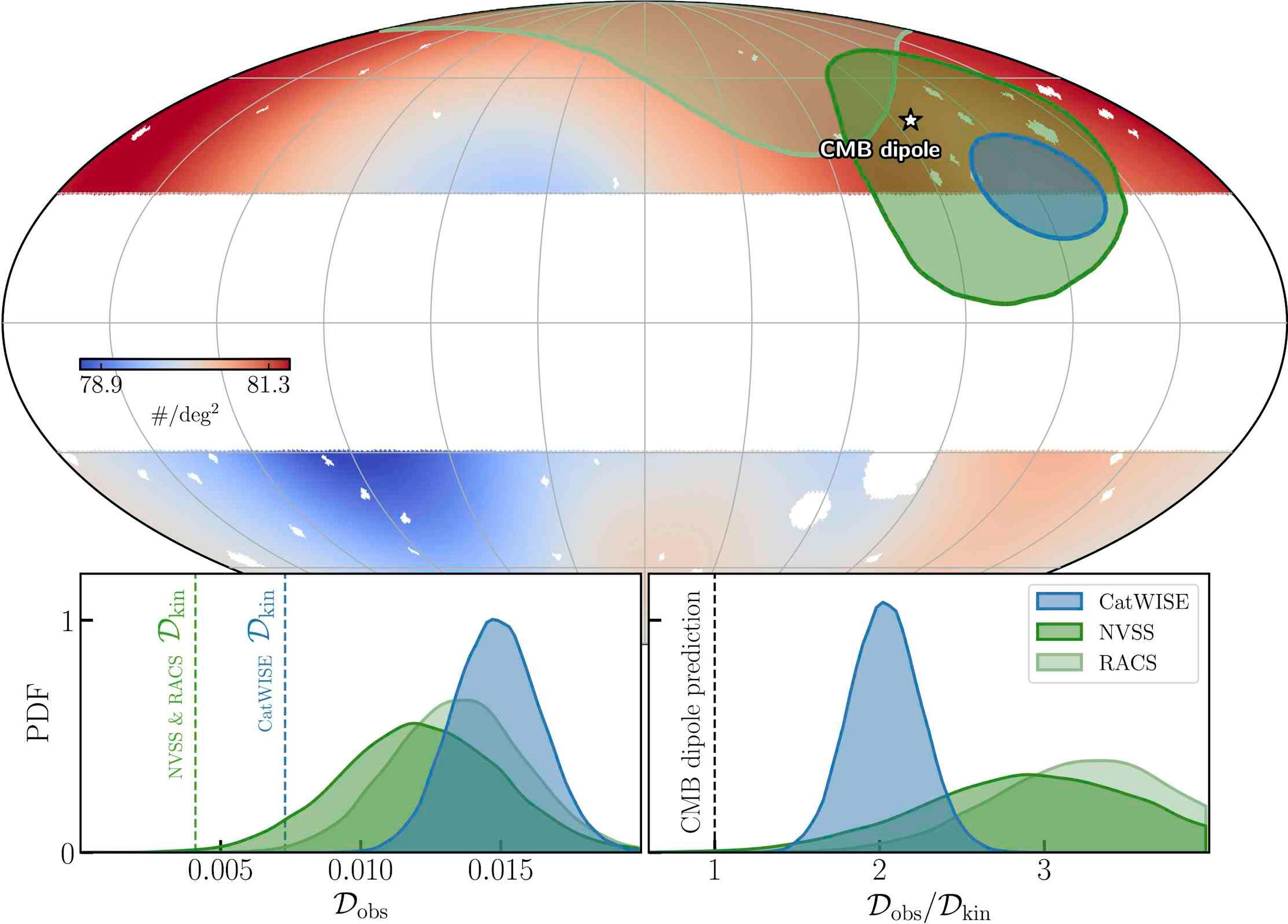
Consistency between the variations in the CMB and in matter would support the standard Lambda-CDM model. Discord would directly challenge it, and indeed the FLRW description. Because it is a very precise test, the data catalogue required to perform it has become available only recently.
The outcome is that the Universe fails the Ellis-Baldwin test. The variation in matter does not match that in the CMB. Since the possible sources of error are quite different for telescopes and satellites, and for different wavelengths in the spectrum, it is reassuring that the same result is obtained with terrestrial radio telescopes and satellites observing at mid-infrared wavelengths.
Rethinking the foundations of cosmology
The cosmic dipole anomaly has thus established itself as a major challenge to the standard cosmological model, even if the astronomical community has chosen to largely ignore it.
This may be because there is no easy way to patch up this problem. It requires abandoning not just the Lambda-CDM model but the FLRW description itself, and going back to square one.
Yet an avalanche of data is expected from new satellites like Euclid and SPHEREx, and telescopes such as the Vera Rubin Observatory and the Square Kilometre Array. It is conceivable that we may soon receive bold new insights into how to construct a new cosmological model, harnessing recent advances in a subset of artificial intelligence (AI) called machine learning.
The impact would be truly huge on fundamental physics – and on our understanding of the Universe.
Reference: “Colloquium: The cosmic dipole anomaly” by Nathan Secrest, Sebastian von Hausegger, Mohamed Rameez, Roya Mohayaee, Subir Sarkar, Nathan Secrest, Sebastian von Hausegger, Mohamed Rameez, Roya Mohayaee and Subir Sarkar, 11 December 2025, Reviews of Modern Physics.
DOI: 10.1103/9ygx-z2yq
Adapted from an article originally published in The Conversation.
Disclosure: Subir Sarkar receives funding from the UK Research & Innovation (UKRI) councils.
Never miss a breakthrough: Join the SciTechDaily newsletter.
Follow us on Google and Google News.
9 Comments
A relativistic kosmos can have no single center: every point [locus] is a center.
it is also perpetual to avoid infinite regression
Look up “Quasar Dipole News Aiden Smith”. It’s a high quality kill shot of this fake quasar story. This is hand-waving as its absolute best. The catWISE team has thrown every possible statistical method at page 1 of the book and inferred the story without reading page 2 or the prologue.
Its the ABG model and belief.
It will never be consistent or unanimous.
Don’t trust AI – a single mind, singly focused is certainly the finest instrument still as it may parse the as yet unforeseen. -Where AI munches past data – from the past (and unfortunately, misconceived).
Look up “Quasar Dipole News Aiden Smith”.
Its a hard kill shot showing that the dipole anomalies is a systematics artifact in the data. I have been in contact with the catwise2020 team including Subir Sarkar, however he is beating this dead horse for internet clout. Essentially the above website is a breakdown of why the dipole is NOT real, but there IS a high-sigma tension in dark-sirens (my unrelated findings), showing a propagation anomaly between gravity waves and EM.
BC Memo 2602_121709,130102_Source1.Reinterpretation【
Source 1.
https://scitechdaily.com/is-the-universe-lopsided-new-evidence-challenges-einsteins-simplest-universe/
1.
Is the Universe Unbalanced? New evidence calls into question Einstein’s simplest cosmology.
_The standard cosmological model assumes that the universe is uniform and looks identical in all directions from a macroscopic point of view. A new study directly verifies these assumptions and finds evidence that the distribution of matter in the universe is not entirely consistent with this model.
1-1.
_Evidence from large-scale cosmic patterns suggests that the universe may be fundamentally asymmetric.
_For decades cosmology has been based on the idea that the universe is the same from any direction, an assumption inherent in the standard cosmological model.
_However, the new study challenges this fundamental view by pointing out the discrepancy between the pattern observed in ancient cosmic radiation and the distribution of matter throughout the universe.
-a1.【 The cosmic radiation pattern (*) may be due to two types of neutron charge (zero, n).magicsum expressed in the dark matter sample4.moss.
-Protons and electrons make atoms, but due to the neutron charge trying to maintain the nucleus, an ozer.4pointer separation pattern can be formed in msbase. Hmmm. 0644.0705.
】
1-2.
_We usually don’t think about the shape of the universe. However, our research team announced a new study that shows that the shape of the universe may be asymmetrical or one-sided. In other words, the shape of the universe may not be the same in all directions.
1-2.
_Why is this important? The current “standard cosmological model,” which describes the structure and behavior of the entire universe, is based on the assumption that the universe is isotropic: it looks identical in all directions, and is homogeneous on very large scales.
_However, we are beginning to challenge such a picture of a universe in which the so-called “disagreement” or discrepancy between several observations is uniform.
1-3.
_In our latest paper, we have investigated one of the most important of these discrepancies, the cosmic dipole anomaly. We find that this anomaly poses a serious problem for the standard cosmological model (also known as the Lambda CDM model), the most widely accepted framework for describing the universe.
_So what is the cosmic dipole anomaly, and why does it become such a big problem in trying to explain the universe in detail?
2-2. Abnormal phenomena that are overlooked but have a deeper meaning
_While the cosmic dipole anomaly has not received as much attention as the Hubble tension, it is a much more fundamental phenomenon in understanding the universe. So what is the cosmic dipole anomaly?
2-3.
_After the fact that the cosmic microwave background radiation (CMB) is symmetric at the macroscopic scale, various variations have been found in this radiation remaining after the Big Bang.
_One of the most important variations is the CMB dipole anisotropy, which is the largest temperature difference in the CMB, with one side of the sky hotter and the other colder, with a difference of about 1/1000.
-a2.[There is a dipole xy model in which the cosmic background radiation CMB exhibits both isotropic and anisotropic.
– It’s oms.vix.ain. On the front, left and right x are isotropic symmetries and down y is anisotropic asymmetry.
-Anisotropy is related to the temperature difference of the mass difference distribution of matter.
sample1.
msbase12.qpeoms.2square.vector
oms.vix.a’6,vixx.a(b1,g3,k3,o5,n6)
b0acfd|0000e0
000ac0|f00bde
0c0fab|000e0d
e00d0c|0b0fa0
f000e0|b0dac0
d0f000|cae0b0
0b000f|0ead0c
0deb00|ac000f
ced0ba|00f000
a0b00e|0dc0f0
0ace00|df000b
0f00d0|e0bc0a
】
–Hmm. A momentary extension exists from msbase4.power. 2456.
-This means that the Big Bang event very quickly exists in the instantaneous age of the early universe, msbase.msoss.power.momentary.err, from the hadron era to the lepton era.1736.39.2457.
-The hadron era can be defined in terms of qpeoms. Because all of it is a unit of scalar quantities and spreads instantaneously. Uh-huh. 1757.
– The more important point is that hadron quantum units form msbase atom.photon spacetime via mass. Huh. 1800. 2602130101.
-The msoss.dark_matter system was opened via msbase.uh.1259.
-In pre-Frank era, qpeoms.qxell
Times may exist. Hmm. 1817.
Planckepoch corresponds to msbase4.power.cosmos. Huh. 1826.
-Before Planck’s constant era, the negative qpeoms era was huge before the big bang in basems anti-universe. Uh-huh. 1910.2446.48.
That the Universe looks the same in every direction is a strange assumption to make, it seems more about tidy maths than reality.
In the Newtonian model of universe that I propose, the universe is system of super galaxy-clusters, and the CMB is a system of electromagnetic radiations that coexists with the former. The clusters are uniformly distributed in a spherical shell. The inner clusters have shortage of energy and outer clusters have excess energy. The middle region clusters have near normal energy. So the temperature of the universe has a gradation, gradually increasing as we go outwards, though the distribution of matter is uniform. So there is no anomaly in the CMB dipole.
The only hypothesis added to Newtonian physics is that “motion at speed ‘c’ is a fundamental property of matter and forces of nature is reaction to that motion”. The universe oscillates between hot and cold states, and expansion is due to internal-energy of clusters changing into their speeds.