
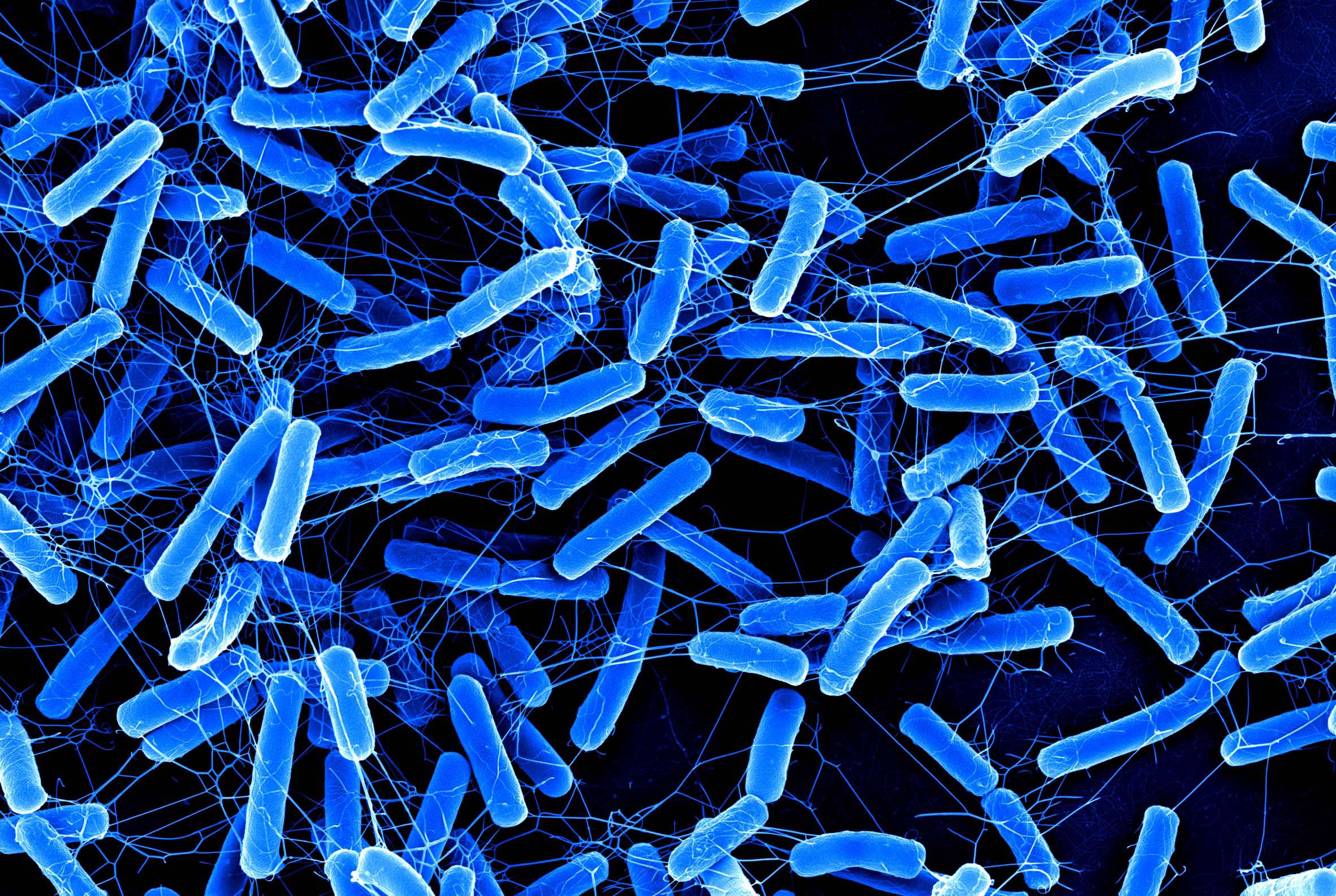
The promise of an experimental treatment for C. difficile gut infections lies partly in the bacteria it leaves alive, according to early laboratory and mouse research.
Broad-spectrum antibiotics can disrupt the gut’s microbial community, allowing a bacterium already living there to multiply unchecked. Clostridioides difficile, or C. difficile, is naturally present in the intestines of many people and usually causes no symptoms when its numbers remain low. When it proliferates, however, its toxins can trigger acute intestinal inflammation that may become chronic and can sometimes be life-threatening.
These infections, known as CDI, are among the leading causes of antibiotic-associated diarrhea and have high relapse rates. After multiple relapses, patients are often treated with fecal microbiota transfer, commonly called a stool transplant. The procedure is complex and unpleasant for many patients, creating a need for treatments that control the infection while limiting further disruption of the gut’s microbes.
Targeting C. difficile while sparing gut microbes
A team led by Professor Rolf Müller, department head and scientific director at HIPS, has identified a drug candidate that specifically kills C. difficile while sparing much of the gut microbiome. HIPS is a site of the Helmholtz Centre for Infection Research (HZI) in collaboration with Saarland University.
The candidate, argyrin B, belongs to a group of natural compounds identified in soil-dwelling myxobacteria. These bacteria use such compounds to hunt other microorganisms and exploit them as food.
“We were able to show that the natural compound argyrin B is highly effective against CDI: both in laboratory experiments and in a mouse model of the infection, where it significantly reduces the bacterial load,” says Dr. Jennifer Herrmann, a senior scientist in the “Microbial Natural Products” department at HIPS.
Little argyrin B reaches the bloodstream
For argyrins to become medicines, researchers must evaluate both their effectiveness and their pharmaceutical properties, including how they move through the body. When the team gave argyrin B to mice by mouth, very little entered the bloodstream. Instead, it remained largely in the large intestine, where the treatment is needed. Keeping the compound concentrated there could help limit unwanted effects elsewhere in the body, suggesting a potentially well-tolerated approach to treating CDI.
Herrmann also describes how the compound acts against the bacterium and what its selectivity could mean for recovery.
“An antibacterial target of the argyrins had previously been identified and characterized in the notorious hospital-acquired pathogen Pseudomonas aeruginosa. Now we have been able to show that argyrin B also acts on this target in C. difficile and exhibits particularly high efficacy in doing so. In contrast, the argyrins have virtually no effect on the beneficial microorganisms in our digestive tract. The gut microbiome could therefore be spared during treatment with argyrin and restored to a healthy state more quickly.”
An argyrin-based treatment could reduce the risk of further microbiome disruption, infections, and relapses that would otherwise require a stool transplant. In follow-up studies, the researchers plan to determine the dose of argyrin B that achieves maximum efficacy and use appropriate models to test its effectiveness against recurrent infections.
Reference: “Argyrin B exhibits potent therapeutic efficacy in a Clostridioides difficile-infection mouse model while preserving microbiota functionality” by Sari Rasheed, Katrin Ehrhardt, Ahmed Mohamed Mostafa Abdrabou, Alexander Mellmann, Anna Lechleiter, Domen Pogorevc, Sabryna Junker, Lutz von Müller, Marius Vital, Jennifer Herrmann, Guntram A. Grassl, Markus Bischoff and Rolf Müller, 16 July 2026, npj Antimicrobials and Resistance.
DOI: 10.1038/s44259-026-00248-x
Never miss a breakthrough: Join the SciTechDaily newsletter.
Follow us on Google and Google News.