
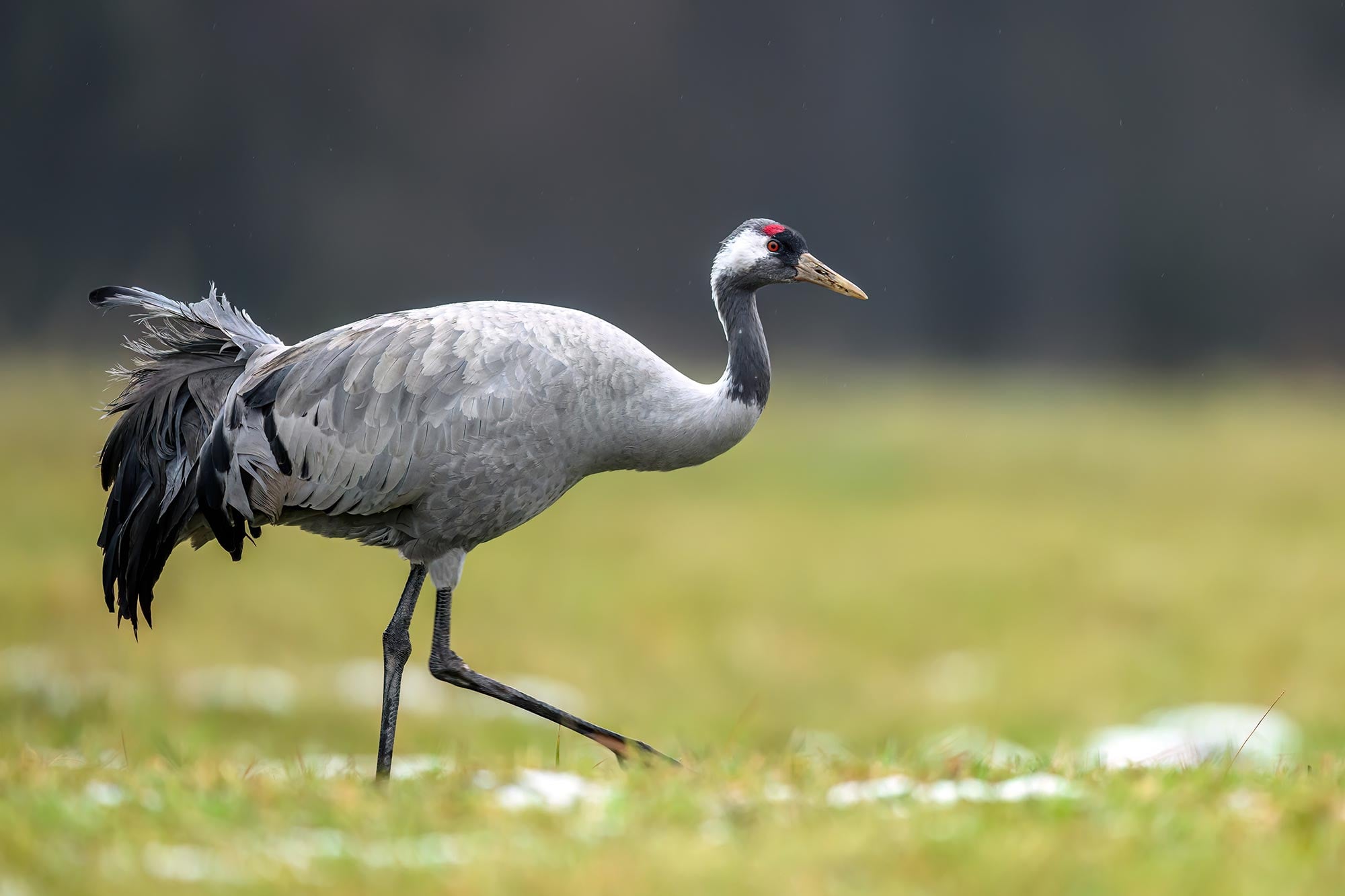
Ancient DNA analysis has challenged a 150-year-old belief about a giant bird thought to have disappeared after the last Ice Age.
For more than 150 years, scientists believed that enormous crane bones found in European caves belonged to a giant bird species that disappeared after the last Ice Age. Now, ancient DNA has overturned that identification, revealing that the supposedly extinct bird was actually a larger version of a species still living in Europe today.
Researchers at Bournemouth University (BU) found that the fossils attributed to Grus primigenia belonged to the common crane. Their findings also raise questions about whether other prehistoric birds classified as extinct species were simply larger forms of birds that survive today.
Ancient DNA Solves a 150-Year-Old Mystery
The mystery began in the 19th century when French biologist Alphonse Milne-Edwards examined unusually large crane bones discovered in caves in southern France. Believing they represented a distinct species, he named the bird Grus primigenia. The remains dated to the end of the last Ice Age and were long considered evidence of an extinct giant crane.
To investigate the bird’s identity, a team led by Dr. John Stewart, Professor of Evolutionary Paleoecology at BU, analyzed ancient DNA from 18 crane bones recovered across England, Wales, France, Germany, and the Balearic Islands. Working with the Centre for Palaeogenetics in Stockholm, Sweden, the researchers used genetic evidence to determine which species the bones belonged to.
“Previous studies had merely used the size and shape of the bones to attempt to understand these large birds. The use of DNA analysis has given us a more accurate picture of what they represent,” Stewart explained.
Why Scientists Mistook the Cranes for an Extinct Species
The genetic findings indicate that the oversized fossils belonged to common cranes rather than a separate extinct species. Stewart believes differences in body size between male and female cranes may have contributed to the original misidentification.
“We suspected that these large cranes were not extinct and instead represented larger, modern European common cranes. We believe that the reason for the mistaken identity was that cranes have large males and smaller females, and we think this contributed to previous speculation that there were two different species: the living, common crane we see today and the extinct, larger species,” Stewart said.
What Caused Ancient Cranes to Shrink?
Although the DNA evidence clarifies the birds’ identity, it leaves another question unanswered: Why were some prehistoric common cranes considerably larger than those living today?
“The challenge going forward is to investigate the reason for the cranes decrease in size. Wetland drainage and human land use changes are what we suspect, but more work is needed to resolve that,” Stewart said.
The researchers plan to investigate whether changes in wetland habitats and human land use contributed to the reduction in crane body size. These remain possible explanations rather than established causes.
Could Other Supposedly Extinct Birds Still Exist?
The findings suggest that some prehistoric bird species identified primarily through fossil measurements may need to be reconsidered. Differences in bone size do not necessarily indicate separate species, and ancient DNA could help determine whether other supposedly extinct birds were actually larger or smaller populations of surviving species.
“While it is true that many species of birds are vulnerable to human actions today, it may be that we have overestimated the number of extinctions in the past,” Stewart said.
“Some of these may instead represent size changes to living species,” he concluded.
Reference: “Ancient DNA study resolves the taxonomic status of the extinct large Palaearctic crane Grus primigenia Milne-Edwards, 1871 (Aves: Gruiformes: Gruidae)” by John R. Stewart, Rebecca Rickard, Sheila Hamilton-Dyer, Keith Dobney, Veronique Laroulandie, Josep Antoni Alcover, Joan Femenias-Gual, Nadja Pöllath, Erik Ersmark, Bodil Cronholm, Per G. P. Ericson and Love Dalén, 1 October 2026, Royal Society Open Science.
DOI: 10.1098/rsos.260699
Never miss a breakthrough: Join the SciTechDaily newsletter.
Follow us on Google and Google News.