
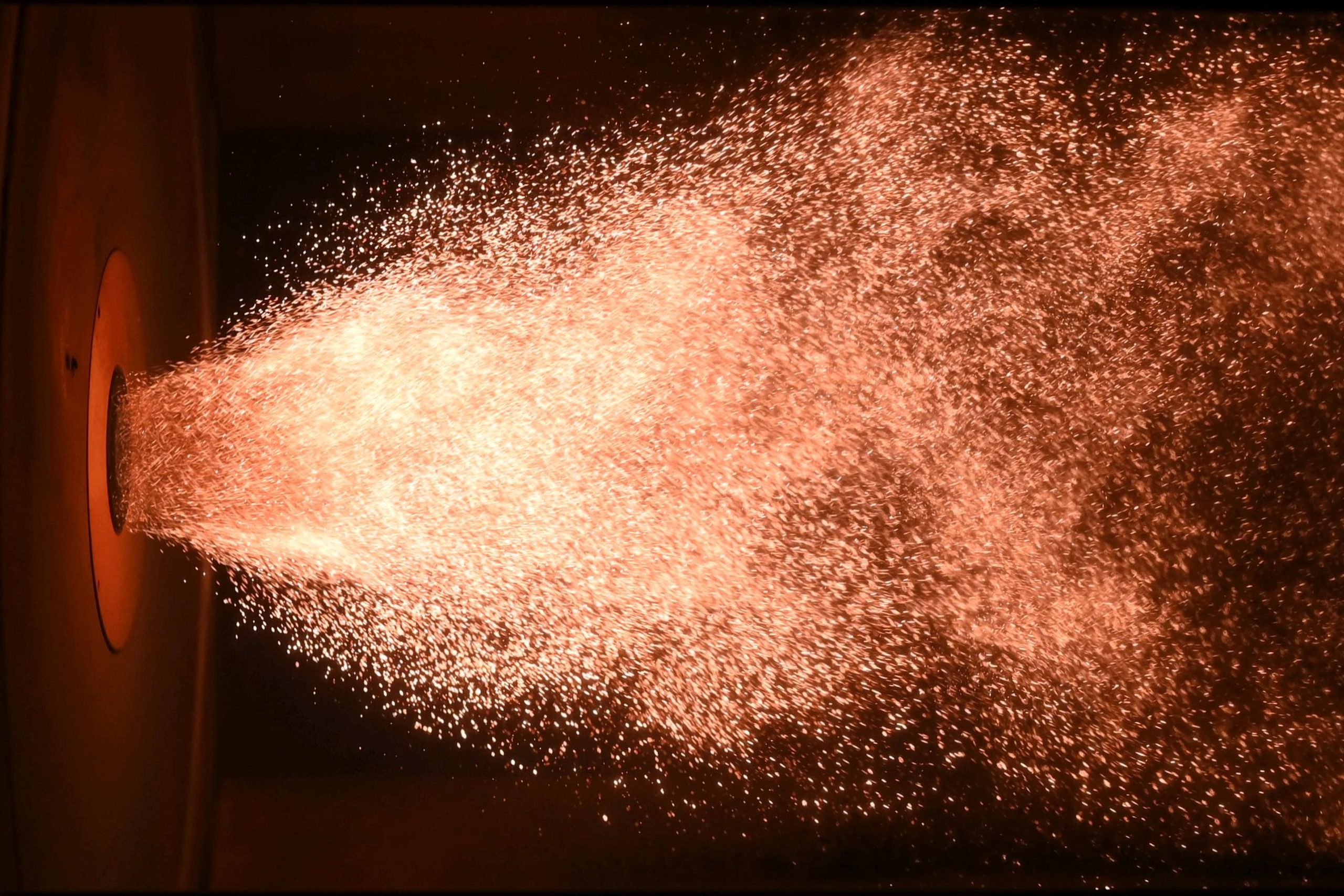
Scientists are exploring how iron powder could transform renewable energy storage and transportation while giving aging coal power plants a new purpose.
Iron powder could help transform old coal power plants into a source of climate-neutral electricity, according to a new study from the Karlsruhe Institute of Technology (KIT). Researchers found that this recyclable fuel could help keep Europe’s power supply stable during extended periods of weak wind and sunlight, particularly in regions where other forms of energy storage are limited.
The process relies on a cycle in which iron powder is burned to generate heat, producing iron oxide, commonly known as rust. Hydrogen produced using renewable energy can then remove the oxygen from the iron oxide, restoring the metal so it can be used again. “This works in a cycle that emits no carbon dioxide or environmentally harmful substances,” said Julia Schuler from KIT’s Institute for Industrial Production (IIP).
Turning Coal Power Plants Into Iron-Fueled Facilities
One potential advantage is that iron powder could be used in existing coal power plants without replacing all their equipment. “When burned, iron powder behaves very much like coal. We wanted to find out whether it was possible to repurpose existing coal power plants to iron-firing,” said Schuler.
According to Schuler, most modifications would involve the equipment responsible for generating heat. Other major components, including steam turbines, generators, and connections to the electricity grid, could remain in service. Germany may be particularly well suited to this approach because of its large fleet of coal power plants and the possibility of retaining existing heating networks and other infrastructure.
Transporting Renewable Energy Without Hydrogen Pipelines
Iron powder could also provide a practical way to move renewable energy across long distances. Electricity generated by coastal wind farms or solar facilities in desert regions could be used to produce hydrogen, which would convert iron oxide into iron. The resulting powder could then be transported to another location and burned to recover the stored energy.
Unlike hydrogen, which requires specialized pipelines, import terminals, and underground storage facilities, iron powder is relatively straightforward to transport and store for extended periods. This could reduce the infrastructure investment needed to move renewable energy between regions. Surplus renewable electricity generated within Europe could also be used to regenerate iron locally through an intermediate hydrogen production step.
Computer Models Reveal Where Iron Could Be Most Useful
To investigate the technology’s potential, KIT scientists built on findings from the Clean Circles research project. In a study funded by Stiftung Energieforschung Baden-Württemberg (Baden-Württemberg energy-research foundation), they expanded the established PERSEUS energy model to include iron-fueled power plants, facilities for regenerating iron, and the infrastructure needed for storage and transportation.
The researchers then simulated the development of a climate-neutral European energy system through 2050, comparing iron with competing technologies such as batteries, hydrogen storage, and hydrogen power plants. Iron-fired power plants appeared in the lowest-cost energy system across every scenario examined, although the results did not suggest that iron would replace hydrogen.
The greatest benefits emerged in countries with limited hydropower resources or few suitable locations for underground hydrogen storage. In these regions, iron could help maintain electricity supplies during prolonged shortages of wind and solar generation. It could also reduce demand on hydrogen pipelines and import facilities when their capacity becomes constrained.
The Challenges That Could Determine Iron’s Future
“Iron might play a very special, but economically meaningful role for reaching climate-neutrality and in reliably making renewables available,” said Schuler.
Whether a new “iron age” emerges in electricity generation will depend largely on two unresolved technical and economic questions: how extensively existing coal power plants must be modified and how efficiently iron oxide can be converted back into reusable iron. The simulations indicate that iron could complement hydrogen in a climate-neutral energy system, but its practical competitiveness will depend on how these processes perform outside the model.
Reference: “A new iron age? The potential role of iron fuel in Europe’s clean energy transition” by Julia Schuler, Armin Ardone, Viktor Slednev and Wolf Fichtner, 8 June 2026, Chem Circularity.
DOI: 10.1016/j.checir.2026.100047
Never miss a breakthrough: Join the SciTechDaily newsletter.
Follow us on Google and Google News.
2 Comments
The weakest links in this proposal for eliminating CO2 are mining, beneficiating the ore, pelletizing, smelting, and then converting the iron to powder. Next is transporting the burned iron to the hydrogen facility, crushing to make a powder, and then back to the burner. Make no mistake, these are energy intensive operations. Where is that energy going to come from?
A plus is that the iron is not consumed, it’s continually reused. Basically it’s just a transport vehicle for oxygen.
The whole point of a battery system is that we don’t care where the electricity comes from. So, if you could have a system where you plug some containers, or a small building, into a wind farm (or just off the grid, to soak up the excess solar during the day), then you convert thee iron oxide back into iron powder.
Then you ‘burn it’ (oxidise it), to extract the energy, and have the same iron left over to process back into iron powder.
At some point you don’t need any more iron. Not like we don’t already have plenty around.