
Gas above a Martian volcano may come from hidden magma, offering clues to the planet’s remaining heat and its potential to support life underground.
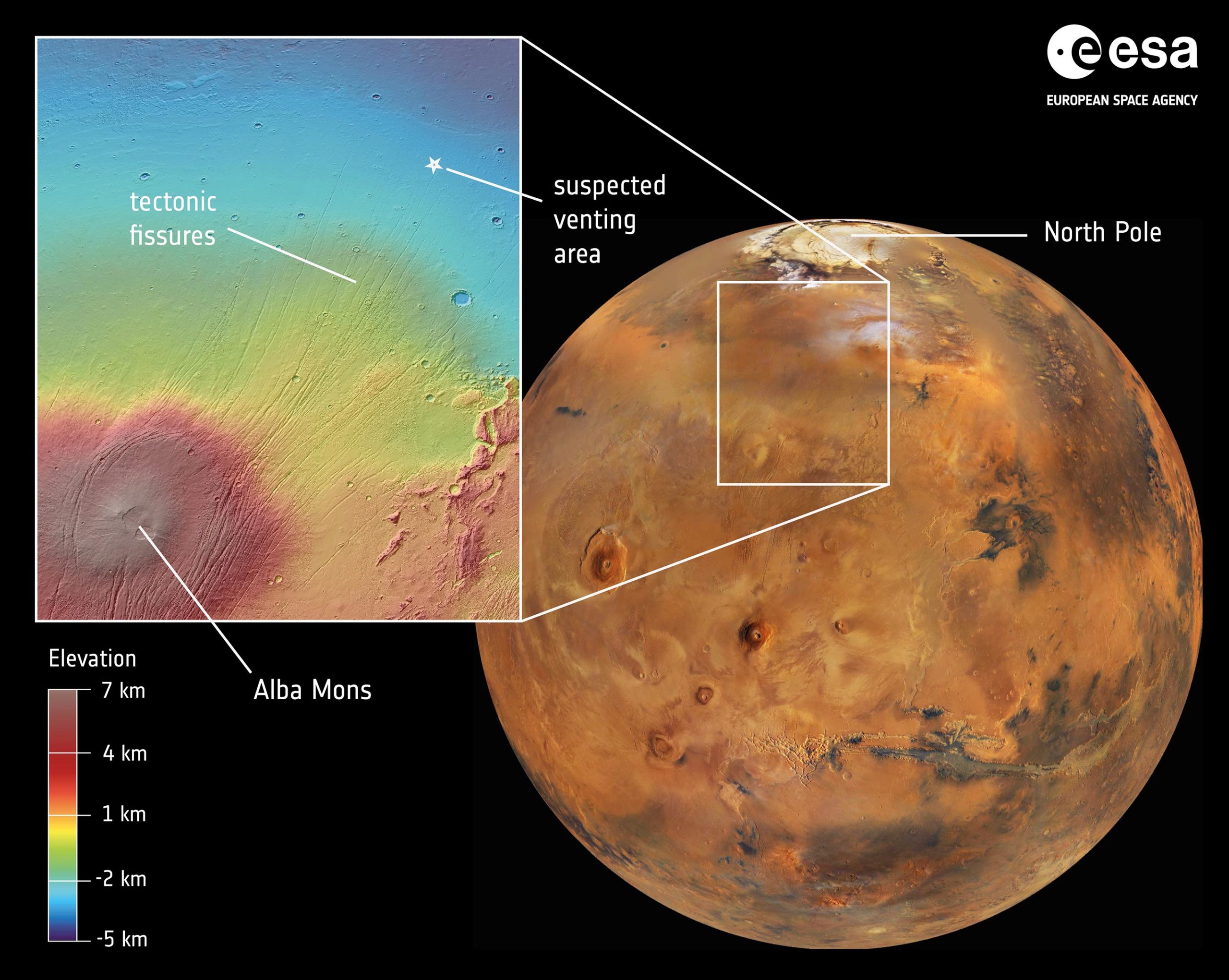
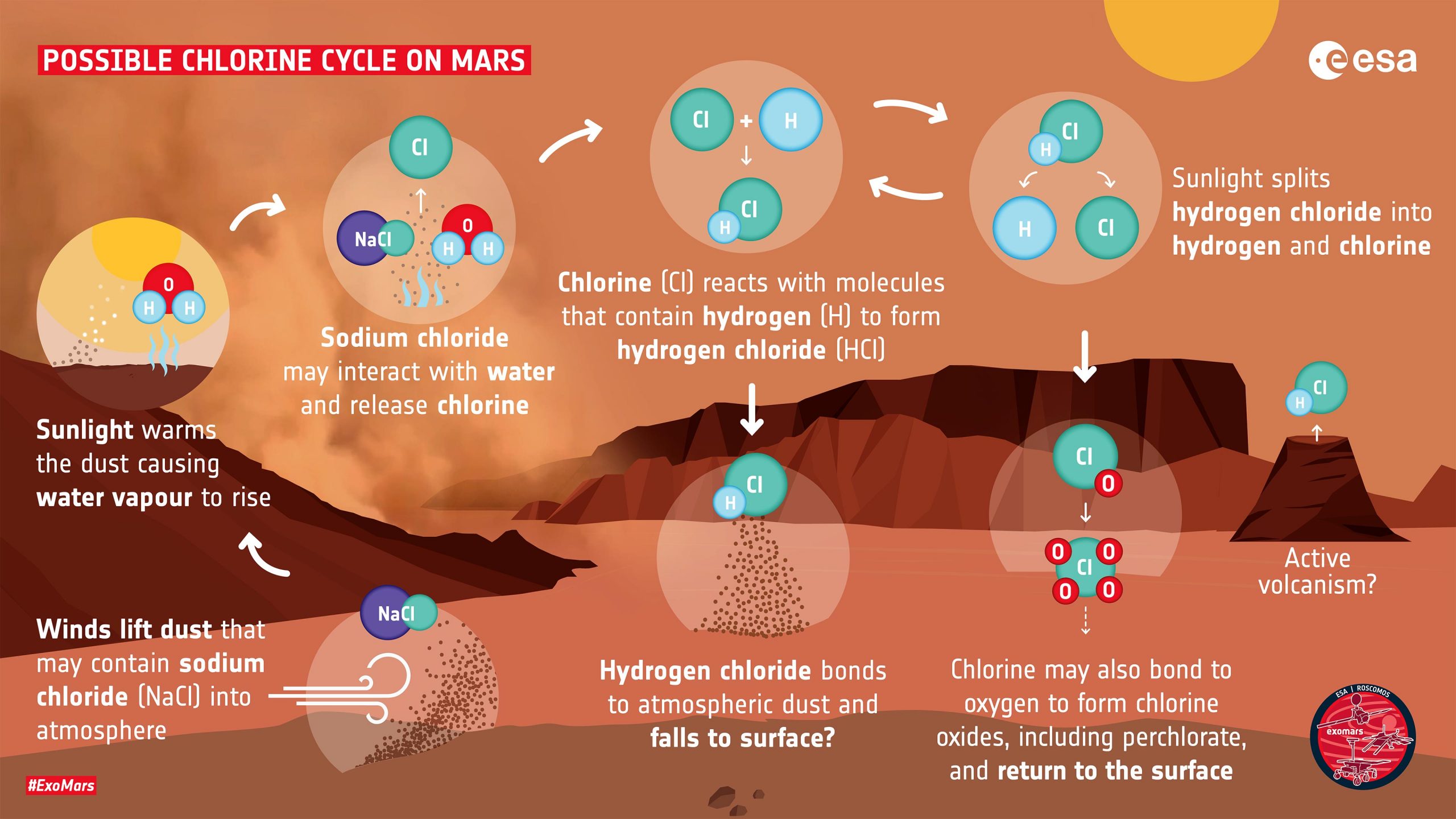
Hydrogen chloride gas usually reaches its highest levels in Mars’s atmosphere during winter in the northern hemisphere, then mostly disappears in summer. Much of that seasonal pattern appears to follow the planet’s dust and water cycles. Above volcanic fissures on the flanks of Alba Mons, researchers found a recurring exception. Localized spikes of the gas appeared in the same place in early northern summer, raising the possibility of a source beneath the ground.
An international research team led by Alexander Trokhimovskiy suggests that the gas could be escaping from hot magma below the region. Its study, published November 4, 2026, in Science Advances, brings together atmospheric measurements and geological evidence to investigate a possible connection to dormant volcanism.
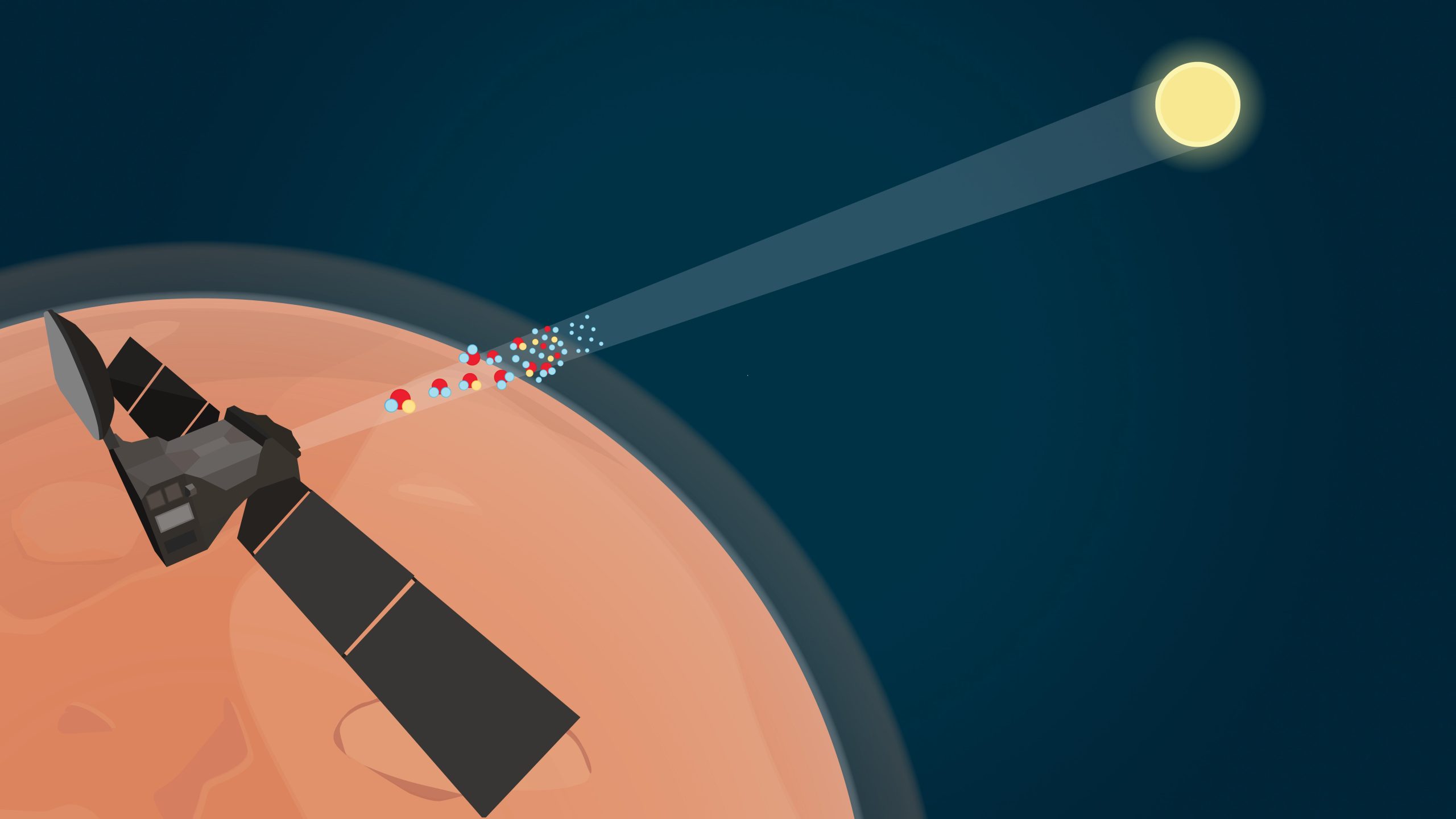
This artist’s impression shows hydrogen chloride gas rising from within Mars’ crust and venting to the atmosphere, where the ExoMars Trace Gas Orbiter detects it. The animation explains one scenario of how the timing of the hydrogen chloride detection is governed by seasonal water ice. Credit: ESA
Fresh fissures support a volcanic explanation
The ExoMars Trace Gas Orbiter (TGO) first reported hydrogen chloride in the Martian atmosphere in 2021. On Earth, the gas commonly escapes from magmatic vents, making a volcanic source on Mars a possibility worth examining. Using infrared spectrometers in TGO’s Atmospheric Chemistry Suite, researchers detected a strongly localized concentration above Alba Mons just after winter frosts sublimated, turning directly from ice into vapor.
“Looking at the spatial distribution of the seeping, it became instantly obvious to me that there was something volcanic behind it, but it had to be demonstrated,” says Daniel Mège, a professor at the Space Research Centre of the Polish Academy of Sciences and co-lead author of the paper. “A huge part of the work consisted of examining all the possible chemical processes going on in the Martian atmosphere. We needed to be rigorous, critical, and creative to explain the presence of hydrogen chloride. The data were complex, but also excellent brain food.”
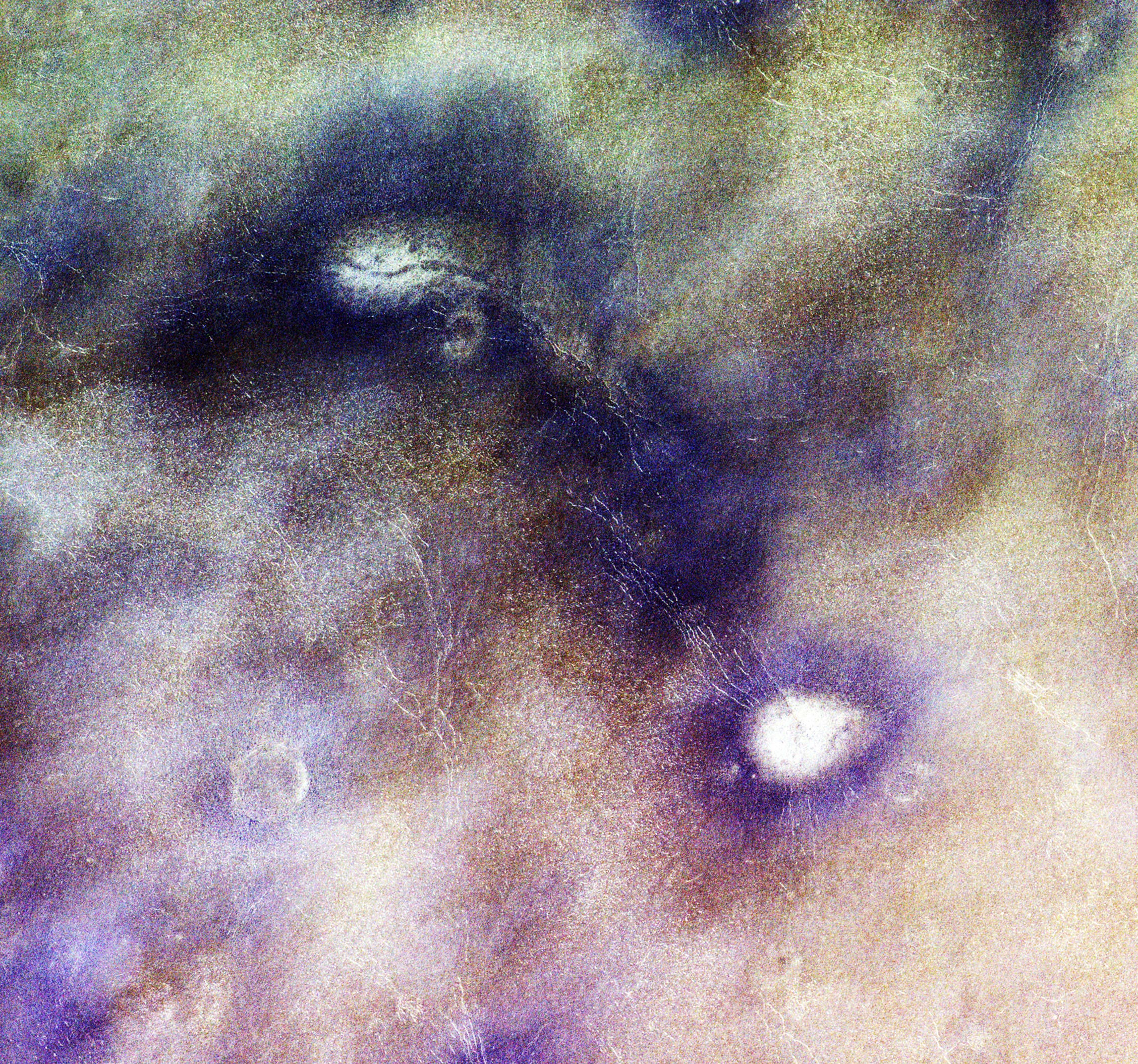
A closer look at Alba Mons with TGO’s CaSSIS camera revealed fresh, narrow fissures, some hundreds of meters long, associated with changes in surface color. Those features provided geological evidence to consider alongside the gas measurements.
The team proposes that a dormant magma chamber, an underground reservoir of molten rock, could supply gases that rise through the fissures. During winter, when temperatures fall as low as −120°C (−184°F), ice could block their escape. As the ice sublimates in early summer, the openings would allow the gases to reach the atmosphere. The fissures could therefore behave like fumaroles on Earth, vents that release volcanic gases. Deposits left by escaping gases could also explain the discoloration around them.
“The Trace Gas Orbiter was able to find the smoking gun. It was like looking for a needle in a haystack. It’s truly amazing that it spotted a handful of molecules from a perhaps intermittent source, whilst moving continuously along its orbit to monitor the whole Martian atmosphere,” Mège says.
Volcanic clues without an observed eruption
Scientists still do not know how active Mars’s volcanoes are. The planet has the largest volcanoes in the solar system, and orbital images suggest that some were active within the last few million years. Seismometers have also detected marsquakes, the Martian equivalent of earthquakes. Both observations point to the possibility of continuing volcanic activity, although no new lava flows or eruptions have ever been observed.
“Our findings suggest that Mars has retained enough internal heat to support volcanic activity until recently, and possibly still does,” Mège says.
“These findings may prove to be TGO’s greatest success yet,” says Colin Wilson, ESA’s project scientist for the ExoMars Trace Gas Orbiter.
Possible refuges for life beneath Mars
Magmatic gases such as hydrogen chloride could have been more abundant earlier in Mars’s history, contributing to a thicker atmosphere and a warmer climate that allowed liquid water to cover much of the surface. If molten rock rising through the crust encounters groundwater, it could also create warm niches potentially suitable for life.
“Looking for Martian life in the seeping fissures of the Alba Mons region would make a lot of sense. If hydrothermal systems are active, they could contain the ingredients and energy needed for microorganisms to develop, and shield microorganisms from the hostile and changing environment above the surface,” Mège says.
Reference: “Enigmatic HCl detections as a potential signature of igneous activity on Mars” by Alexander Trokhimovskiy, Daniel Mège, Oleg Korablev, Kevin S. Olsen, Anna A. Fedorova, Benjamin Taysum, Pierre-Antoine Tesson, Mikhail Luginin, Franck Montmessin, Pavel Vlasov, Alexey Grigoriev, Juan Alday, Denis Belyaev, Nikolay Ignatiev, Andrey Patrakeev, Nikita Kokonkov, Yuriy Ivanov, Joanna Gurgurewicz, Antoine Pommerol, Gabriele Cremonese and Nicolas Thomas, 4 November 2026, Science Advances.
DOI: 10.1126/sciadv.aeb9422
Funding: The ExoMars mission is a joint mission of the European Space Agency (ESA) and Roscosmos. The ACS experiment is led by the Space Research Institute (IKI) in Moscow, assisted by LATMOS in France. The science operations of ACS are funded by Roscosmos and ESA. The authors with affiliation 1 acknowledge funding from the Ministry of Science and Higher Education of the Russian Federation (subsidies, theme “Planeta”). The authors with affiliation 2 were funded by the EXOMHYDR project, carried out within the TEAM program of the Foundation for Polish Science, co-financed by the European Union under the European Regional Development Fund. D.M. was additionally supported by the Polish National Agency for Academic Exchange (NAWA) under the Bekker Program, grant number BPN/BEK/2024/1/00139/U/00001.
Never miss a breakthrough: Join the SciTechDaily newsletter.
Follow us on Google and Google News.