
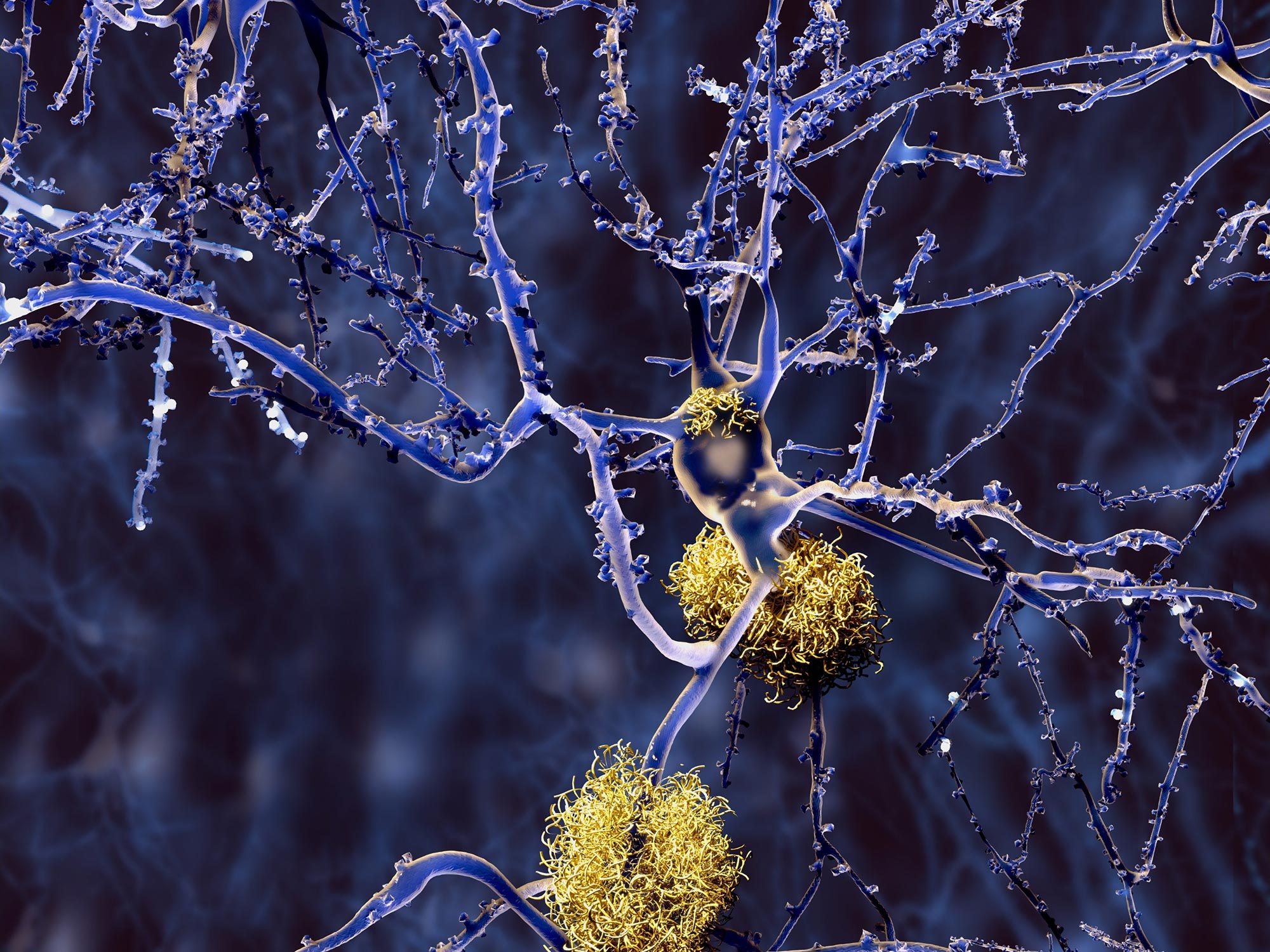
A new study suggests that a little-understood genetic risk factor may influence Alzheimer’s progression by weakening the brain’s natural defenses against toxic plaques.
A gene linked to Alzheimer’s disease may play a crucial role in protecting the brain from toxic protein buildup. Researchers at UVA Health have discovered that CASS4 helps immune cells contain harmful plaques, and experiments in mice show that disrupting the gene can accelerate plaque accumulation, damage neurons, and contribute to cognitive decline.
The findings suggest that CASS4 influences Alzheimer’s primarily through the brain’s immune system rather than by acting directly in nerve cells, as some scientists previously suspected. Researchers now believe that restoring or strengthening its activity could offer a new approach to treating the disease.
How the Brain Contains Harmful Plaques
Alzheimer’s disease, which affects more than 6 million Americans, is characterized by the accumulation of amyloid-beta plaques and abnormal tangles of tau proteins in the brain. These changes are associated with progressive damage to neurons and worsening memory and cognitive function.
Specialized immune cells called microglia help defend the brain against these threats. When functioning properly, they gather around amyloid-beta plaques, form protective barriers, and compress the deposits into smaller, more compact structures that can limit their harmful effects.
Researchers led by John Lukens, PhD, found that CASS4 plays an important role in this protective process. In laboratory mice lacking normal CASS4 function, microglia became less effective at surrounding and compacting plaques. Amyloid deposits accumulated more aggressively, neuronal damage increased, and the animals experienced cognitive decline.

An Alzheimer’s Risk Gene With a Previously Unknown Role
Although previous genetic studies had repeatedly associated CASS4 with Alzheimer’s risk, scientists had little understanding of its biological function. The UVA team investigated how the gene influences microglial activity and what happens when that activity is disrupted.
“Despite CASS4 being an Alzheimer’s risk gene, really nothing is known about what this gene does or how it affects the brain during disease. Our lab sought to address this major knowledge gap with this paper,” said Addie Walsh, a UVA physiology graduate student and the study’s first author. “These are important findings because they give us new insight into how this understudied AD risk gene functions in the brain and suggest that CASS4 may normally help microglia respond to amyloid pathology.”
Disrupting CASS4 also triggered widespread changes in gene activity. The researchers suspect that some of these alterations could be relevant to other neurodegenerative disorders, although the gene’s involvement in those conditions remains under investigation.
A Potential New Target for Alzheimer’s Treatment
The results raise the possibility that CASS4 could eventually help researchers identify Alzheimer’s related changes earlier or develop therapies that improve the brain’s ability to manage amyloid plaques. However, the findings come from preclinical research, and further studies are needed to determine whether targeting the gene would benefit patients.
“These findings break new ground in our understanding of how this genetic risk factor contributes to Alzheimer’s disease,” said Lukens, director of UVA’s Harrison Family Translational Research Center in Alzheimer’s and Neurodegenerative Diseases. “Our work further suggests that defective CASS4 activity may serve as an early-onset biomarker to detect Alzheimer’s and that therapeutic strategies which boost its function may offer a much-needed approach to treat this devastating brain disease.”
The study also supports growing research into how immune dysfunction contributes to neurodegeneration. Rather than focusing exclusively on neurons or the proteins that accumulate around them, scientists are increasingly investigating whether modifying microglial responses could help protect brain tissue.
Shifting the Focus Toward the Brain’s Immune System
“We are now actively exploring potential roles for CASS4 in multiple other neurodegenerative disorders and developing novel strategies to therapeutically target it,” said Lukens, of the Department of Neuroscience at the University of Virginia School of Medicine. “Many in the field initially presumed that CASS4 was likely functioning in neurons to influence Alzheimer’s. Our findings shift this paradigm by proving that CASS4 predominantly acts through the immune system. This is particularly exciting, as it has only been in recent years that immune-targeting strategies have been considered for the treatment of neurodegenerative diseases, and this remains an untapped therapeutic avenue with tremendous potential.”
Walsh plans to continue investigating the role of microglia in neurodegenerative diseases as she moves into pharmaceutical research.
“I will be heading to Boston at the end of the year to start my postdoctoral research with the Neurodegeneration Team at the pharmaceutical company Novartis,” she said. “I am looking forward to continuing to study microglia in neurodegeneration.”
Reference: “Alzheimer’s genetic risk factor CASS4 controls microglial focal adhesion biology and amyloidosis” by Adeline E. Walsh, Benjamin A. Davis, Joshua D. Samuels, William A. Mills, Jessica M. Thanos, Alexis M. Johnson, Katelyn A. Moore, Michael A. Puchalski, Eric J. Steacy, Benjamin W. Wendell, Amélie Daugherty-Lopès, Adrian A. Shimpi, Ukpong B. Eyo and John R. Lukens, 27 October 2026, Journal of Experimental Medicine.
DOI: 10.1084/jem.20260104
Never miss a breakthrough: Join the SciTechDaily newsletter.
Follow us on Google and Google News.