
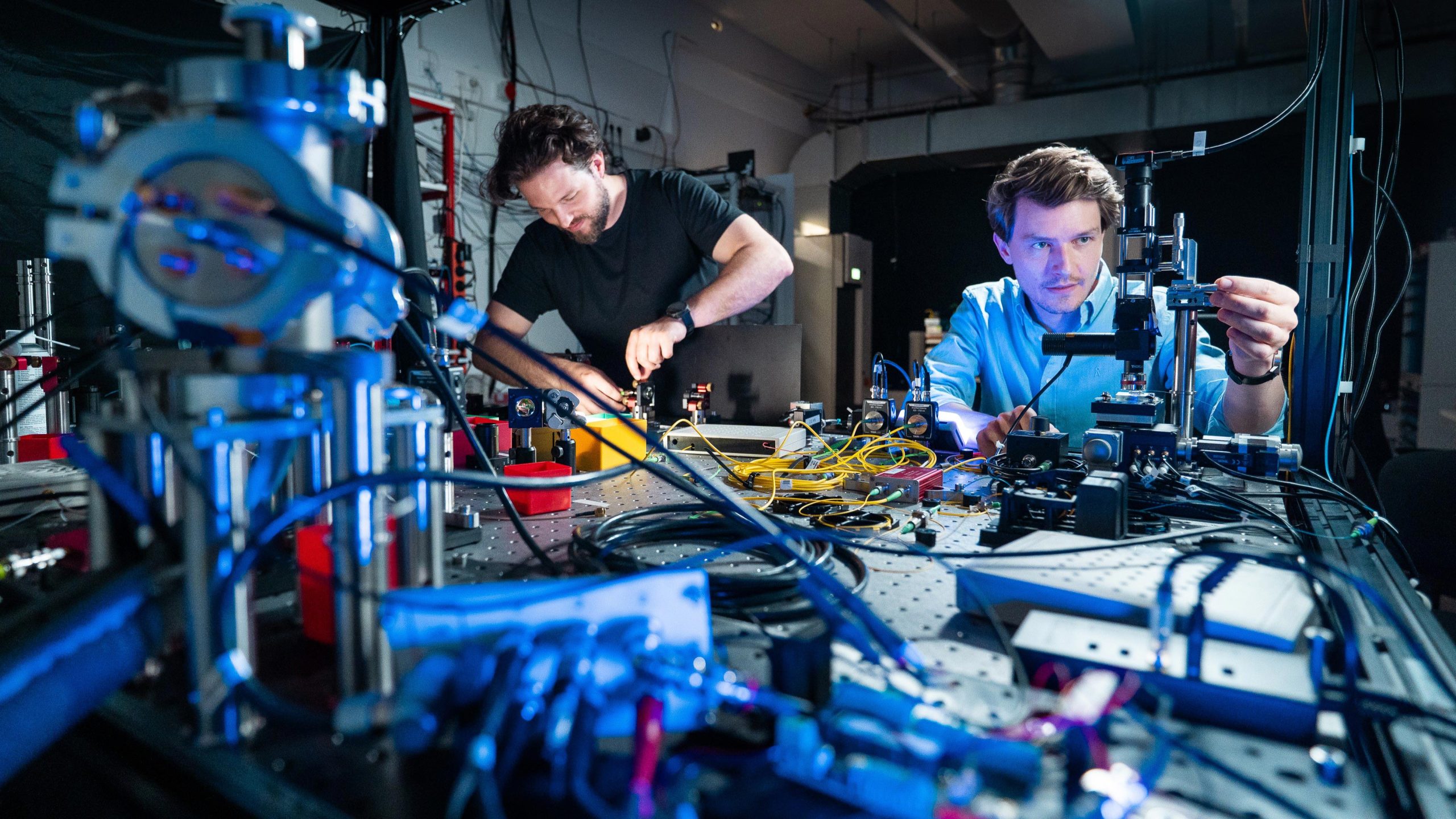
Getting the right light for future quantum networks may depend on what scientists prevent from being emitted, an approach that nearly tripled the share of desired photons.
Future quantum networks may one day allow quantum computers and other devices to exchange information through individual particles of light, known as photons. Making that possible requires reliable sources of photons with carefully controlled properties. One challenge is their frequency, which determines the kind of light they produce. A source can emit photons at several frequencies, leaving only a fraction suitable for the intended connection.
Scientists have traditionally addressed this problem using tiny optical structures called resonators. These structures influence a photon source so that it emits more light at a particular frequency. Although effective, resonators work within a narrow frequency range and must be precisely tuned to each source, making it difficult to use multiple sources together.
Blocking unwanted light at the source
Researchers at the Technical University of Munich (TUM) and the Munich Center for Quantum Science and Technology (MCQST) have now demonstrated a different approach. Rather than encouraging a source to produce more light at the desired frequency, they change its surroundings to suppress the frequencies they do not want.
The team uses structures called photonic crystal waveguides, which contain carefully arranged patterns on a nanometer scale. These patterns control the pathways through which light can be emitted, blocking unwanted frequencies while allowing the desired ones to remain.
More usable photons with less tuning
In initial experiments using erbium, an element already used in fiber-optic technologies, the researchers increased the proportion of photons emitted at the desired frequency from about 23% to around 72%. Previously, achieving comparable results required much more complex resonator systems.
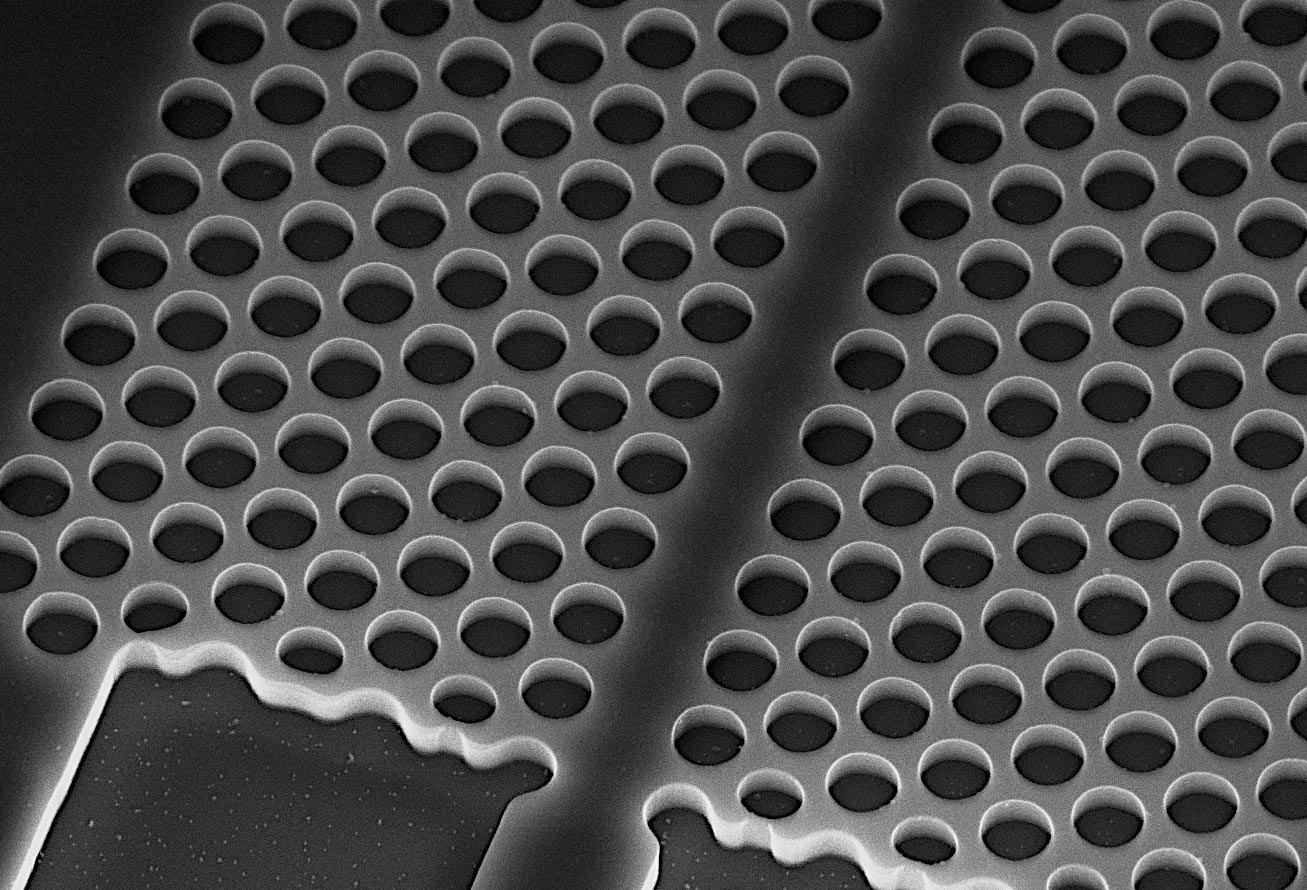
The waveguides also offer greater flexibility. Their larger size allows multiple photon sources, known as emitters, to operate simultaneously within a single device, something that is much more limited with tiny resonators. Because the waveguides work across a broader range of frequencies, researchers can also select the desired frequency without having to precisely tune the structure to each individual emitter.
Another difference is that the new approach produces photons slightly more slowly, which can actually make them easier to manage.
“If photons are generated too quickly, it’s difficult for us to control their properties,” explains Andreas Reiserer, professor of quantum networks at TUM. “Our approach is therefore significantly better suited for many emitters than the resonators used to date.”
Connecting quantum devices over long distances
The findings could help researchers develop the interfaces needed to connect quantum devices over long distances. Such interfaces would have to convert information stored in a quantum system into individual photons that can travel through optical fibers.
Florian Burger, a doctoral student and the publication’s first author, sees the work as an early step toward that goal.
“Quantum networks are expected to connect many quantum systems with one another one day. This requires interfaces that can reliably transfer information from a quantum system to individual photons and then transmit them, for example, via optical fibers. Our work lays the foundation for this.”
Reference: “Inhibited radiative decay enhances single-photon emitters” by Florian Burger, Stephan Rinner, Andreas Gritsch, Kilian Sandholzer and Andreas Reiserer, 16 July 2026, Nature Communications.
DOI: 10.1038/s41467-026-75489-5
Funded by the Federal Ministry of Education and Research (BMBF) and the Free State of Bavaria as part of the federal and state Excellence Strategy. This project was funded by the High-Tech Agenda Bavaria (HTA).
Never miss a breakthrough: Join the SciTechDaily newsletter.
Follow us on Google and Google News.