
Close Menu
    Facebook X (Twitter) Instagram
    SciTechDaily
    • Biology
    • Chemistry
    • Earth
    • Health
    • Physics
    • Science
    • Space
    • Technology
    Facebook X (Twitter) Pinterest YouTube RSS
    SciTechDaily
    Home»Biology»Scientists Discover That Young Chimpanzees May Develop Accents Just Like Humans
    Biology

    Scientists Discover That Young Chimpanzees May Develop Accents Just Like Humans

    By Queen Mary University of LondonNovember 23, 2026No Comments3 Mins Read
    Facebook Twitter Pinterest Telegram LinkedIn WhatsApp Email Reddit
    Share
    Facebook Twitter LinkedIn Pinterest Telegram Email Reddit
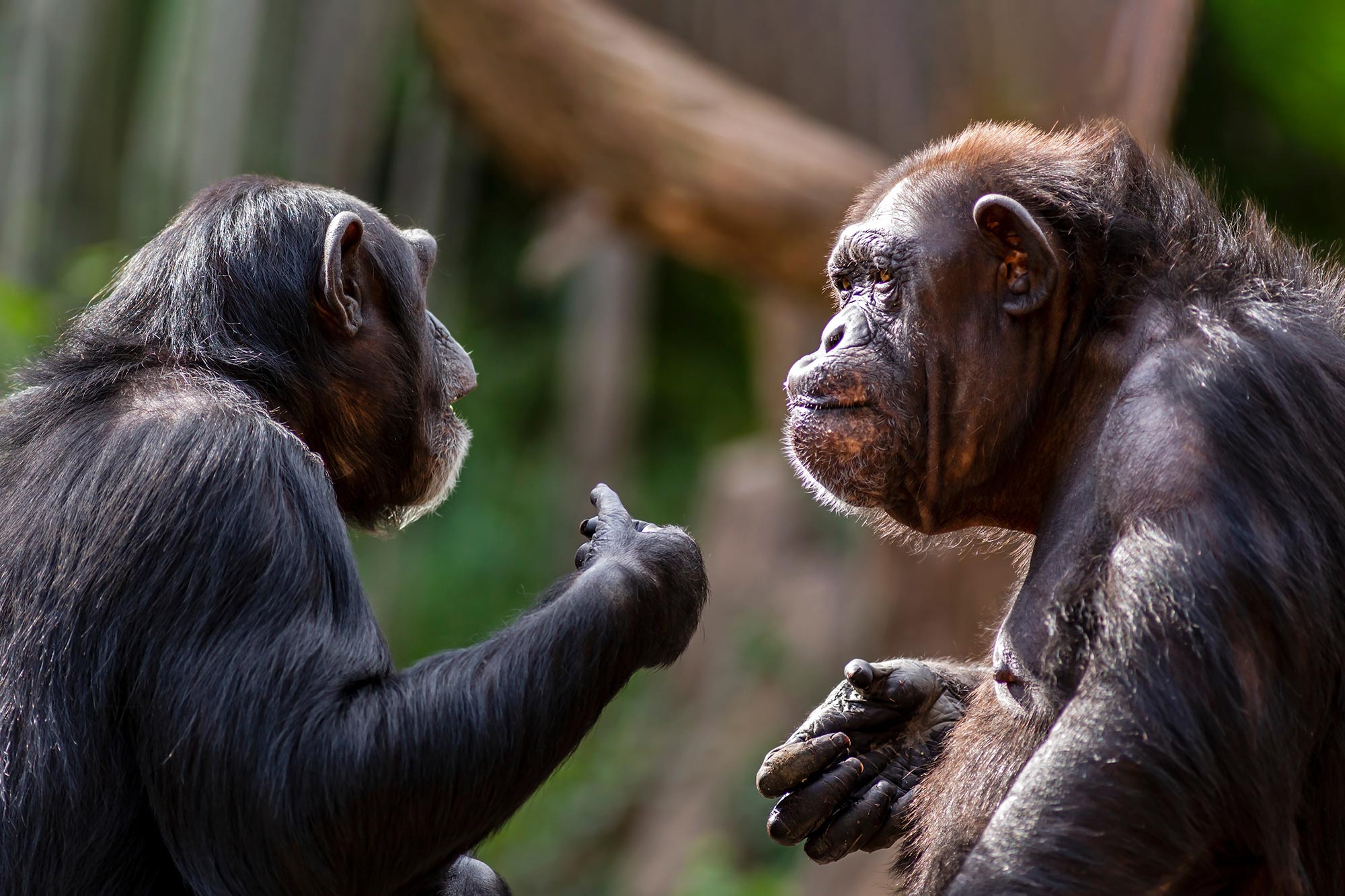
    Two Chimpanzees Conversation
    Young chimpanzees may develop distinct vocal patterns as they grow, suggesting that their communication is shaped by more than genetics alone. Credit: Shutterstock

    The sounds animals make may carry clues to their social worlds, and young chimpanzees are helping scientists explore how communication takes shape beyond inherited biology.

    Young chimpanzees may develop something resembling regional accents, with the sounds they make becoming increasingly different depending on the community in which they grow up.

    Much like people who pick up subtle differences in speech from those around them, chimpanzees appear to develop population-specific vocal patterns as they mature. The finding challenges the long-held belief that their calls are largely fixed by genetics from birth.

    A research team led by doctoral researcher Kassandra Giragosian from the School of Biological and Behavioural Sciences at Queen Mary University of London, in collaboration with the University of Portsmouth, compared the vocalizations of infant and juvenile chimpanzees from two geographically separated populations. By examining grunts, whimpers, and laughter, the researchers found that differences between the groups became more pronounced as the animals grew older.

    Not all of these differences appeared at the same time. Some population-specific vocal characteristics were already detectable during infancy, while others emerged as the chimpanzees entered their juvenile years. This provides the first evidence that differences in chimpanzee vocalizations become increasingly distinct throughout early development.
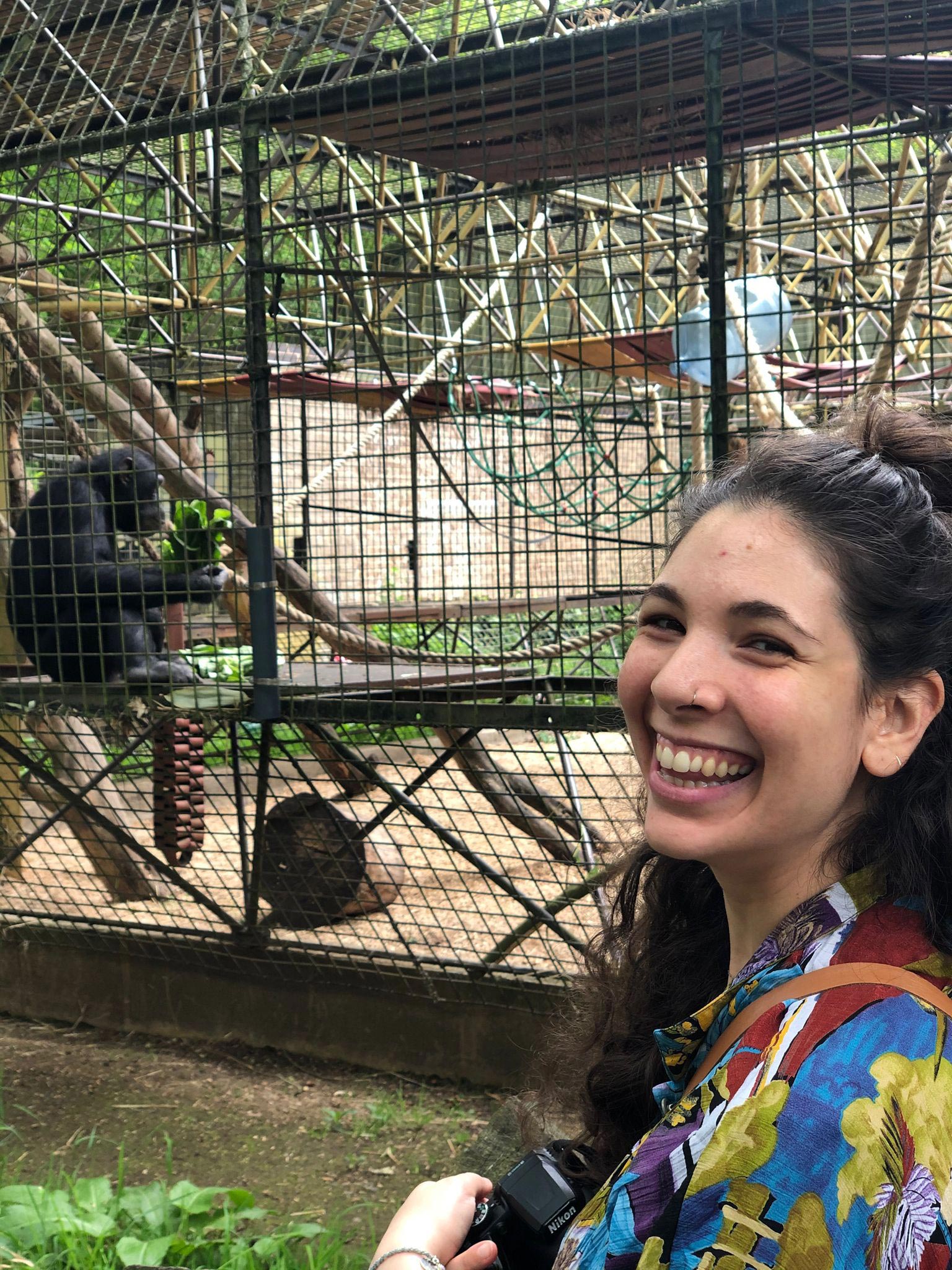
    Kassandra Giragosian and a Chimp
    Dr Kassandra Giragosian and a chimp. Credit: Kassandra Giragosian

    “Understanding how communication develops during early life is fundamental to understanding animal behavior. Our findings show that chimpanzee vocalizations are not simply fixed from birth but continue to develop as young animals interact with their social and ecological environments,” says doctoral researcher Kassandra Giragosian.

    Social interactions, environmental conditions, and other influences beyond genetics may therefore help shape how young chimpanzees communicate. Although the research does not establish precisely how these factors contribute to vocal development, the findings suggest that inherited traits alone cannot explain the differences between populations.

    Vocal differences are not language

    The discovery does not mean chimpanzees possess language or human-like speech, which involves an agreed vocabulary and grammar. Instead, it offers a new perspective on how communication develops in primates and how vocal patterns can differ between animal communities.

    By examining communication at different stages of early life rather than simply comparing adults from different populations, the research provides a framework for investigating how communication systems emerge and diversify. It could also help scientists better understand the biological and environmental influences that shape vocal behavior across other species and the evolution of increasingly complex communication systems.

    Reference: “Ontogeny of dialects across chimpanzee vocalisations” by Kassandra Giragosian, Marina Davila-Ross and Derry Taylor, 2 September 2026, PLOS ONE.
    DOI: 10.1371/journal.pone.0355313

    Never miss a breakthrough: Join the SciTechDaily newsletter.
    Follow us on Google and Google News.

    Animal Behavior Chimpanzee Primates Primatology Queen Mary University of London
    Share. Facebook Twitter Pinterest LinkedIn Email Reddit

    Related Articles

    Chimpanzees Keep Throwing Stones at the Same Trees – Scientists Want To Know Why

    New Research Reveals Chimpanzees and Bonobos Have “Friend Groups” Just Like Humans Do

    Revolutionary Discovery: Menopause in Wild Chimpanzees Challenges Human Uniqueness

    Area of Monkey Brain Keeps Tally of Altruistic Acts

    Kayan Loris, A Newly Discovered Species of Slow Loris

    Survey Shows Great Apes Also Have Mid-Life Crisis

    Cooking Fueled the Growth of the Human Brain

    World’s Smallest Primate Issues High-Frequency Calls Like Bats

    Bonobo Great Apes Are Domesticating Themselves

    Leave A Reply Cancel Reply

    • Facebook
    • Twitter
    • Pinterest
    • YouTube

    Don't Miss a Discovery

    Subscribe for the Latest in Science & Tech!

    Trending News

    On the Brink of Extinction, These Giant Sea Turtles Are Doing Something Unexpected

    Coffee May Be Changing Your Gut in Ways Scientists Are Only Beginning To Understand

    Scientists Uncover Why a Common Nutrient Can Be Dangerous for Blood Vessels

    Mysterious Radio Signals From 5,000 Light-Years Away Lead Scientists to a Surprising Discovery

    New FDA-Approved Pill Lowers High Blood Pressure and May Slow Kidney Disease

    Scientists Just Challenged a Decades-Old Belief About How Cells Work

    Scientists Uncover a Natural Molecule That Makes Muscles Stronger and More Resistant to Fatigue

    Scientists Find That Mice, Not Deer, Hold a Major Clue to Lyme Disease Risk

    Follow SciTechDaily
    • Facebook
    • Twitter
    • YouTube
    • Pinterest
    • Newsletter
    • RSS
    SciTech News
    • Biology News
    • Chemistry News
    • Earth News
    • Health News
    • Physics News
    • Science News
    • Space News
    • Technology News
    Recent Posts
    • Scientists Discover That Young Chimpanzees May Develop Accents Just Like Humans
    • Your Personality May Be Partly Written in Your DNA, Massive Study of 1 Million People Reveals
    • Pancreatic Cancer’s “Don’t Eat Me” Signal Reveals a Potential New Treatment Target
    • A Tiny Region of the Brain Could Hold the Key to Understanding Early Alzheimer’s Symptoms
    • Two Overlooked “Forever Chemicals” Linked To More Than Double the Risk of Liver Cancer
    Copyright © 1998 - 2026 SciTechDaily. All Rights Reserved.
    • Science News
    • About
    • Contact
    • Editorial Board
    • Privacy Policy
    • Terms of Use

    Type above and press Enter to search. Press Esc to cancel.