
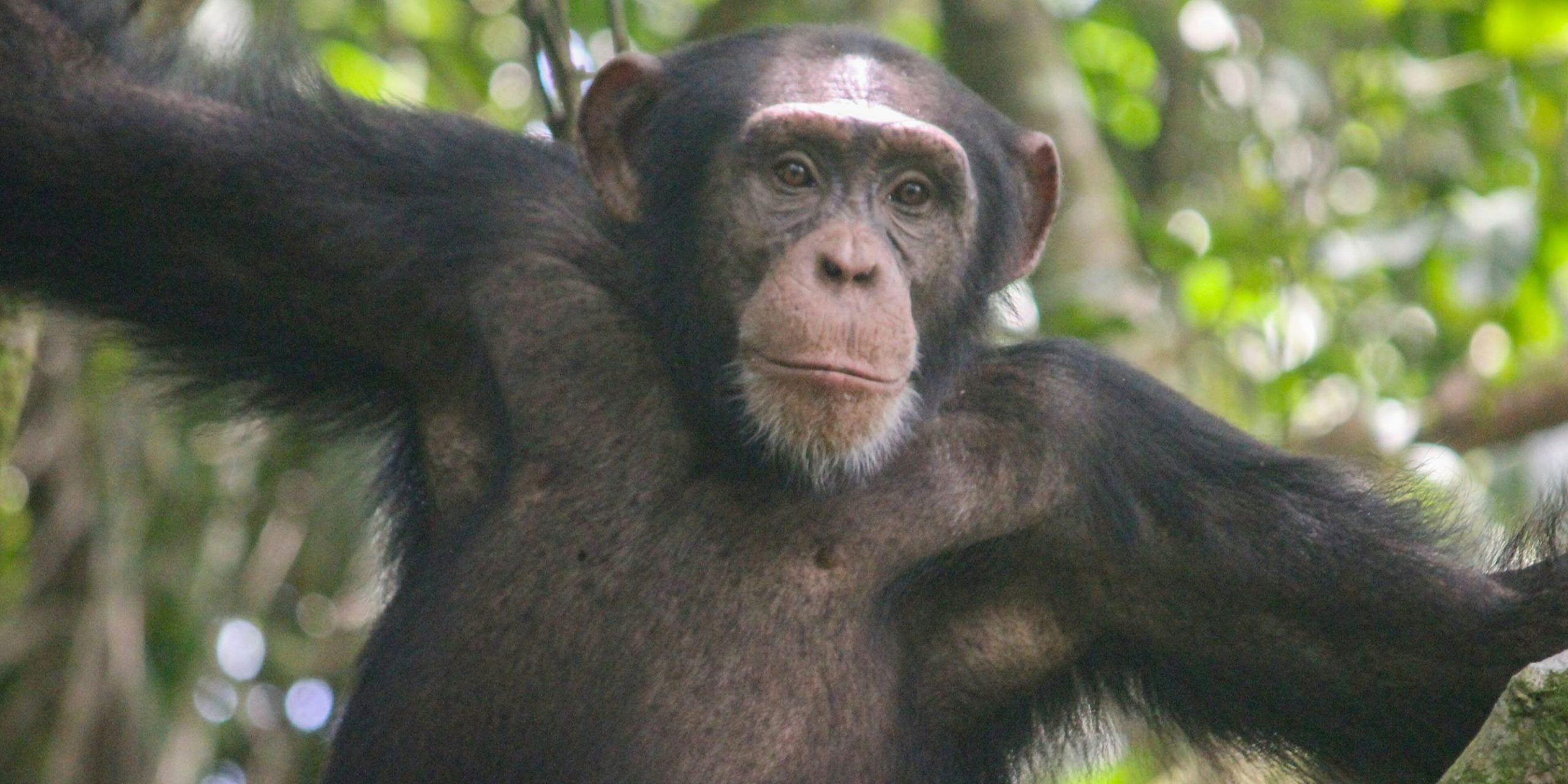
Chimpanzee stone-throwing sites may preserve rare evidence of primate culture and communication.
In the savanna woodland of Boé National Park in Guinea-Bissau, a scarred tree can tell a strange story. Around its base, rocks may lie in small piles, while its trunk bears the marks of repeated impacts.
The chimpanzees that made them may already be gone, but the scene can reveal evidence of one of their rarest and most intriguing behaviors: accumulative stone throwing.
This behavior has been recorded in wild western chimpanzees, most often adult males. Video footage shows them hurling stones at particular trees, then returning to those same trees again and again to repeat the action.
The displays are not quiet. As they throw, the chimpanzees often pant-hoot, a loud call that can carry over long distances. Some also strike the tree with their hands and feet in a behavior known as buttress drumming.
Researchers have just returned from a field site in Guinea-Bissau, where they gathered new data to better understand the social and ecological setting of accumulative stone throwing. The goal is to determine what, if anything, chimpanzees are communicating when they repeatedly throw rocks at the same trees.
Because chimpanzees are our closest living relatives, this behavior may offer clues about the deep evolutionary roots of communication and stone tool use. Understanding why they select certain trees, why stones accumulate there, and how the displays fit into chimpanzee social life could help researchers explore how more complex signaling and tool-related behaviors emerged over human evolution.
A cultural behavior
Pant hooting and buttress drumming are both part of the male chimpanzee display, suggesting that accumulative stone throwing might represent a modification of this common behavior. It is likely a cultural behavior due to its limited distribution, and because the availability of rocks and trees does not guarantee the presence of an accumulative stone throwing site.
Previous research suggests that accumulative stone throwing is likely communicative or may even have a symbolic purpose, with sites marking important locations within the chimpanzees’ territory.
However, we still don’t know what cumulative stone-throwing sites might mean to the chimpanzees themselves nor why they do it. While some primates use stone tools to access food, for instance to crack open nuts, accumulative stone throwing is a rare example of stone tool use in a social context. It has been observed in only four chimpanzee groups in West Africa to date.
Setting up camp
We traveled to the remote Boé chimpanzee territory in Guinea-Bissau and based ourselves in Béli, a small village where, in collaboration with local people, the Dutch non-governmental organization Chimbo maintains a compound. Visiting researchers and tourists can stay here and use a workspace with solar-generated electricity.
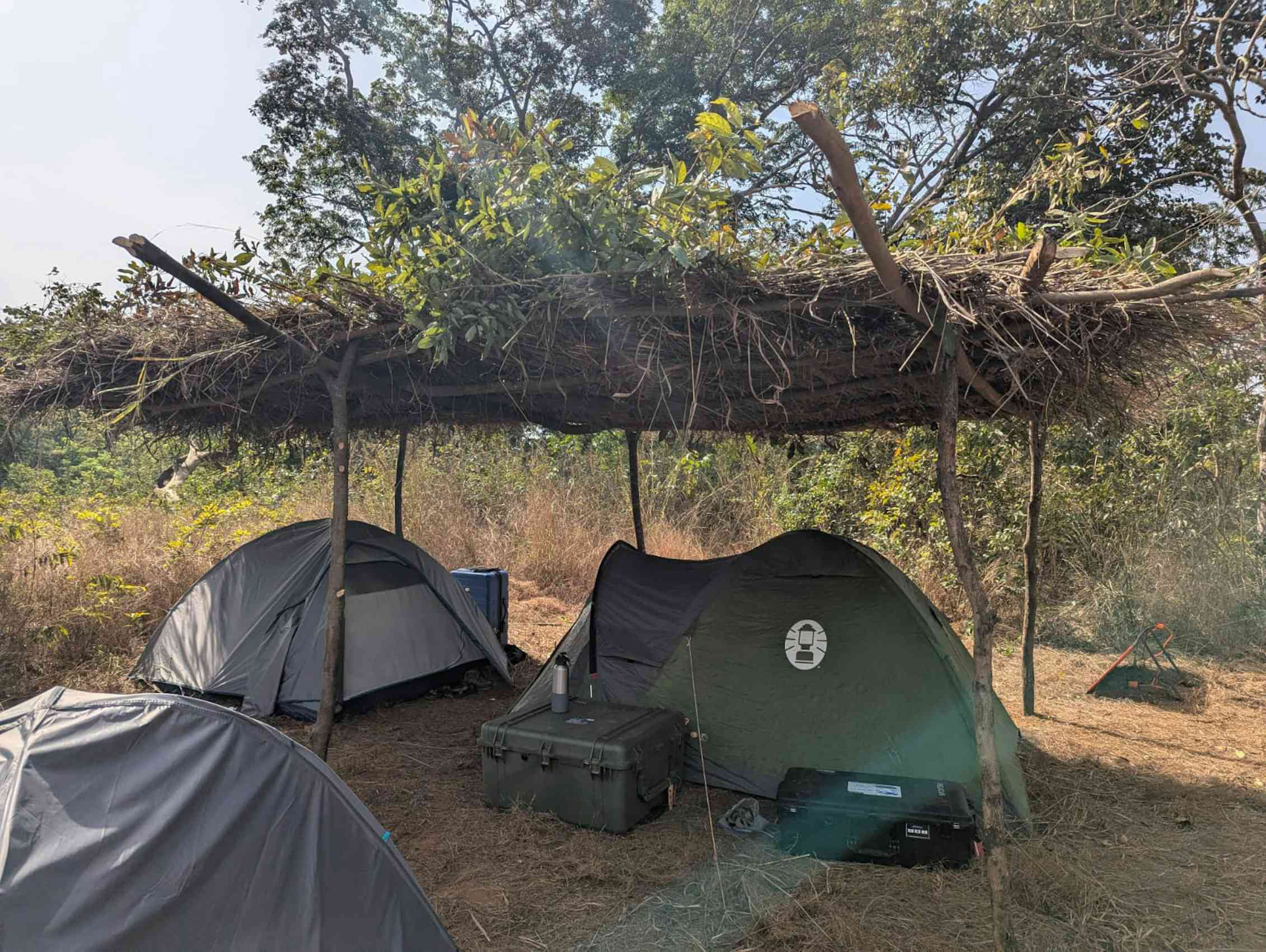
From Béli, we cycled and hiked 22 kilometers into the savanna-woodland to establish a bush camp with our two field assistants, Djei Baldé and Balu Séra, and a master’s student from the Great Ape Behavior Lab, Taylor Tippett.
The Boé chimpanzees performing the behavior are unhabituated; they are not used to humans, meaning that we cannot observe individual chimpanzees on foot because they will run away. Instead, we collected behavioral data using camera traps and recording devices.
We set up two video cameras at each accumulative stone throwing site and placed the recording devices strategically to capture audio data from the areas around these sites.
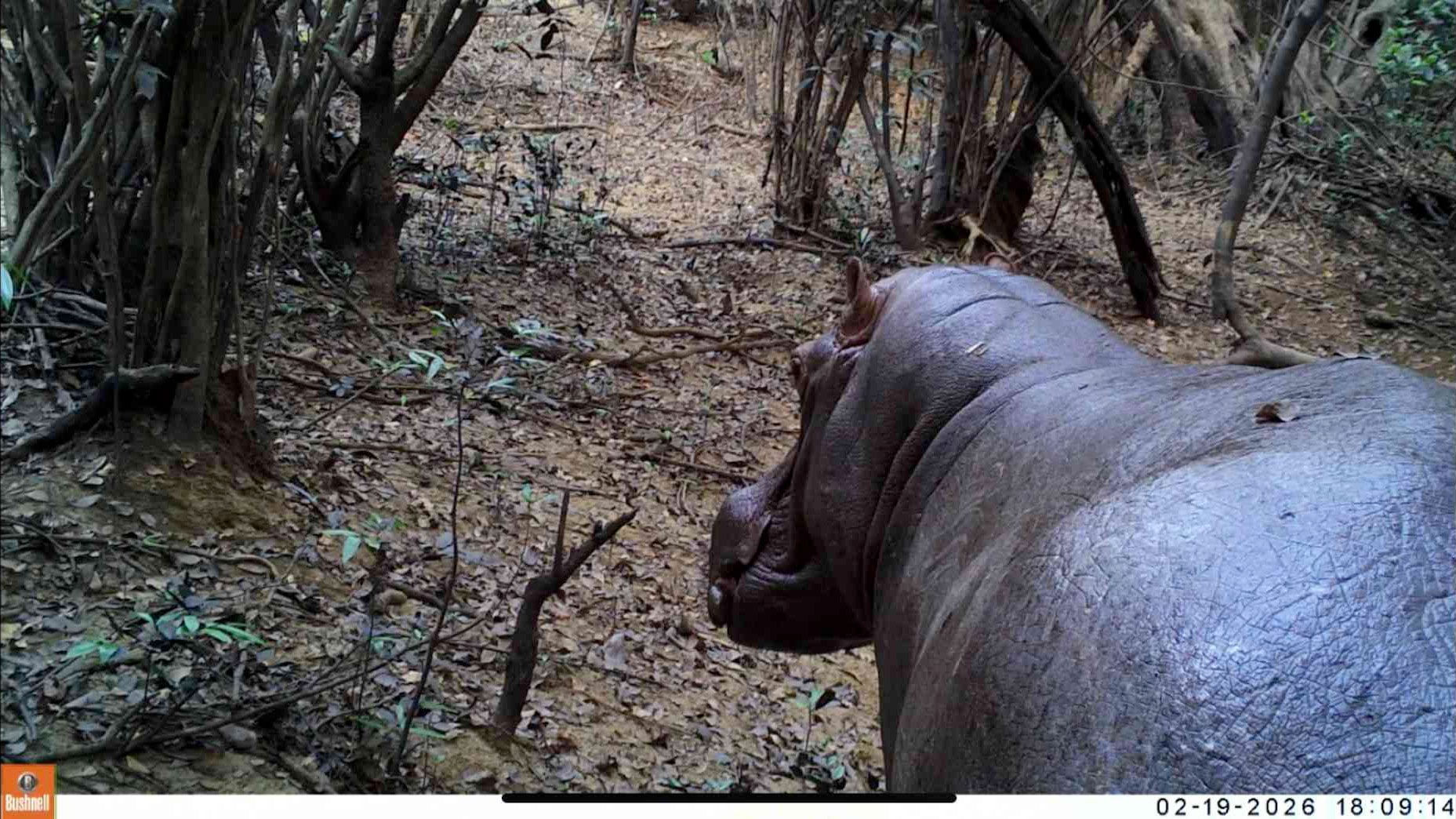
Our campsite bordered the Fefine, a large river that flows even in the dry season. In a landscape like the savanna-woodland where water sources are scarce, rivers like the Fefine are important for wildlife and humans alike. We captured several of our neighbors on cameras set up near the riverbank.
Chimpanzee nests
On an average day, we woke up around 6:30 a.m. and ate a small breakfast before heading to a set of two to five sites. There, we replaced the SD cards and batteries on the cameras, made sure the devices were working well and collected any additional data needed, including measurements of the tree and 3D scans of rocks thrown at the tree for later analysis.
Along the way, we recorded observations of chimpanzee nests, feeding signs, vocalizations, and sightings.
The video and audio data we collected will allow us to investigate the social traits of accumulative stone throwing, including the age and sex of the stone thrower and the audience (other chimpanzees nearby who might react to the throw). This information can help us determine what chimpanzees are trying to communicate.
We found that most of the sites first identified by the Pan African Program, and revisited by our team in 2017, were still in use during our recent trip to the field, meaning that chimpanzees can use these sites for over a decade.
The threat of bauxite mining
As many primate species face threats from human activities, cultural behaviors and the maintenance of rich cultural repertoires can help them adapt to environmental changes and provide support for conservation.
On top of its potential communicative importance and intrinsic value as a cultural behavior, accumulative stone throwing involves durable primate material culture, the loss of which would constitute the erasure of primate heritage.
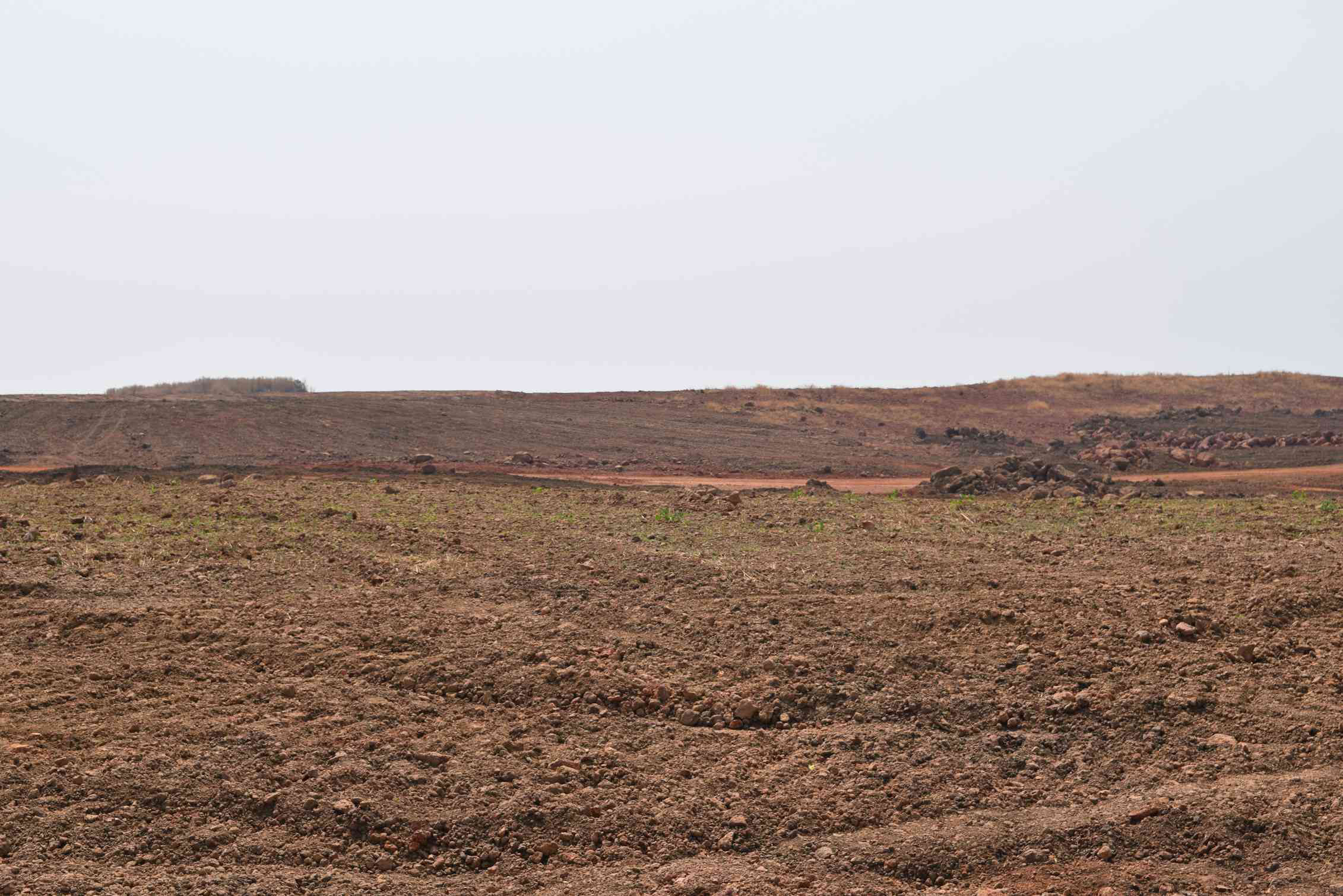
Unfortunately, chimpanzee habitat in Guinea-Bissau is threatened by extractive industries, particularly industrial mining. While in the field, we encountered boreholes from bauxite mining exploration.
Bauxite mining represents a significant opportunity for economic growth and development in Guinea-Bissau. It can also cause habitat destruction and pollution with severe detrimental effects for chimpanzees, other wildlife, and the local people — as it already has in neighboring Guinea.
Environmental oversight and regulations are much needed, especially given the added challenges of unstable governance in Guinea-Bissau.
By studying and bringing attention to chimpanzee cultural behaviors like accumulative stone throwing, we hope to support chimpanzee conservation and the maintenance of biodiversity more broadly, as well as the preservation of primate cultural materials for future research and education.
Adapted from an article originally published in The Conversation.
Never miss a breakthrough: Join the SciTechDaily newsletter.
Follow us on Google and Google News.
5 Comments
One of these chimps’ group members fell from each of these trees and was killed. In typical primate fashion, they are blaming it on the trees. Any monkey could figure that out.
They have learned a playful gravity experiment…now tell them that it was not Newton but Quantum x
Those pics were completely irrelevant and more suited for a personal social media post than this article.
That being said, I look forward to seeing what can be learned from this.
My guess is that it’s some sort of a coordination competition.
Basically, some of them are trying to prove themselves beyond strength, demonstrating their value that others don’t have.
I agree with Holy Hannah. Similar to what I was thinking. That it’s like when humans play darts in a bar. They are having a friendly competition but it’s also a way of impressing others and showing off skill and ability and accuracy. Plus, throwin’ stuff is just fun.
I agree about the photos in this article. They have really nothing to do with the subject matter of the article. Really would have liked to have seen photos of the trees that have been pelted by rocks and the piles of rocks themselves to see how big they are and if they are all of a similar shape and size, etc. Same with the trees, I wonder if they picked wide trees or skinny trees because it would be harder to hit a skinny tree with a rock and would be more challenging and therefor more impressive if a chimp does hit it with a rock.
I would also like to know if it’s both male and female chimps throwing the rocks at the trees? If it’s only the males then, to me, it’s most likely a way to impress the ladies.
I would also like to know if they’ve found lots of rocks in the area that were misses. And if it’s one side of the tree they are aiming at or is it all sides of the tree that they throw the rocks at. And I’d like to know the location of the trees so I can see if there is anything unique about them that would make you want to hit it with a rock. Like when you see a balloon and you just kinda want to pop it. Not really for any reason or purpose, just because.
Another possibility it that there are insects living in the tree and the vibrations of the rocks hitting the trunk make the insects come out or descend or something so that the chimps can then catch them and eat them. Or are they fruit trees? The rocks impacting the tree might loosen up the fruit so it falls and then the chimps can eat it. Or maybe they are aiming at the fruit trying to knock it off the tree.
Rock throwing esp. with groups sounds a lot like golf. There is a special place to do it, a golf course (sp?), moving a sphere, rock or golf ball, remembering hitting the tree or making a hole in one. Loud and racous(sp) behavior (sounds like a football match)