
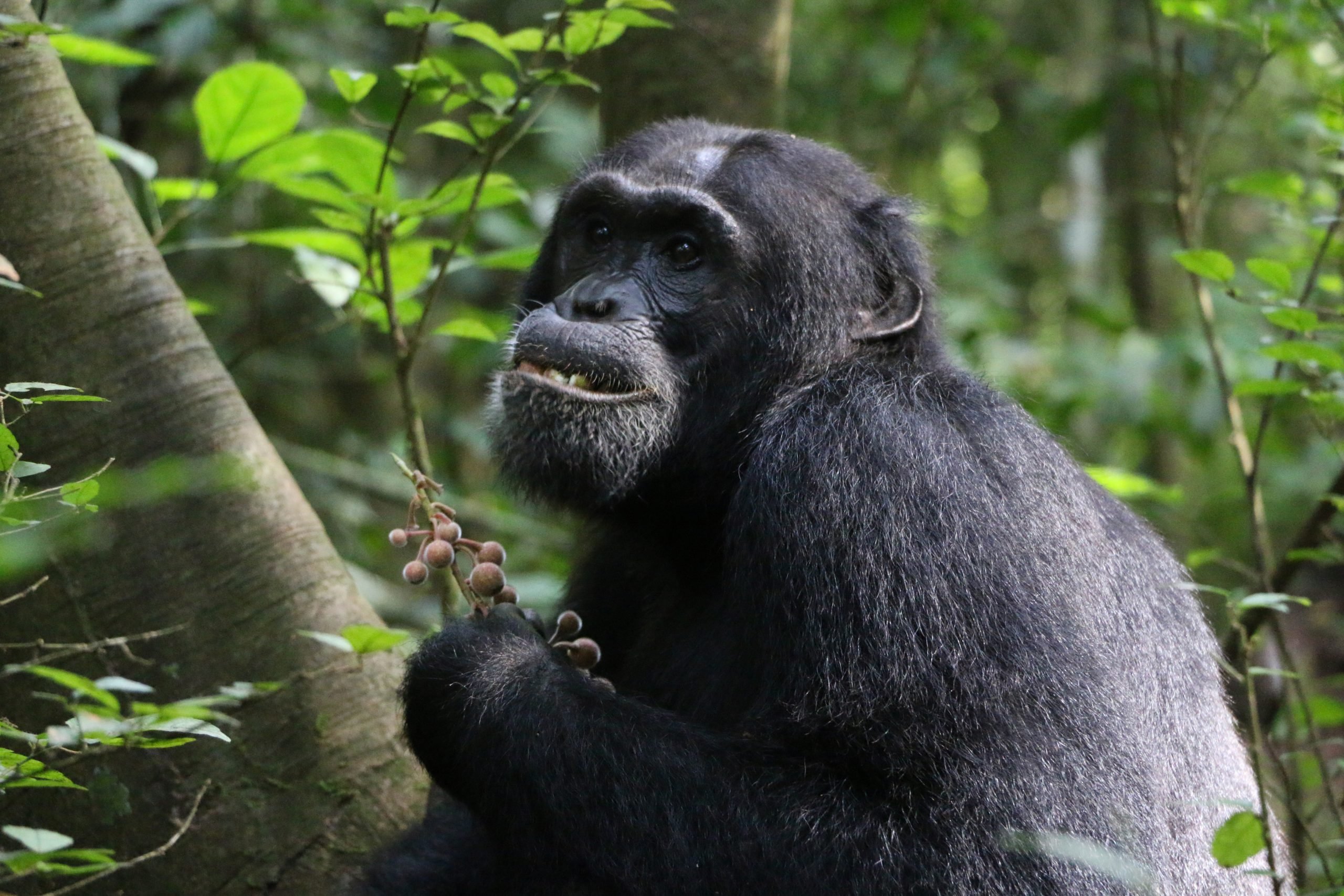
Chimpanzees afflicted with illness consume tree bark, dead wood, and ferns known for their antibiotic and anti-inflammatory properties.
According to a study published on June 20 in the open-access journal PLOS ONE, chimpanzees may consume plants with medicinal benefits to address their health issues. The research, conducted by Elodie Freymann of the University of Oxford, UK, and her team, explores this behavior.
Many plants produce compounds that have medicinal effects on humans and other animals. Wild chimpanzees eat a variety of plant matter, including some that are nutritionally poor but may treat or lessen the symptoms of illness. However, it is hard to determine whether chimpanzees self-medicate, by intentionally seeking out plants with properties that help their specific ailments, or passively consume plants that happen to be medicinal.
The authors of the present study combined behavioral observations of wild chimpanzees (Pan troglodytes) with pharmacological testing of the potentially medicinal plants they eat. They monitored the behavior and health of 51 chimpanzees from two habituated communities in the Budongo Central Forest Reserve in Uganda. Next, they collected plant extracts from 13 species of trees and herbs in the reserve that they suspected the chimpanzees might be using to self-medicate, and tested them for their anti-inflammatory and antibiotic properties. These included plants that they observed sick or injured chimpanzees eating, but were not part of their normal diet, and plants that previous research has suggested chimpanzees might consume for their medicinal properties.
Medicinal Properties of Plants and Chimpanzee Behavior
The researchers discovered that 88% of the plant extracts inhibited bacterial growth, while 33% had anti-inflammatory properties. Dead wood from a tree in the Dogbane family (Alstonia boonei) showed the strongest antibacterial activity and also had anti-inflammatory properties, suggesting that it could be used to treat wounds. Bark and resin from the East African mahogany tree (Khaya anthotheca) and leaves from a fern (Christella parasitica) exhibited potent anti-inflammatory effects. The researchers observed a male Chimpanzee with an injured hand seek out and eat leaves of the fern, which may have helped to reduce pain and swelling. They also recorded an individual with a parasitic infection consuming the bark of the cat-thorn tree (Scutia myrtina).
The results suggest that chimpanzees seek out specific plants for their medicinal effects. The study is one of the first to provide both behavioral and pharmacological evidence of the medicinal benefits to wild chimpanzees of feeding on bark and dead wood. The medicinal plants growing in Budongo Central Forest Reserve could also be helpful for the development of new drugs to address the challenges of antibiotic-resistant bacteria and chronic inflammatory diseases, the authors say.
The authors add: “In this paper, we demonstrate how watching and learning from our primate cousins may fast-track the discovery of novel medicines, while also emphasizing the importance of protecting our forest pharmacies.”
Reference: “Pharmacological and behavioral investigation of putative self-medicative plants in Budongo chimpanzee diets” by Elodie Freymann, Susana Carvalho, Leif A. Garbe, Dinda Dwi Ghazhelia, Catherine Hobaiter, Michael A. Huffman, Geresomu Muhumuza, Lena Schulz, Daniel Sempebwa, Florian Wald, Eguma R. Yikii, Klaus Zuberbühler and Fabien Schultz, 20 June 2024, PLOS ONE.
DOI: 10.1371/journal.pone.0305219
Funding for this project was granted by the the Clarendon Fund at the University of Oxford (to EF), the British Institute of Eastern Africa (to EF), Keble College at the University of Oxford (to EF), Boise Trust Fund (to EF), German Federal Ministry of Education and Research (13FH026IX5, PI: L-AG and Co-I: FS) (to LAG, FS) and Neubrandenburg University of Applied Sciences (grant # 13310510) (to LAG, FS).
Never miss a breakthrough: Join the SciTechDaily newsletter.
Follow us on Google and Google News.