
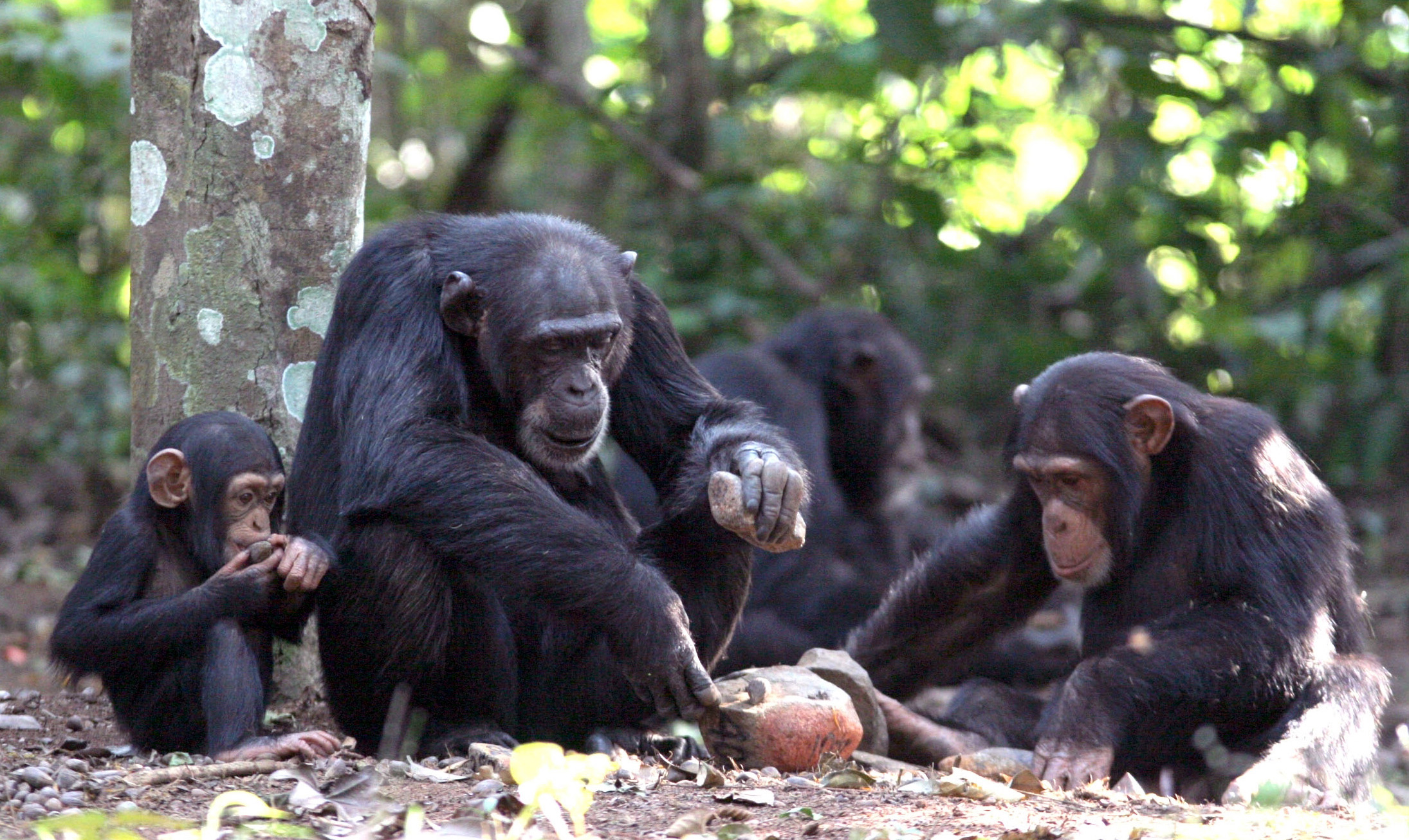
Chimpanzees may refine cultural behaviors over time, with advanced toolsets spreading through migrating females, suggesting early stages of cumulative culture.
Chimpanzees are renowned for their remarkable intelligence and ability to use tools, but could their cultures also evolve over time, similar to human cultures? A new multidisciplinary study, led by the University of Zurich, suggests that some of their most advanced behaviors may have been passed down and refined through generations.
In recent decades, scientists have clearly demonstrated that chimpanzees, like humans, pass on complex cultures such as tool use from generation to generation. But human culture has become vastly more sophisticated, from the Stone Age to the Space Age, as new advances have been incorporated. Chimpanzee cultures haven’t changed in the same way, which suggests that only humans have the remarkable ability to build more sophisticated cultures over time.
Scientists studying chimpanzees in the wild, however, have disputed this, suggesting that some of chimpanzees’ most complex technologies, in which they use multiple tools in sequence to extract hidden food sources, were probably built on previous knowledge over time.
Tracing genetic links
“As most chimpanzee tools, such as sticks and stems, are perishable, there are few records of their history to confirm this hypothesis – unlike human cases such as the evolution of the wheel or computer technology,” says lead author Cassandra Gunasekaram from the Department of Evolutionary Anthropology at the University of Zurich.
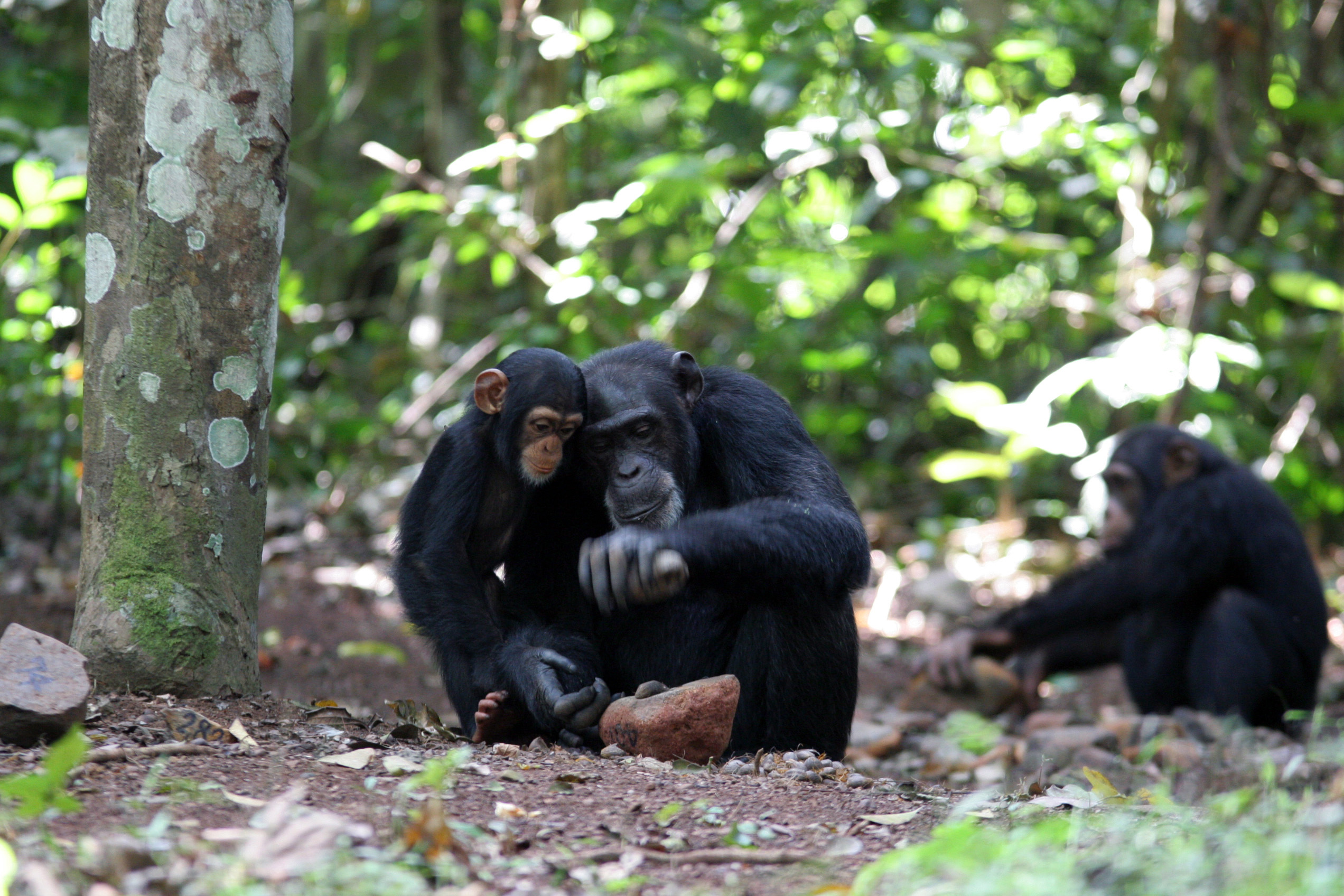
For the new study, a team of anthropologists, primatologists, physicists, and geneticists from universities and research institutions in Zurich, St. Andrews, Barcelona, Cambridge, Konstanz, and Vienna joined forces to trace genetic links between chimpanzee populations over thousands of years, using new discoveries in genetics to uncover key pieces of chimpanzee cultural history in ways never before imagined.
Early stages of cumulative culture
The authors collected information on markers of genetic similarity – genetic evidence of links between different groups of chimpanzees – as well as a range of foraging behaviors previously reported to be culturally learned, from a total of 35 chimpanzee study sites across Africa. They grouped these behaviors into those that required no tools; those that required simple tools, such as using a leaf sponge to get water from a tree hole; and the most complex behaviors that relied on a toolset.
Trading toolsets across generations
“As an example of such a toolset, chimpanzees in the Congo region first use a strong stick to dig a deep tunnel through hard soil to reach an underground termite nest,” explains Gunasekaram. “Next, they make a ‘fishing’ probe by pulling a long plant stem through their teeth to form a brush-like tip, pressing it into a point, and deftly threading it down the tunnel they’ve made. They then pull it out and nibble off any defending termites that have bitten into it.”
“We made the surprising discovery that it is the most complex chimpanzee technologies – the use of entire ‘toolsets’ – that are most strongly linked across now distant populations,” says corresponding author Andrea Migliano, professor of evolutionary anthropology at UZH. “This is exactly what would be predicted if these more advanced technologies were rarely invented and even less likely to be reinvented, and therefore more likely to have been transmitted between groups.”
How female migrations spread innovation
In chimpanzees, it is sexually maturing females, rather than males, who migrate to new communities to avoid inbreeding. In this way, genes are spread between neighboring groups and then further afield over the years, centuries, and millennia. The study authors discovered that it would be these same female migrations that could spread any new cultural advances to communities that lacked them.
The study also showed that when both complex toolsets and their simpler versions (i.e., mostly the components of the toolsets) occur at different study sites, the genetic markers indicate that the sites were connected in the past by female migrations. This suggests that the complex versions were built cumulatively by adding to or modifying the simple ones. “These groundbreaking discoveries provide a new way to demonstrate that chimpanzees have a cumulative culture, albeit at an early stage of development,” Migliano adds.
Reference: “Population connectivity shapes the distribution and complexity of chimpanzee cumulative culture” by Cassandra Gunasekaram, Federico Battiston, Onkar Sadekar, Cecilia Padilla-Iglesias, Maria A. van Noordwijk, Reinhard Furrer, Andrea Manica, Jaume Bertranpetit, Andrew Whiten, Carel P. van Schaik, Lucio Vinicius and Andrea Bamberg Migliano, 21 November 2024, Science.
DOI: 10.1126/science.adk3381
Never miss a breakthrough: Join the SciTechDaily newsletter.
Follow us on Google and Google News.