

Close Menu
    Facebook X (Twitter) Instagram
    SciTechDaily
    • Biology
    • Chemistry
    • Earth
    • Health
    • Physics
    • Science
    • Space
    • Technology
    Facebook X (Twitter) Pinterest YouTube RSS
    SciTechDaily
    Home»Science»Cracking Chimpanzee Culture – More Similar to Human Culture Than Often Assumed
    Science

    Cracking Chimpanzee Culture – More Similar to Human Culture Than Often Assumed

    By University of ZurichJanuary 24, 20221 Comment3 Mins Read
    Facebook Twitter Pinterest Telegram LinkedIn WhatsApp Email Reddit
    Share
    Facebook Twitter LinkedIn Pinterest Telegram Email Reddit
    Nimba Mountains, Guinea
    Nimba Mountains, Guinea. Credit: Kathelijne Koops, UZH

    Chimpanzees don’t automatically know what to do when they come across nuts and stones. Researchers at the University of Zurich have now used field experiments to show that chimpanzees thus do not simply invent nut-cracking with tools, but need to learn such complex cultural behaviors from others. Their culture is therefore more similar to human culture than often assumed.

    Humans have a complex culture that enables them to copy behaviors from others. As such, human culture is cumulative, since skills and technologies accumulate over generations and become increasingly efficient or complex. According to the zone of latent solutions hypothesis in Anthropology, chimpanzees do not learn in this way, but can reinvent cultural behaviors individually. UZH professor in the department of Anthropology Kathelijne Koops has now carried out novel field experiments in the Nimba Mountains of Guinea to show that this may not be the case.
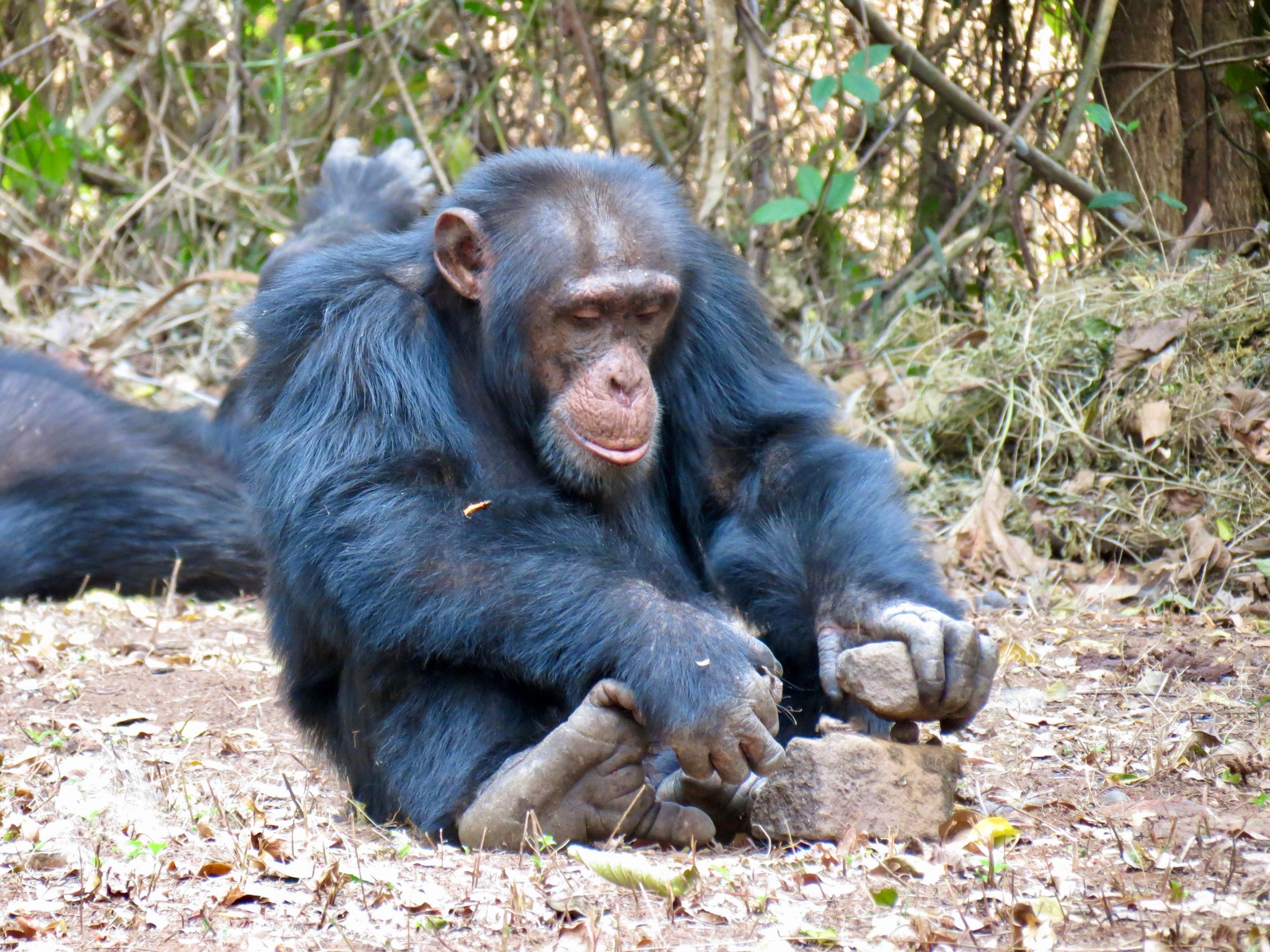
    Chimpanzee Cracking Nut With Stones
    Chimpanzee cracking a nut with stones. Credit: Kathelijne Koops, UZH

    Four Experiments With Wild Chimpanzees

    The primatologist investigated whether wild chimpanzees can in fact invent a complex behavior like nut-cracking independently. The chimpanzees were presented with a series of four experiments. First, the chimps were presented with oil palm nuts and stones. Next, the researchers added a palm fruit to the experimental setup. In the third experiment, the nuts were cracked open and placed on top of the stones. And finally, the chimps were presented with another, easier-to-crack species of nuts (Coula) together with stones.

    The chimpanzees visited the nut-cracking experiments and explored the nuts and stones, yet they did not crack any nuts, even after more than a year of exposure to the materials. A total of 35 chimpanzee parties (or sub-groups) visited the experiments, of which 11 parties closely investigated the experimental items. The chimpanzees were more likely to explore the experiments when visiting in bigger parties. Only one female chimpanzee was observed eating from the palm fruit, but on no occasion did the chimpanzees crack or eat either oil palm or Coula nuts.
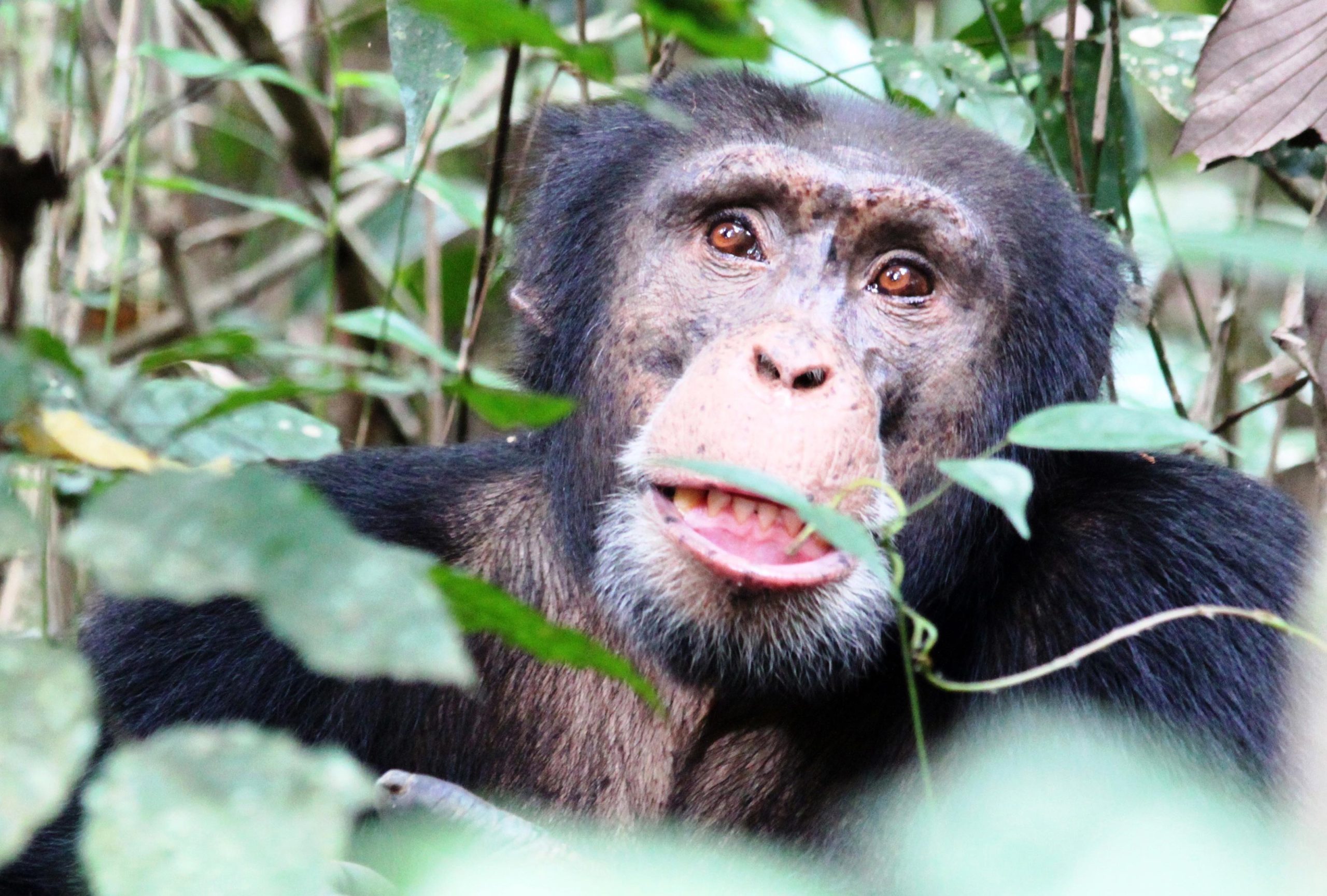
    Chimpanzee in Nimba Mountains
    Chimpanzee in the Nimba Mountains, Guinea. Credit: Kathelijne Koops, UZH

    Shared Evolutionary Origin of Cumulative Culture

    “Our findings suggest that chimpanzees acquire cultural behaviors more like humans and do not simply invent a complex tool use behavior like nut cracking on their own,” says Koops. The presence of a model from whom to learn appears to be the missing piece. “Our findings on wild chimpanzees, our closest living relatives, help to shed light on what it is (and isn’t!) that makes human culture unique. Specifically, they suggest greater continuity between chimpanzee and human cultural evolution than is normally assumed and that the human capacity for cumulative culture may have a shared evolutionary origin with chimpanzees.”

    Reference: “Field experiments find no evidence that chimpanzee nut cracking can be independently innovated” by Kathelijne Koops, Aly Gaspard Soumah, Kelly L. van Leeuwen, Henry Didier Camara and Tetsuro Matsuzawa, 24 January 2022, Nature Human Behaviour.
    DOI: 10.1038/s41562-021-01272-9

    Never miss a breakthrough: Join the SciTechDaily newsletter.
    Follow us on Google and Google News.

    Anthropology Chimpanzee Evolution Learning Monkey Popular University of Zurich
    Share. Facebook Twitter Pinterest LinkedIn Email Reddit

    Related Articles

    Evolving Intelligence: How Chimpanzees Master Tools Well Into Adulthood

    Earliest Homo Populations in Africa Had Primitive Ape-Like Brains – Just Half the Size of Today’s Humans

    Neandertals Dove Underwater to Collect Clam Shells to Use as Tools

    Developing Complex Culture in the Stone Age: Hunter-Gatherer Networks Accelerated Human Evolution

    Earliest Interbreeding Between Ancient Human Populations Discovered – Evolutionary Puzzle Solved

    What Caused Neanderthal Extinction and Were Our Human Ancestors to Blame?

    New Evidence Shows Humans Mastered Fire Earlier Than Thought

    What Really Caused Neanderthals to Go Extinct? New Study Has Shocking Answer

    Million-Year-Old Ash in South African Cave Yields Evidence of Cooking

    1 Comment

    1. xABBAAA on January 25, 2022 2:40 am

      … is there more similarities with: a Chimpanzees or a Bonobos.
      I would prefer to have more Bonobo stuff, but is it?

      Reply
    Leave A Reply Cancel Reply

    • Facebook
    • Twitter
    • Pinterest
    • YouTube

    Don't Miss a Discovery

    Subscribe for the Latest in Science & Tech!

    Trending News

    The Universe Is Expanding Too Fast and Scientists Can’t Explain Why

    “Like Liquid Metal”: Scientists Create Strange Shape-Shifting Material

    Early Warning Signals of Esophageal Cancer May Be Hiding in Plain Sight

    Common Blood Pressure Drug Shows Surprising Power Against Deadly Antibiotic-Resistant Superbug

    Scientists Uncover Dangerous Connection Between Serotonin and Heart Valve Disease

    Scientists Discover a “Protector” Protein That Could Help Reverse Hair Loss

    Bone-Strengthening Discovery Could Reverse Osteoporosis

    Scientists Uncover Hidden Trigger Behind Stem Cell Aging

    Follow SciTechDaily
    • Facebook
    • Twitter
    • YouTube
    • Pinterest
    • Newsletter
    • RSS
    SciTech News
    • Biology News
    • Chemistry News
    • Earth News
    • Health News
    • Physics News
    • Science News
    • Space News
    • Technology News
    Recent Posts
    • Scientists Overcome Major Quantum Bottleneck, Potentially Transforming Teleportation and Computing
    • Quantum Physics’ Strangest Problem May Hold the Key to Time Itself
    • Scientists Create “Liquid Gears” That Spin Without Touching
    • The Simple Habit That Could Help Prevent Cancer
    • Forgotten Medicinal Plant Shows Promise in Fighting Dangerous Superbugs
    Copyright © 1998 - 2026 SciTechDaily. All Rights Reserved.
    • Science News
    • About
    • Contact
    • Editorial Board
    • Privacy Policy
    • Terms of Use

    Type above and press Enter to search. Press Esc to cancel.