
Close Menu
    Facebook X (Twitter) Instagram
    SciTechDaily
    • Biology
    • Chemistry
    • Earth
    • Health
    • Physics
    • Science
    • Space
    • Technology
    Facebook X (Twitter) Pinterest YouTube RSS
    SciTechDaily
    Home»Biology»Unlocking Intelligence: Marmosets Reveal Hidden Secrets of Human Brain Evolution
    Biology

    Unlocking Intelligence: Marmosets Reveal Hidden Secrets of Human Brain Evolution

    By University of ZurichOctober 30, 2024No Comments3 Mins Read
    Facebook Twitter Pinterest Telegram LinkedIn WhatsApp Email Reddit
    Share
    Facebook Twitter LinkedIn Pinterest Telegram Email Reddit
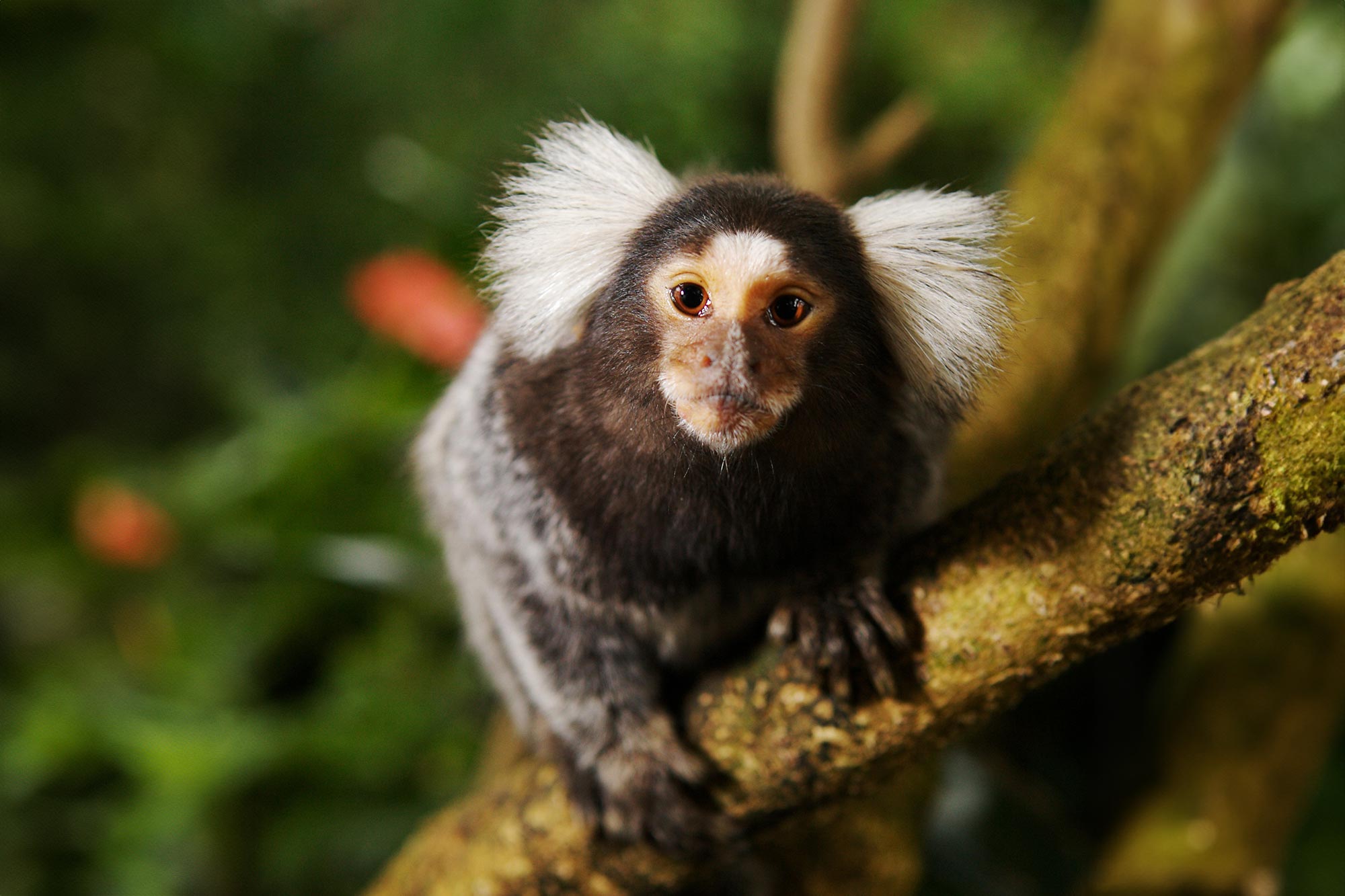
    Marmoset Close Up
    University of Zurich researchers have found that social interactions delay brain maturation in marmosets, similar to humans. This prolonged development phase enhances learning, which is vital for their sophisticated social behaviors.

    Researchers have uncovered how social interactions influence brain development in common marmosets, drawing parallels with human evolution.

    The study reveals that brain regions involved in social processing mature slowly, mirroring the development seen in humans. This protracted brain maturation supports prolonged learning from social interactions, underlying the advanced socio-cognitive skills observed in these primates.

    Primate brain development is influenced by various factors, which differ between species based on their social structures. In independent breeders, like great apes, parents are solely responsible for raising offspring. In cooperative breeders, such as common marmosets (Callithrix jacchus) and humans, however, other group members also help raise infants from birth.

    An international research team, led by Paola Cerrito from the University of Zurich’s Department of Evolutionary Anthropology, investigated how these social interactions influence brain development in common marmosets. Their study sheds light on the timing of brain growth and its link to socio-cognitive skills, particularly the prosocial and cooperative behaviors seen in marmosets.

    Common Marmosets
    As in humans, infants of common marmosets interact with several caregivers from birth and are thus exposed to intensive social interaction. Credit: Judith Burkart/UZH

    Social Interactions and Brain Maturation

    The research team analyzed brain development using magnetic resonance data and showed that in marmosets, the brain regions involved in the processing of social interactions exhibit protracted development – in a similar way to humans. These brain regions only reach maturity in early adulthood, allowing the animals to learn from social interactions for longer.

    Like humans, immature marmosets are surrounded and cared for by multiple caregivers from birth and are therefore exposed to intense social interaction. Feeding is also a cooperative business: the immature animals are fed by group members and as they get older, they have to beg for food because their mothers are already busy with the next offspring. According to the study, the need to elicit care from several group members significantly shapes brain development and contributes to the sophisticated socio-cognitive motivation (and observed skills) of these primates.

    Common Marmosets in Tree
    Marmosets, native to South American forests, are tiny, agile primates recognized for their unique social dynamics and expressive calls. Living in close-knit groups, these primates display intriguing behaviors that offer valuable insights into social and cognitive development. Credit: Judith Burkhart/UZH

    Comparative Insights and Human Evolution

    Given their similarities with humans, marmosets are an important model for studying the evolution of social cognition. “Our findings underscore the importance of social experiences to the formation of neural and cognitive networks, not only in primates, but also in humans,” explains Cerrito.

    The early-life social inputs that characterize infants’ life in cooperatively breeding species may be a driving force in the development of humans’ marked social motivation. “This insight could have an impact on various fields, ranging from evolutionary biology to neuroscience and psychology,” adds Cerrito.

    Reference: “Neurodevelopmental timing and socio-cognitive development in a prosocial cooperatively breeding primate (Callithrix jacchus)” by Paola Cerrito, Eduardo Gascon, Angela C. Roberts, Stephen J. Sawiak and Judith M. Burkart, 30 October 2024, Science Advances.
    DOI: 10.1126/sciadv.ado3486

    Never miss a breakthrough: Join the SciTechDaily newsletter.
    Follow us on Google and Google News.

    Brain Developmental Biology Evolution Evolutionary Biology Primates University of Zurich
    Share. Facebook Twitter Pinterest LinkedIn Email Reddit

    Related Articles

    Does Fruit Really Fuel Brain Growth? New Study Challenges Old Ideas

    New Research Could Link Evolution of Complex Life to Genetic “Dark Matter”

    Scientists Have Figured Out Why Childbirth Became So Complex and Dangerous

    When New Males Take Over, These Female Primates Hurry Up and Sexually Mature

    Scientists Reveal the Evolution of Modern Human Brain Shape

    New Insight on CLOCK Gene May Hold Answers to Human Brain Evolution

    A Natural Example of a Functioning Gear Mechanism Discovered in an Insect

    DNA Study Reveals Clues about Primate Evolution

    Evolutionary Changes Surrounding the NOS1 Gene

    Leave A Reply Cancel Reply

    • Facebook
    • Twitter
    • Pinterest
    • YouTube

    Don't Miss a Discovery

    Subscribe for the Latest in Science & Tech!

    Trending News

    Even Occasional Binge Drinking May Triple Liver Damage Risk

    Liftoff! NASA’s Artemis II Launch Sends Astronauts Around the Moon for First Time in 50 Years

    Scientists Discover New Way To Eliminate “Zombie Cells” Driving Aging

    This New Quantum Theory Could Change Everything We Know About the Big Bang

    This One Vitamin May Help Protect Your Brain From Dementia Years Later

    Stopping Weight-Loss Drugs Like Ozempic Can Quickly Erase Heart Benefits

    A 500-Million-Year-Old Surprise Is Forcing Scientists to Rethink Spider Evolution

    Coffee and Blood Pressure: What You Need To Know Before Your Next Cup

    Follow SciTechDaily
    • Facebook
    • Twitter
    • YouTube
    • Pinterest
    • Newsletter
    • RSS
    SciTech News
    • Biology News
    • Chemistry News
    • Earth News
    • Health News
    • Physics News
    • Science News
    • Space News
    • Technology News
    Recent Posts
    • Tiny 436-Million-Year-Old Fish Fossil Rewrites the Origins of Vertebrates
    • 1,800 Miles Down: Scientists Uncover Mysterious Movements at the Edge of Earth’s Core
    • Scientists Uncover Earth’s Hidden “Gold Kitchen” Beneath the Ocean Floor
    • You Don’t Need To Be Rich: New Study Reveals a Simple Life Is the Real Secret to Happiness
    • “Crazy Dice” Help Scientists Prove Only One 150-Year-Old Theory About Randomness Works
    Copyright © 1998 - 2026 SciTechDaily. All Rights Reserved.
    • Science News
    • About
    • Contact
    • Editorial Board
    • Privacy Policy
    • Terms of Use

    Type above and press Enter to search. Press Esc to cancel.